-Struggling to find a reliable truck brake pad supplier? Worried about inconsistent quality and high costs? You need a partner who understands heavy-duty demands and can deliver consistently.
To choose the right manufacturer, you must focus on their production technology1, especially their methods for cooling and material mixing2. Look for suppliers with deep experience in heavy-duty applications3 and a proven quality control process4. This ensures you get durable, safe, and cost-effective brake pads for your market.
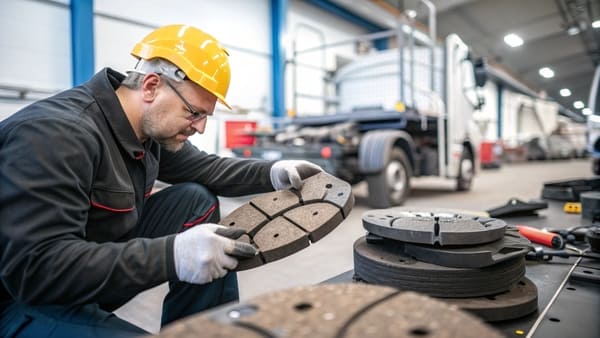
Finding a good partner for truck brake pads is one of the toughest challenges in the auto parts business. The standards are incredibly high, and the room for error is zero. As a business sourcing these parts, you are not just buying a product; you are buying safety and reliability for your customers. I've learned over many years that the details in the manufacturing process make all the difference. Let's walk through what you need to know to make the right choice and build a successful product line.
What Are Truck Brake Pads and Why Are They Critical for Heavy-Duty Vehicles?
Trucks carry immense weight. If their brakes fail, disaster follows. Understanding what makes truck brake pads different is the first step to ensuring safety and reliability for your customers.
Truck brake pads are friction components designed for extreme heat and pressure. They are critical because heavy-duty vehicles need massive stopping power to operate safely. Poor quality pads can lead to brake fade5, longer stopping distances, and catastrophic accidents, making them a non-negotiable safety component.
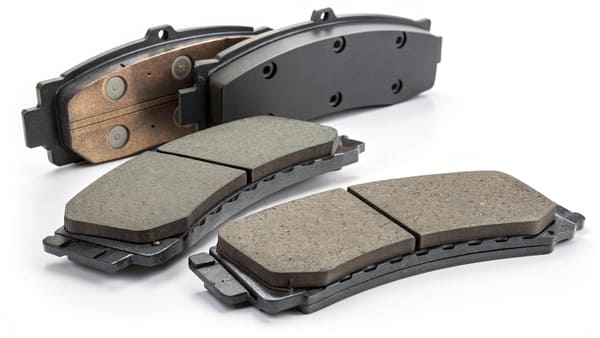
A fully loaded truck can weigh over 40 tons. Stopping that much weight generates an incredible amount of heat and pressure. Unlike a passenger car, a truck's brakes have to perform perfectly time after time, often on long downhill grades where heat builds up continuously. This is where the term "brake fade5" comes in. It happens when the brake pads get so hot that they lose their ability to create friction, and the truck's stopping power dangerously decreases.
That's why the engineering behind truck brake pads is so specialized. It’s not just about making a bigger version of a car brake pad. The materials, the density, and the way they are bonded together must be able to handle temperatures that would destroy normal pads. As an importer or brand, your choice of manufacturer directly impacts the safety of every driver using your product. It is a responsibility we take very seriously.
What Types of Truck Brake Pads Are Available for Different Applications?
Not all brake pads are the same. Using the wrong type for a specific truck application can cause premature wear or even failure. You need to know the options to serve your market properly.
The main types are semi-metallic, ceramic, and organic. Semi-metallic pads are durable and great for heavy loads and high heat. Ceramic pads offer quiet operation and low dust. Your choice depends entirely on the truck's intended use, balancing performance, durability, and cost.
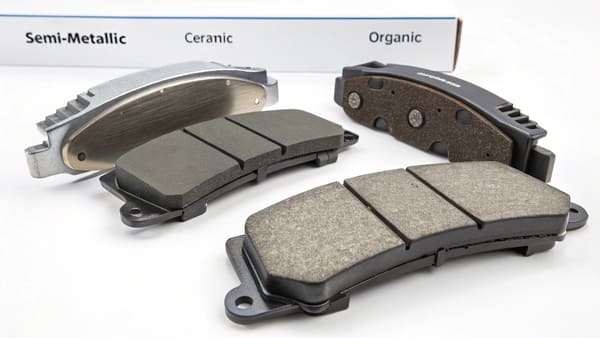
Choosing the right material is a balancing act. You need to match the friction material6 to the vehicle's job. A truck hauling timber down a mountain has very different needs than a delivery truck making stops all day in a flat city. As an OEM/ODM supplier, we help our clients navigate these choices to create the best product for their specific customers. It's about finding the perfect formula for the application.
Here is a simple breakdown of the most common types:
| Pad Type | Friction Material | Best For | Pros | Cons |
|---|---|---|---|---|
| Semi-Metallic | 30-65% metal flakes (steel, iron, copper) mixed with fillers | Heavy-duty hauling, long-distance freight, demanding conditions | Excellent heat dissipation, high durability, superior stopping power | Can be noisy, produces more brake dust, can wear rotors faster |
| Ceramic | Ceramic fibers, non-ferrous fillers, and bonding agents | Lighter-duty trucks, fleet vehicles in urban areas, noise-sensitive applications | Very quiet, low dust, stable performance across temperatures, long life | More expensive, not ideal for extreme heavy-duty use |
| Organic (NAO) | Non-asbestos organic materials like glass, fiber, and Kevlar | Not commonly used for heavy trucks, maybe for very light-duty applications | Quiet, soft on rotors | Wears quickly, creates more dust, not suitable for high heat |
For most of our B2B clients in the heavy-duty sector, semi-metallic pads7 are the go-to solution because they provide the safety margin needed for heavy loads. However, the exact metal composition is something we customize based on the target market's needs.
How Do You Choose the Best Truck Brake Pads for Different Truck Brands and Road Conditions?
You've found a potential supplier, but can they make the right pads for your specific market? Choosing a one-size-fits-all solution is a recipe for problems and unhappy customers.
First, analyze the truck brands popular in your market (e.g., Volvo, Scania, Freightliner). Second, consider the road conditions. Then, work with a manufacturer who can customize the friction formula8 and production process to meet these specific needs for optimal performance and safety.
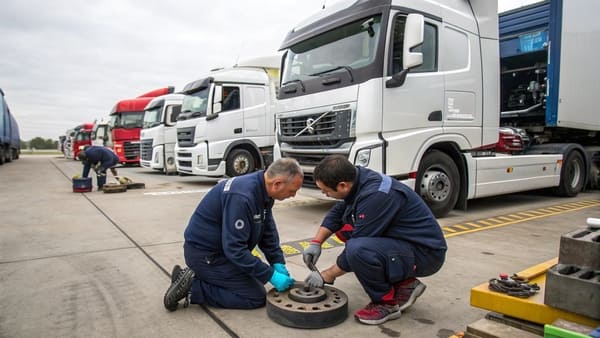
This is where a true manufacturing partner proves their worth. The best suppliers don't just sell you a product; they work with you to engineer a solution. The manufacturing process for truck brake pads is extremely difficult. Standard equipment simply cannot achieve the required precision and durability. The two hardest parts are density control during cooling9 and the precise mixing of friction materials10](6s">https://shuipet.com/are-brake-pads-better-than-brake-shoes/)6s. High-precision machines capable of this are rare and usually found in specific industrial zones, like near Shanghai or in the Fujian province.
I learned this lesson the hard way. Early in my career, I worked with a client from Pakistan. It was one of our first big orders for truck brake pads. We were still refining our process and made a mistake during the cooling stage. The result was a batch of pads that showed some uneven wear. I was very worried, but to my surprise, the client was happy. It turned out that due to their local road conditions and vehicle maintenance habits, this "flaw" actually performed better for them. This was a huge lesson: customization is everything11. From that day on, we focused on mastering our process so we could control every variable, allowing us to engineer the exact performance characteristics our clients need.
Conclusion
Choosing the right truck brake pad manufacturer is about more than price. It's about finding a partner with the right technology, experience, and willingness to customize for your market's needs.
Understanding advanced production technology helps you select manufacturers who deliver superior quality and performance for heavy-duty applications. ↩
Learning about these methods ensures you choose suppliers who produce durable and reliable brake pads for demanding conditions. ↩
Exploring this topic helps you understand why specialized brake pads are essential for safety and performance in heavy-duty vehicles. ↩
A proven quality control process guarantees consistent, safe, and high-performing brake pads for your business and customers. ↩
Preventing brake fade is crucial for safety; this resource will help you understand and avoid dangerous loss of stopping power. ↩
Knowing the different friction materials helps you match the right pad to your truck's needs for optimal performance and longevity. ↩
Semi-metallic pads are popular for heavy-duty use; learn their pros and cons to make informed purchasing decisions. ↩
Customization allows you to tailor brake pads to specific brands and road conditions, improving safety and satisfaction. ↩
Proper density control ensures consistent quality and performance, reducing the risk of premature wear or failure. ↩
Precision in mixing leads to reliable, high-performing brake pads, critical for heavy-duty vehicles. ↩
Customization ensures the brake pads meet unique market needs, maximizing safety and customer satisfaction. ↩