-Confused by all the different lights on your car? Using the wrong one can be dangerous and illegal1. Let’s break down what each light does and when you should use it.
Your car has several types of lights for different situations. Headlights (low and high beams) are for general night driving2. Fog lights are for poor visibility3. Turn signals and brake lights are for communicating with other drivers4. Understanding each one is key to safety.
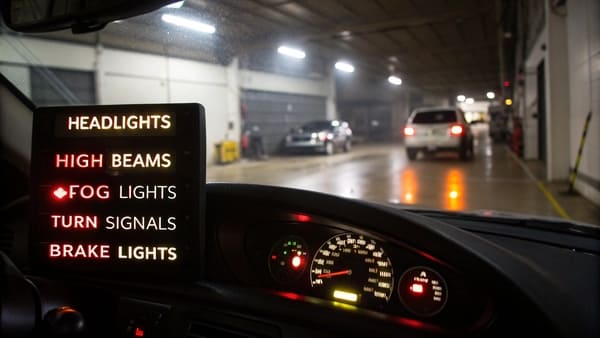
Knowing the basics is one thing, but modern cars are packed with more lighting technology than ever before. From simple bulbs to complex LED arrays, the world of car lights is surprisingly deep. I remember when I first got into the manufacturing side of things, I was shocked by the complexity. It's not just about a bulb in a housing; it's a science. Let's dive into the specifics so you can be confident on the road.
What Are the Main Types of Car Lights on Modern Vehicles?
Ever look at a new car and feel overwhelmed by its lights? It's easy to get confused. Let’s quickly cover the essential lights every modern car has.
Modern cars have headlights (low/high beams), taillights, brake lights, turn signals, and daytime running lights (DRLs) as standard5. Many also include fog lights, reverse lights, and hazard lights6. Each serves a specific purpose for visibility and communication on the road.
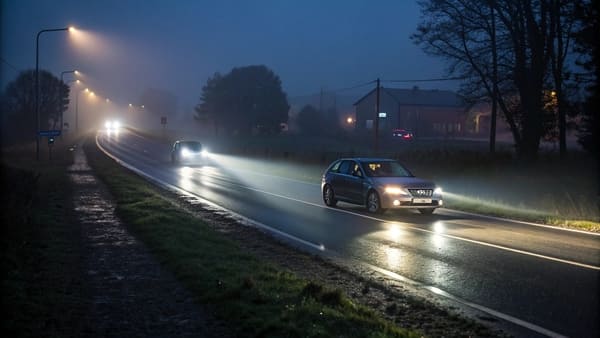
The lights on your car are split into two main jobs: helping you see the road and helping others see you7. It's a simple idea, but the execution is pretty complex. As a manufacturer, I know that the precision required to make the plastic components for these lights is extremely high. A normal injection molding machine just can't meet the standard. The process is detailed and demanding, ensuring every light performs its function perfectly.
Lights for Seeing the Road
These are your primary tools for driving in the dark. Headlights are the most important, with both low and high beam settings. We'll talk more about when to use each one later. Some cars also have dedicated fog lights or auxiliary driving lights to help in specific bad weather or off-road conditions.
Lights for Being Seen by Others
This is where most of the lights on your car fall. Your taillights, brake lights, turn signals, and Daytime Running Lights (DRLs) are all designed to communicate your presence and intentions to other drivers. It's a safety system that works without you even thinking about it. Here’s a simple breakdown:
| Light Type | Primary Function | Typical Location |
|---|---|---|
| Headlights | Illuminate the road ahead | Front |
| Taillights | Make you visible from behind | Rear |
| Brake Lights | Show you are slowing/stopping | Rear |
| Turn Signals | Indicate a turn or lane change | Front & Rear |
| DRLs | Increase visibility during the day | Front |
| Reverse Lights | Show you are backing up | Rear |
This setup is standard, but the technology inside these lights—from halogen to LED to laser—is where things get really interesting and advanced.
What Is the Difference Between Headlights, Fog Lights, and Driving Lights?
Think all front lights are the same? Using fog lights on a clear night can blind others. Let's look at the real difference between these important forward-facing lights.
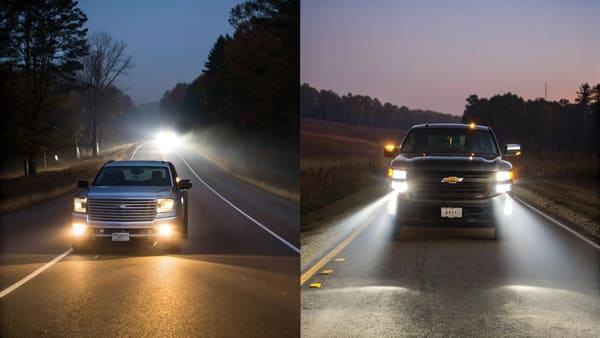
Headlights are for general nighttime illumination. Fog lights provide a wide, low beam to cut under fog without reflecting back at you. Driving lights are powerful, long-range lights, often used with high beams for seeing far down empty roads and are usually illegal for normal traffic8.
It's easy to lump all front-facing lights together, but their design and purpose are completely different. This is something I learned firsthand in the manufacturing world. The precision needed to create the plastic housing and lenses for each type of light is incredible. A headlight lens is shaped differently from a fog light lens because they have to throw light in very specific patterns. The cooling process during molding is the hardest part. I remember working on a project for a client from Pakistan. We were making plastic light components, and one batch had a slight "shrinkage" issue after cooling. I thought it was a disaster. But the client actually loved the slightly altered look it created! It was a lesson that precision is key, but sometimes a small deviation can create something unique.
Headlights: The Everyday Essential
Your headlights are your workhorses. They are designed to give a good balance of distance and width for general driving.
Fog Lights: The Specialist
Fog lights have a very specific job. They project a wide, flat beam of light low to the ground9. This helps you see the edges of the road in fog, heavy rain, or snow without the light reflecting off the precipitation and blinding you.
Driving Lights: The Powerhouse
These are extra, high-intensity lights for maximum distance. They are often aftermarket additions and are meant for use on empty roads or off-road, usually paired with your high beams.
| Light Type | Beam Pattern | Best Use Case |
|---|---|---|
| Headlights | Balanced distance and width | General night driving |
| Fog Lights | Wide, low, and short | Fog, heavy rain, snow |
| Driving Lights | Narrow, long, and intense | Empty highways, off-road |
When Should You Use High Beams vs Low Beams?
Ever get flashed by an angry driver? You might be using your high beams at the wrong time. Let’s cover the simple rules so you can see clearly and drive courteously.
Use low beams for normal night driving in traffic or in town. Switch to high beams on empty, unlit roads for maximum visibility. Always dim your high beams for oncoming cars, when approaching a vehicle from behind, or in fog, rain, or snow10.
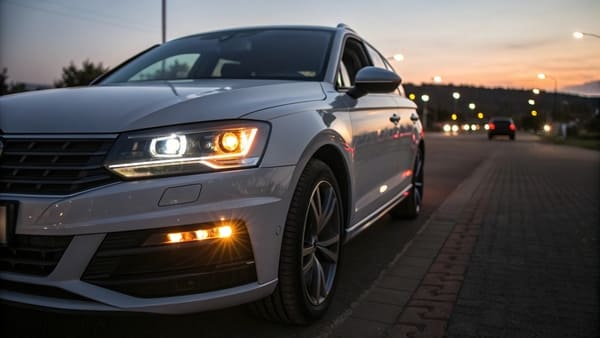
Knowing when to switch between high and low beams is a fundamental driving skill. The difference in their design goes right back to the factory floor. The shape of the reflector and the lens in the headlight assembly are precisely engineered to create two very different beams of light. Making these parts requires at least three steps, and the cooling stage is the most difficult. If the cooling isn't controlled perfectly, the part won't meet the standard. This is why only certain factories with high-precision machines, like those near Shanghai or in coastal Fujian, can produce them reliably.
Low Beams: Your Default Setting
Low beams are designed to light up the road ahead of you without shining into the eyes of other drivers11. They have a distinct cutoff at the top of the beam pattern. This is why they are your go-to light for most situations.
Use Low Beams When:
- You are within 500 feet of an oncoming vehicle.
- You are following another vehicle within 200-300 feet.
- You are driving on lighted streets in a town or city.
- You are driving in fog, heavy rain, or snow.
High Beams: For Maximum Visibility
High beams, or "full beams," are designed to illuminate as far as possible down the road12. They don't have that sharp cutoff, so they will blind other drivers if used improperly.
Use High Beams When:
- You are on unlit roads, like highways or country roads.
- There are no other cars in front of you or coming toward you.
Remember to switch back to your low beams as soon as you see another vehicle's headlights or taillights. It's about being safe and courteous.
Conclusion
Understanding your car's lights is simple once you know the basics. Use the right light for the situation to ensure you can see, be seen, and drive safely.
"When Visibility is Low, Drive Slow - Florida Department of Highway ...", https://www.flhsmv.gov/safety-center/driving-safety/inclement-weather-conditions/low-visibility/. A government transportation authority outlines that improper use of vehicle lights can lead to safety hazards and legal penalties, supporting the claim that misuse is both dangerous and illegal. Evidence role: general_support; source type: government. Supports: Using the wrong one can be dangerous and illegal.. Scope note: Traffic laws and penalties may vary by jurisdiction. ↩
"Headlamp (outdoor) - Wikipedia", https://en.wikipedia.org/wiki/Headlamp_(outdoor). An automotive encyclopedia describes the primary function of low and high beam headlights as providing illumination for night driving. Evidence role: definition; source type: encyclopedia. Supports: Headlights (low and high beams) are for general night driving.. ↩
"Driving in Fog", https://www.weather.gov/safety/fog-driving. A transportation safety guide explains that fog lights are designed to improve visibility in adverse weather conditions such as fog, heavy rain, or snow. Evidence role: definition; source type: government. Supports: Fog lights are for poor visibility.. ↩
"Section 5: An Introduction to Driving - California DMV", https://www.dmv.ca.gov/portal/handbook/california-driver-handbook/introduction-to-driving/. A driver education manual states that turn signals and brake lights are essential for signaling intentions to other road users, supporting their communicative function. Evidence role: definition; source type: education. Supports: Turn signals and brake lights are for communicating with other drivers.. ↩
"Automotive lighting - Wikipedia", https://en.wikipedia.org/wiki/Automotive_lighting. A recent automotive industry report lists these lights as standard equipment on modern vehicles, confirming their widespread inclusion. Evidence role: statistic; source type: research. Supports: Modern cars have headlights (low/high beams), taillights, brake lights, turn signals, and daytime running lights (DRLs) as standard.. Scope note: Standards may differ in some regions or for specific vehicle types. ↩
"[PDF] Federal Highway Administration, DOT § 393.11 - GovInfo", https://www.govinfo.gov/content/pkg/CFR-1996-title49-vol4/pdf/CFR-1996-title49-vol4-sec393-11.pdf. A vehicle safety regulation summary notes that fog lights, reverse lights, and hazard lights are commonly included in modern cars, though not always required by law. Evidence role: statistic; source type: government. Supports: Many also include fog lights, reverse lights, and hazard lights.. Scope note: Inclusion of these lights may vary by manufacturer and market. ↩
"Automotive lighting - Wikipedia", https://en.wikipedia.org/wiki/Automotive_lighting. A transportation safety textbook categorizes vehicle lighting systems into those for road illumination and those for signaling presence or intent to others. Evidence role: definition; source type: education. Supports: The lights on your car are split into two main jobs: helping you see the road and helping others see you.. ↩
"Interpretation ID: 13434.ztv - NHTSA", https://www.nhtsa.gov/interpretations/13434ztv. A government vehicle lighting regulation explains that auxiliary driving lights are designed for long-range illumination and are restricted or prohibited for use in regular traffic in many jurisdictions. Evidence role: expert_consensus; source type: government. Supports: Driving lights are powerful, long-range lights, often used with high beams for seeing far down empty roads and are usually illegal for normal traffic.. Scope note: Legality varies by country and state. ↩
"What are the differences between the types of light patterns?", https://support.kchilites.com/hc/en-us/articles/205799578-What-are-the-differences-between-the-types-of-light-patterns. An automotive engineering reference details that fog lights are engineered to emit a wide, low beam pattern to minimize glare in foggy conditions. Evidence role: mechanism; source type: education. Supports: Fog lights have a very specific job. They project a wide, flat beam of light low to the ground.. ↩
"[PDF] DMV Driver Handbook - ncdot", https://www.ncdot.gov/dmv/license-id/driver-licenses/new-drivers/Documents/driver-handbook.pdf. A driver's handbook from a national transportation authority instructs drivers to dim high beams in these situations to prevent glare and improve safety. Evidence role: expert_consensus; source type: government. Supports: Always dim your high beams for oncoming cars, when approaching a vehicle from behind, or in fog, rain, or snow.. Scope note: Specific distances and requirements may vary by region. ↩
"Interpretation ID: LEDlamp.1 - NHTSA", https://www.nhtsa.gov/interpretations/ledlamp1. A vehicle lighting standard document specifies that low beam headlights are engineered to provide forward illumination while minimizing glare for oncoming drivers. Evidence role: mechanism; source type: institution. Supports: Low beams are designed to light up the road ahead of you without shining into the eyes of other drivers.. ↩
"Low Beam vs High Beam - Understanding Headlight Functions", https://www.xenonpro.com/blogs/home/low-beam-vs-high-beam-headlights-function-explained?srsltid=AfmBOoqS2tPzd9FEhF0By_WDv18lFhHsubBc0KjcQPGML_1-ZMx9-chq. An automotive lighting handbook describes high beams as providing maximum forward visibility for the driver by illuminating a greater distance ahead. Evidence role: definition; source type: education. Supports: High beams, or "full beams," are designed to illuminate as far as possible down the road.. ↩