-Struggling with frequent brake shoe replacements1? Poor quality parts risk safety and drive up maintenance costs. Choosing the right ones is critical for your fleet's performance and bottom line.
The best semi-truck brake shoes offer a balance of high-quality friction material2, precise manufacturing for heat dissipation3, and a friction rating (like 23K)4 matched to your load requirements. They ensure consistent stopping power5 over thousands of miles, maximizing both safety and operational uptime.
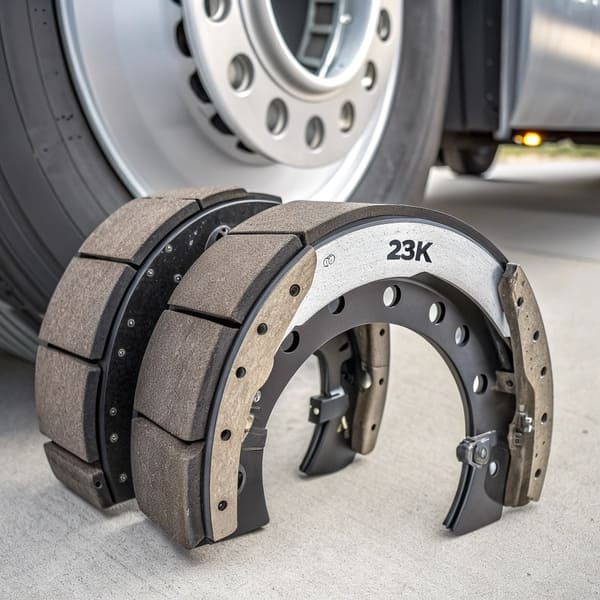
Choosing the right brake shoes goes beyond just looking at a part number. The manufacturing process itself is incredibly complex, something I learned firsthand over many years in this business. There are key differences you need to know about that separate a reliable, long-lasting part from a potential failure waiting to happen. Let's break down what really matters when you're making this critical decision for your fleet.
What Makes Semi Truck Brake Shoes Different from Standard Brake Shoes?
Think a brake shoe is just a brake shoe? Applying that logic to heavy trucks is dangerous. The immense weight and heat demand something entirely different to prevent catastrophic brake failure.
Semi-truck brake shoes are fundamentally different due to their larger size, thicker friction material, and specialized composition designed to handle extreme heat and pressure6 from heavy loads. They prioritize durability and consistent performance under high-stress conditions that would destroy standard car brake shoes.
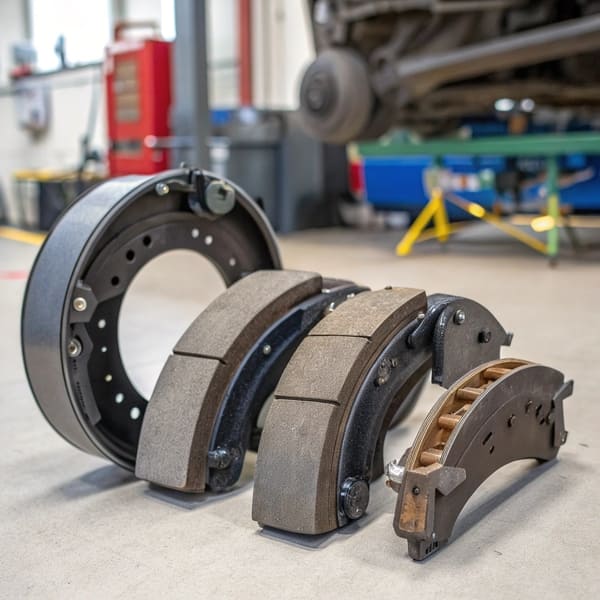
The engineering is worlds apart. Manufacturing heavy-duty brake shoes is a precise science that requires specialized equipment. Unlike standard automotive parts, they go through a multi-stage process where heat treatment, material density, and bonding are everything. A failure in any step compromises the entire part, which can have dire consequences on the road.
The Critical Manufacturing Steps
The most important stage is the controlled cooling and shaping7 after the friction material is applied. This step dictates the shoe's final density and its ability to resist wear under extreme heat. We learned early on that only certain high-precision machines8, often found in industrial hubs like Fujian and the Shanghai region, can handle this process correctly. If the density is inconsistent, it creates 'hot spots' on the brake drum, leading to uneven wear and potential drum cracking. The precision required is measured in microns. It's a level of quality control that is far beyond what's needed for standard passenger car parts. The steel core itself must also be manufactured to exact specifications to prevent flexing or warping under thousands of pounds of force.
Key Structural Distinctions
Here is a simple breakdown of the differences you can see and feel:
| Feature | Standard Car Brake Shoe | Semi Truck Brake Shoe |
|---|---|---|
| Size & Mass | Small and lightweight | Large, heavy, with a thick reinforced steel core |
| Friction Material | Softer, organic/ceramic mix for quietness | Hard, metallic/ceramic composite for high friction9 |
| Heat Capacity | Moderate, designed for short stops | Extremely high to prevent brake fade on long descents |
| Design Goal | Smooth stopping and passenger comfort | Maximum stopping power and extreme durability |
This is why you can't just scale up a car part. The entire production philosophy must focus on handling immense force and dissipating massive amounts of heat, day after day.
How Do Friction Ratings Like 20K and 23K Affect Brake Performance?
See ratings like '20K' and '23K' on brake shoes and feel confused? Ignoring them is a big mistake. The wrong rating means you might not have enough braking force for your specific axle weight.
Friction ratings like 20K and 23K indicate the Gross Axle Weight Rating (GAWR)10 the brake shoe is certified for. A 23K-rated shoe is designed for heavier loads up to 23,000 lbs per axle, providing more stopping power and heat resistance than a 20K-rated shoe.
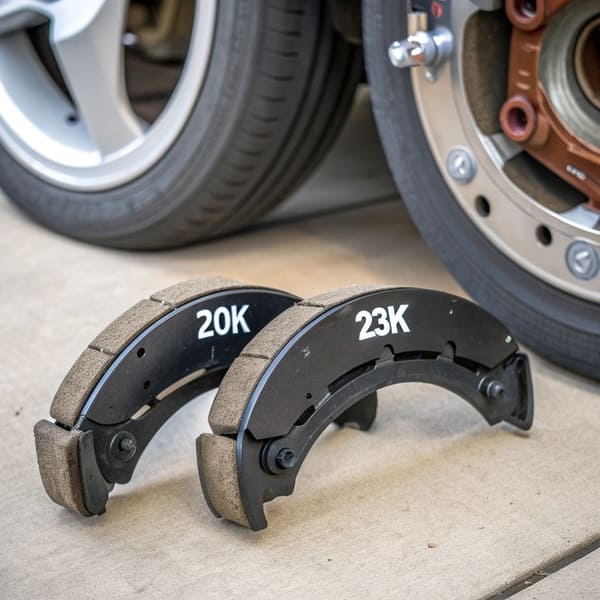
These numbers are not just for marketing; they represent a legal and engineering promise of performance under a specific load. Achieving a 23K rating is much more challenging than a 20K one, and it all comes down to the science of the friction material.
The Art of Material Formulation
Getting the friction material mix right is one of the hardest parts of our job. The formula can contain over a dozen different ingredients, including metallic fibers, graphite, and proprietary binders. To add these ingredients in the correct sequence, we have to stop the machine and open the mold. This brief exposure to air makes uniform cooling and pressing extremely difficult. I vividly remember my first major project for a client in Pakistan. The shoes we produced wore down a bit faster than our internal spec. I was nervous about their feedback, but the client loved them. They explained that their mountain routes required an aggressive initial 'bite' from the brakes. Our standard 'long-life' formula felt unresponsive to them. That experience taught me that the 'best' material isn't universal; it's about engineering for the specific application and driver feel.
Comparing Common Friction Ratings
| Rating | Max GAWR (lbs) | Typical Application | Performance Focus |
|---|---|---|---|
| 20K | 20,000 | Standard duty trailers, general freight | A good balance of performance and long service life |
| 23K | 23,000 | Heavy haul, tankers, logging, refuse trucks | Maximum stopping power and extreme resistance to heat fade |
Choosing 23K for a heavy application isn't just a small upgrade; it's a fundamental safety requirement.
Which Trucks and Trailers Are Compatible with These Brake Shoes?
Worried about ordering the wrong brake shoes for your fleet? A mismatch means downtime and wasted money. Let's clarify which applications use these common heavy-duty brake shoe sizes and types.
These heavy-duty brake shoes are compatible with most Class 8 trucks and standard semi-trailers using S-cam air brake systems11. Common sizes like 470712 and 4515 fit axles from manufacturers like Meritor, Dana, and Hendrickson, covering the vast majority of the North American trucking fleet.
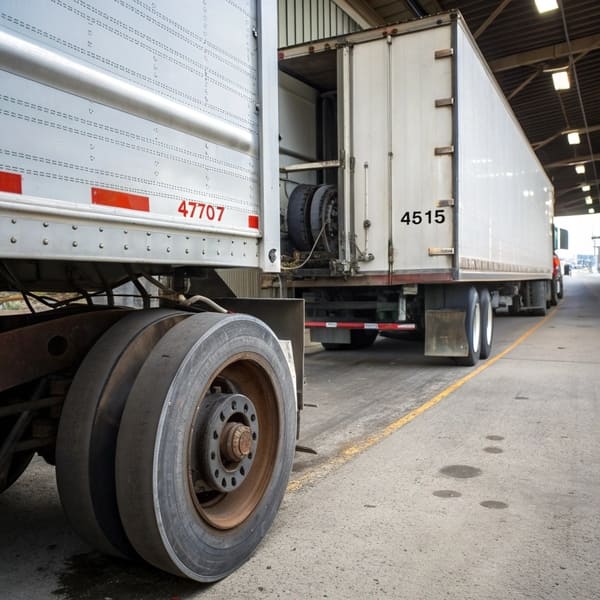
While there are common industry standards, ensuring true compatibility is essential for safety and performance. The vast majority of North American semi-trucks and trailers use an S-cam air brake system, which is our area of expertise. This is where our role as an OEM/ODM supplier13 becomes critical. We don't just sell a standard part off the shelf; we partner with clients to engineer a complete braking solution that matches their operational reality.
Focusing on S-Cam Brake Systems
The S-cam system is the undisputed workhorse of the heavy-duty trucking industry. It's a mechanically simple, robust design that uses an S-shaped cam to force the brake shoes against the drum. Our manufacturing process is built around creating shoes that fit perfectly within these systems. We work directly with clients to customize shoes for their specific fleets14. For example, a fleet operating in the Rocky Mountains faces long, steep grades and needs maximum fade resistance. A fleet in Florida might be more concerned with corrosion from salt air and humidity15. We can adjust the steel coating and friction material to optimize performance for either environment. This is the core of what we do.
Common Brake Shoe Compatibility Guide
| Brake Shoe Number | Brake Size | Common Axle Types | Typical Use Case |
|---|---|---|---|
| 470712 | 16.5" x 7" | Meritor, Dana (Drive Axles) | The most common shoe for Class 8 tractors. |
| 4515 | 16.5" x 7" | Meritor, Hendrickson (Trailer Axles) | The standard for most trailers like dry vans and flatbeds. |
| 4709 | 16.5" x 8.625" | Meritor, Dana (Drive Axles) | Used in heavy haul and other extreme duty trucks. |
Always confirm your axle's specific part number with us, but these three standards cover a huge portion of the vehicles we build for.
Conclusion
Choosing the right semi-truck brake shoe involves understanding manufacturing precision, friction ratings, and proper application. This ensures maximum safety, longevity, and value for your heavy-duty fleet's operations.
Understanding the causes of frequent replacements can help you reduce downtime and maintenance costs for your fleet. ↩
Learning about friction materials helps you choose brake shoes that last longer and perform better under stress. ↩
Proper heat dissipation prevents brake fade and extends the life of your braking system, ensuring safety. ↩
Knowing friction ratings ensures you select brake shoes that match your truck's load requirements and legal standards. ↩
Consistent stopping power is crucial for safety and operational reliability in heavy-duty trucking. ↩
Understanding material composition helps you select parts that withstand the toughest conditions. ↩
This process step ensures durability and prevents failures like drum cracking or uneven wear. ↩
Precision machinery guarantees the quality and safety of brake shoes for heavy-duty applications. ↩
These composites provide superior friction and durability, essential for heavy loads and long descents. ↩
GAWR helps you choose the right brake shoe for your truck's weight, ensuring compliance and safety. ↩
Understanding S-cam systems helps you ensure compatibility and optimal performance for your fleet. ↩
Knowing about the 4707 brake shoe helps you select the right part for common Class 8 tractors. ↩
Partnering with an OEM/ODM supplier ensures you get customized, high-quality braking solutions. ↩
Customization optimizes brake performance for unique operational environments and challenges. ↩
Learning about corrosion helps you choose coatings and materials that extend brake shoe life in harsh climates. ↩