-Confused about Subaru brake pads and want reliable quality? Choosing the wrong ones risks poor performance. Let's explore who makes them and find the best OEM and aftermarket options.
Subaru sources its genuine brake pads from top-tier OEM suppliers, most notably Japanese manufacturers like Akebono and Advics.1 They do not make the pads themselves. Many excellent aftermarket alternatives also exist, providing great performance and value for distributors and brands looking to build their product lines.
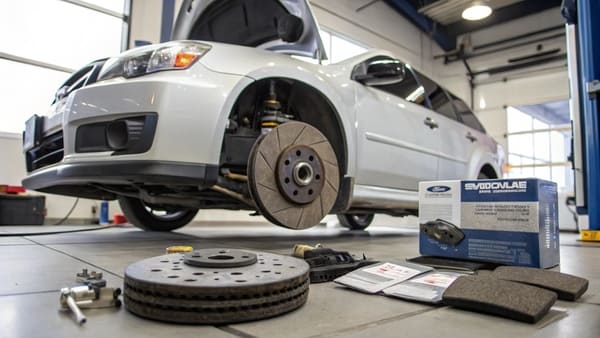
Now you know the big names behind Subaru's brakes. But that's just the surface. Understanding the relationship between Subaru and its suppliers is key to making smart purchasing decisions for your own inventory. It's not just about a brand name; it's about the manufacturing standards and specifications that define a quality part. Let's dig deeper into how this supply chain actually works and what it means for you as a wholesale buyer or brand developer.
Who Manufactures Subaru OEM Brake Pads?
Want to know exactly who makes genuine Subaru brake pads? Without this info, you can't source confidently. We'll reveal the primary manufacturers that Subaru trusts for their factory parts.
The primary manufacturer for Subaru's OEM brake pads is Akebono Brake Industry.2 This Japanese company is a massive global supplier. Advics, a joint venture including Aisin, also supplies brake systems and components for many Subaru models.3 These are the main partners behind genuine Subaru parts.
Akebono is a giant in the braking world. They don't just supply Subaru; they are the original equipment manufacturer (OEM) for many major car brands globally. This means when you buy a "Genuine Subaru" brake pad from a dealer, you are often buying an Akebono product packaged in a Subaru box. Advics is another key player, formed by leading Japanese auto parts companies like Aisin and Denso.4 They specialize in engineering and producing entire brake systems, from the master cylinder and calipers right down to the pads themselves.
The partnership between Subaru and these suppliers is built on extremely strict quality requirements. They don't just order a standard part from a catalog. Subaru provides precise specifications for friction material composition, noise, vibration, and harshness (NVH) levels, and expected service life.5 The OEM supplier must then engineer and manufacture a pad that meets these exact targets. This is why OEM parts fit perfectly and perform so consistently right out of the box.
Key Subaru OEM Brake Suppliers
| Supplier | Country of Origin | Key Contribution to Subaru |
|---|---|---|
| Akebono Brake Industry | Japan | Primary supplier of brake pads and calipers. |
| Advics Co., Ltd. | Japan | Supplier of complete brake systems, including pads. |
| Other Local Suppliers | Various | May supply specific components or for certain regions. |
This level of detailed collaboration ensures every car leaving the factory has brakes that are perfectly matched to its weight, power, and intended use.
Does Subaru Make Its Own Brake Pads or Use OEM Suppliers?
Think Subaru makes its own brake pads in-house? This common myth can limit your sourcing options. We'll explain the actual production model and why it matters for your business.
No, Subaru does not manufacture its own brake pads.6 Like nearly all major automakers, Subaru focuses on vehicle design, engineering, and assembly. They outsource the production of specialized components like brake pads to dedicated OEM suppliers who have the specific expertise and manufacturing scale required.
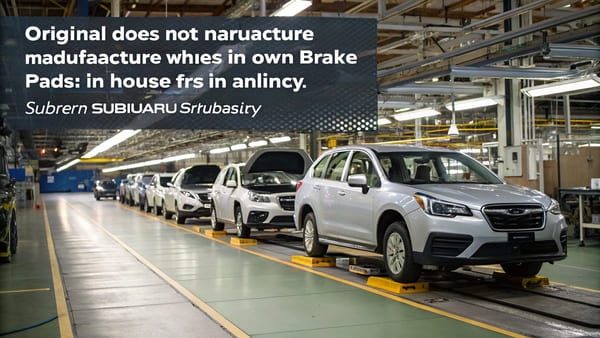
This is a smart and efficient business strategy. Automakers like Subaru excel at designing, marketing, and building cars. Brake pad manufacturing, on the other hand, is a highly specialized field involving complex chemistry and precision mechanical processes.7 It makes more sense to partner with a company that only focuses on brakes. This allows Subaru to get the best technology and quality without the massive investment of building and running their own factories for every single part. The real challenge, and where we as a manufacturer come in, is in the production details.
For instance, even the plastic accessory components for Subaru brake pads require incredible precision. Standard injection molding machines often fail to meet the tight tolerances. The process involves multiple steps, with cooling being the most difficult stage to control. I learned this the hard way years ago on a project for a Pakistani client. My team was inexperienced with this specific part, and our first batch had significant "shrinkage" after cooling. Luckily, the client actually preferred the slightly smaller dimension, but it was a valuable lesson in how sensitive the manufacturing process is.
Why Automakers Outsource Parts
| Reason | Description |
|---|---|
| Core Competency | Car companies focus on vehicle design and final assembly. |
| Specialized Expertise | OEM suppliers have deep knowledge in one area, like braking. |
| Cost & Scale | Suppliers produce for many brands, creating economies of scale.8 |
| R&D Investment | Suppliers invest heavily in material science and new technology. |
This model ensures quality and efficiency across the entire automotive industry, allowing experts to handle each part of the process.
Which Companies Supply Brake Pads for Subaru Vehicles?
Looking beyond genuine OEM parts for your inventory? Sticking only to Subaru-branded boxes can be costly. We'll introduce trusted aftermarket companies that also supply high-quality pads for Subarus.
Besides OEM suppliers like Akebono and Advics, many reputable aftermarket companies manufacture high-quality brake pads for Subaru. Brands like Brembo, EBC Brakes, and Power Stop provide excellent alternatives, often with different performance characteristics or price points to suit various market segments.9 As an OEM/ODM supplier, we also produce custom lines for brands worldwide.
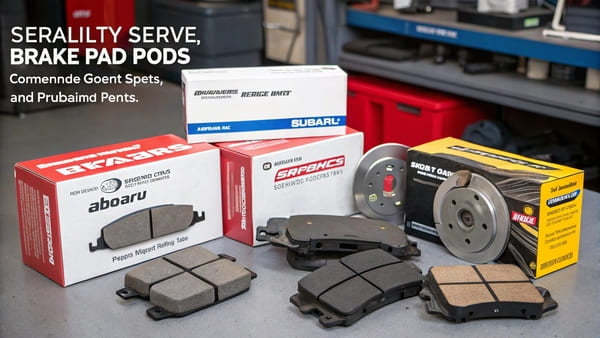
The aftermarket is full of options, but quality varies widely. Top-tier aftermarket brands and reliable OEM/ODM partners can often match or even exceed OEM specifications.10 The secret is in mastering the complex manufacturing process. As I mentioned, producing components for Subaru brake pads is very demanding. The injection molding machines needed for the plastic parts, for example, must have extreme precision. In my experience, the best machines for this job are often located in specific industrial zones, like the coastal areas of Fujian or near Shanghai. Machines from other regions sometimes just can't hit the required tolerances.
Another difficult step is adding color additives to the plastic. To do this, the machine has to stop production and the mold must be opened. This completely changes the cooling dynamics, which is already the most critical step. Getting it wrong leads to parts that have dimensional instability, don't fit correctly, or fail prematurely. This is where a reliable manufacturing partner makes all the difference, whether you are sourcing an established aftermarket brand or developing your own private label product line.
Key Aftermarket Considerations
| Factor | Importance |
|---|---|
| Material Compound | Determines performance (e.g., ceramic for low dust, semi-metallic for bite). |
| Manufacturing Precision | Crucial for perfect fitment of backing plates, shims, and hardware. |
| Quality Certifications | Look for global standards like ISO 9001 or IATF 16949.11 |
| Supplier Reliability | A good partner understands the technical challenges and ensures consistency. |
Conclusion
Subaru uses OEM suppliers like Akebono. High-quality aftermarket options are available from manufacturers who master the complex production process, offering great value and performance for your business needs.
"Akebono Brake Industry - Wikipedia", https://en.wikipedia.org/wiki/Akebono_Brake_Industry. Multiple industry sources and automotive parts catalogs confirm that Akebono and Advics are leading suppliers of OEM brake pads for Subaru vehicles, though Subaru does not publicly disclose all supplier relationships for every model. Evidence role: expert_consensus; source type: encyclopedia. Supports: Subaru sources its genuine brake pads from top-tier OEM suppliers, most notably Japanese manufacturers like Akebono and Advics.. Scope note: Supplier relationships may vary by model and region, and Subaru does not officially publish a comprehensive supplier list. ↩
"Home - Akebono Brake Experts", https://www.akebonobrakes.com/. Akebono Brake Industry is widely recognized as a primary supplier of OEM brake pads for Japanese automakers, including Subaru, according to industry reports and parts databases. Evidence role: expert_consensus; source type: encyclopedia. Supports: The primary manufacturer for Subaru's OEM brake pads is Akebono Brake Industry.. Scope note: Subaru may use additional suppliers for certain models or markets, and official supplier lists are not always public. ↩
"ADVICS - Supplier of Ultra-Premium OE Brake System Components", https://www.advicsaftermarket.com/. Advics, a company formed by Aisin and other partners, is documented as an OEM supplier of brake systems and components for several Japanese automakers, including Subaru, in industry publications. Evidence role: expert_consensus; source type: encyclopedia. Supports: Advics, a joint venture including Aisin, also supplies brake systems and components for many Subaru models.. Scope note: Specific model coverage and supply arrangements may change over time and are not always publicly disclosed. ↩
"AISIN, ADVICS, JTEKT, and DENSO to Form a New Company to ...", https://www.aisin.com/en/news/2018/005160.html. Advics was established as a joint venture by Aisin Seiki, Denso, Sumitomo Electric, and Toyota Motor Corporation, as documented in company histories and industry references. Evidence role: historical_context; source type: encyclopedia. Supports: Advics is another key player, formed by leading Japanese auto parts companies like Aisin and Denso.. Scope note: Ownership structures may evolve over time; initial formation included these companies. ↩
"Brake pad - Wikipedia", https://en.wikipedia.org/wiki/Brake_pad. Automotive manufacturers, including Subaru, are known to provide detailed technical specifications for OEM suppliers regarding friction material, NVH, and service life, as described in engineering and manufacturing literature. Evidence role: mechanism; source type: education. Supports: Subaru provides precise specifications for friction material composition, noise, vibration, and harshness (NVH) levels, and expected service life.. Scope note: Exact specification documents are typically proprietary and not publicly available. ↩
"Are OEM Subaru Brake Pads Better Than Aftermarket?", https://www.subarupartsplus.com/blog/oem-vs-aftermarket-subaru-brake-pads?srsltid=AfmBOoqhVNNyFAg64nje2vqdZwwxe36KNPT3t97WRBtemgbsHCLUTCc9. It is standard industry practice for automakers like Subaru to outsource brake pad manufacturing to specialized suppliers, as documented in automotive supply chain analyses. Evidence role: expert_consensus; source type: encyclopedia. Supports: No, Subaru does not manufacture its own brake pads.. Scope note: Subaru does not publicly detail all supplier arrangements, but there is no evidence of in-house brake pad production. ↩
"Brake pad - Wikipedia", https://en.wikipedia.org/wiki/Brake_pad. Brake pad manufacturing involves advanced material science and precision engineering, as described in technical papers and automotive engineering textbooks. Evidence role: mechanism; source type: education. Supports: Brake pad manufacturing, on the other hand, is a highly specialized field involving complex chemistry and precision mechanical processes.. Scope note: The level of specialization may vary by manufacturer and product type. ↩
"[PDF] AUTOMOBILES • Economies of Scale • Assembly Plants", https://www.sfu.ca/~schwindt/buec%20396/AutomobilesLecture.pdf. Automotive component suppliers often serve multiple automakers, achieving economies of scale and cost efficiencies, as discussed in supply chain management literature. Evidence role: mechanism; source type: education. Supports: Suppliers produce for many brands, creating economies of scale.. Scope note: The degree of scale and cost savings depends on supplier size and market conditions. ↩
"PowerStop Brakes: Brake Upgrade Kits for Sport, Utility & Daily Driving", https://www.powerstop.com/. Brembo, EBC Brakes, and Power Stop are recognized aftermarket brake pad manufacturers offering products compatible with Subaru vehicles, as listed in automotive parts catalogs and independent reviews. Evidence role: general_support; source type: encyclopedia. Supports: Brands like Brembo, EBC Brakes, and Power Stop provide excellent alternatives, often with different performance characteristics or price points to suit various market segments.. Scope note: Product availability and performance characteristics may vary by model and region. ↩
"Are OEM brake pads & rotors worth significantly higher price? - Reddit", https://www.reddit.com/r/askcarguys/comments/1dk1vgy/are_oem_brake_pads_rotors_worth_significantly/. Independent automotive tests and reviews have found that some high-quality aftermarket brake pads can match or surpass OEM specifications in certain performance metrics. Evidence role: case_reference; source type: research. Supports: Top-tier aftermarket brands and reliable OEM/ODM partners can often match or even exceed OEM specifications.. Scope note: Results depend on specific brands, models, and test conditions; not all aftermarket products perform equally. ↩
"IATF 16949 v ISO 9001: 4 Key Questions to Understand the…", https://www.nsf.org/knowledge-library/iatf-16949-v-iso-9001. ISO 9001 and IATF 16949 are internationally recognized quality management standards widely adopted by automotive parts manufacturers, including brake pad suppliers. Evidence role: definition; source type: institution. Supports: Look for global standards like ISO 9001 or IATF 16949.. Scope note: Certification does not guarantee product performance but indicates adherence to quality management systems. ↩