-Struggling to find genuine ceramic brake pads? You are paying a premium for a product that might be fake. Learning to spot the difference protects your investment and ensures safety.
To identify real ceramic brake pads, check for a smooth, fine-grained surface1, usually light gray or beige, with no visible metallic flakes. Also, verify your supplier's manufacturing capabilities, as producing them requires advanced machinery and precise process control2 that not all factories possess.
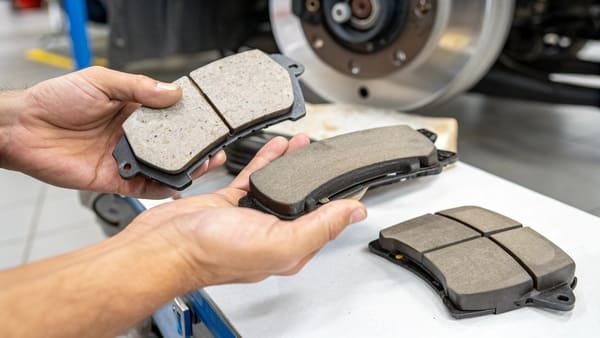
Making the right choice for brake pads is critical, not just for performance but for safety. It can feel overwhelming with so many options and so much misinformation out there. I want to help you understand what makes genuine ceramic pads special and how to make sure you're getting what you pay for. Let's dive deeper into the details so you can source your products with confidence.
What Are Ceramic Brake Pads and How Do They Differ from Other Types?
Confused by brake pad marketing terms? Choosing the wrong type can lead to noise, excessive dust, or poor performance. Let's clarify the key differences to help you decide.
Ceramic brake pads are made from dense ceramic fibers and non-ferrous fillers3. Unlike semi-metallic pads, they are quieter, produce less dust, and offer stable performance. They differ from organic pads by offering better heat resistance4 and a longer lifespan5, making them a premium choice.
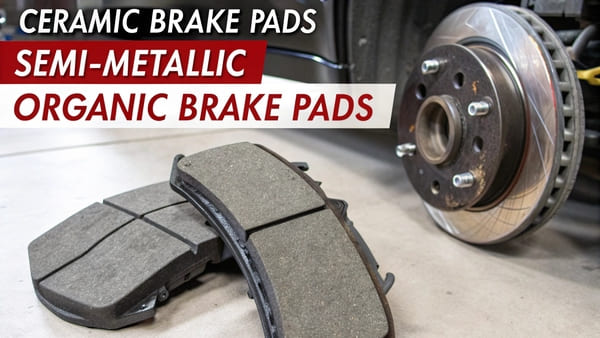
Understanding the materials is the first step to understanding performance. Brake pads are not all the same, and the material composition directly impacts how a vehicle stops, how much noise it makes, and how clean the wheels stay. As a manufacturer, we work with these materials every day, so I know their characteristics inside and out.
Brake Pad Material Comparison
Each type of brake pad is designed for different needs. Here is a simple breakdown to show you the main differences.
| Feature | Ceramic Pads | Semi-Metallic Pads | Organic Pads (NAO) |
|---|---|---|---|
| Key Materials | Ceramic fibers, non-ferrous fillers | Steel, copper, iron fibers | Glass, rubber, carbon, Kevlar |
| Braking Power | Good, consistent | Excellent, aggressive | Good for daily driving |
| Noise Level | Very Low | High | Very Low |
| Dust Level | Very Low | High | Low to Medium |
| Lifespan | Longest | Medium to Long | Shortest |
| Cost | High | Medium | Low |
Ceramic pads are the top choice for drivers who want quiet, clean, and consistent braking. Semi-metallic pads are great for heavy-duty use and performance driving where maximum stopping power is needed, but they come with more noise and dust. Organic pads are a good, quiet option for daily commuters but they wear out the fastest.
Why Are Ceramic Brake Pads More Expensive Than Semi-Metallic Pads?
Have you noticed the high price of ceramic brake pads? It can make you wonder if they are really worth the extra cost. Let's look at why they are more expensive.
The higher cost of ceramic brake pads is due to two main factors: expensive raw materials6 like ceramic fibers and a very complex manufacturing process. This process requires high-precision machinery7, especially for cooling and density control8, which most standard factories simply do not have.
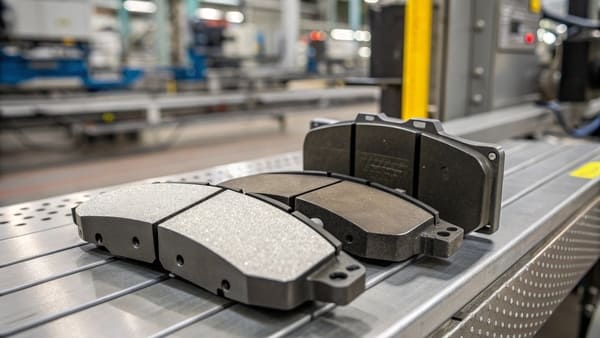
The price difference isn't just about marketing. It is rooted in the real-world challenges of making a high-quality ceramic brake pad. From my experience as a manufacturer, I can tell you that the production process is incredibly difficult to get right. It is not something that can be done with ordinary equipment. The investment in both materials and machinery is significant, and that is reflected in the final price.
The Challenge of Raw Material Formulation
The first major cost is the materials themselves. The recipe for ceramic brake pads must be perfect. It involves a precise mix of ceramic fibers, special fillers, and bonding agents. If the ratio is off by even a small amount, the performance of the pad will suffer. During production, we sometimes need to adjust the material mix. This requires stopping the machine and opening the mold, which can mess up the critical cooling stage9. This level of precision requires skilled technicians and adds to the overall production time and cost.
The Complexity of the Manufacturing Process
Producing a genuine ceramic brake pad involves at least three critical stages, but the most difficult is the cooling and shaping phase. During this step, we have to control the density of the pad very carefully. Standard equipment found in many factories, particularly some I have seen in regions like Hebei, just can't achieve the required precision. The pad won't have the right density or heat dissipation properties. This is why you'll find that the most reliable factories for this kind of work are located in areas like the Fujian coast or around Shanghai, where there is a history of high-precision manufacturing.
How Can You Quickly Identify Real Ceramic Brake Pads by Appearance?
Are you worried you might get fooled by a fake ceramic brake pad? It can be hard to tell them apart, but there are some visual clues you can look for.
To spot a real ceramic brake pad, look for a smooth, fine-grained surface1 that is usually a light gray or beige color10. It should not have any visible shiny metallic flakes. A genuine pad feels dense and solid, while fakes may look rough or contain obvious metal specks.
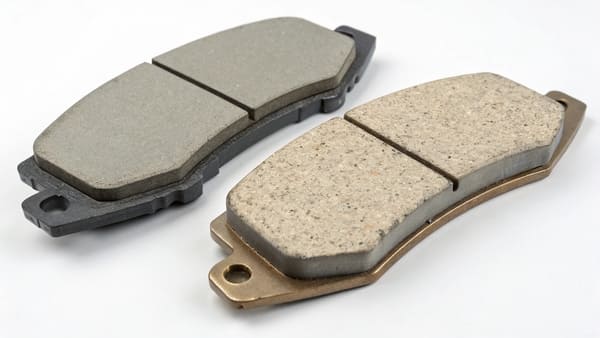
While you can't be 100% certain without lab testing, a quick visual inspection can help you filter out many low-quality fakes. As someone who oversees production, I know what to look for. Fake pads often use cheaper materials to cut costs, and these materials leave behind clues that you can see if you know what to look for. Let me share some of the things I check for myself.
Surface Texture and Color
First, look closely at the pad's friction material. A genuine ceramic brake pad has a very smooth and consistent surface. It looks and feels fine-grained, almost like a piece of polished stone. The color is also a good indicator. It's typically a light shade, like light gray, off-white, or beige. In contrast, semi-metallic pads are usually much darker, often dark gray or black, because of the high metal and carbon content. If a pad is marketed as ceramic but is very dark, you should be suspicious.
Checking for Metallic Flakes
The next thing to check for is metal. Real ceramic pads contain very little to no ferrous (iron-based) metal. Hold the pad up to a light and look for shiny specks. If you see visible metallic flakes glittering on the surface, it is almost certainly a semi-metallic pad or a cheap hybrid being sold as ceramic. These fakes are made by mixing in a lot of cheap metal fibers to give the pad some structure, but they won't give you the quiet, low-dust performance of a true ceramic pad.
A Personal Story about Quality Control
Early in my career, I had a project with a client from Pakistan. We were new to producing this specific type of pad, and to be honest, our process wasn't perfect yet. The final products showed some signs of uneven wear after use. I was worried, but surprisingly, the client was happy because it suited their specific market need. That experience was a lucky break, but it taught me a huge lesson about the importance of consistency. A genuine, high-quality ceramic brake pad should wear down evenly. Any signs of unevenness or premature crumbling are red flags that point to poor manufacturing, and you can't always count on luck.
Conclusion
Identifying genuine ceramic pads involves checking for a smooth, light-colored surface, understanding the high manufacturing costs, and, most importantly, partnering with a supplier you can trust11 to deliver quality.
Learning to spot this surface texture helps you avoid fakes and ensures you get the quiet, long-lasting performance you paid for. ↩
Understanding the need for advanced machinery helps you choose suppliers who can deliver authentic, high-quality ceramic brake pads. ↩
Knowing the materials used in genuine ceramic pads helps you distinguish them from lower-quality alternatives. ↩
Exploring this benefit helps you understand why ceramic pads last longer and perform better under stress. ↩
Learning about lifespan helps you make a cost-effective choice for your vehicle's maintenance. ↩
Understanding material costs explains the price difference and helps you spot genuine products. ↩
Knowing about the machinery involved helps you assess the credibility of your supplier. ↩
Understanding density control ensures you know what makes a pad safe and reliable. ↩
Learning about this stage helps you appreciate the complexity and quality control behind genuine pads. ↩
Recognizing the correct color helps you visually verify the pad's material and quality. ↩
A reliable supplier is key to consistently sourcing genuine, high-quality brake pads. ↩