-Are you struggling to find quality Tesla parts from China? You hear about the cost savings, but worry about the risks, leaving your project stuck and your investment at risk.
Yes, sourcing Tesla parts from China is safe if you partner with a high-precision manufacturer1. The key is to verify their specialized equipment2, their quality control for dimensional accuracy3, and their deep experience with Tesla's specific material requirements4. A true partner will have proven engineering capabilities5.
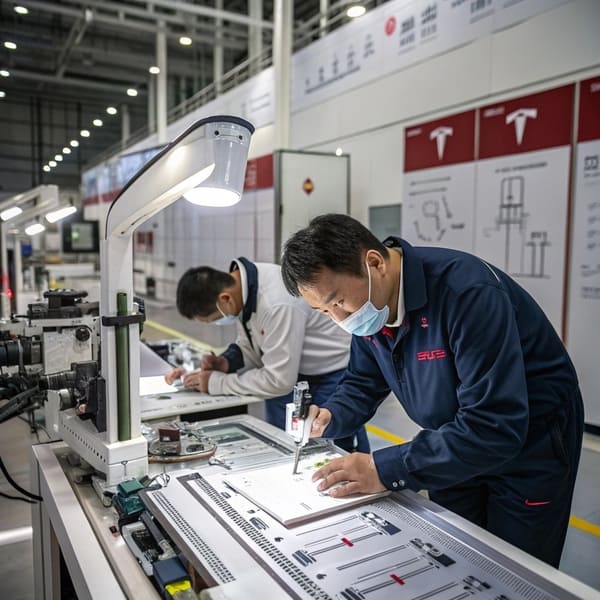
Finding the right supplier feels like searching for a needle in a haystack. The market is huge, and it's hard to know who you can trust. But it's not impossible. You just need to know what to look for and what questions to ask. I'm going to walk you through the process, step by step, so you can source with confidence. We'll explore why buyers are turning to China, how to spot a reliable factory, and the exact steps to verify their claims.
Why Are Global Buyers Searching for Tesla Parts Suppliers in China?
Your business needs a competitive edge in the Tesla aftermarket. Sticking only to local suppliers can mean higher costs and slower innovation, putting you at risk of falling behind competitors.
Buyers are searching for Tesla parts in China because of its massive manufacturing infrastructure6, significant cost advantages, and ability to produce at scale. The country has become a global hub for the automotive supply chain, with specialized regions dedicated to the high-precision engineering7 that Tesla parts demand.
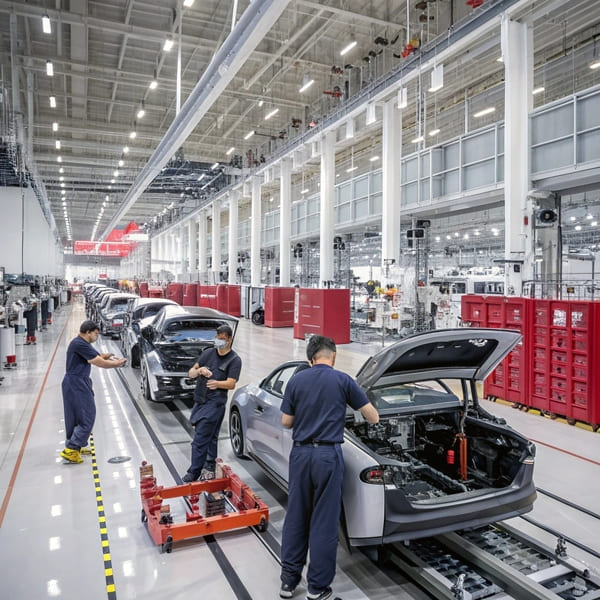
China's role as the "world's factory" gives it a huge advantage. For automotive parts, this isn't just about cheap labor anymore. It's about a complete ecosystem. You can find everything from raw material suppliers to mold makers to logistics experts all in one place. This concentration drives down costs and speeds up development time. More importantly, certain regions have become centers of excellence8. For high-precision work needed for Tesla components, factories in coastal areas like Fujian and around Shanghai have the advanced machinery9 and skilled operators. This specialization is a major draw for global buyers who need top-tier quality. They know that to get the right combination of price, speed, and technology, China's manufacturing hubs are often the best answer. This allows them to build competitive product lines for the fast-growing Tesla aftermarket.
Sourcing Location Comparison
| Factor | Sourcing from China | Sourcing from Other Regions |
|---|---|---|
| Cost | Generally lower due to scale and ecosystem | Often higher due to labor and overhead |
| Scale | Excellent for high-volume production | Can be limited for mass production |
| Supply Chain | Highly integrated and comprehensive | May be fragmented or less accessible |
| Specialization | Strong hubs for high-precision manufacturing | Expertise may be more scattered |
Are Chinese Tesla Parts Suppliers Legitimate and Reliable?
You've found a few potential Chinese suppliers, but you can't shake the fear of scams or poor quality. A bad partnership could mean receiving useless parts and losing your investment.
Yes, many Chinese suppliers are legitimate and highly reliable, but you must be selective. A trustworthy manufacturer has advanced machinery9, a multi-step quality control process10, and a deep understanding of material science. The best partners are not just assemblers; they are engineers who can solve complex problems.
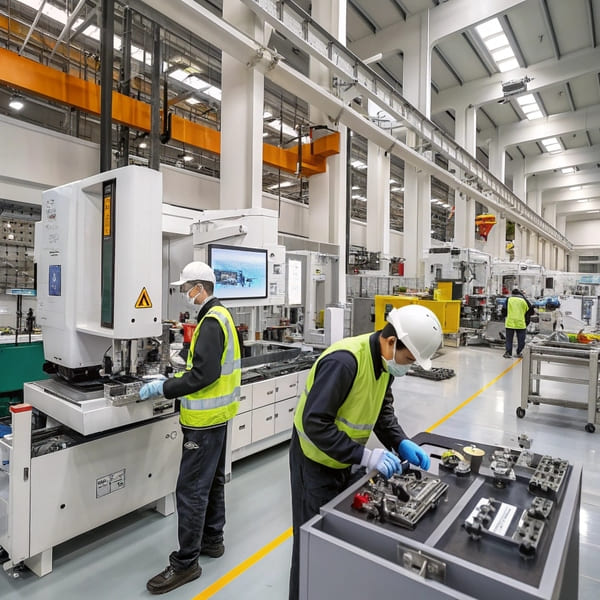
Making parts for a Tesla is not like making parts for a traditional car. The level of precision required is extremely high. Standard production equipment simply cannot achieve the stability and accuracy needed. A reliable factory knows this. They invest in high-precision machines, often found in the industrial zones near Shanghai or in Fujian province. Factories using older or less precise machines, like some you might find in Hebei, just can't meet the standard.
The manufacturing process itself is also very challenging. One of the hardest steps is precision molding11 and controlling the final dimensions. Another difficulty is matching the exact material and specifications. During production, we sometimes need to stop the machine to adjust parameters. This means opening the mold, which can easily ruin the part's accuracy. A reliable supplier has a process to manage this. They understand that every micron matters and have the systems in place to guarantee consistency.
How Can Buyers Verify a Tesla Parts Manufacturer in China?
You need a clear checklist to evaluate a potential supplier. Without a structured verification process, you are just guessing and hoping that you made the right choice for your business.
To verify a manufacturer, you should request technical documentation of their machinery, ask for case studies on similar projects12, and deeply discuss their quality control process for dimensional accuracy. A factory audit13, whether virtual or in-person, is the best final step to confirm their capabilities.
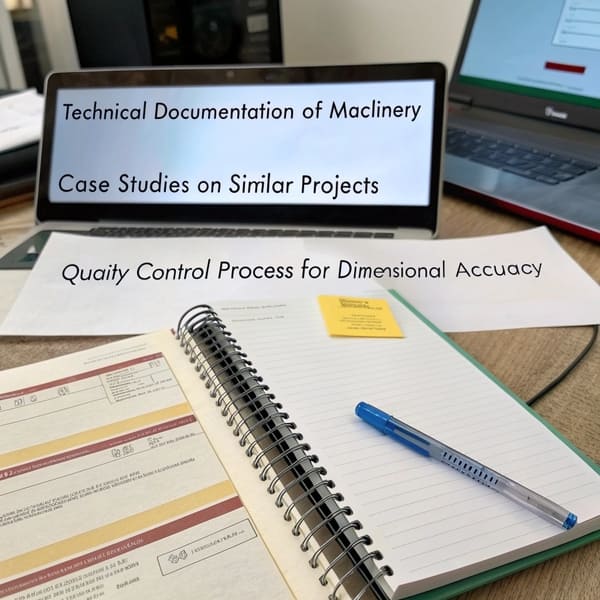
Verification is all about asking the right questions and demanding proof. First, get technical. Ask them to list their key equipment for precision molding11. Ask how they maintain dimensional accuracy when they have to stop a machine and open a mold for adjustments. A good supplier will have a clear, confident answer. A bad one will be vague.
Second, look at their history. I remember my first project for a Pakistani client. We were new to that specific Tesla part, and the first batch had a "fitment deviation14." The parts didn't line up perfectly. It was a stressful learning moment. We had to stop everything and recalibrate our entire process. That experience forced us to master precision control. We've never made that mistake again. A good supplier isn't afraid to talk about challenges they've overcome. Ask for case studies or examples of past work.
Finally, you need to see it for yourself. If you can't visit in person, schedule a live video tour.
Verification Checklist
| Verification Step | What to Look For | Red Flags |
|---|---|---|
| Technical Questions | Detailed answers on machinery and QC process. | Vague or evasive answers. |
| Review Past Work | Case studies, project portfolios, client references. | No proof of similar, complex projects. |
| Factory Audit (Virtual/In-person) | Clean, organized facility; documented QC stations. | Messy workspace; no visible quality checks. |
| Communication | Clear, professional, and timely responses. | Poor communication; language barriers. |
Conclusion
Sourcing Tesla parts from China is both safe and smart. Success depends entirely on finding a partner with proven technical expertise in high-precision manufacturing and a commitment to quality control.
Learn how high-precision manufacturers ensure the quality and safety of Tesla parts, helping you avoid costly mistakes and unreliable suppliers. ↩
Discover why specialized equipment is crucial for meeting Tesla's strict requirements and how it impacts the final product's performance. ↩
Understand the importance of dimensional accuracy and how robust quality control processes prevent fitment issues and failures. ↩
Explore Tesla's unique material standards to ensure your supplier can meet them, reducing the risk of part rejection or malfunction. ↩
Find out how to assess a supplier's engineering expertise to guarantee they can handle complex Tesla projects. ↩
See how China's manufacturing ecosystem offers cost, speed, and innovation advantages for Tesla aftermarket businesses. ↩
Learn why high-precision engineering is essential for Tesla parts and how it affects safety and performance. ↩
Identify the best regions in China for sourcing top-quality Tesla parts, ensuring you choose the right supplier. ↩
Discover the types of advanced machinery that set leading Chinese suppliers apart in Tesla parts production. ↩
Understand the layers of quality checks that ensure every Tesla part meets strict standards before delivery. ↩
Learn about the difficulties of precision molding and how overcoming them leads to better, more reliable parts. ↩
See how reviewing case studies helps you judge a supplier's experience and ability to deliver on complex requirements. ↩
Get a step-by-step guide to auditing a factory, ensuring your supplier meets all technical and quality requirements. ↩
Understand the risks of fitment deviation and how top suppliers address this issue to ensure perfect part alignment. ↩