-Are you worried about when to replace your car's brakes? Ignoring them is a safety risk, but changing them too early wastes money. This guide makes it simple.
The best time to change your brakes depends on wear, not just a fixed schedule. Look for warning signs like noise or a soft pedal1. For replacements, choose high-quality parts from a supplier who understands the complex manufacturing process2, because your safety depends on it.
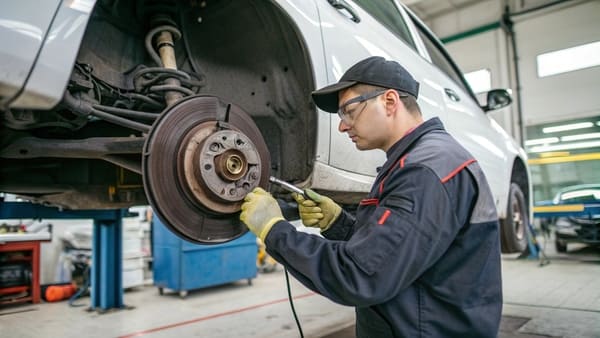
Understanding your car's brake system is crucial. It's not just about stopping; it's about stopping safely and reliably every single time. As someone who has spent years in the auto parts manufacturing business, I've seen firsthand how much detail goes into making a dependable brake part. It’s more complex than most people think. Let's break down what you really need to know to keep your vehicle safe and your maintenance costs reasonable. This information will help you make better decisions for your car.
How Often Should You Replace Brake Pads and Rotors in Different Driving Conditions?
Your friend who drives on the highway says his brakes last forever. But you live in the city and replace yours often. This difference can be confusing and costly.
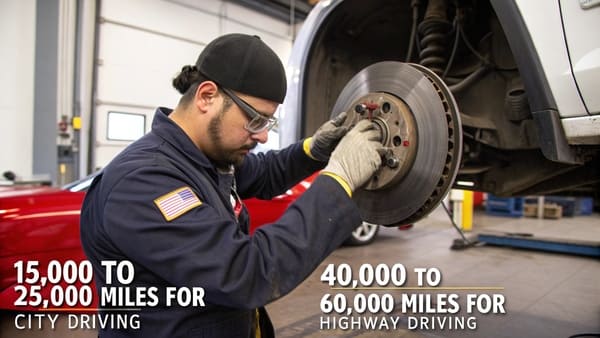
In heavy city traffic with lots of stop-and-go, you might need new brake pads every 15,000 to 25,000 miles3. For mostly highway driving, they can last 40,000 to 60,000 miles or more. Rotors usually last through two sets of pads.
Mileage Is Just a Guideline
Mileage gives you a rough idea, but it isn't the whole story. The way you drive and where you drive are much more important. Your car's brakes work by creating friction, which turns motion into heat. The more you use them, and the harder you use them, the faster they wear out. Let's look at how different environments impact your brakes.
| Driving Condition | Description | Impact on Brakes | Estimated Pad Lifespan |
|---|---|---|---|
| City Driving | Frequent stops, stop-and-go traffic, lower speeds. | High Wear. Constant braking generates a lot of heat and friction. | 15,000-25,000 miles |
| Highway Driving | Long distances at steady speeds with minimal braking. | Low Wear. Brakes are used infrequently and have time to cool. | 40,000-60,000+ miles |
| Aggressive/Towing | Hard braking, high speeds, carrying heavy loads. | Very High Wear. Extreme heat and pressure wear parts down quickly. | 10,000-20,000 miles |
City driving is the toughest on your brakes. Every traffic light and stop sign requires you to press the pedal, wearing down the pads. In contrast, highway driving is much easier on them. You might drive for an hour with only a few light taps on the brake. This is why a highway commuter's brakes last so much longer.
What Is the Average Lifespan of Brake Pads vs Brake Rotors?
Many people think you have to replace brake pads and rotors together every time. This can lead to unnecessary spending. Knowing their separate lifespans helps you save money without compromising safety.
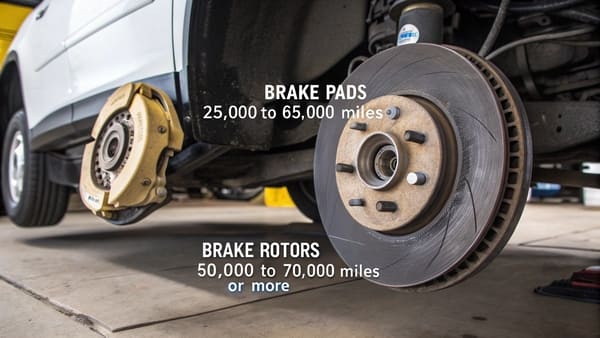
Brake pads are designed to wear out and typically last between 25,000 to 65,000 miles. Brake rotors are much tougher and often last 50,000 to 70,000 miles or more. You can often replace your pads two or three times before needing new rotors.
Why Do Pads Wear Faster Than Rotors?
It comes down to simple physics and material science. Brake pads are made of a softer friction material. Their job is to press against the hard, cast-iron brake rotor to create the friction needed to stop your car. The pads are the sacrificial part of the system, designed to wear down over time. The rotor, being much harder, is designed to withstand this friction for a longer period.
Think of it like a pencil and paper. The pencil lead (the brake pad) wears down as you write, while the paper (the brake rotor) lasts much longer.
The material of the brake pad also plays a huge role in how long both the pad and the rotor last. Here’s a quick comparison:
| Pad Material | Lifespan | Performance | Impact on Rotor |
|---|---|---|---|
| Organic | Shorter | Quiet, smooth | Gentle |
| Ceramic | Longer | Quiet, low dust | Gentle |
| Semi-Metallic | Long | Good in heat | Can wear rotors faster |
When you get your pads replaced, a good mechanic should always inspect the rotors4. They check for thickness, warping, and any deep grooves. If the rotor is still thick enough and in good condition, you don't need to replace it.
What Factors Affect How Quickly Your Brakes Wear Out?
Your brakes seem to wear out much faster than expected. You follow the mileage guides, but you're still at the repair shop. You start to wonder what else is going on.
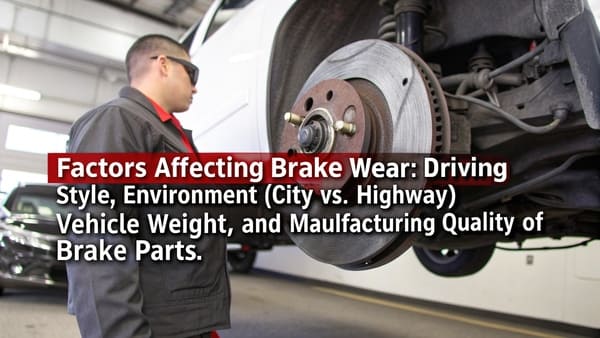
The biggest factors are your driving style5, the environment (city vs. highway), and the weight of your vehicle. However, a hidden factor is the manufacturing quality of the brake parts6 themselves. Low-quality parts simply won't last, no matter how you drive.
The Hidden Factor: Manufacturing Quality
Everyone knows that aggressive driving wears out brakes. Slamming on the pedal at the last second creates much more heat and wear than gentle, gradual braking. Driving in hilly areas or towing a trailer also puts a huge strain on the system. But there's a critical factor most drivers and even some distributors don't fully appreciate: the manufacturing process.
Making a good brake part is extremely difficult. It requires high-precision machinery and strict process control. A proper brake part needs to go through at least three critical manufacturing stages. The most difficult of these is the cooling and shaping process7. The machines that can do this with the required accuracy are not common. I've found that factories in coastal areas like Fujian or near Shanghai8 can often achieve this precision. In other regions, the equipment sometimes just isn't up to the task.
I learned this lesson the hard way. One of our first big brake part orders was for a client in Pakistan. We were still gaining experience. During production, adjusting the raw material formula9 requires stopping the machine and opening the mold, which makes the cooling process tricky. After our first run, the finished parts had "shrunk" more than we expected due to this cooling challenge. I was worried. But when we sent the samples, the client loved them. The slightly different dimensions worked perfectly for their specific application. We got lucky, but it was a powerful lesson. Since then, we have perfected our process to ensure absolute consistency. This experience showed me just how sensitive brake manufacturing is. A small deviation can change everything, which is why choosing a supplier with deep manufacturing knowledge is so important.
Conclusion
Regularly checking your brakes and understanding wear factors are key to vehicle safety. Most importantly, always choose high-quality replacement parts from a reliable source to ensure performance and longevity.
Learning to recognize these warning signs can help you avoid dangerous brake failures and unnecessary repair costs. ↩
Understanding the value of quality parts ensures your safety and helps you avoid frequent, costly replacements. ↩
Knowing the right replacement interval for city driving can help you plan maintenance and avoid unexpected brake issues. ↩
Ensuring proper inspection prevents missed safety issues and unnecessary expenses. ↩
Learning this can help you adopt habits that extend the life of your brakes and save money. ↩
Choosing well-made parts is essential for safety and long-term cost savings. ↩
Understanding this process highlights why not all brake parts are created equal. ↩
This insight helps you identify reliable sources for quality brake components. ↩
Knowing this can help you appreciate the complexity behind reliable brake parts and make better purchasing decisions. ↩