-Choosing the right brake pads for your product line is a critical decision. Making the wrong choice can lead to poor performance, unhappy customers, and wasted inventory for your business.
The "better" brake pad depends entirely on the target application. Semi-metallic pads1 are ideal for performance, heavy-duty use, and cost-effectiveness due to their strong bite and heat management2. Ceramic pads3 excel in daily driving, offering quiet operation4, low dust5, and consistent, smooth braking performance.
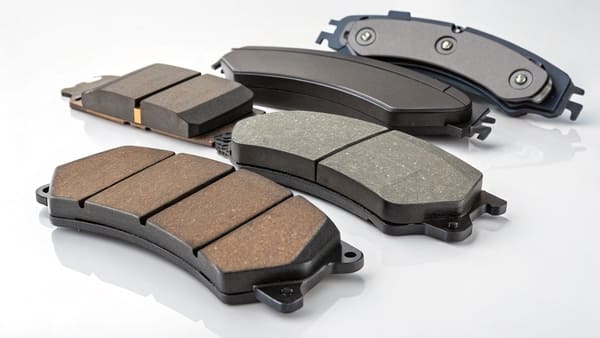
Deciding between these two isn't just about the end-user; it's about your business goals. Whether you're supplying to performance shops, general auto parts distributors, or brands focused on luxury comfort6, the material you choose defines your product's appeal and market position. As a manufacturer, I've seen how this choice impacts everything from production costs7 to customer satisfaction. Let's dig into the details to help you make the best sourcing decision.
What Are the Key Differences Between Semi-Metallic and Ceramic Brake Pads?
You see "semi-metallic" and "ceramic" on spec sheets, but they just look like brake pads. Not knowing the real material differences makes it hard to source the right product.
Semi-metallic pads1 contain 30-65% metal fibers like steel and copper, making them durable and excellent at dissipating heat. Ceramic pads3 use dense ceramic fibers and non-ferrous fillers, which makes them quieter, cleaner, and more resistant to wear under normal driving conditions.
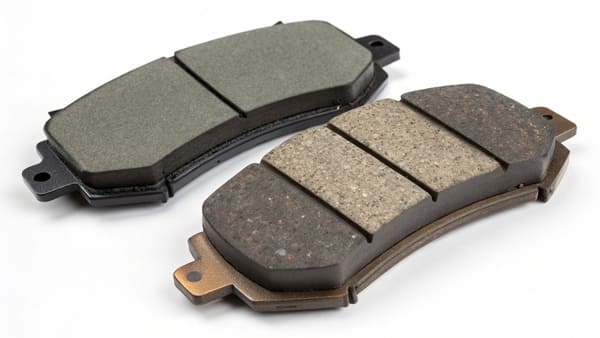
The manufacturing process for these pads is incredibly complex. Standard equipment often can't meet the required precision and performance standards. Proper production involves at least three key stages, with the cooling and shaping phase being the most difficult. High-precision machines, typically found in the coastal areas of Fujian or around Shanghai, are necessary for this. Machines from other regions, like Hebei, often lack the required accuracy. Another major challenge is managing the raw material ratio8. The machine has to be stopped to adjust the formula, and the mold has to be opened. This makes the cooling process tricky. I remember my first time producing these for a client from Pakistan. We were still learning, and the pads had a noticeable "shrinkage" after cooling. Luckily, the client actually preferred this result, and we haven't had an issue since.
| Feature | Semi-Metallic Brake Pads | Ceramic Brake Pads |
|---|---|---|
| Composition | 30-65% metal (steel, iron, copper), graphite, fillers | Ceramic fibers, non-ferrous fillers, bonding agents |
| Manufacturing | Less sensitive to formula changes during production | Requires high precision, especially during cooling |
| Target Market | Performance, towing, heavy vehicles, budget-conscious | Daily driving, luxury vehicles, clean-conscious users |
| Production Cost | Generally lower | Generally higher |
Which Brake Pad Type Delivers Better Stopping Power and Heat Resistance?
Your customers demand reliable stopping power, especially under heavy use. Brake fade from poor heat management2 is dangerous and can quickly lead to terrible reviews for your brand.
Semi-metallic pads1 offer superior initial "bite" and perform better in both cold and extremely hot conditions. They manage high heat exceptionally well by transferring it away from the rotor, making them ideal for performance driving, towing, and heavy vehicles where brake fade9 is a concern.
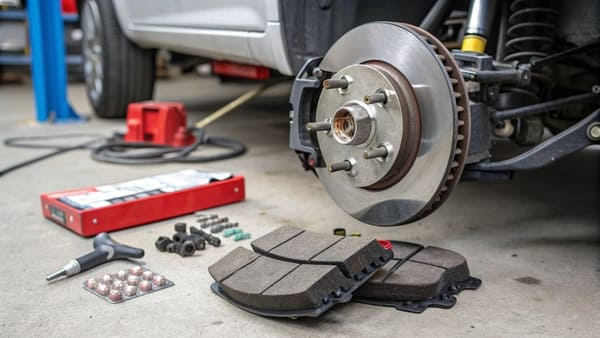
"Brake fade" happens when pads get too hot and lose their ability to create friction. This is a critical safety factor. Semi-metallic pads1 fight this well because the metal in them acts like a heatsink, pulling heat away from the rotor surface. This keeps the braking system effective even after repeated hard stops. Ceramic pads3, while very stable across a wide range of temperatures, have an upper limit. They are fantastic for everyday use but can't handle the extreme heat of a race track or a long mountain descent with a heavy load as effectively as semi-metallics. The "bite," or how quickly the brakes grab, is also different. Semi-metallics have an aggressive initial bite, which many drivers prefer for a connected feel. Ceramics are smoother and more progressive, which suits luxury and comfort-oriented vehicles.
| Performance Metric | Semi-Metallic Brake Pads | Ceramic Brake Pads |
|---|---|---|
| Initial Bite | Strong and aggressive | Smooth and progressive |
| High-Temp Performance | Excellent, superior heat dissipation | Good, but can fade under extreme abuse |
| Cold Performance | Excellent, effective immediately | Good, may require slight warming for optimal bite |
| Fade Resistance | Superior due to heat conductivity | Very good for normal use, but has a lower thermal limit |
Are Ceramic Brake Pads Really Quieter and Cleaner Than Semi-Metallic?
End-users constantly complain about two things: squealing brakes and wheels covered in black dust. These common issues can easily tarnish your brand's reputation for quality and refinement.
Yes, ceramic brake pads are significantly quieter and produce far less visible dust. The ceramic compound creates friction at a frequency outside the range of human hearing. The light-colored, fine dust they generate does not stick to wheels like the black, metallic dust from semi-metallic pads.
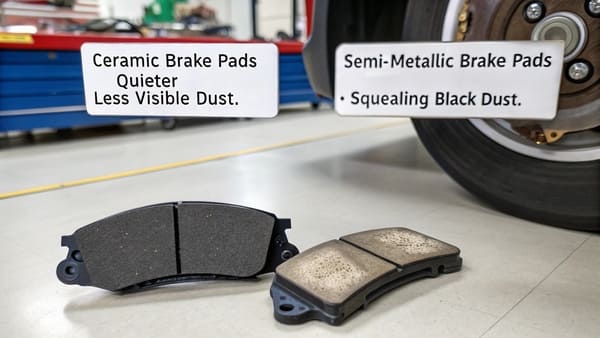
The science behind the noise is simple. Semi-metallic pads1 create noise because of the metal-on-metal friction against the brake rotor. It's a vibration that we hear as a squeal or grind. Ceramic pads3 are made from a much denser, smoother material that dampens these vibrations effectively. The noise they produce is at a much higher frequency, so we simply don't hear it. The dust issue is just as clear. Semi-metallic pads1 shed dark, heavy particles that are abrasive and can even corrode the finish on alloy wheels if not cleaned off. Ceramic pads3 produce a very fine, light-colored dust that is much less noticeable and doesn't bond to the wheel surface. A final point is rotor wear10. The abrasive nature of semi-metallic pads11 wears down brake rotors faster. Ceramic pads3 are much gentler, which can extend the life of the rotors and be a great selling point for customers looking for lower long-term maintenance costs.
| Characteristic | Semi-Metallic Brake Pads | Ceramic Brake Pads |
|---|---|---|
| Noise Level | More prone to noise (squeal, grind) | Extremely quiet |
| Dust Amount | Moderate to high | Very low |
| Dust Type | Dark, heavy, sticks to wheels | Light-colored, fine, easy to clean |
| Rotor Wear | More abrasive, higher rotor wear10 | Less abrasive, longer rotor life |
Conclusion
The best brake pad depends on your target market. Choose semi-metallic for performance and cost-effectiveness, and ceramic for a quiet, clean, premium daily driving experience. Partner with an experienced manufacturer.
Learn why semi-metallic pads are preferred for performance and heavy-duty vehicles, helping you make informed sourcing decisions. ↩
Understanding heat management helps prevent brake fade and ensures safety, crucial for product reliability and customer satisfaction. ↩
Discover the benefits of ceramic pads for quiet, clean, and smooth braking, which can enhance your product line's appeal. ↩
Explore how quiet operation can improve customer satisfaction and reduce complaints about brake noise. ↩
Reducing brake dust keeps wheels cleaner and appeals to customers seeking low-maintenance solutions. ↩
Find out how ceramic pads enhance the driving experience for premium and comfort-oriented vehicle brands. ↩
Comparing production costs helps you make strategic decisions for your product line and maximize profitability. ↩
Understanding this helps you avoid production issues and maintain consistent product quality. ↩
Preventing brake fade is vital for safety and performance, especially in demanding driving conditions. ↩
Minimizing rotor wear can lower maintenance costs and increase customer satisfaction with your products. ↩
Understanding this helps you balance performance with long-term maintenance considerations for your customers. ↩