-Finding the right brake pads for your market is tough. A wrong choice can hurt your brand and your profits. This guide will help you choose the right partner and product.
The best brake pad manufacturer focuses on precision engineering1, especially in material formulation2 and the cooling process3. The best brake pad type for your business depends entirely on your target market’s specific needs, balancing performance, durability, quietness, and cost.
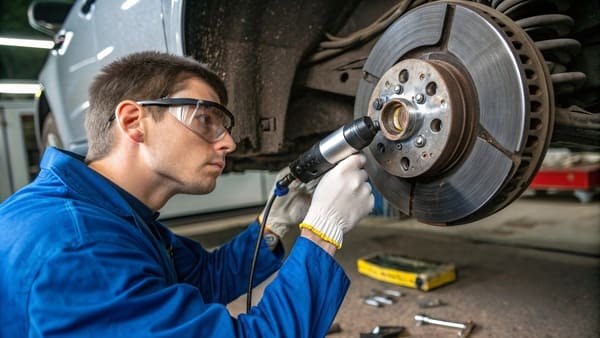
Choosing a supplier for something as critical as brake pads feels like a huge responsibility. You're not just buying a part; you're buying safety and reliability for your customers. A good decision can build your brand for years, while a bad one can cause problems you don't need. I've been through this process many times, and I've learned that understanding what goes on behind the factory doors is the key. Let's walk through what really matters so you can make a confident choice for your business.
What Does a Professional Brake Pad Manufacturer Actually Produce?
You might think all brake pad factories are the same. But many cut corners on machinery and testing, which leads to inconsistent and unsafe products for your customers.
A professional brake pad manufacturer produces a complete, reliable system. This includes formulating the friction material4, manufacturing the backing plates5, bonding the components under pressure and heat, and performing rigorous quality control tests6 for safety, consistency, and performance.
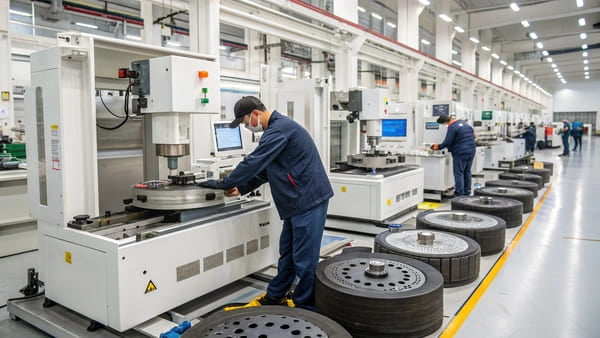
When we talk about producing brake pads, we're not just pressing some material into a shape. The process is incredibly complex and requires a high level of precision that many factories simply can't achieve. A true professional manufacturer controls the entire journey. It starts with the raw materials. The friction formula is like a secret recipe, and getting the mix of fibers, fillers, and binders exactly right is critical. Then there's the backing plate, which needs to be perfectly flat and strong. The two parts are bonded together with special adhesives under immense heat and pressure.
But the most difficult step is the cooling and shaping process. The machinery for this has to be incredibly precise. In my experience, the best machines for this job are often found in factories in coastal regions like Fujian or near Shanghai. Machines from other areas sometimes lack the required precision. This single step determines the final density and stability of the pad. If it’s not done right, the pad won't perform consistently. This is what separates a top-tier OEM supplier7 from a low-cost, low-quality factory.
What Are the Main Types of Brake Pads and How Do They Compare?
The market is full of different brake pad types, and the terms can be confusing. If you choose a type that doesn't fit your customers' cars or driving habits, you'll end up with complaints.
The three main types of brake pads are organic, semi-metallic, and ceramic. Organic pads are quiet and affordable. Semi-metallic pads provide excellent stopping power8 and heat management. Ceramic pads offer a clean, quiet, and long-lasting premium experience.
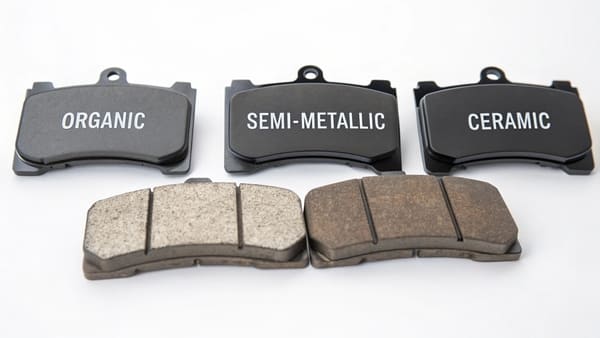
Each brake pad material is designed for a specific purpose, and understanding the differences is key to stocking the right products for your customers. It's not about which one is "best" overall, but which one is "best" for a particular car, driver, and budget. For example, a daily commuter car doesn't need the same stopping power8 as a heavy-duty truck. I always advise my clients to think about their end-user first. Providing a clear comparison helps them make smarter inventory decisions. Here is a simple breakdown to help you see how they stack up against each other.
| Material Type | Pros | Cons | Best For |
|---|---|---|---|
| Organic (NAO) | - Very quiet<br>- Low dust<br>- Gentle on rotors<br>- Inexpensive | - Wears out faster<br>- Lower performance<br>- Can fade under high heat | Daily-driving passenger cars in non-demanding environments. |
| Semi-Metallic | - Excellent stopping power8<br>- Great heat dissipation9<br>- Durable and long-lasting | - Can be noisy<br>- Produces more dust<br>- Harsher on brake rotors | Trucks, SUVs, performance cars, and commercial vehicles. |
| Ceramic | - Extremely quiet<br>- Very low, light-colored dust<br>- Stable over a wide temperature range<br>- Long lifespan | - Most expensive<br>- Less effective in extreme cold<br>- Good, but not the absolute best for heavy-duty stopping | Luxury cars, high-end sedans, and drivers who prioritize clean wheels and quiet operation. |
Which Brake Pad Material Is Best for Different Markets and Applications?
You know the types, but now you have to decide which ones to order. Stocking the wrong inventory is a costly mistake that ties up your capital and slows down your business growth.
For price-sensitive markets or standard daily driving, organic pads10 are a solid choice. For markets that value performance or use heavy-duty vehicles, semi-metallic is essential. For premium markets where quietness and cleanliness are top priorities, ceramic pads11 are the best option.
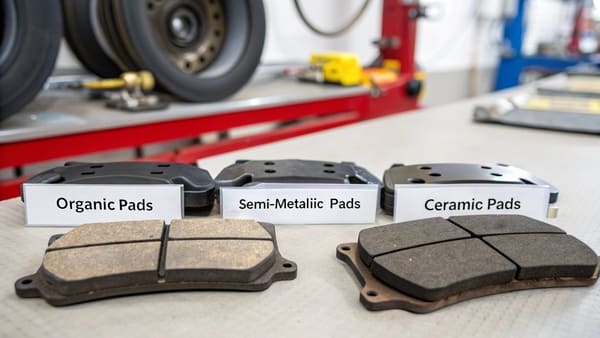
Matching the product to the market is where a good manufacturing partner proves their worth. One of the most difficult parts of making brake pads is getting the material formula right. When you adjust the raw materials, you have to stop the machine and open the mold, which makes the critical cooling process3 very tricky.
I learned this the hard way. On my first big brake pad project, for a client in Pakistan, I was still gaining experience. I miscalculated the cooling process3, and the friction material4 "shrank" more than we expected. I was very worried we had ruined the whole batch. To my surprise, the client loved them. The slightly denser pads performed better in their local hot climate and heavy traffic conditions. It was a lucky mistake, but it taught me a priceless lesson: a "perfect" spec on paper isn't always perfect for every real-world market. This is why we now work closely with clients to customize formulas for their specific regions.
For Everyday Commuter Markets
In markets like North America and much of Europe, many drivers use their cars for commuting. They value a quiet, smooth ride and don't want to see black dust on their wheels12. For this segment, Ceramic pads are often the top choice for the premium end, while modern Non-Asbestos Organic (NAO) pads serve the budget-friendly and standard replacement market very well.
For Performance and Heavy-Use Markets
For customers who drive trucks, tow trailers, or simply love performance driving, heat is the enemy. You need a pad that can bite hard and not fade. Semi-metallic pads are the clear winner here. Their metal content, often a mix of steel and copper fibers, pulls heat away from the rotor, providing consistent stopping power8 under load. This is the go-to choice for the global truck, SUV, and performance aftermarket.
For Price-Sensitive and Developing Markets
In many parts of South Asia, Africa, and South America, vehicles often face demanding conditions like rough roads and heavy loads13, but cost is a major factor. Here, a robust Semi-metallic pad offers the best balance of durability and price. High-quality Organic (NAO) pads can also be a strong option if they are formulated for durability, providing a reliable and affordable solution for the massive small passenger car segment.
Conclusion
Choosing the right manufacturer is about their precision and process. Choosing the right brake pad is about deeply understanding your market. We are here to help you succeed in both.
Understanding precision engineering helps you evaluate manufacturers who prioritize safety, consistency, and high-quality brake pads. ↩
Material formulation directly impacts brake pad performance, durability, and safety—key factors for your business reputation. ↩
The cooling process determines the final density and stability of brake pads, influencing their reliability and lifespan. ↩
Friction material is the core of brake pad function; learning about it helps you choose products that meet your market's needs. ↩
Backing plates ensure brake pad strength and fit, which are crucial for safety and consistent performance. ↩
Quality control tests guarantee that brake pads meet safety and performance standards, protecting your brand and customers. ↩
Partnering with a reputable OEM supplier ensures consistent quality and reliability, strengthening your brand's reputation. ↩
Stopping power is critical for safety—learn how to select pads that deliver reliable braking for your customers. ↩
Effective heat dissipation prevents brake fade and ensures consistent stopping power, especially for heavy-duty vehicles. ↩
Organic pads are affordable and quiet, making them ideal for standard markets—learn if they're right for your inventory. ↩
Ceramic pads provide a premium, quiet, and clean braking experience—discover if they suit your high-end customers. ↩
Low-dust pads keep wheels cleaner, which is a top priority for many drivers, especially in premium markets. ↩
Choosing the right pads for tough environments prevents premature wear and ensures customer satisfaction in developing markets. ↩