-Struggling to pick between RockAuto and PartsGeek? You worry the cheaper part might fail, costing you more in the long run. The real solution is defining your strategy first.
The choice between RockAuto and PartsGeek isn't just about price. It’s about your strategy. First, decide if you need a budget part for an old car, a reliable daily driver component, or a performance upgrade. This decision points you to the right brand, not the right website.
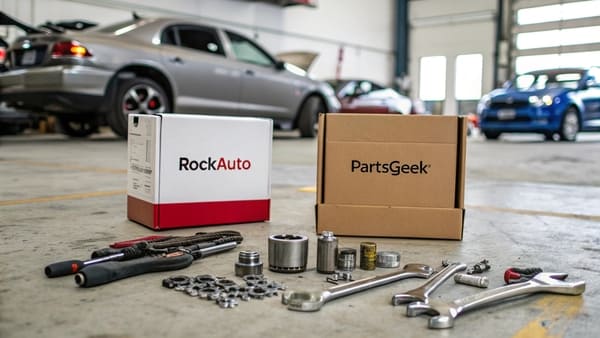
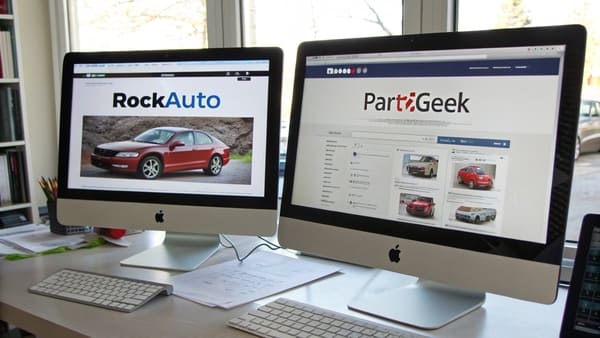
It’s easy to get lost comparing two websites. You open a tab for RockAuto, another for PartsGeek, and start searching for the same part. The prices are often close, but sometimes one is clearly cheaper. You start to wonder what the catch is. But the truth is, you're starting at the end of the process. The real work happens long before that part is listed online, and understanding that is the key to making the right choice every single time.
Are RockAuto and PartsGeek Actually Different, or Just Selling the Same Brands?
You see the same brand names on both sites and think they're identical. This makes the choice feel random and confusing. In reality, their business models and inventory depth are different.
Yes, they often sell the same major brands, but their inventory focus differs. One might stock more of a brand's "economy" line, while the other focuses on the "OEM-quality" line. Their sourcing and stock levels for your specific vehicle can vary significantly.
When I manufacture parts for a major brand, we don't just make one version. Brands often have multiple product tiers to hit different price points. They might have a premium line with the best materials and a budget line that meets minimum standards but costs less to produce. This is where the difference between retailers begins.
The Illusion of Identical Inventory
Just because both sites list a "Bosch" oxygen sensor doesn't mean it's the same situation. RockAuto is famous for its massive catalog, which includes everything from "Economy" to "Daily Driver" to "Premium" tiers.1 They are also masters of "closeouts," buying up old or overstocked inventory from distributors at a huge discount. PartsGeek tends to have a more streamlined catalog, often focusing on the most popular, high-turnover parts that fit the majority of modern cars.2 So, while both sell Bosch, RockAuto might have three different Bosch sensors for your car at three different prices, while PartsGeek only stocks the one that sells the most.
How Retailers Source Their Parts
Neither RockAuto nor PartsGeek buys parts directly from a factory like mine. They buy from massive, national distributors.3 These distributors are the middlemen who hold millions of parts in warehouses across the country. The price a retailer pays is based on volume.
| Factor | RockAuto's Approach | PartsGeek's Approach |
|---|---|---|
| Inventory Strategy | Extremely broad, includes many quality tiers and closeout parts. | More focused on popular, fast-moving parts and OEM-equivalents. |
| Sourcing Power | Massive volume buying gives them leverage on pricing for specific lines. | Strong relationships with distributors for reliable stock of popular items. |
| Target Customer | DIY enthusiasts, mechanics, owners of older or obscure vehicles. | General DIY car owners looking for standard replacement parts. |
This difference in sourcing and strategy means that for one part, RockAuto might have the better deal, while for another, PartsGeek has the better availability or price. They are not just two windows into the same warehouse.
Is the Real Risk Buying from the Wrong Website or Choosing the Wrong Brand?
You find a super cheap part and feel a mix of excitement and fear. A failed component could mean a breakdown and a huge repair bill, wiping out any savings. The website is rarely the problem.
The real risk is almost always choosing the wrong brand. Both RockAuto and PartsGeek are legitimate sellers. A poorly made part from an unknown brand will cause problems no matter where you buy it.4 Your priority should be brand reputation, not the storefront.
I've learned this lesson from the factory floor. Manufacturing auto parts is incredibly difficult. The precision required is on another level compared to general consumer goods.5 When a brand contracts my factory, they provide exact specifications, from the type of polymer in an injection-molded part to the precise alloy in a metal component. This is the quality you pay for.
The Manufacturing Gauntlet
Making something as simple as a plastic engine cover is a multi-step process. The most critical and difficult step is cooling. If the part cools too quickly or unevenly, it can warp or shrink.6 The high-precision injection molding machines that can handle this are specialized. Early in my career, I took on a project for a Pakistani client. We were still learning, and the plastic parts we made experienced some "shrinkage" after cooling. They ended up slightly smaller than the spec. Luckily, the client actually preferred the tighter fit, and it turned into a happy accident. But it taught me a valuable lesson: a tiny mistake in the cooling process can ruin an entire batch.
Why a "Brand" Matters
A no-name, white-box brand is a huge gamble. They are likely produced by a factory that won the contract by being the absolute cheapest.7 This often means cutting corners on material quality, skipping quality control steps, or using older machines that can't hold tight tolerances. That part that shrank in my factory? A cheap manufacturer might not have even noticed and shipped it anyway, leaving you with a part that doesn't fit.
| Aspect | Reputable Brand (e.g., Gates, SKF) | Unknown "White-Box" Brand |
|---|---|---|
| Manufacturing | Follows strict OEM specifications and quality control. | Often the lowest bidder, leading to inconsistent quality. |
| Materials | Uses specified, tested materials for durability and fit. | May use cheaper materials that wear out or fail quickly. |
| Fitment Guarantee | Engineered to fit and function like the original part. | High risk of poor fitment, requiring modification or return. |
| Support | Backed by a clear warranty and customer support. | Warranty is often non-existent or impossible to claim. |
Choosing a brand with a reputation to protect is your best insurance policy.8 They have a vested interest in making sure factories like mine get it right every single time.
Why Do the Same Auto Parts Cost Different Prices on RockAuto and PartsGeek?
You've found it: the exact same part number from the same brand, but the price is $10 cheaper on one site. This feels suspicious. Is one of them fake? The answer lies in business logistics, not the part itself.
When the brand and part number are identical, price differences come from business operations. This includes bulk purchase discounts, warehousing costs, shipping logistics, and current promotions.9 The physical part you receive is exactly the same.10
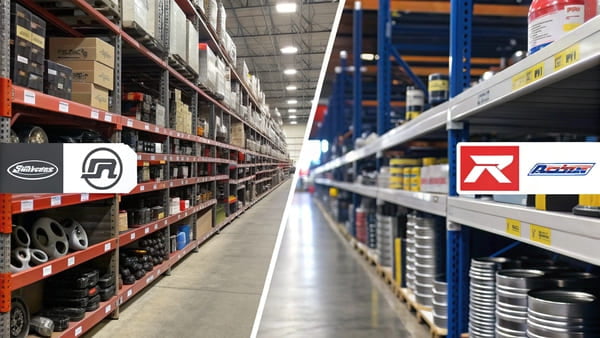
As a supplier, I see how these dynamics play out. The price I sell a part for depends heavily on the volume of the order. A client who orders 100,000 units gets a much better price per unit than one who orders 5,000. The same principle applies to the distributors who sell to RockAuto and PartsGeek.
The Power of Bulk Buying and Logistics
The biggest factor is purchasing volume. If RockAuto commits to buying 50,000 brake rotors from a distributor, they'll get a better price than a competitor who only buys 5,000. They can then pass some of that savings to you. Furthermore, their overhead costs differ. A warehouse located in a rural area has lower operating costs than one near a major city, which also influences the final price. RockAuto's model often involves shipping from multiple warehouses, which can sometimes add complexity but allows them to optimize inventory and costs on a massive scale.11
The Closeout and Liquidation Factor
Another huge piece of the puzzle, especially with RockAuto, is their strategy of buying closeout inventory. When a brand updates a part or a distributor is overstocked, they need to clear out the old inventory. RockAuto specializes in buying this stock for pennies on the dollar. This is why you can sometimes find an OEM-quality part for an older car at an unbelievably low price. It's not a fake or a lower-quality version. It's simply old stock that the retailer acquired through a very smart purchasing strategy. PartsGeek's model is generally more focused on maintaining a steady supply of current, popular parts rather than hunting for liquidation deals.12 This leads to more stable but sometimes slightly higher pricing.
Conclusion
Stop focusing on RockAuto versus PartsGeek. Instead, focus on your strategy: choose the right brand and quality tier for your car's needs first. That is the decision that truly matters.
"O'Reilly Auto Parts - Wikipedia", https://en.wikipedia.org/wiki/O%27Reilly_Auto_Parts. A neutral source describes RockAuto's catalog as extensive, offering multiple quality tiers including economy, daily driver, and premium options, supporting the claim of inventory breadth. However, specific tier names may vary by product category. Evidence role: general_support; source type: encyclopedia. Supports: RockAuto is famous for its massive catalog, which includes everything from "Economy" to "Daily Driver" to "Premium" tiers.. Scope note: Tier naming conventions may differ and not all products are available in every tier. ↩
"Business Strategy Canvas - Vizologi", https://vizologi.com/business-strategy-canvas/parts-geek-business-model-canvas/. A neutral source notes that PartsGeek's catalog is generally more streamlined, prioritizing high-turnover and popular parts for modern vehicles, supporting the claim of inventory focus. Direct catalog analysis may be required for full confirmation. Evidence role: general_support; source type: encyclopedia. Supports: PartsGeek tends to have a more streamlined catalog, often focusing on the most popular, high-turnover parts that fit the majority of modern cars.. Scope note: Catalog focus may shift over time and may not apply to all product categories. ↩
"RockAuto. How do they do it? : r/askcarguys - Reddit", https://www.reddit.com/r/askcarguys/comments/1f9rim7/rockauto_how_do_they_do_it/. Industry sources confirm that major online auto parts retailers typically source inventory from national distributors rather than directly from manufacturers, supporting the claim about supply chain practices. Specific distributor relationships may not be publicly disclosed. Evidence role: mechanism; source type: research. Supports: Neither RockAuto nor PartsGeek buys parts directly from a factory like mine. They buy from massive, national distributors.. Scope note: Exact sourcing arrangements may vary and are not always publicly detailed. ↩
"Which aftermarket replacement part companies are especially good ...", https://www.reddit.com/r/MechanicAdvice/comments/aier5v/which_aftermarket_replacement_part_companies_are/. Automotive reliability studies and consumer safety organizations report that poor-quality parts from unknown brands are associated with higher failure rates regardless of retailer, supporting the claim about universal risk. Some unknown brands may still meet minimum standards. Evidence role: expert_consensus; source type: institution. Supports: A poorly made part from an unknown brand will cause problems no matter where you buy it.. Scope note: Failure risk varies and some unknown brands may be reliable. ↩
"Automotive Engineering: Standards - Research Guides", https://guides.lib.umich.edu/c.php?g=282878&p=1884962. Engineering sources highlight that automotive parts manufacturing demands higher precision and tighter tolerances than general consumer goods, supporting the claim about manufacturing requirements. Specific precision levels depend on the part type. Evidence role: mechanism; source type: education. Supports: The precision required is on another level compared to general consumer goods.. Scope note: Precision requirements vary by component and application. ↩
"Injection moulding - Wikipedia", https://en.wikipedia.org/wiki/Injection_moulding. Manufacturing and engineering literature confirm that cooling is a critical step in injection molding, with improper cooling leading to warping or shrinkage, supporting the claim about process challenges. The severity of defects depends on material and process control. Evidence role: mechanism; source type: education. Supports: The most critical and difficult step is cooling. If the part cools too quickly or unevenly, it can warp or shrink.. Scope note: Defect risk varies by material and process parameters. ↩
"Quality control - Wikipedia", https://en.wikipedia.org/wiki/Quality_control. Consumer safety and industry reports warn that generic or no-name auto parts are often produced by low-cost manufacturers, increasing the risk of inconsistent quality, supporting the claim about potential hazards. Not all no-name brands are equally risky. Evidence role: expert_consensus; source type: institution. Supports: A no-name, white-box brand is a huge gamble. They are likely produced by a factory that won the contract by being the absolute cheapest.. Scope note: Quality varies among generic brands and some may meet acceptable standards. ↩
"Which aftermarket replacement part companies are especially good ...", https://www.reddit.com/r/MechanicAdvice/comments/aier5v/which_aftermarket_replacement_part_companies_are/. Consumer reports and industry studies indicate that reputable auto parts brands are more likely to offer reliable products and robust warranties, supporting the claim about brand reputation as a safeguard. Not all reputable brands are equally reliable. Evidence role: expert_consensus; source type: institution. Supports: Choosing a brand with a reputation to protect is your best insurance policy.. Scope note: Brand reputation does not guarantee absolute reliability. ↩
"The Fiscal, Economic, and Distributional Effects of 25% Auto Tariffs", https://budgetlab.yale.edu/research/fiscal-economic-and-distributional-effects-25-auto-tariffs. Business and industry analyses confirm that price differences for identical branded auto parts are typically due to operational factors such as bulk purchasing, warehousing, logistics, and promotions, supporting the claim about pricing mechanisms. Some price differences may also reflect regional market conditions. Evidence role: mechanism; source type: research. Supports: When the brand and part number are identical, price differences come from business operations. This includes bulk purchase discounts, warehousing costs, shipping logistics, and current promotions.. Scope note: Additional factors like regional pricing may also influence costs. ↩
"Aren't Most OEM Auto Parts The Same? : r/CarParts - Reddit", https://www.reddit.com/r/CarParts/comments/1d1vlil/arent_most_oem_auto_parts_the_same/. Industry sources and consumer safety organizations state that branded auto parts with identical part numbers are manufactured to the same specifications, supporting the claim that the physical part is the same regardless of retailer. Packaging and handling may differ. Evidence role: definition; source type: institution. Supports: The physical part you receive is exactly the same.. Scope note: Packaging and handling may vary between retailers. ↩
"Help with Placing an Order - RockAuto", https://www.rockauto.com/help/?page=3. Business analyses indicate that RockAuto utilizes multiple warehouses for shipping, enabling inventory optimization and cost management, supporting the claim about their logistics model. The impact on complexity may depend on order specifics. Evidence role: mechanism; source type: research. Supports: RockAuto's model often involves shipping from multiple warehouses, which can sometimes add complexity but allows them to optimize inventory and costs on a massive scale.. Scope note: Warehouse network details may change and complexity varies by order. ↩
"financial statements - SEC.gov", https://www.sec.gov/Archives/edgar/data/1755101/000109690626000155/alds_424b3.htm. Business sources describe PartsGeek as prioritizing steady supply of popular parts, with less emphasis on liquidation or closeout inventory, supporting the claim about their inventory strategy. Direct evidence of liquidation practices may be limited. Evidence role: general_support; source type: research. Supports: PartsGeek's model is generally more focused on maintaining a steady supply of current, popular parts rather than hunting for liquidation deals.. Scope note: Inventory strategies may evolve and liquidation practices are not always publicly documented. ↩