-Sourcing reliable brake parts feels like a huge gamble. A wrong choice can damage your brand's reputation. You need to know exactly what separates a great supplier from a bad one.
The best global suppliers are not just warehouses but true OEM brake pad manufacturers1. They control the entire production line, from mixing raw materials to final quality checks. These expert factories are often found in specialized industrial regions2 and possess highly precise machinery.
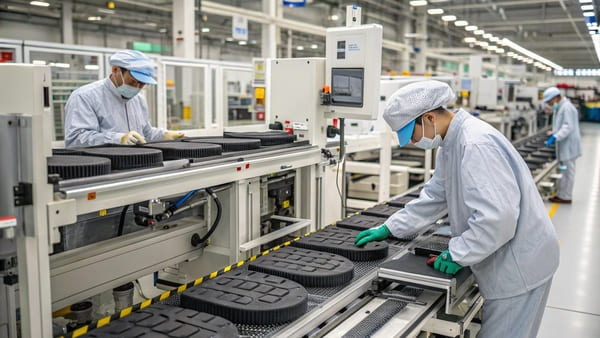
Finding these top-tier suppliers is not as simple as a quick online search. The market is filled with traders and warehouses that look like manufacturers. To make the right choice, you must first understand the different players in the supply chain. Let's start by defining what a brake and equipment warehouse actually does.
What Is a Brake & Equipment Warehouse and How Does It Work in the Supply Chain?
The term "warehouse" can be confusing. You might think you are buying direct, but you are really just dealing with a middleman. Understanding their exact role is key.
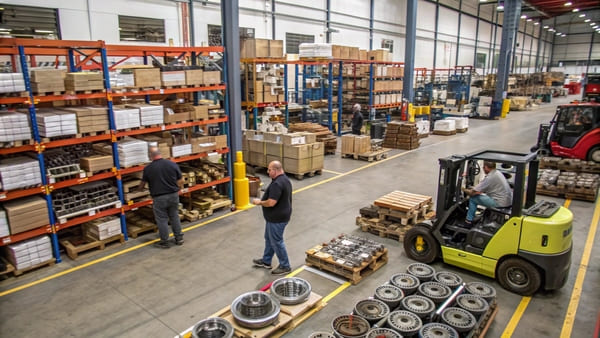
A brake and equipment warehouse is mainly a logistics center3. It stocks and distributes brake parts from many different manufacturers. Its job is to ensure parts are available and ship quickly, not to make them. They are a link in the distribution chain4.
The Role of Warehouses in the Automotive Aftermarket
A brake and equipment warehouse is an intermediary. It sits between the factory that makes the parts and the businesses that sell or install them. The typical supply chain looks like this: an OEM manufacturer produces the brake pads, a warehouse buys them in bulk, and then the warehouse sells them in smaller quantities to local distributors, retail stores, or auto repair shops.
Their primary value is availability. They keep a wide variety of parts in stock, ready for immediate shipment. This is perfect for a repair shop that needs a specific set of brake pads for a single car today. However, for a business looking to source products for its own brand, the warehouse model has significant limitations. They are not involved in the design, engineering, or quality control of the product itself. They are simply moving boxes.
Here is a simple table to show the difference:
| Feature | Brake & Equipment Warehouse | OEM Manufacturer (Like Us) |
|---|---|---|
| Core Function | Stocking and Distribution | Design, Engineering, and Production |
| Product Origin | Buys from various manufacturers | Produces parts in-house |
| Customization | Not available | Fully available (material, brand, package) |
| Technical Support | Limited to part numbers and applications | Deep engineering and material support |
| Pricing | Includes a middleman markup5 | Direct-from-factory pricing |
A warehouse is a vital part of the retail and repair aftermarket, but for wholesalers, importers, or brands, it is an unnecessary and costly layer.
Why Are Buyers Searching for Alternatives to Brake & Equipment Warehouse?
Relying only on warehouses can limit your business growth. You face tough price competition and have no unique products. Looking for alternatives opens up brand new opportunities for you.
Buyers look for alternatives to get better pricing, control product quality, and create custom private-label products6. Working directly with an OEM manufacturer cuts out the middleman. This gives you more flexibility and a competitive edge that a warehouse simply cannot offer.
The Limits of a Warehouse-Only Strategy
When you buy from a warehouse, you are buying a commodity. The same box from the same brand is likely being sold by your competitors, who also buy from that same warehouse. This leads to a race to the bottom on price7, where margins become very thin. You have no control over the product itself. If the manufacturer of the parts decides to change the formula or quality, you have no say. You are stuck with what the warehouse decides to stock. This lack of control is a major risk for any serious business.
The Benefits of Going Direct
This is why smart buyers are building relationships directly with OEM manufacturers like us. When you work with the factory, you remove the warehouse's markup, which immediately improves your profit margin. More importantly, you gain control.
You can work with our engineers to develop a product that meets your exact specifications. Do you need a brake pad with a specific friction characteristic for performance vehicles? We can do that. Do you want to launch your own brand of brake parts with unique packaging and branding? We are set up for that. This is called private labeling, and it is the best way to build a unique, defensible product line that your competitors cannot easily copy. Bypassing the warehouse gives you control over your supply chain8, your product quality, and ultimately, your brand's destiny.
What Should You Look for in a Reliable Brake Pad Warehouse or OEM Supplier?
Choosing the wrong OEM supplier is a very costly mistake. Poor quality can lead to product failures, returns, and even legal problems. You must know the key technical signs of a great partner.
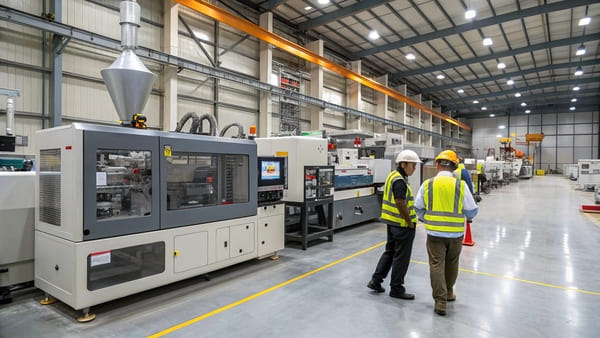
Look for an OEM supplier with complete in-house control over critical processes like friction material mixing9 and high-precision molding10. They must have advanced machinery for cooling and density control. A good supplier is a transparent partner who helps you succeed.
Critical Manufacturing Processes
Finding a true OEM brake pad expert is hard. Many factories use standard equipment that cannot meet the precision required for high-quality OEM brake pads. There are several key manufacturing steps, but two are the most difficult and tell you everything you need to know about a supplier's capability.
First is the cooling, setting, and density control11 process. After a brake pad is pressed into shape, it must be cooled and cured under precise conditions to achieve the correct density and structural integrity. The machines that can do this with high accuracy are not common. In my experience, you typically find them in factories in China's coastal areas, like Fujian and around Shanghai. Factories using less precise machinery, often from other regions, simply cannot produce a consistent, reliable OEM-grade pad.
The Importance of Material Science
The second, and equally difficult, challenge is the precise mixing of friction materials. An OEM brake pad is a complex recipe of dozens of components. The ratio must be perfect. Here is the problem: to add different ingredients, the mixing machine must stop, and the mold has to be opened. This action introduces variables that can disrupt the cooling and curing process, leading to inconsistencies in the final product. Only a factory with deep process engineering knowledge12 can manage this effectively.
I learned this the hard way. Early in my career, I worked on a brake pad project for a client from Pakistan. We were still gaining experience, and our first production batch had a noticeable "uneven wear" problem. I was very worried we had failed. But, surprisingly, the client loved them. The wear pattern was actually desirable for his specific market. It was a lucky break, but it taught me a powerful lesson about the importance of controlling every single variable. We perfected our process right after that, and we have never had an uncontrolled issue like it again.
When you evaluate a supplier, ask them about these specific challenges. A true expert will be able to discuss them in detail.
Here are the key things to look for:
- In-house mold development and engineering.
- High-precision mixing and weighing equipment for friction materials.
- Advanced machinery for temperature-controlled cooling and curing13.
- A multi-stage quality control process14 that checks density, hardness, and friction coefficient.
- Proven experience developing products for global markets.
Conclusion
Finding the right partner means looking beyond warehouses. You need a true OEM manufacturer who controls the entire process, from raw materials to the final product, ensuring quality and customization15.
Discovering the best OEM brake pad manufacturers ensures you source from experts who control quality and production, not just middlemen. ↩
Learning about specialized industrial regions helps you target suppliers with advanced technology and expertise in brake parts. ↩
Understanding the role of logistics centers clarifies how parts move from factories to your business, helping you optimize sourcing. ↩
Exploring the distribution chain reveals where value is added and where costs can be reduced in your sourcing strategy. ↩
Knowing about middleman markup helps you identify cost-saving opportunities by sourcing directly from manufacturers. ↩
Private-label products allow you to build a unique brand and stand out from competitors in the automotive market. ↩
Understanding this concept helps you avoid destructive price competition and focus on value-added strategies. ↩
Gaining supply chain control improves quality, reliability, and profitability for your automotive parts business. ↩
Friction material mixing directly impacts brake pad performance and safety, making it a key quality factor. ↩
High-precision molding ensures consistent quality and performance in brake pads, reducing defects and returns. ↩
These processes are essential for producing reliable, OEM-grade brake pads that meet strict safety standards. ↩
Process engineering expertise ensures every production variable is controlled, resulting in consistent, high-quality products. ↩
This process guarantees the structural integrity and reliability of brake pads, critical for safety and performance. ↩
A multi-stage quality control process ensures every brake pad meets safety and performance standards before shipping. ↩
Customization lets you tailor products to your market's needs, giving you a competitive edge and higher customer satisfaction. ↩