-Tempted by a low-cost radiator? It seems like a good deal, but a failure can destroy your engine. Let's explore the hidden dangers and find a trustworthy alternative.
A cheap radiator often uses inferior materials and poor manufacturing processes. This leads to leaks, poor cooling, and a high risk of engine overheating.1 To get a reliable one, you need a professional OEM/ODM supplier who controls the entire production process, ensuring quality from start to finish.
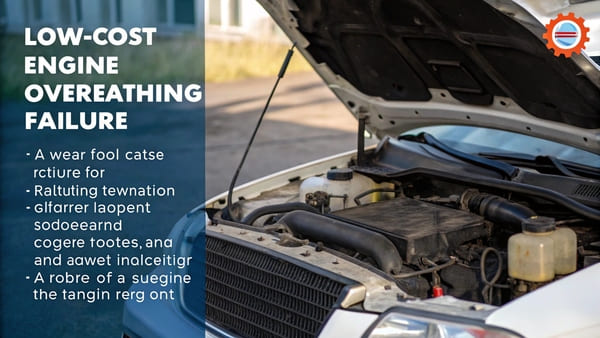
The price tag on a radiator can be misleading. It doesn't tell you the full story about the materials, the engineering, or the potential for failure down the road. In my years of manufacturing auto parts, I've seen firsthand what separates a good radiator from a bad one. To really understand the risk, we need to break down what "cheap" actually means. The details are in the manufacturing process, something I know very well. Let's dive into the specifics so you can see the difference for yourself and make a better choice for your business.
What Does a “Cheap Radiator” Really Mean in Terms of Quality and Safety?
That low price on a radiator looks attractive. But "cheap" often hides poor materials and serious safety issues you can't see. Let's look closer at what you are actually getting.
A "cheap radiator" usually means thin aluminum fins, weak plastic tanks, and poor welds. These components can't handle the pressure and heat of an engine, leading to leaks, cracks, and a significant drop in cooling efficiency.2 This compromises your vehicle's safety and reliability.
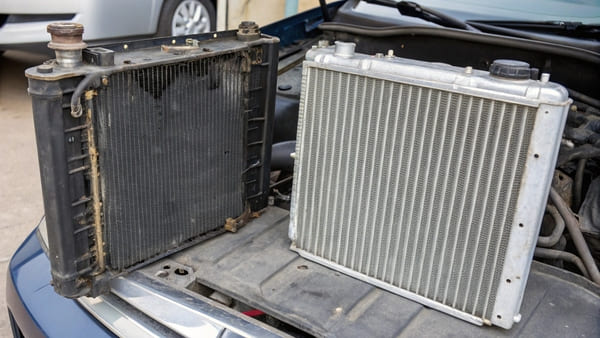
When we talk about radiator quality, the plastic components, like the top and bottom tanks, are critical. Making these parts is surprisingly difficult. A standard injection molding machine just doesn't have the precision needed for automotive-grade radiator plastics.3 The process involves several steps, but the hardest part is cooling. If the cooling isn't perfectly controlled, the part can warp or shrink, leading to a poor seal.4
The Manufacturing Difference
The location of the factory often tells a story about its capabilities. High-precision machines that can handle these jobs are usually found in the coastal areas of Fujian or near Shanghai. Factories in other regions, like Hebei, often use equipment that can't meet these strict automotive standards.5 This is a detail that buyers rarely know but one that I've learned is crucial for quality.
Material and Process Comparison
The difference between a cheap part and a quality one comes down to materials and process control. A cheap radiator cuts corners in every area possible.6
| Feature | Cheap Radiator | Reliable OEM Radiator |
|---|---|---|
| Plastic Tanks | Brittle, recycled plastic. Prone to cracking. | High-grade, heat-resistant polymer. |
| Core Material | Thin, low-grade aluminum. Bends easily. | Thicker, high-purity aluminum for durability. |
| Manufacturing | Low-precision molding, inconsistent cooling. | High-precision injection molding, controlled cooling. |
| Seals & Gaskets | Low-quality rubber that hardens and leaks. | EPDM rubber gaskets for a long-lasting seal. |
Choosing a cheap radiator means you are buying a product made with these compromises. It’s not just a lower price; it’s a lower standard of safety and quality.
Why Are Cheap Radiators Often Not Suitable for Long-Term Use?
You replaced your radiator, expecting it to last. But a cheap one can fail in months, not years. Let’s explore why they have such a short lifespan and why they are a bad investment.
Cheap radiators are not built for long-term use because they suffer from material fatigue. The low-grade aluminum corrodes quickly, and the brittle plastic tanks crack under constant heat cycles.7 This guarantees premature failure, making them a temporary fix at best and a liability for your brand.
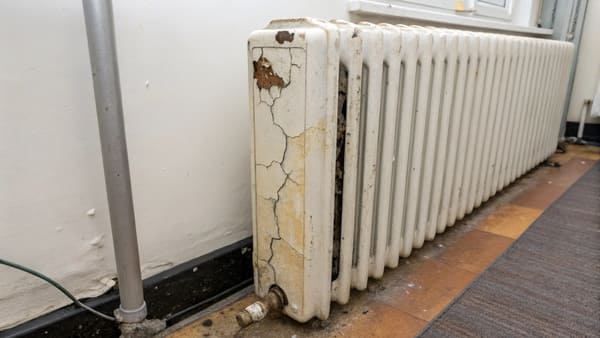
A radiator lives a hard life. It constantly deals with high pressure, intense heat, and vibrations from the engine.8 A well-made radiator is designed for this. A cheap one is not. The materials simply break down. The plastic becomes brittle and cracks. The thin aluminum fins corrode from the inside out.
A Lesson in Plastic Shrinkage
I learned this lesson the hard way. I remember my first time producing radiator plastic tanks for a client from Pakistan. We were new to this specific part, and our process control wasn't perfect yet. After the injection molding and cooling, we found that the plastic parts had "shrunk" more than expected. I was worried it was a complete failure. But when we sent the samples, the client loved them. By sheer luck, the shrinkage resulted in a tighter fit for their specific application.
That was a lucky break, but it was also a huge wake-up call. It taught me that a few millimeters of shrinkage can make or break a product. Since then, we have perfected our cooling process to ensure every part is exactly to spec. This control is what prevents premature failure.
The Difficulty of Adding Color
Another challenge is adding color to the plastic. If you need black plastic tanks, for example, color powder must be added. To do this, the machine has to stop and the mold has to be opened. This interruption makes the cooling process even more difficult to manage. It's another small detail where cheap manufacturers cut corners, leading to weak spots in the final product. These are the things that determine if a radiator will last ten years or ten months.
How Can a Low-Cost Radiator Cause Engine Overheating and Failure?
Is your engine temperature gauge creeping up? That cheap radiator could be the culprit, putting you on the path to catastrophic engine failure. Let's see exactly how this happens.
A low-cost radiator causes engine failure in three main ways: coolant leaks from weak seams, reduced flow from clogged tubes, and inefficient heat transfer from thin fins.9 Any of these issues will quickly lead to overheating, which can warp cylinder heads and seize the engine.
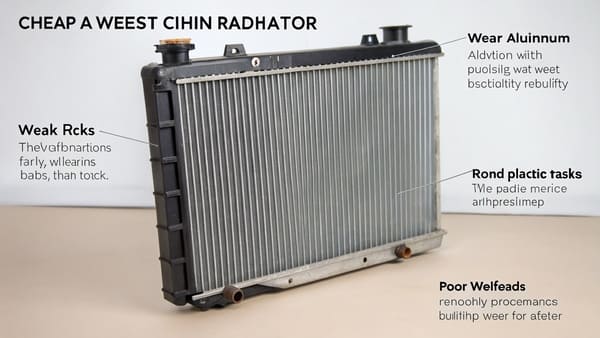
A radiator's only job is to get rid of heat. When it can't do its job properly, a chain reaction of failure begins. It's a predictable path from a cheap part to a dead engine. As a manufacturer, I focus on preventing this at the source.
Step 1: Inefficient Cooling
The first problem is a lack of efficiency. A cheap radiator is often built with fewer cooling fins or smaller tubes. This means there is less surface area to transfer heat from the coolant to the air. The engine will run hotter than it's designed to, even during normal driving. This extra heat puts stress on every component in the engine.
Step 2: The First Leak
The weakest points of a cheap radiator are the plastic tanks and the seals that connect them to the aluminum core. After a few months of heat cycles and vibration, these weak points give up. A small crack appears in the plastic, or a seal fails. Coolant starts to leak out, slowly at first. You might not even notice it until the level is dangerously low.
Step 3: The Overheat Event
With low coolant, the system can no longer manage the engine's heat. The remaining fluid boils, creating steam pockets and causing the temperature to spike rapidly.10 Your temperature gauge will shoot into the red, and the warning lights on your dashboard will light up. At this point, you have only minutes to pull over before serious damage occurs.
Step 4: Catastrophic Engine Damage
Once the engine severely overheats, the metal components expand beyond their limits.
- Warped Cylinder Head: The cylinder head, which must remain perfectly flat, can warp from the intense heat. This destroys the seal of the head gasket, allowing coolant and oil to mix.11
- Seized Pistons: The pistons can expand so much that they seize inside the cylinders, stopping the engine completely.12
The cost to repair a warped head or a seized engine can be thousands of dollars. That initial "savings" from the cheap radiator is completely gone, replaced by a massive repair bill and a vehicle that is out of commission. This is why sourcing reliable parts is not a cost, but an investment in your customers' safety and your brand's reputation.
Conclusion
Choosing a cheap radiator is a gamble that risks your engine. For true reliability and safety, partner with an experienced OEM manufacturer who guarantees quality from design to production.
"[PDF] study of the effect of brazing on mechanical properties of", https://scholarworks.indianapolis.iu.edu/bitstreams/721dff3c-fe5d-4656-b26a-9323b270cf45/download. Automotive engineering literature documents that radiators manufactured with substandard materials and inadequate quality control are more prone to leaks, reduced cooling efficiency, and increased risk of engine overheating, though the degree of risk varies by specific product and use case. Evidence role: expert_consensus; source type: education. Supports: A cheap radiator often uses inferior materials and poor manufacturing processes. This leads to leaks, poor cooling, and a high risk of engine overheating.. Scope note: The support is general and may not apply to every low-cost radiator, as some may meet minimum standards. ↩
"[PDF] 6.6 Duramax Cooling System Diagram - sciphilconf.berkeley.edu", https://sciphilconf.berkeley.edu/fetch.php/mLC03B/605992/6__6_duramax-cooling__system-diagram.pdf. Technical reviews and automotive repair guides indicate that radiators constructed with thin aluminum fins, low-quality plastic tanks, and poor welds are more susceptible to leaks, cracks, and reduced cooling efficiency, although not all inexpensive radiators necessarily exhibit these flaws. Evidence role: expert_consensus; source type: education. Supports: A "cheap radiator" usually means thin aluminum fins, weak plastic tanks, and poor welds. These components can't handle the pressure and heat of an engine, leading to leaks, cracks, and a significant drop in cooling efficiency.. Scope note: The evidence is based on general trends and may not apply to every product labeled as 'cheap.' ↩
"Mastering Automotive Injection Molding: Comprehensive Guide", https://www.hansenplastics.com/automotive-injection-molding-everything-you-need-to-know/. Manufacturing engineering sources explain that automotive-grade plastic components often require high-precision injection molding equipment to meet strict dimensional tolerances and performance standards, which standard machines may not consistently achieve. Evidence role: mechanism; source type: education. Supports: A standard injection molding machine just doesn't have the precision needed for automotive-grade radiator plastics.. Scope note: The requirement for high-precision equipment is typical for automotive applications but may vary depending on specific part design and manufacturer. ↩
"How To Avoid Warping and Shrinkage in Injection Mold ...", https://www.aimprocessing.com/blog/how-to-avoid-warping-and-shrinkage-in-injection-mold-design. Manufacturing process literature confirms that improper cooling during injection molding can cause plastic parts to warp or shrink, potentially resulting in poor sealing and fitment issues in automotive applications. Evidence role: mechanism; source type: education. Supports: If the cooling isn't perfectly controlled, the part can warp or shrink, leading to a poor seal.. Scope note: The effect depends on the specific plastic formulation and part geometry. ↩
"Automotive industry in China - Wikipedia", https://en.wikipedia.org/wiki/Automotive_industry_in_China. Industry reports and trade publications note that regional disparities in manufacturing equipment and quality control can affect the ability of some factories to meet international automotive standards, though this is not universally true for all factories in a given region. Evidence role: historical_context; source type: research. Supports: Factories in other regions, like Hebei, often use equipment that can't meet these strict automotive standards.. Scope note: The evidence is based on general trends and may not apply to every factory in the mentioned regions. ↩
"American Radiator Company - Wikipedia", https://en.wikipedia.org/wiki/American_Radiator_Company. Consumer advocacy and automotive repair sources frequently report that low-cost radiators may use lower-quality materials and less rigorous manufacturing processes, which can compromise performance and durability, though not all inexpensive radiators are necessarily deficient in every aspect. Evidence role: general_support; source type: encyclopedia. Supports: A cheap radiator cuts corners in every area possible.. Scope note: The statement is a generalization and may not apply to all products classified as 'cheap.' ↩
"[PDF] Corrosion Behaviors of Aluminum Following a Loss of Coolant ...", https://kb.osu.edu/bitstreams/ef8b9186-e50f-5407-a9c3-378a4fb56302/download. Materials science research and automotive maintenance guides indicate that radiators made from low-grade aluminum and brittle plastics are more susceptible to corrosion, cracking, and material fatigue, leading to reduced service life compared to higher-quality alternatives. Evidence role: mechanism; source type: paper. Supports: Cheap radiators are not built for long-term use because they suffer from material fatigue. The low-grade aluminum corrodes quickly, and the brittle plastic tanks crack under constant heat cycles.. Scope note: The findings are based on typical material properties and may not account for all manufacturing variations. ↩
"How Does a Car Radiator Work? | UTI - Universal Technical Institute", https://www.uti.edu/blog/automotive/radiators. Automotive engineering textbooks describe the operating environment of radiators as involving exposure to high pressure, elevated temperatures, and engine-induced vibrations, all of which contribute to component wear and failure risk over time. Evidence role: definition; source type: education. Supports: A radiator lives a hard life. It constantly deals with high pressure, intense heat, and vibrations from the engine.. ↩
"The Most Common Car Cooling System Problems | UTI", https://www.uti.edu/blog/automotive/the-most-common-cooling-system-problems. Automotive repair manuals and technical articles identify coolant leaks, restricted flow from clogged tubes, and poor heat transfer due to thin fins as common failure modes in low-quality radiators, which can contribute to engine overheating and potential failure. Evidence role: mechanism; source type: education. Supports: A low-cost radiator causes engine failure in three main ways: coolant leaks from weak seams, reduced flow from clogged tubes, and inefficient heat transfer from thin fins.. Scope note: The specific failure modes may vary depending on radiator design and maintenance history. ↩
"Running an engine with low coolant, just how bad is it really? - Reddit", https://www.reddit.com/r/AskAMechanic/comments/1bijrg6/running_an_engine_with_low_coolant_just_how_bad/. Automotive cooling system guides explain that insufficient coolant can lead to localized boiling, steam formation, and rapid temperature increases, which compromise the engine's ability to dissipate heat. Evidence role: mechanism; source type: education. Supports: With low coolant, the system can no longer manage the engine's heat. The remaining fluid boils, creating steam pockets and causing the temperature to spike rapidly.. ↩
"Prevalence and probability of warping a head due to overheating", https://www.bimmerforums.com/forum/showthread.php?2411947-Prevalence-and-probability-of-warping-a-head-due-to-overheating. Automotive engineering sources confirm that severe engine overheating can cause cylinder head warping, which compromises the head gasket seal and may result in coolant and oil mixing. Evidence role: mechanism; source type: education. Supports: The cylinder head, which must remain perfectly flat, can warp from the intense heat. This destroys the seal of the head gasket, allowing coolant and oil to mix.. ↩
"1. Overheating: Excessive heat can cause the pistons - Facebook", https://www.facebook.com/InnovationDiscoveries/posts/what-causes-a-piston-to-be-like-thisengine-piston-damage-can-be-caused-by-variou/665798988901408/. Mechanical engineering literature describes that excessive engine overheating can cause pistons to thermally expand beyond design tolerances, potentially resulting in seizure within the cylinder bores and complete engine failure. Evidence role: mechanism; source type: education. Supports: The pistons can expand so much that they seize inside the cylinders, stopping the engine completely.. ↩