-Tired of seeing the same modern cars? The bold, unique designs of the 1970s call to collectors, but finding quality parts can feel impossible. It's a real challenge.
The 1970s was a turning point for the auto industry1. Cars from this decade fascinate people because they represent a bridge between the raw power of the 60s and the technology-driven cars of today. Their unique designs and historical importance make them truly special collectibles2.

Cars from the 1970s tell a story of change. It was a decade of massive shifts, from powerful muscle cars to smaller, more efficient vehicles. This period was full of challenges, but also full of character. For us in the parts manufacturing business, it’s a decade that presents unique problems and rewards. These cars aren't just old; they are monuments to a time when the world was changing, and the auto industry had to change with it. Understanding this era helps us appreciate the cars and the work it takes to keep them on the road. Let's look at what made this decade so important.
What Made 1970s Cars So Different From Cars of the 1960s?
You see a classic car and think it's from the 60s, but it's actually from the 70s. The styles seem to blend, but the differences are huge and frustratingly subtle.
Cars from the 1970s were very different from their 1960s predecessors. The focus shifted from pure horsepower to new priorities like safety, luxury, and emissions3. This resulted in bigger bumpers, plusher interiors, and less powerful engines, creating a completely distinct feel and driving experience.
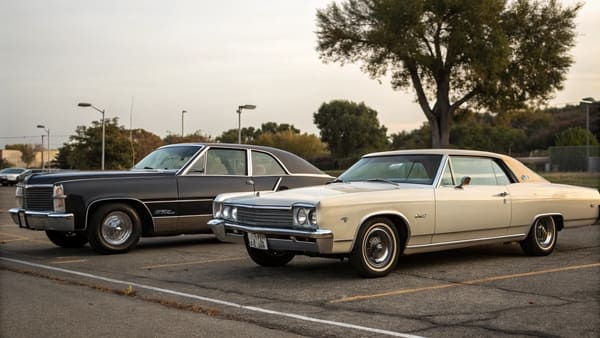
When we look deeper, the 1960s were the peak of American automotive confidence. It was all about big V8 engines, speed, and flashy chrome. The cars were designed to be fast and exciting. Then the 1970s arrived, and everything changed. New government regulations for safety and emissions forced car makers to rethink everything. This wasn't just a simple model year update; it was a fundamental change in car design philosophy. For example, the need for 5-mph impact bumpers completely changed the look of car fronts and rears4. Gone were the sleek, integrated chrome bumpers of the 60s. In their place were large, heavy "diving board" bumpers that stuck out from the body. Inside, cars became more about personal luxury, with thick shag carpets, vinyl roofs, and "opera windows." The focus moved from the race track to comfortable highway cruising. This table shows the main differences:
| Feature | 1960s Cars | 1970s Cars |
|---|---|---|
| Primary Focus | Performance and Style | Safety and Personal Luxury |
| Engines | High-Compression, Big V8s | Low-Compression, Detuned Engines |
| Design | Chrome, Fins, Sleek Lines | Vinyl Roofs, Opera Windows, Big Bumpers |
| Safety | Minimal (Lap Belts) | Mandated Bumpers, Shoulder Belts |
| Interior | Simple, Functional | Plush, Comfortable, "Lounge-like" |
Why Did the Oil Crisis Change the Entire Direction of the Car Industry?
Remember stories of waiting in gas lines for hours? That crisis wasn't just an inconvenience; it was a shock that completely changed what people wanted in a car, seemingly overnight.
The 1973 oil crisis made gasoline expensive and scarce5. This killed the demand for large, gas-guzzling cars6. Suddenly, everyone wanted smaller, fuel-efficient vehicles. This forced American automakers to downsize and opened the door for Japanese brands like Toyota and Honda to gain a major foothold7.
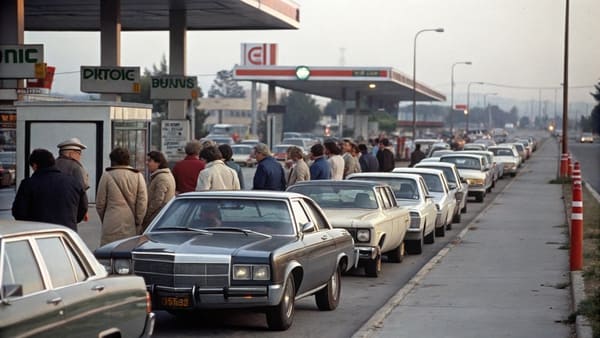
The 1973 OPEC oil embargo was a wake-up call. For decades, American drivers enjoyed cheap gas and didn't worry about fuel economy. Big cars with big V8 engines were the standard. But when the embargo hit, the price of gas shot up, and supply became limited. People panicked. Suddenly, owning a car that got 8 miles per gallon was a serious financial problem. The market for big sedans and muscle cars collapsed almost instantly. We saw it directly in the parts we were asked to produce. Orders for big engine components dropped, while demand for parts related to smaller, four-cylinder engines started to appear. American car companies scrambled to respond. They rushed to create their own small cars, like the Ford Pinto and Chevrolet Vega. But they were new to this market. Japanese automakers, who had been making small, reliable, and fuel-efficient cars for years, were perfectly positioned. Their cars became incredibly popular, and it changed the American auto landscape forever. The entire industry had to learn a new language: fuel efficiency.
How Did Emissions Laws Kill the Golden Age of Muscle Cars?
You look at a 1971 muscle car and a 1975 version of the same car. One is a legend, the other is a disappointment. What happened to all the power?
New emissions laws, like the Clean Air Act, forced automakers to add new equipment to cars that choked engine performance8. Catalytic converters and other devices reduced horsepower dramatically9. This effectively ended the golden age of high-performance muscle cars that had defined the late 1960s.
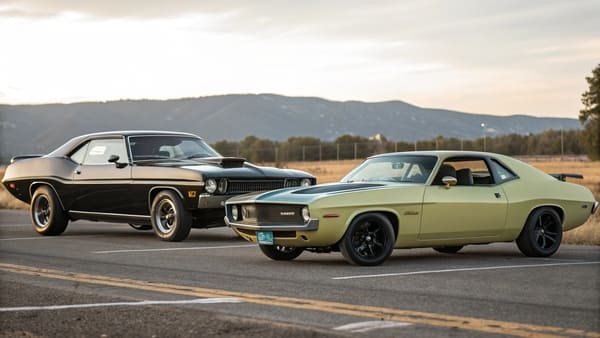
The end of the muscle car era wasn't just about the oil crisis; it was also about clean air. The government passed laws to reduce pollution from cars. To meet these new standards, manufacturers had to add equipment that made engines run cleaner, but also much weaker. They lowered engine compression, added catalytic converters to the exhaust, and used EGR valves to recirculate exhaust gas. A powerful V8 engine that made 350 horsepower in 1970 was making less than 200 horsepower by 197510. The "muscle" was gone.
This brings up a huge challenge for us today as parts manufacturers. Restoring these cars is very popular11, but making parts for them, especially plastic parts, is incredibly difficult. The plastic trim, dashboards, and interior pieces from the 70s are hard to reproduce with the right look and feel. Standard injection molding machines often lack the precision needed. For these vintage plastic parts, we need a special process with at least three stages, and the cooling stage is the most difficult part. High-precision machines that can do this work are usually found in factories in the Fujian coastal area or around Shanghai. Machines made in other regions, like Hebei, typically can't meet the precision requirements.
Another challenge is adding color. To add color powder, the machine has to be stopped and the mold opened. This makes the cooling process even more complicated and can easily ruin the part. I remember my first time working on these parts for a client from Pakistan. We were inexperienced, and the plastic parts "shrank" more than we expected after cooling. I thought it was a disaster. But the client loved it. He said the slight shrinkage gave the parts a more authentic, aged look. We got lucky, but it was a great learning experience. Since then, we have perfected the process to control that effect, ensuring every part we make meets the exact needs of classic car restorers.
Conclusion
The 1970s was a decade of massive change for cars12. These vehicles tell a unique story of adaptation, making them a challenging but deeply rewarding part of automotive history.
"Malaise era - Wikipedia", https://en.wikipedia.org/wiki/Malaise_era. A historical overview of the automotive industry identifies the 1970s as a period of significant transformation due to regulatory, economic, and technological changes. Evidence role: historical_context; source type: encyclopedia. Supports: The 1970s was a turning point for the auto industry.. Scope note: While the 1970s were pivotal, some changes began in the late 1960s and continued into the 1980s. ↩
"Malaise era - Wikipedia", https://en.wikipedia.org/wiki/Malaise_era. Automotive historians note that 1970s cars are valued by collectors for their distinctive designs and their role in automotive history. Evidence role: expert_consensus; source type: encyclopedia. Supports: Their unique designs and historical importance make them truly special collectibles.. Scope note: Collector preferences can vary by region and market segment. ↩
"Malaise era - Wikipedia", https://en.wikipedia.org/wiki/Malaise_era. Industry analyses indicate that the 1970s saw a shift in automotive priorities from performance to safety, emissions, and comfort due to regulatory and market pressures. Evidence role: historical_context; source type: encyclopedia. Supports: The focus shifted from pure horsepower to new priorities like safety, luxury, and emissions.. Scope note: The shift was gradual and varied among manufacturers and markets. ↩
"49 CFR Part 581 -- Bumper Standard - eCFR", https://www.ecfr.gov/current/title-49/subtitle-B/chapter-V/part-581. Federal Motor Vehicle Safety Standards introduced in the early 1970s required 5-mph bumpers, significantly altering vehicle design. Evidence role: mechanism; source type: government. Supports: The need for 5-mph impact bumpers completely changed the look of car fronts and rears.. Scope note: The regulation applied primarily to the U.S. market and affected most, but not all, vehicles. ↩
"Oil Embargo, 1973–1974 - Office of the Historian", https://history.state.gov/milestones/1969-1976/oil-embargo. The 1973 oil crisis, triggered by the OPEC embargo, led to fuel shortages and price increases in the United States and other countries. Evidence role: historical_context; source type: encyclopedia. Supports: The 1973 oil crisis made gasoline expensive and scarce.. Scope note: The severity of shortages and price increases varied by region. ↩
"Malaise era - Wikipedia", https://en.wikipedia.org/wiki/Malaise_era. Market analyses after the 1973 oil crisis show a sharp decline in sales of large, fuel-inefficient vehicles in the United States. Evidence role: statistic; source type: research. Supports: This killed the demand for large, gas-guzzling cars.. Scope note: The decline was most pronounced in North America; other markets were affected differently. ↩
"[PDF] The U.S. Automakers' Reaction to the Japanese - UNI ScholarWorks", https://scholarworks.uni.edu/cgi/viewcontent.cgi?article=1030&context=draftings. Automotive industry reports document increased market share for Japanese automakers in the U.S. following the 1973 oil crisis. Evidence role: statistic; source type: research. Supports: The oil crisis opened the door for Japanese brands like Toyota and Honda to gain a major foothold.. Scope note: Market share gains varied by brand and region. ↩
"Clean Air Act Vehicle and Engine Enforcement Case Resolutions", https://www.epa.gov/enforcement/clean-air-act-vehicle-and-engine-enforcement-case-resolutions. The Clean Air Act amendments of the 1970s required automakers to implement emissions control technologies, which often reduced engine performance. Evidence role: mechanism; source type: government. Supports: New emissions laws, like the Clean Air Act, forced automakers to add new equipment to cars that choked engine performance.. Scope note: The impact on performance varied by engine and manufacturer. ↩
"Exhaust System Reduces Auto Emissions, Boosts Engine ...", https://news.osu.edu/exhaust-system-reduces-auto-emissions-boosts-engine-performance/. Technical analyses confirm that the introduction of catalytic converters and related emissions controls in the 1970s led to significant reductions in engine horsepower. Evidence role: mechanism; source type: education. Supports: Catalytic converters and other devices reduced horsepower dramatically.. Scope note: The degree of horsepower loss depended on the specific technology and vehicle model. ↩
"Basic Information about the Emission Standards Reference Guide ...", https://www.epa.gov/emission-standards-reference-guide/basic-information-about-emission-standards-reference-guide-road. Comparative engine specifications from the early to mid-1970s show that many V8 engines experienced substantial drops in rated horsepower due to emissions regulations and lower compression ratios. Evidence role: statistic; source type: education. Supports: A powerful V8 engine that made 350 horsepower in 1970 was making less than 200 horsepower by 1975.. Scope note: Specific figures vary by manufacturer and model; the example is illustrative. ↩
"Why is there a decline in interest in restoring and owning ... - Facebook", https://www.facebook.com/groups/557408138218966/posts/1645692276057208/. Classic car restoration, particularly of 1970s models, is a popular hobby and industry segment according to automotive enthusiast organizations. Evidence role: general_support; source type: institution. Supports: Restoring these cars is very popular.. Scope note: Popularity varies by region and car model. ↩
"Malaise era - Wikipedia", https://en.wikipedia.org/wiki/Malaise_era. Automotive historians widely agree that the 1970s brought major changes to car design, regulation, and market dynamics. Evidence role: expert_consensus; source type: encyclopedia. Supports: The 1970s was a decade of massive change for cars.. Scope note: The extent and nature of changes varied internationally. ↩