-Are you unsure about your brake pads' condition? Ignoring them is a dangerous gamble that can lead to costly repairs or, worse, an accident. Learn the clear signs now.
A new brake pad has a thick layer of friction material1, about 10-12mm, ensuring strong stopping power. A worn pad is dangerously thin, often under 3mm, and may make a squealing or grinding noise2. You should replace them when they reach this minimum thickness3 to avoid brake failure.
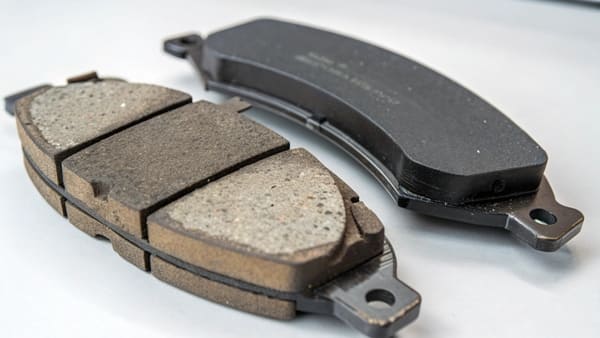
As a manufacturer of automotive parts, I've seen firsthand how critical brake pad quality is. It’s not just about a simple replacement; it’s about understanding the engineering and materials that keep you safe on the road. The difference between a quality new pad and a worn-out one is night and day. Let's dive into what you really need to know, from my factory floor to your driver's seat.
What Is the Real Difference Between New and Worn Brake Pads in Performance?
Does your car feel like it takes longer to stop than it used to? This isn't your imagination, and it could put you in a very dangerous situation.
New brake pads provide maximum friction for short, reliable stopping distances. Worn pads have much less friction material1, overheat quickly, and can dramatically increase your stopping distance. This difference is most critical during an emergency stop, where worn pads can fail to perform when you need them most.
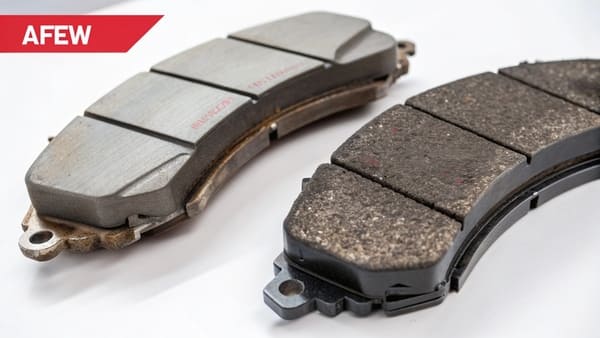
The performance gap between new and worn pads comes down to two things: material thickness and heat management4. A new pad has a thick chunk of specially formulated friction material1. This material is designed to create a high level of friction against the brake rotor while also drawing heat away from the braking surface. When you press the brake pedal, the pad clamps down, and your car stops quickly and quietly.
A worn pad, on the other hand, has very little material left to do this job. It can't generate the same friction, so your car travels further before it stops. More importantly, the thin material can't handle heat. This leads to a dangerous condition called "brake fade5," where the brakes get so hot they stop working effectively. From a manufacturing perspective, getting this right is our biggest challenge. The material formula6 is a complex recipe. We have to stop the machines and open the molds to add specific ingredients. This makes the cooling process7, which is the most difficult step, even harder. If the pad cools improperly, it won't perform right, even when brand new.
| Performance Metric | New Brake Pads | Worn Brake Pads |
|---|---|---|
| Stopping Distance | Short and consistent | Long and unpredictable |
| Heat Dissipation | Excellent | Poor, leads to "brake fade5" |
| Pedal Feel | Firm and responsive | Spongy, soft, or vibrating |
| Noise | Silent | Squealing, grinding, or clicking |
How Can You Visually Identify Worn Brake Pads Without Technical Tools?
You don't want to pay a mechanic just for an inspection. But you also know you can't just guess when it comes to your vehicle's safety.
Look through the spokes of your wheel at the brake caliper, which is the component that clamps onto the shiny metal brake rotor. You will see the brake pad pressed against the rotor. A safe pad has a noticeable thickness; a worn one will look like a thin sliver.
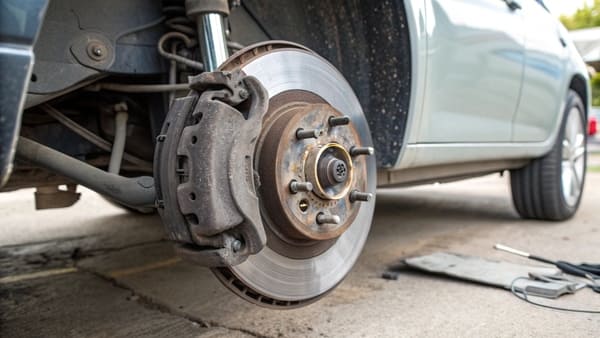
You can do a quick visual check8 yourself with just a flashlight. First, park your car on a level surface. Look through the openings in your wheel, and find the brake rotor—the large, shiny metal disc. The brake caliper is the assembly that fits over the rotor like a clamp. Inside the caliper, you'll find the brake pads. Each pad consists of a heavy metal backing plate9 and the friction material1 that presses against the rotor. You need to focus on the thickness of that friction material1. If it looks thick and substantial, you're likely in good shape. If it’s very thin, almost down to the metal backing plate9, it's time for a change.
I learned a lot about how material composition10 affects wear from a past project. I was working with a client from Pakistan on their first order of brake pads. Our manufacturing process is incredibly precise, but we had a batch where the pads "shrank" more than usual during the difficult cooling stage. They were a little smaller but much denser. I was worried, but the client tested them and was thrilled. They were more durable and performed better than expected. This taught me that the physical properties you can see—like thickness and integrity—are directly tied to a complex and precise manufacturing process.
What Thickness Means Your Brake Pads Are Still Safe or Already Dangerous?
So you've looked at your brake pads, but how thin is too thin? Guessing wrong is a risk you simply cannot afford to take with your safety.
Generally, new brake pads are 10-12mm thick. You should plan for a replacement when they wear down to 6mm. If your pads are 3mm or less, they are considered dangerous and must be replaced immediately to prevent total brake failure and costly rotor damage.
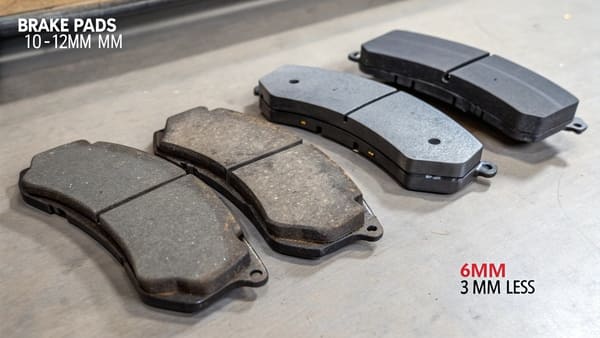
Knowing the specific numbers takes the guesswork out of brake safety. Think of it as a simple traffic light system for your pads. When they are very thin, the risk increases dramatically. At 3mm or less, you are approaching metal-on-metal contact11. This is where the metal backing plate9 of the pad starts grinding against the brake rotor. When this happens, you will hear a horrible grinding sound, your stopping power will be almost zero, and you will destroy your brake rotors, turning a simple pad replacement into a much more expensive repair job.
This is why, as a manufacturer, we are obsessed with precision. The injection molding machines12 used for brake pads must be incredibly accurate. Standard machines, which you might find in some factories in Hebei, often can't achieve the required precision. We rely on specialized equipment, typically found in the industrial hubs near Shanghai or along the Fujian coast, to guarantee every pad has a uniform thickness and density13. This precision ensures that our pads wear down evenly and predictably, so you can trust these thickness guidelines to keep you safe.
| Thickness | Status | Action Required |
|---|---|---|
| 10-12mm | New | Peak performance. No action needed. |
| 7-9mm | Good | Normal wear. Monitor at your next oil change. |
| 4-6mm | Caution | Still safe, but start planning your replacement. |
| 3mm or less | Dangerous | Replace Immediately. Risk of brake failure. |
Conclusion
Checking your brake pads is simple. By understanding performance changes, doing visual check8s, and knowing the critical thickness levels, you can ensure your brakes are always ready to protect you.
Understanding friction material helps you choose brake pads that offer reliable stopping power and durability for your vehicle. ↩
Learning about these noises can help you spot early signs of brake pad wear and prevent costly repairs or accidents. ↩
Knowing the minimum thickness ensures you replace pads before they become dangerous, protecting your safety and your car. ↩
Proper heat management prevents brake fade and ensures your brakes work effectively during emergency stops. ↩
Understanding brake fade helps you avoid situations where your brakes fail due to overheating, keeping you safe on the road. ↩
Learning about material formulas helps you select pads that last longer and perform better under stress. ↩
The cooling process affects pad durability and performance, so knowing about it helps you choose high-quality products. ↩
A visual check lets you assess pad condition without a mechanic, saving you time and money. ↩
Understanding the backing plate helps you spot dangerous wear and avoid metal-on-metal contact that damages rotors. ↩
Material composition determines how quickly pads wear, helping you choose the best option for your driving needs. ↩
Metal-on-metal contact destroys rotors and compromises safety, so knowing the signs helps you avoid expensive repairs. ↩
High-precision machines ensure consistent pad thickness and performance, so you can trust your brakes to keep you safe. ↩
Uniform pads wear evenly, providing predictable performance and reducing the risk of sudden brake failure. ↩