-Confused by brake pad options? Picking the wrong ones risks your safety. Let's see if one size really fits all cars, ensuring you make the right choice.
Brake pads are not universal. They are highly vehicle-specific, designed to match a car's weight, performance, and braking system.1 Using the correct pads specified for your model is crucial for safety and optimal stopping power.
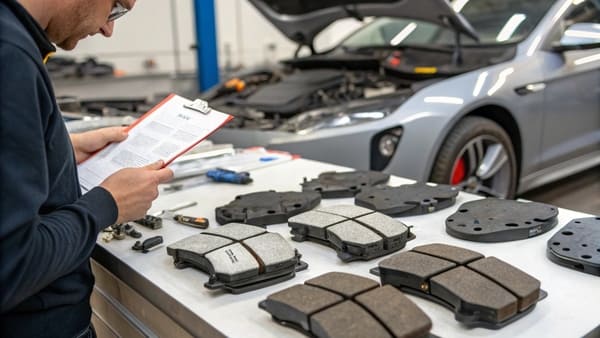
It seems like a simple question, but the answer has big implications for your car's safety and performance. You might be surprised by how often this question comes up and the reasons behind it. Let's explore why so many people are looking for a one-size-fits-all solution for their brakes.
Why Do So Many Drivers Ask if Brake Pads Are Universal?
Hoping to save time and money on car repairs? The idea of a universal brake pad is tempting. But this search for a simple fix can lead to bigger problems.
Drivers often ask about universal brake pads hoping for a cheaper, simpler solution.2 The huge variety of parts can be overwhelming, so the idea of a one-size-fits-all option seems convenient. It's a common search driven by budget and the desire for an easy repair process.

The search for a "universal" brake pad is completely understandable. When you walk into a parts store or browse online, the number of options is dizzying. Most drivers are just looking for a straightforward, affordable fix. The primary motivation is often cost. A universal part suggests mass production and lower prices. Secondly, there's the appeal of convenience. Instead of cross-referencing part numbers and vehicle identification numbers (VINs), you could just grab a "universal" set and be on your way. This is a powerful fantasy for anyone who has spent hours trying to find the exact right component. Finally, market confusion plays a big role. Some sellers might use misleading terms, making it seem like some pads fit a wider range of vehicles than they actually do.3 This creates a false hope that a truly universal option exists.
| Driver's Hope (Universal Part) | Automotive Reality (Specific Part) |
|---|---|
| Lower Cost | Safety requires specific materials and designs, which costs more. |
| Easy Selection | Each vehicle's weight and speed demands a unique brake pad. |
| Quick Repair | Incorrect parts lead to longer installation times and repeat repairs. |
Are Brake Pads Universal for All Cars?
Thinking any brake pad will do the job? This assumption is dangerous and can lead to complete brake failure. Let’s get a definite answer on this critical safety question.
Absolutely not. Brake pads are not universal for all cars. Each pad is engineered for a specific vehicle's braking system, considering its weight, top speed, and caliper design.4 Using the wrong pad is a serious safety hazard and will not work correctly.5
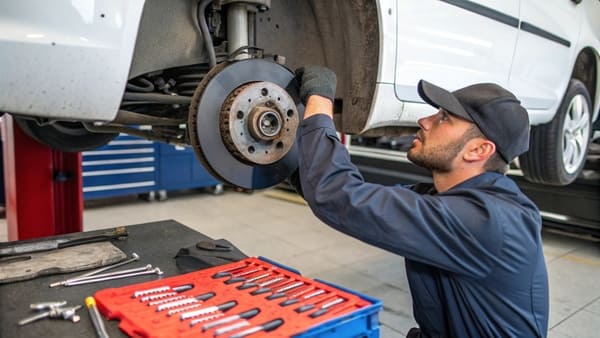
The idea of a universal brake pad falls apart when you look at the technical details. First, the physical shape and size are incredibly diverse. The backing plate has to fit perfectly into the brake caliper's mounting bracket. Even a millimeter of difference can cause rattling, uneven wear, or complete failure.6 Second, the friction material itself is a complex science. A heavy truck needs a very different compound than a lightweight sports car.7 One needs to resist heat from heavy loads, while the other needs to provide instant bite at high speeds. This is why you see different materials like ceramic, semi-metallic, and organic pads. As a manufacturer, I can tell you that producing these specific parts is extremely difficult. The precision required is immense. I remember my first project for a Pakistani client. We had issues with the parts "shrinking" after cooling because our process wasn't perfect yet. Luckily, the client happened to like the outcome, but it taught us a valuable lesson about precision.
Physical Dimensions: Shape and Size
The backing plate must match the caliper bracket exactly.
Friction Material Composition
The material is chosen based on the vehicle's intended use, from daily driving to high-performance racing.
The Manufacturing Challenge
Creating these parts requires specialized machinery and expertise to control factors like cooling and material composition.
Why Are Brake Pads Different Between Vehicle Models?
Why can't a brake pad for a small car fit a large truck? It seems inefficient. But these differences are essential for your safety. Let's break down why.
Brake pads differ to match a vehicle's specific weight, performance level, and heat dissipation needs. A heavy SUV requires larger, more robust pads to generate stopping force and manage heat, while a small city car can use smaller, simpler pads effectively.
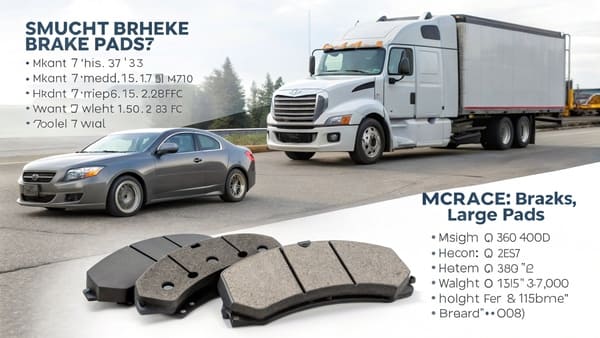
The differences between brake pads are all about physics. A heavier vehicle carries more momentum and needs more force to stop. This directly impacts the brake pad design.8 A larger surface area is needed to distribute pressure and manage heat.9 Speaking of heat, it's the biggest enemy of a braking system. Pads for performance cars or heavy trucks must have materials that can withstand and dissipate extreme temperatures without fading.10 This is where manufacturing precision becomes non-negotiable. Custom brake pad production is incredibly tough. Standard injection molding machines just don't have the accuracy.11 The process has several steps, and the hardest part is cooling. I've learned that the best machines for this are found in coastal regions like Fujian or near Shanghai; machines from other areas often don't meet the precision standards. Even adding color powder is a challenge. You have to stop the machine and open the mold, which messes with the cooling cycle. It's a delicate process that requires specialized equipment and expertise to get right.
| Vehicle Type | Key Brake Pad Requirement | Consequence of Mismatch |
|---|---|---|
| Heavy Truck/SUV | High heat resistance, large surface area | Brake fade, overheating, longer stopping distance |
| Sports Car | High friction ("bite"), fade resistance at speed | Poor performance feel, glazing under hard use |
| Economy Car | Durability, low noise, low cost | Excessive wear, noise, unnecessary cost |
Conclusion
Brake pads are not universal. Always use the specific pads made for your car.12 This is the only way to guarantee your safety and your car's proper performance.
"Brake pad - Wikipedia", https://en.wikipedia.org/wiki/Brake_pad. Automotive engineering sources explain that brake pads are designed to fit specific vehicles, taking into account factors such as weight, braking system, and performance requirements, and that using incorrect pads can compromise safety and braking efficiency. Evidence role: expert_consensus; source type: encyclopedia. Supports: Brake pads are not universal. They are highly vehicle-specific, designed to match a car's weight, performance, and braking system.. ↩
"Optimized car parts detection with advanced feature fusion ... - PMC", https://pmc.ncbi.nlm.nih.gov/articles/PMC12749146/. Market research and consumer behavior studies indicate that cost and convenience are primary motivators for drivers seeking universal automotive parts, including brake pads. Evidence role: general_support; source type: research. Supports: Drivers often ask about universal brake pads hoping for a cheaper, simpler solution.. Scope note: Direct studies on brake pads specifically may be limited; evidence may refer to general automotive parts. ↩
"Automobiles | Federal Trade Commission", https://www.ftc.gov/business-guidance/industry/automobiles. Consumer protection agencies have reported instances where automotive parts are marketed as 'universal' despite not fitting all vehicles, leading to consumer confusion. Evidence role: case_reference; source type: government. Supports: Some sellers might use misleading terms, making it seem like some pads fit a wider range of vehicles than they actually do.. Scope note: Specific examples for brake pads may be limited; evidence may cover broader automotive parts. ↩
"[PDF] Checks on brake discs and brake pads, carried out visually and ...", https://education.mn.gov/mdeprod/groups/educ/documents/hiddencontent/mdaw/mdu5/~edisp/059294.pdf. Automotive engineering literature details that brake pads are designed to match the specific requirements of a vehicle's braking system, including weight, speed, and caliper configuration. Evidence role: mechanism; source type: education. Supports: Each pad is engineered for a specific vehicle's braking system, considering its weight, top speed, and caliper design.. ↩
"Dangers of incorrectly installed brake pads - Facebook", https://www.facebook.com/groups/150656185655794/posts/1743192646402132/. Safety authorities and engineering studies warn that using incorrect brake pads can lead to reduced braking performance and increased risk of accidents. Evidence role: expert_consensus; source type: government. Supports: Using the wrong pad is a serious safety hazard and will not work correctly.. ↩
"[PDF] Checks on brake discs and brake pads, carried out visually and ...", https://education.mn.gov/mdeprod/groups/educ/documents/hiddencontent/mdaw/mdu5/~edisp/059294.pdf. Engineering sources note that improper fitment of brake pads, even by small margins, can cause noise, uneven wear, or brake failure. Evidence role: mechanism; source type: education. Supports: Even a millimeter of difference can cause rattling, uneven wear, or complete failure.. Scope note: Exact tolerance values may vary by manufacturer. ↩
"ARSC News - Spring 2021 Understanding California's Brake Pad Law", https://www.bar.ca.gov/arsc/newsletters/newsletter/spring-2021/understanding-californias-brake-pad-law. Materials science and automotive engineering sources explain that brake pad compounds are selected based on vehicle weight and performance needs, with trucks requiring high heat resistance and sports cars needing high friction at speed. Evidence role: mechanism; source type: education. Supports: A heavy truck needs a very different compound than a lightweight sports car.. ↩
"Accelerating and braking - Dynamics", https://dynref.engr.illinois.edu/ava.html. Physics and automotive engineering sources explain that heavier vehicles require greater braking force, influencing the size and material of brake pads. Evidence role: mechanism; source type: education. Supports: A heavier vehicle carries more momentum and needs more force to stop. This directly impacts the brake pad design.. ↩
"Understanding Heat Ranges for Optimal Brake Pad Performance", https://xpmotorsports.com/blog/understanding-heat-ranges-for-optimal-brake-pad-performance/. Engineering literature states that larger brake pads are used to better distribute pressure and manage heat in heavier or high-performance vehicles. Evidence role: mechanism; source type: education. Supports: A larger surface area is needed to distribute pressure and manage heat.. ↩
"Initial Selection of Disc Brake Pads Material based on ... - PMC - NIH", https://pmc.ncbi.nlm.nih.gov/articles/PMC7078729/. Automotive engineering literature confirms that brake pads for high-performance and heavy vehicles are formulated to resist high temperatures and prevent brake fade. Evidence role: mechanism; source type: education. Supports: Pads for performance cars or heavy trucks must have materials that can withstand and dissipate extreme temperatures without fading.. ↩
"Brake Pad Thickness Standards: Professional Manufacturer's ...", https://www.best-brake.com/brake-pad-thickness-standards-professional-manufacturers-configuration-guide/. Manufacturing industry sources note that brake pad production requires specialized equipment to achieve the necessary precision, which standard injection molding machines may not provide. Evidence role: mechanism; source type: research. Supports: Standard injection molding machines just don't have the accuracy.. Scope note: Details may vary by manufacturer and technology used. ↩
"Brake Pads Frequently Asked Questions", https://dtsc.ca.gov/scp/brake-pads-frequently-asked-questions/. Automotive safety authorities and manufacturers recommend using only vehicle-specific brake pads to ensure proper performance and safety. Evidence role: expert_consensus; source type: government. Supports: Brake pads are not universal. Always use the specific pads made for your car.. ↩