Finding a brake pad supplier that meets your quality and volume needs is a huge challenge. A bad partner can lead to safety issues and a damaged reputation.1
The "best" brake pad manufacturer depends on your specific needs, whether for OEM, wholesale, or the aftermarket. The right partner is one with proven quality control, deep material expertise, and the capability for large-scale production, often found in specialized industrial regions that focus on automotive safety components.2
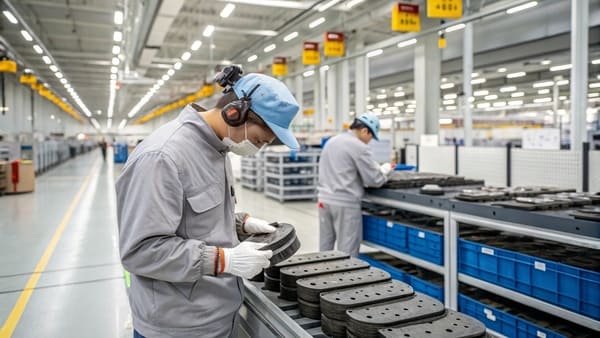
But finding that ideal partner isn't just about picking a name from a list. It's about understanding why reliability is so critical in this market, and what truly separates a great manufacturer from an average one. Let's explore why so many buyers like you are on this exact search.
Why Are Global Buyers Searching for Reliable Brake Pad Manufacturers?
You're sourcing brake pads, but the market is flooded with suppliers offering inconsistent quality. Choosing the wrong one leads to performance failures and angry, dissatisfied customers.
Buyers search for reliable manufacturers because brake pads are non-negotiable safety components.3 Inconsistent quality creates serious safety risks, costly recalls, and permanent brand damage.4 A dependable supplier guarantees product compliance, consistent performance, and a stable supply chain, which are all essential for long-term business success.5
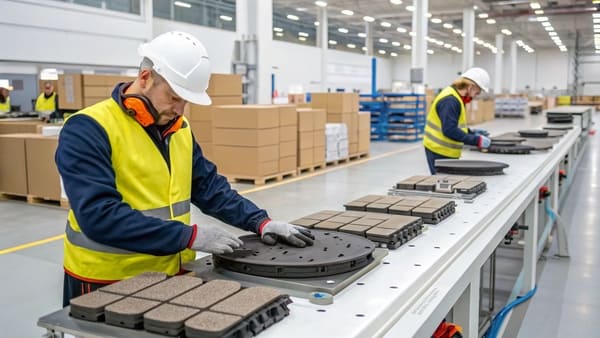
When we talk about brake pads, safety is the number one priority. There is no room for error. For my clients—whether they are global brands, distributors, or importers—their reputation rests on the quality of the products they sell. A failing brake pad isn't just a defective part; it's a potential disaster. That's why international standards like ECE R90 in Europe or AMECA testing in the United States6 exist. A reliable manufacturer doesn't just meet these standards; they build their entire process around them.
Beyond the immediate safety concerns, there is a huge business impact. Imagine a whole batch of brake pads being recalled. The financial cost is massive, but the damage to your brand's trust is even worse. Customers who lose faith in your products rarely come back. As a B2B manufacturer, my clients' success is my success. They need a stable, uninterrupted supply of parts they can trust, shipment after shipment. This is why the search for a truly reliable partner is so intense. It’s about building a business on a foundation of safety and trust.
What Should You Look for Before Choosing a Brake Pad Manufacturer?
You have a list of potential suppliers, but they all look the same on paper. Making the wrong choice can lock you into a bad partnership and waste valuable resources.
You should look for a manufacturer with strong material science knowledge, advanced production processes, and strict quality control. Key factors include their OEM/ODM experience, ability to handle custom formulations like ceramic or semi-metallic, and verifiable certifications. A transparent and communicative partner is also essential.
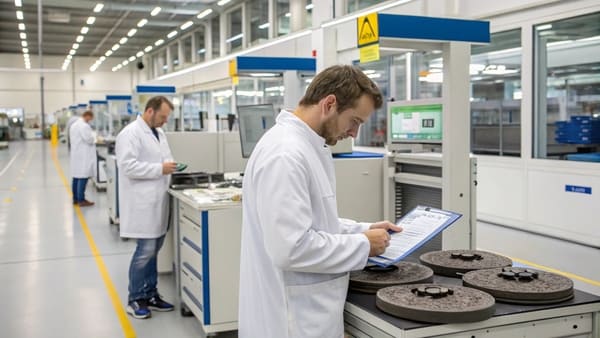
The manufacturing of brake pads is far more difficult than most people think.7 For instance, the plastic accessory components on brake pads require extreme precision that a standard injection molding machine simply can't achieve. The process involves at least three main stages, and the most challenging of all is cooling.8 I learned this the hard way on one of my first projects. We were making components for a client from Pakistan. After the parts were molded, the post-cooling "shrinkage" was pretty severe. I was worried we had made a huge mistake. Luckily, the client actually preferred the tighter fit. It was a lucky break, but it taught me a valuable lesson about controlling every tiny variable in the production process. We have perfected it since then.
Another tricky part is adding color powder. To add color, the machine has to stop and the mold has to be opened. This completely changes the cooling dynamics and can easily ruin the part if not handled by experienced technicians.9 These are the kinds of details that separate a top-tier manufacturer.
Here are the key things to look for in a partner:
| Criterion | Why It Matters | What to Ask a Potential Supplier |
|---|---|---|
| Material Expertise | The formulation directly affects performance, noise, dust, and lifespan. | What formulations do you offer (ceramic, semi-metallic, organic)? Can you develop a custom compound for my market? |
| Production Technology | The machinery used determines precision, consistency, and quality. | What kind of machinery do you use for molding? How do you control the cooling process to ensure consistency? |
| Quality Control | This ensures every single part meets safety and performance standards. | What are your QC procedures from raw material to final product? Are you certified with ISO/TS16949 or IATF 16949? |
| OEM/ODM Experience | This shows they can handle complex projects and meet the high standards of car brands. | Can you share case studies or examples of past OEM/ODM projects you have completed? |
Which Countries Have the Strongest Brake Pad Manufacturing Industry?
You want to source globally for the best quality and value, but you don't know where to start looking. Focusing on the wrong region can waste months of your time.
Countries like Germany, Japan, the USA, and China all have very strong brake pad manufacturing industries. Germany and Japan are known for premium OEM quality, while the USA has a robust aftermarket. China offers massive industrial scale, combining cost-effectiveness with high-tech capabilities in specific industrial clusters.
Different countries have different strengths, and the best choice for you depends on your business goals. Germany and Japan are home to some of the world's most famous OEM suppliers, like Bosch and Akebono.10 They are the benchmark for engineering and quality, but this comes at a premium price. The USA has a very strong and mature aftermarket, with well-known brands that have built a lot of trust with consumers over decades.11
China, on the other hand, is a different story. The country's manufacturing capability is enormous, but it is not all the same. You have to know where to look. For high-precision components like those in brake pads, the best manufacturers are concentrated in specific regions. For example, the most advanced machinery and skilled factories for these parts are often found in coastal areas like Fujian province or around major hubs like Shanghai.12 Factories in other regions, like Hebei for instance, may use equipment that doesn't meet the tight tolerances required for top-tier brake pad components. This regional specialization is a key piece of insider knowledge for sourcing effectively in China. Knowing this helps you filter out the noise and focus on partners who truly have the technology and experience to deliver.
| Country | Strengths | Best For |
|---|---|---|
| Germany | Premium Quality, OEM Focus, Engineering Excellence | High-end vehicle brands, performance aftermarket |
| Japan | OEM Dominance, Extreme Reliability, R&D | Japanese car brands, buyers prioritizing consistency |
| USA | Strong Aftermarket Brands, Market Recognition | North American market distribution and branding |
| China | Massive Scale, Cost-Effectiveness, Specialized Clusters | Wholesale, private label, and mass-market OEM/ODM projects |
Conclusion
Finding the best brake pad manufacturer means prioritizing technical expertise, proven processes, and regional specialization. Choose a partner who understands that safety and quality must come before anything else.
"[PDF] IMPORTANT SAFETY RECALL RECALL NO. 16E026 May 2016", https://static.nhtsa.gov/odi/rcl/2016/RCMN-16E026-3719.pdf. Industry reports and case studies have documented that sourcing from unreliable brake pad suppliers has led to safety recalls and reputational damage for automotive brands, though the extent of impact varies by incident. Evidence role: case_reference; source type: institution. Supports: A bad partner can lead to safety issues and a damaged reputation.. Scope note: Specific outcomes depend on the scale of the recall and the brand's response. ↩
"Brake Pad Timeline - Department of Toxic Substances Control", https://dtsc.ca.gov/scp/brake-pad-timeline/. Industry guidelines and expert analyses highlight that proven quality control, material expertise, and large-scale production capabilities are critical for reliable brake pad manufacturing, with many top suppliers located in specialized industrial regions. Evidence role: expert_consensus; source type: institution. Supports: The right partner is one with proven quality control, deep material expertise, and the capability for large-scale production, often found in specialized industrial regions that focus on automotive safety components.. Scope note: Regional specialization may vary by country and market segment. ↩
"Brake Pad Timeline - Department of Toxic Substances Control", https://dtsc.ca.gov/scp/brake-pad-timeline/. Automotive safety authorities and technical standards classify brake pads as critical safety components due to their essential role in vehicle braking systems. Evidence role: definition; source type: government. Supports: Buyers search for reliable manufacturers because brake pads are non-negotiable safety components.. ↩
"[PDF] IMPORTANT SAFETY RECALL - nhtsa", https://static.nhtsa.gov/odi/rcl/2016/RCONL-16E026-3109.pdf. Regulatory recall databases and industry analyses show that inconsistent brake pad quality has led to safety risks, product recalls, and reputational harm for manufacturers. Evidence role: case_reference; source type: government. Supports: Inconsistent quality creates serious safety risks, costly recalls, and permanent brand damage.. Scope note: The frequency and severity of such outcomes depend on the specific defect and market response. ↩
"Brake Pads Frequently Asked Questions", https://dtsc.ca.gov/scp/brake-pads-frequently-asked-questions/. Supply chain management research emphasizes that dependable suppliers are crucial for ensuring product compliance, consistent performance, and supply chain stability, all of which contribute to long-term business success in the automotive sector. Evidence role: expert_consensus; source type: education. Supports: A dependable supplier guarantees product compliance, consistent performance, and a stable supply chain, which are all essential for long-term business success.. Scope note: The degree of impact may vary by company size and market conditions. ↩
"ECE Regulation 90 - Wikipedia", https://en.wikipedia.org/wiki/ECE_Regulation_90. Automotive regulatory bodies define ECE R90 as a European standard for replacement brake linings, and AMECA as a US-based certification program for brake components, both aimed at ensuring safety and performance. Evidence role: definition; source type: government. Supports: That's why international standards like ECE R90 in Europe or AMECA testing in the United States exist.. Scope note: Standards may differ in scope and enforcement between regions. ↩
"How Brake Pads are Made - YouTube", https://www.youtube.com/watch?v=H1WXlHONorw. Technical reviews and industry publications describe brake pad manufacturing as a complex process involving precise material formulation, molding, and quality control. Evidence role: mechanism; source type: education. Supports: The manufacturing of brake pads is far more difficult than most people think.. Scope note: Complexity may vary depending on the type of brake pad and production scale. ↩
"Fundamental steps in the manufacture of brake pads", https://www.fmgbrakes.com/remsa/how-are-brake-pads-produced/. Manufacturing engineering sources outline multiple stages in brake pad production, including molding and cooling, with cooling identified as a critical step affecting final product quality. Evidence role: mechanism; source type: education. Supports: The process involves at least three main stages, and the most challenging of all is cooling.. Scope note: The relative difficulty of each stage may depend on specific manufacturing methods. ↩
"The Effect of Molding Temperature on the Mechanical and ... - PMC", https://pmc.ncbi.nlm.nih.gov/articles/PMC12177619/. Manufacturing process guides note that introducing color additives and interrupting the molding process can alter cooling rates and affect the quality of molded brake pad components. Evidence role: mechanism; source type: education. Supports: To add color, the machine has to stop and the mold has to be opened. This completely changes the cooling dynamics and can easily ruin the part if not handled by experienced technicians.. Scope note: The impact depends on the specific materials and process controls used. ↩
"Akebono Brake Industry - Wikipedia", https://en.wikipedia.org/wiki/Akebono_Brake_Industry. Industry directories and company profiles confirm that Bosch (Germany) and Akebono (Japan) are among the most prominent OEM brake pad suppliers globally. Evidence role: case_reference; source type: encyclopedia. Supports: Germany and Japan are home to some of the world's most famous OEM suppliers, like Bosch and Akebono.. Scope note: Market leadership may shift over time or by vehicle segment. ↩
"Automotive aftermarket - Wikipedia", https://en.wikipedia.org/wiki/Automotive_aftermarket. Market research reports indicate that the United States has a well-developed automotive aftermarket sector, with established brake pad brands recognized for consumer trust and product reliability. Evidence role: historical_context; source type: research. Supports: The USA has a very strong and mature aftermarket, with well-known brands that have built a lot of trust with consumers over decades.. Scope note: Brand reputation may vary by region and product line. ↩
"Fujian Motors Group - Wikipedia", https://en.wikipedia.org/wiki/Fujian_Motors_Group. Chinese industrial reports and trade analyses identify coastal regions such as Fujian and Shanghai as centers for advanced automotive parts manufacturing, including high-precision brake pad production. Evidence role: historical_context; source type: government. Supports: the most advanced machinery and skilled factories for these parts are often found in coastal areas like Fujian province or around major hubs like Shanghai.. Scope note: Industrial specialization may evolve with economic and policy changes. ↩