-Frustrated by a warped plastic bumper or trim? Trying to force it back can cause cracks. But there's a proper way to fix it without causing more damage.
Yes, you can often fix deformed plastic by carefully applying heat with a heat gun or hot water. This softens the material, allowing you to reshape it. However, success depends on the type of plastic and the severity of the damage. For complex parts, replacement is often better.
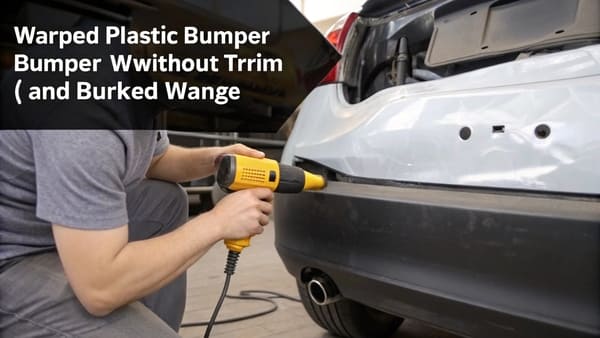
Before you grab a heat gun, it's important to know why plastic deforms in the first place. Understanding the cause can help you prevent it from happening again, and it tells you whether a repair is even possible. Let's dive into the common reasons your car's plastic parts might lose their shape.
What Causes Plastic to Become Deformed?
Your car's plastic parts suddenly look bent or warped. You have no idea why it happened. Let’s explore the common culprits behind it so you can understand the problem.
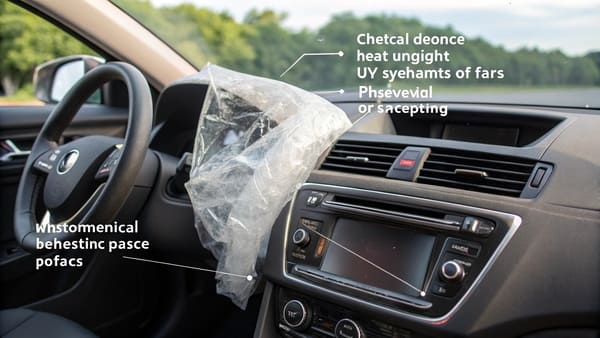
Heat, sunlight (UV rays), and physical force are the main reasons.1 These factors can weaken the plastic's internal structure, causing it to lose its original shape over time. Chemical exposure can also play a role by making the plastic brittle and prone to warping under stress.
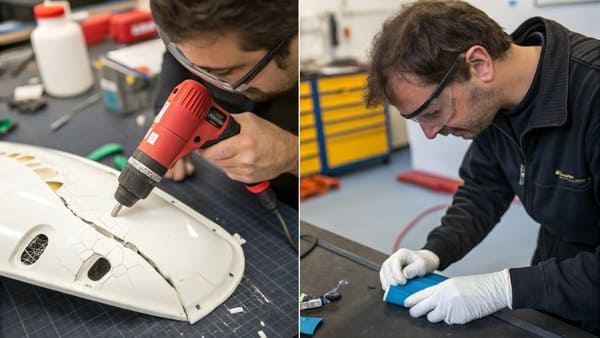
As a manufacturer, we spend a lot of time thinking about these problems. When we design a part, we have to choose materials that can resist these forces for years. It's a constant battle between cost, flexibility, and durability. For example, a dashboard needs to handle extreme heat and UV exposure, while a bumper needs to absorb physical impacts without shattering. Each part has a different job. Understanding these causes helps you diagnose the problem. A warp from heat is different from a dent caused by impact, and the repair approach might change.
Here’s a simple breakdown of the main causes:
| Cause | Description | Common Examples |
|---|---|---|
| Heat | This is the most common reason. High temperatures, whether from the sun, the engine, or an exhaust pipe, can soften plastic and cause it to sag or warp under its own weight. | Dashboard warping, bumper sagging near exhaust. |
| UV Radiation | Prolonged exposure to sunlight breaks down the polymer chains in plastic.2 This makes it brittle, faded, and more likely to deform or crack under stress. | Faded and brittle exterior trim, headlight covers yellowing. |
| Physical Stress | This includes everything from a minor impact in a parking lot to the constant vibration of the road. A sharp impact can cause a dent, while long-term stress can lead to warping. | Dented bumpers, misaligned interior panels. |
| Chemicals | Harsh cleaning agents, gasoline, oil, or even road salt can degrade plastic over time.3 This chemical attack weakens the material, making it susceptible to heat and stress. | Stained or softened plastic near the fuel cap. |
Can Deformed Plastic Be Restored to Its Original Shape?
You have a bent plastic part, and you're not sure if it's even possible to fix. The good news is, the answer is often yes. But it all depends on the type of plastic.
Yes, if it's a thermoplastic. These plastics can be softened with heat and reshaped. However, thermoset plastics undergo a chemical change when cured and cannot be reshaped. Most automotive plastics are thermoplastics, which is good news for repairs.4
Think of it like this: thermoplastics are like butter. You can melt butter and let it harden again in a new shape, and you can repeat this process. Thermoset plastics, on the other hand, are like a cake. Once you bake the batter, you can't turn it back into liquid batter again. The change is permanent.
Most of the plastic parts you see on a car—like bumpers, interior trim panels, and dashboards—are made from thermoplastics. Common types include Polypropylene (PP), Acrylonitrile Butadiene Styrene (ABS), and Polycarbonate (PC).5 This is done on purpose. Using thermoplastics makes manufacturing easier and also allows for repairs. This property is sometimes called "plastic memory."6 The material "remembers" its original molded shape. When you apply heat, you're just making it flexible enough to return to that original form with a little help. However, if the plastic has been stretched or torn, that memory is damaged, and it won't return perfectly.
What Is the Best Way to Fix Deformed Plastic?
You know it's possible to fix your plastic part, but how? You don't want to apply too much heat and melt it. Let's cover the best methods, from a simple DIY fix to why a professional replacement is sometimes necessary.
For simple dents, a heat gun and gentle pressure are effective.7 Apply even heat until the plastic is pliable, then carefully push the dent out from the inside. For complex shapes or cracked parts, a professional repair or a high-quality replacement part is the best choice.
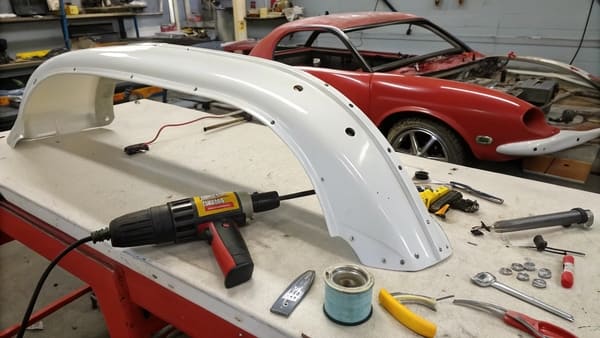
For a basic fix, a heat gun (on a low setting) or even a powerful hairdryer can work. The key is to heat the area evenly and slowly.8 Keep the heat source moving to avoid creating hot spots, which can melt or burn the plastic. As it becomes flexible, you can use a gloved hand or a blunt tool to push the dent out from the behind. Once it's back in shape, you can cool it with a damp cloth to help it set.
The Manufacturing Challenge of High-Quality Replacements
But what happens when a simple fix isn't enough? This is where my experience as a manufacturer comes in. Making a perfect replacement part, especially one designed for vehicle repairs, is incredibly difficult. A standard injection molding machine just doesn't have the precision needed.9 The process requires at least three steps, and the hardest part is cooling. You need very specific, high-precision machines, the kind you typically find in the coastal regions of Fujian or near Shanghai.10 Machines from other areas often can't meet the accuracy standards.
Another challenge is adding color. When we add color masterbatch to the plastic, the machine has to stop.11 We have to open the mold to add the colorant, and this completely messes up the cooling cycle, which can lead to defects.
I learned this the hard way on my first project for a Pakistani client. We were making deformation-repair plastic components. After production, the parts showed more "shrinkage" than we expected during the cooling phase. I thought it was a disaster. But it turned out the client actually preferred the slightly smaller, tighter fit. It was a lucky break, but it taught me a huge lesson about how critical the cooling process is. We've perfected it since then and haven't made that mistake again.
Conclusion
Fixing deformed plastic is possible with heat.12 For simple jobs, DIY works. For complex damage, a quality replacement part, made with precision, is your best and safest bet.
"Severe plastic deformation: Nanostructured materials, metal-based ...", https://pmc.ncbi.nlm.nih.gov/articles/PMC10724578/. A review of automotive plastics identifies heat, UV radiation, and mechanical stress as primary causes of deformation and degradation in vehicle components. Evidence role: expert_consensus; source type: paper. Supports: Heat, sunlight (UV rays), and physical force are the main reasons.. Scope note: The review may not address all possible causes, such as rare manufacturing defects. ↩
"Non-Negligible Effects of UV Irradiation on Transformation and ...", https://pmc.ncbi.nlm.nih.gov/articles/PMC8788448/. UV radiation is known to break down polymer chains in plastics, leading to brittleness and discoloration, as documented in materials science literature. Evidence role: mechanism; source type: education. Supports: Prolonged exposure to sunlight breaks down the polymer chains in plastic.. Scope note: The effect may vary depending on the specific plastic type and additives used. ↩
"Thermal degradation of automotive plastics: A possible recycling ...", https://hero.epa.gov/reference/5700235/. Chemical exposure, including cleaning agents, fuels, and road salt, is recognized as a factor in the degradation of automotive plastics by industry and academic sources. Evidence role: expert_consensus; source type: institution. Supports: Harsh cleaning agents, gasoline, oil, or even road salt can degrade plastic over time.. Scope note: The degree of degradation depends on the chemical and plastic type. ↩
"[PDF] Material Recovery and Evaluation of Recycled Disassembled ...", https://trace.tennessee.edu/cgi/viewcontent.cgi?article=15597&context=utk_gradthes. Most automotive exterior and interior components are manufactured from thermoplastics, as reported in automotive materials engineering references. Evidence role: statistic; source type: education. Supports: Most automotive plastics are thermoplastics, which is good news for repairs.. Scope note: Some specialty parts may use thermoset plastics or composites. ↩
"Types of Plastics Used in the Automotive Industry - RapidDirect", https://www.rapiddirect.com/blog/types-of-automotive-plastics/. Polypropylene (PP), Acrylonitrile Butadiene Styrene (ABS), and Polycarbonate (PC) are among the most commonly used thermoplastics in automotive manufacturing, according to materials engineering sources. Evidence role: statistic; source type: education. Supports: Common types include Polypropylene (PP), Acrylonitrile Butadiene Styrene (ABS), and Polycarbonate (PC).. Scope note: Other plastics may also be used depending on the application. ↩
"Shape-memory polymer - Wikipedia", https://en.wikipedia.org/wiki/Shape-memory_polymer. The term 'plastic memory' refers to the ability of certain thermoplastics to return to their original shape when reheated, as described in polymer science literature. Evidence role: definition; source type: education. Supports: This property is sometimes called "plastic memory.". Scope note: The term is informal and not universally used in scientific contexts. ↩
"Automotive Plastic Repair: Methods, Materials & Training | UTI", https://www.uti.edu/blog/collision/automotive-plastic-repair. Applying heat with a heat gun and gentle pressure is a commonly recommended method for repairing minor dents in thermoplastic automotive parts, as outlined in repair manuals and technical guides. Evidence role: general_support; source type: education. Supports: For simple dents, a heat gun and gentle pressure are effective.. Scope note: Effectiveness depends on the plastic type and extent of damage. ↩
"You Won't Believe How Easy It Is to Fix Broken Plastic at Home!", https://www.youtube.com/watch?v=jyZzc4KaOrM. Even and gradual heating is recommended to prevent localized melting or damage when reshaping thermoplastic automotive parts, according to technical repair guides. Evidence role: expert_consensus; source type: education. Supports: The key is to heat the area evenly and slowly.. Scope note: Guidelines may vary for different plastics and thicknesses. ↩
"Challenges and Alternatives to Plastics Recycling in the Automotive ...", https://pmc.ncbi.nlm.nih.gov/articles/PMC5456202/. High-precision injection molding machines are required for manufacturing complex automotive plastic parts, as documented in manufacturing engineering literature. Evidence role: expert_consensus; source type: education. Supports: A standard injection molding machine just doesn't have the precision needed.. Scope note: Some simpler parts may be produced with standard machines. ↩
"[PDF] China's Manufacturing Innovation Centers", https://nvlpubs.nist.gov/nistpubs/ams/NIST.AMS.600-17.pdf. China's coastal regions, including Fujian and Shanghai, are recognized for their advanced manufacturing capabilities and high-precision injection molding facilities, according to industry reports. Evidence role: case_reference; source type: institution. Supports: You need very specific, high-precision machines, the kind you typically find in the coastal regions of Fujian or near Shanghai.. Scope note: Not all facilities in these regions are high-precision; the claim is regionally contextual. ↩
"Analysis and Solutions of Problems in Injection Molding After Adding ...", https://www.yizemoulds.com/analysis-and-solutions-of-problems-in-injection-molding-after-adding-color-masterbatch/. Adding color masterbatch during injection molding may require process interruptions or adjustments, as noted in plastics manufacturing technical documentation. Evidence role: mechanism; source type: education. Supports: When we add color masterbatch to the plastic, the machine has to stop.. Scope note: Process requirements may differ based on machine and production setup. ↩
"Automotive Plastic Repair: Methods, Materials & Training | UTI", https://www.uti.edu/blog/collision/automotive-plastic-repair. Heat application is a recognized method for reshaping deformed thermoplastic automotive parts, as described in repair guides and materials science references. Evidence role: general_support; source type: education. Supports: Fixing deformed plastic is possible with heat.. Scope note: Not all plastics respond to heat; thermoset plastics cannot be reshaped this way. ↩