-Are you ever unsure about the right time to use your car horn? Many drivers use it out of frustration, but its real purpose is safety, not anger.
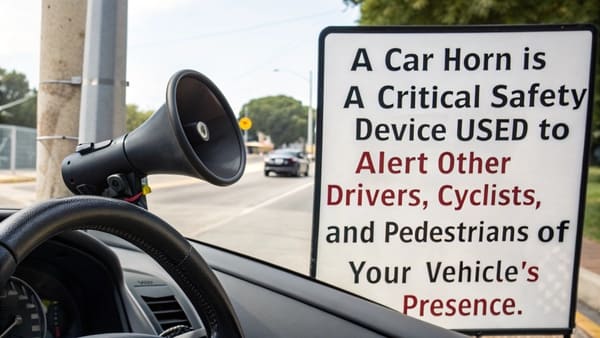
A car horn is a critical safety device used to alert other drivers, cyclists, and pedestrians of your vehicle's presence. Its main function is to prevent accidents by providing a loud, audible warning in situations where visual signals are not enough.1
The sound of a car horn is one of the most recognized noises on the road. We hear it every day, but we might not think much about what it is or how it works. Understanding this simple device is key to using it effectively and staying safe. Let's take a closer look at this essential piece of equipment.
What Is a Car Horn?
Feeling confused about the mechanics behind that loud honk? A car horn seems simple, but it's a precisely engineered device that has to work every single time.
A car horn is an auditory signaling device that uses an electromagnet to vibrate a metal diaphragm.2 This vibration creates the sound waves that we hear as a "honk." The entire mechanism is protected by a durable housing, usually made of high-grade plastic.3

Let's dive deeper into how a horn is made. The basic parts are an electromagnet, a steel diaphragm, and the outer shell. When you press the horn button, electricity flows to the electromagnet, which pulls the diaphragm. This movement breaks the circuit, the magnet releases, and the diaphragm snaps back. This happens hundreds oftimes a second, creating the sound. The plastic housing that protects these parts is surprisingly difficult to make. It requires very precise injection molding machines that many factories don't have. The cooling process is the hardest part.
I remember my first project involving horn housings for a client in Pakistan. We were still learning, and the plastic parts "shrank" more than expected after cooling. I was worried we had failed. But the client actually preferred the slightly smaller, denser feel. It was a lucky break, but it taught us a valuable lesson about controlling every step, especially cooling and adding color pigments, which can also affect the final product.
| Component | Function | Manufacturing Note |
|---|---|---|
| Diaphragm | A flexible steel disc that vibrates to create sound. | Material quality is crucial for tone and longevity. |
| Electromagnet | Creates a magnetic field to pull and release the diaphragm. | Winding consistency determines performance. |
| Housing | A plastic shell that protects internal parts from weather. | Requires high-precision injection molding and controlled cooling. |
| Contacts | A switch that makes and breaks the electrical circuit. | Must be durable to handle rapid cycling. |
What Are Car Horns Used For?
Do you only use your horn when you're angry at another driver? Using it incorrectly can cause more problems than it solves and might even be illegal.
A car horn should be used primarily for safety alerts.4 This includes warning pedestrians who are about to step into traffic, alerting a driver who is drifting into your lane, or making your presence known around a blind corner. It is a tool for communication, not aggression.
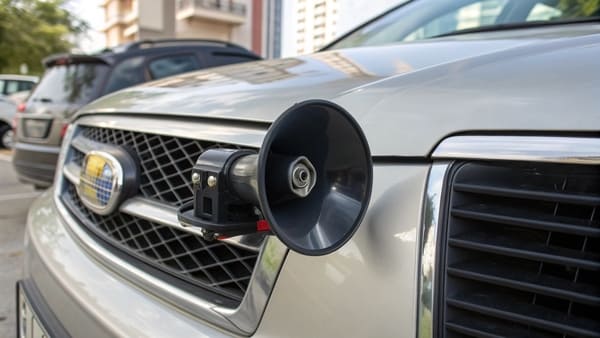
The main job of a horn is to prevent a collision before it happens. Think of it as a shout of "Hey, look out!" for your car. Its uses can be broken down into a few key situations. The most important use is to alert someone who is unaware of danger. This could be a driver checking their phone and not seeing the light turn green, or a cyclist who is about to merge without looking. It's also essential in low-visibility conditions. If you're driving on a narrow, winding mountain road, a quick toot before a blind curve can let oncoming traffic know you're there.
However, it's just as important to know when not to use the horn. Honking in a traffic jam won't make the cars move. Honking at a slow driver out of frustration only creates stress and road rage. A friendly, short tap is sometimes used to say "hello" or "thank you," but this can be misunderstood in different places. Sticking to safety-related uses is always the best policy.
| Situation | Appropriate Use | Inappropriate Use |
|---|---|---|
| Pedestrians | A short toot to warn someone stepping off the curb. | A long blast at people crossing legally. |
| Other Cars | Alerting a driver drifting into your lane. | Honking because someone is driving the speed limit. |
| Communication | A quick tap to signal you're ready to go. | Expressing anger or impatience in a traffic jam. |
| Hazards | Honking before a blind corner on a narrow road. | Using it to scold another driver for a past mistake. |
Why Are Car Horns Important for Road Safety?
Do you see the car horn as just another button on your steering wheel? Underestimating its importance can put you and others at risk in critical moments.
The car horn is a vital, active safety feature that prevents accidents by providing an immediate auditory warning. It cuts through distractions and works when visual cues fail, making it an indispensable tool for avoiding collisions and protecting vulnerable road users.

A car horn is your vehicle's voice, and its primary job is to enhance safety. Unlike passive safety features like airbags, which protect you during a crash, the horn is an active feature that helps you avoid the crash altogether.5 Its sound is designed to be loud and distinct enough to grab attention instantly.6 This is crucial in today's world, where drivers and pedestrians are often distracted by phones, music, or conversations. A visual signal, like flashing your lights, might not work if the other person isn't looking in your direction. But a horn's sound travels, reaching people even when they aren't looking.
Think about a car backing out of a driveway without seeing a child on a bicycle. A quick honk can prevent a tragedy. Or consider a situation on the highway where a truck's large blind spot hides your car. A horn alerts the truck driver to your presence before they change lanes. For these reasons, horns are regulated to ensure they are loud enough—typically between 100-110 decibels—to be effective. It is a simple, reliable, and universal signal for "danger."7
Conclusion
Your car horn is a powerful communication tool for safety. Use it wisely to prevent accidents by alerting others, not to express anger, ensuring a safer road for everyone.
"How Car Horns Prevent Accidents and Improve Road Safety", https://www.rootsautomotives.com/blog/the-role-of-car-horns-in-accident-prevention/. Automotive safety literature notes that car horns are intended to prevent accidents by providing an audible warning when visual cues are insufficient. Evidence role: mechanism; source type: encyclopedia. Supports: Its main function is to prevent accidents by providing a loud, audible warning in situations where visual signals are not enough.. Scope note: This is a general safety principle and may not account for all specific traffic regulations. ↩
"Vehicle horn", https://en.wikipedia.org/wiki/Vehicle_horn. Technical references describe car horns as devices that use an electromagnet to vibrate a diaphragm, producing sound waves. Evidence role: definition; source type: encyclopedia. Supports: A car horn is an auditory signaling device that uses an electromagnet to vibrate a metal diaphragm.. ↩
"Vehicle horn", https://en.wikipedia.org/wiki/Vehicle_horn. Automotive engineering guides state that car horn mechanisms are typically enclosed in durable plastic housings to protect against environmental factors. Evidence role: general_support; source type: education. Supports: The entire mechanism is protected by a durable housing, usually made of high-grade plastic.. Scope note: Material composition may vary by manufacturer and model. ↩
"RCW 46.37.380:", https://app.leg.wa.gov/rcw/default.aspx?cite=46.37.380. Traffic safety authorities recommend that car horns be used mainly for safety alerts, such as warning of immediate danger. Evidence role: expert_consensus; source type: government. Supports: A car horn should be used primarily for safety alerts.. Scope note: Specific regulations may differ by country or region. ↩
"Interpretation ID: 11655DRN", https://www.nhtsa.gov/interpretations/11655drn. Safety engineering literature distinguishes between passive features, such as airbags, and active features like horns, which are intended to prevent accidents. Evidence role: definition; source type: education. Supports: Unlike passive safety features like airbags, which protect you during a crash, the horn is an active feature that helps you avoid the crash altogether.. Scope note: The classification of safety features may vary in some contexts. ↩
"Eli5: Why are truck horns so much louder than car horns?", https://www.reddit.com/r/explainlikeimfive/comments/1bj0as1/eli5_why_are_truck_horns_so_much_louder_than_car/. Vehicle safety standards specify that car horns must emit a loud and distinct sound to ensure they are noticed by other road users. Evidence role: mechanism; source type: government. Supports: Its sound is designed to be loud and distinct enough to grab attention instantly.. Scope note: Exact loudness requirements may vary by jurisdiction. ↩
"The Essential Role of Car Horns in Driving Safety", https://www.counterman.com/car-horns-driving-safety/. Road safety references describe the car horn as a widely recognized and reliable auditory signal used to indicate immediate danger on the road. Evidence role: general_support; source type: encyclopedia. Supports: It is a simple, reliable, and universal signal for "danger.". Scope note: Universality may not account for all cultural or regional differences in horn use. ↩