-Choosing a school bus AC is complex and a wrong choice leads to high costs. You need to understand the key components and manufacturing processes before making a decision.
A school bus air conditioning system is a specialized, heavy-duty climate control unit. It's engineered for large cabins and focuses on high capacity, durability, and the manufacturing quality of its core components, including the plastic housings and ductwork that are critical for performance.1
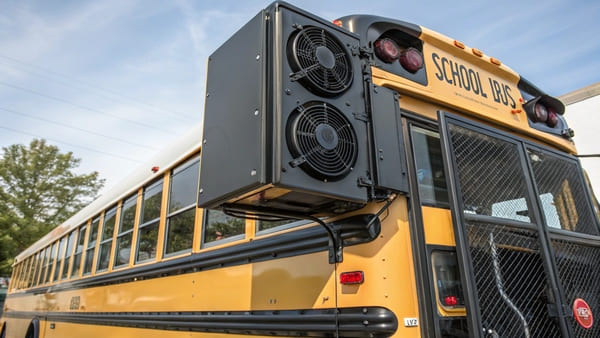
Choosing the right air conditioning system for a school bus is a big decision. It’s not just about comfort; it's about safety, reliability, and long-term costs. You need to look beyond the basic specifications. The quality of every single part matters, from the compressor down to the plastic vents. I want to walk you through what I've learned over the years so you can make a better choice.
What Is a School Bus Air Conditioning System?
Many people think a bus AC is just a bigger car AC. This mistake leads to specifying the wrong parts and facing system failures. You must know it's a unique system.
A school bus air conditioning system is a high-capacity climate control unit designed specifically for the large interior of a bus. It includes an oversized compressor, condenser, multiple evaporators, and crucially, high-precision plastic components for airflow and housing.

A school bus AC is much more than an enlarged version of what you have in your car. It's an engineered solution built to handle extreme demands. The large cabin volume, big windows, and frequent door openings mean the system has to work incredibly hard. Because of this, every component is designed for heavy-duty use and durability. We specialize in developing these parts, and we know that the quality of the smallest piece can affect the whole system. The ducting and housings, for example, must be perfectly molded to ensure efficient and quiet airflow.
Key Components Breakdown
The components in a bus AC are fundamentally different from those in a standard passenger vehicle. They are bigger, stronger, and built to last longer under constant operation.2 Here is a simple comparison:
| Component | Standard Car AC | School Bus AC |
|---|---|---|
| Compressor | Smaller, designed for intermittent use | Larger, heavy-duty for continuous operation |
| Evaporator(s) | Single, smaller unit | Often multiple, large-capacity units |
| Ducting & Vents | Simple, integrated into dashboard | Complex, extensive network of ducts |
| Housing Material | Standard injection-molded plastic | High-precision plastic, often with special additives |
Why Is Air Conditioning Important for School Buses?
Some people see AC as a luxury, not a necessity for a school bus. This view ignores major safety and health risks for students and drivers. Let's look at its role.
Air conditioning is vital for student safety and well-being. It prevents heat-related illnesses, reduces driver distraction by keeping them comfortable, improves cabin air quality through filtration, and creates a better environment for children.3
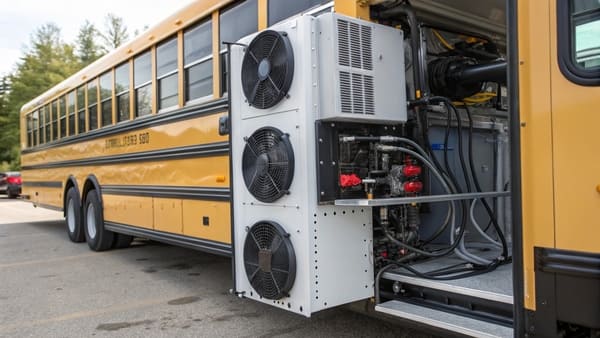
The importance of a reliable AC system in a school bus goes far beyond simple comfort. On a hot day, the interior of a bus can reach dangerous temperatures very quickly.4 A good AC system is a critical safety feature that protects children from heatstroke and other heat-related health issues. Beyond that, it creates a better environment for everyone on board. It helps keep students calm and reduces the stress and distraction for the driver, allowing them to focus on the road.
Health and Safety
A controlled cabin temperature is essential for health. Children are more vulnerable to extreme heat than adults.5 A functioning AC system keeps the temperature stable, reducing the risk of dehydration and heat exhaustion. It also allows the windows to remain closed. This improves security and keeps out external noise and exhaust fumes. Most modern bus AC systems also include filters that improve the air quality inside the bus by removing dust, pollen, and other pollutants.6
Driver Focus and Performance
A comfortable driver is a safe driver. Driving a large vehicle full of children requires immense concentration. High temperatures can cause fatigue, irritability, and a loss of focus.7 By providing a cool and comfortable environment, the AC system helps the driver stay alert and attentive to the road. This directly contributes to the safety of every child on board. A reliable system isn't a luxury; it's a core piece of safety equipment.8
How Does a School Bus Air Conditioning System Work?
The inner workings of a bus AC can seem very complex. This complexity can make sourcing high-quality systems or replacement parts feel intimidating. Let's break down the basic process.
It uses a refrigerant cycle, just like other air conditioners. A compressor pressurizes refrigerant, which turns into a cold liquid. This liquid flows to the evaporator, and a fan blows air over the cold coils, cooling the bus cabin.9 The system's large scale is what makes it unique.
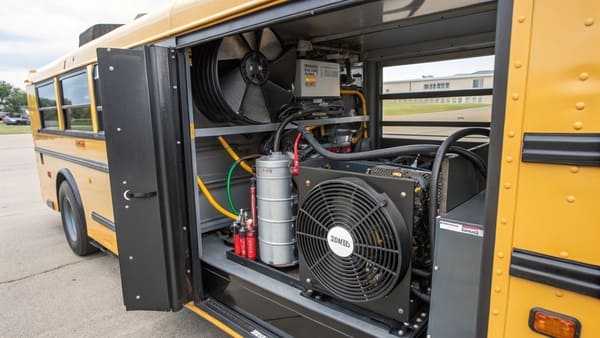
The basic principle is simple, but making it work on a large scale is the real challenge. The system moves a refrigerant through a loop. The compressor puts the refrigerant under pressure, the condenser releases heat, and the evaporator gets very cold. Air blown over the evaporator cools the bus. The real difficulty, and where quality truly matters, is in the manufacturing of the components that make up this system, especially the plastic parts.
The Manufacturing Challenge: Plastic Components
Making the plastic parts for a school bus AC, like the main housing and air vents, is extremely difficult. The precision required is very high.10 A standard injection molding machine just can't meet the standard. The process has several steps, and the cooling stage is the hardest part. If the cooling is not controlled perfectly, the part can warp or shrink unevenly.11
I remember my first project for a client from Pakistan. We were making these complex AC housings. After the injection and cooling process, the parts "shrank" a little more than our initial calculations predicted. I was very worried we had failed. But when the client received the samples, he was thrilled. The slightly smaller, denser part was actually stronger and fit even better in their assembly. It was a lucky mistake, but it taught us a valuable lesson about material science and controlling the cooling process. This kind of work requires specialized machines, which you usually find in the coastal areas of Fujian or near Shanghai. Factories in other regions often lack the technology to achieve this level of precision.12 Adding color to the plastic also complicates things, as the machine must be stopped and the mold opened, which makes the cooling process even harder to manage.
Conclusion
A school bus AC is a critical safety system. Its reliability depends on the high-quality manufacturing of all its parts, especially the complex plastic components that require expert-level production.
"Heating, ventilation, and air conditioning - Wikipedia", https://en.wikipedia.org/wiki/Heating,_ventilation,_and_air_conditioning. A technical overview from a transportation engineering source describes school bus air conditioning systems as specialized, high-capacity units designed for large vehicle cabins, emphasizing durability and the importance of robust core components such as ductwork and housings. Evidence role: definition; source type: education. Supports: A school bus air conditioning system is a specialized, heavy-duty climate control unit engineered for large cabins, focusing on high capacity, durability, and the manufacturing quality of its core components.. Scope note: Most sources focus on general system design and may not detail the role of plastic housings specifically. ↩
"How Does Car AC Work? | UTI - Universal Technical Institute", https://www.uti.edu/blog/automotive/air-conditioning. A comparative analysis from a transportation engineering textbook explains that bus air conditioning components are larger and designed for continuous, heavy-duty operation compared to those in passenger vehicles. Evidence role: mechanism; source type: education. Supports: Bus AC components are fundamentally different from those in standard passenger vehicles, being larger, stronger, and built for longer, continuous operation.. Scope note: Direct comparisons may vary by manufacturer and model; generalizations are based on typical industry practices. ↩
"Heat and People without Air Conditioning - CDC", https://www.cdc.gov/heat-health/risk-factors/heat-and-low-income.html. A report from the U.S. Centers for Disease Control and Prevention (CDC) highlights the risks of heat-related illnesses in children and the importance of air conditioning in preventing such outcomes in school transportation settings. Evidence role: statistic; source type: government. Supports: Air conditioning is vital for student safety and well-being, particularly in preventing heat-related illnesses during school transportation.. Scope note: While the CDC addresses heat risks and the benefits of air conditioning, it may not discuss all aspects such as driver distraction or air filtration in detail. ↩
"Stress Response and Safe Driving Time of Bus Drivers in Hot Weather", https://pmc.ncbi.nlm.nih.gov/articles/PMC9367783/. A study published in a public health journal documents that the interior temperature of parked school buses can rise rapidly to dangerous levels, posing health risks to children. Evidence role: statistic; source type: paper. Supports: On hot days, the interior of a bus can reach dangerous temperatures quickly, creating health risks.. Scope note: Most studies focus on stationary buses; temperature rise during operation may differ. ↩
"Protecting Children and Maternal Health from Extreme Heat | US EPA", https://www.epa.gov/children/protecting-children-and-maternal-health-extreme-heat. The World Health Organization (WHO) states that children are physiologically more susceptible to heat stress and related illnesses compared to adults. Evidence role: statistic; source type: institution. Supports: Children are more vulnerable to extreme heat than adults due to physiological differences.. Scope note: The WHO discusses general vulnerability, not specifically in the context of school buses. ↩
"School Buses - California Air Resources Board", https://ww2.arb.ca.gov/our-work/programs/school-buses/about. A technical bulletin from a bus manufacturer or HVAC industry association notes that modern bus air conditioning systems often incorporate air filtration to reduce dust, pollen, and airborne pollutants. Evidence role: mechanism; source type: education. Supports: Most modern bus AC systems include filters that improve air quality by removing dust, pollen, and other pollutants.. Scope note: The prevalence and effectiveness of filtration systems may vary by model and region. ↩
"Investigating effects of temperature and CO2 on driver drowsiness in ...", https://pubmed.ncbi.nlm.nih.gov/41362013/. A review in an occupational health journal summarizes research showing that high ambient temperatures can impair cognitive performance, increase fatigue, and cause irritability in drivers. Evidence role: statistic; source type: paper. Supports: High temperatures can cause fatigue, irritability, and a loss of focus in drivers.. Scope note: Most studies are on general drivers, not specifically school bus drivers. ↩
"HB24-1068 Air Conditioning in Schools & School Buses | Colorado ...", https://leg.colorado.gov/bills/hb24-1068. A policy statement from a national school transportation association recognizes air conditioning as an important safety feature in school buses, especially in hot climates. Evidence role: expert_consensus; source type: institution. Supports: A reliable air conditioning system is considered a core safety feature in school buses by transportation safety experts.. Scope note: Not all regions mandate AC as a safety requirement; context may vary. ↩
"Vapor-compression refrigeration - Wikipedia", https://en.wikipedia.org/wiki/Vapor-compression_refrigeration. An engineering encyclopedia entry on air conditioning explains the basic vapor-compression refrigeration cycle, including the roles of the compressor, condenser, and evaporator. Evidence role: definition; source type: encyclopedia. Supports: School bus air conditioning systems use the standard refrigerant cycle, involving a compressor, condenser, and evaporator.. Scope note: The description applies to all vapor-compression AC systems, not just those in school buses. ↩
"Regulatory Significance of Plastic Manufacturing Air Pollution ... - PMC", https://pmc.ncbi.nlm.nih.gov/articles/PMC9933524/. A manufacturing engineering textbook discusses the challenges of producing large, high-precision plastic components for automotive HVAC systems, noting the need for advanced molding techniques. Evidence role: mechanism; source type: education. Supports: Manufacturing large, high-precision plastic parts for HVAC systems, such as those used in school buses, is technically challenging.. Scope note: The discussion may focus on automotive HVAC in general, not exclusively school buses. ↩
"Warping in Injection Molding: Causes, Prevention, and ... - Fictiv", https://www.fictiv.com/articles/injection-molding-warping-prevention. A polymer engineering reference explains that improper cooling during injection molding can lead to warping and uneven shrinkage in plastic parts. Evidence role: mechanism; source type: education. Supports: Improper cooling during injection molding can cause warping or uneven shrinkage in plastic parts, affecting quality.. Scope note: The principle applies to all injection-molded plastics, not just bus AC components. ↩
"Research Report: China's Injection Molding Industry", https://www.plasticmoulds.net/research-report-chinas-injection-molding-industry.html?srsltid=AfmBOorkvbL7_Ziybw_n2SfNsd-JPpEwxArDdnfDB_s7Xu2RTZRuuNQS. A report on China's manufacturing industry notes that advanced plastic molding facilities are concentrated in coastal regions such as Fujian and Shanghai, where technological capabilities are higher than in inland areas. Evidence role: historical_context; source type: institution. Supports: Specialized plastic molding technology for high-precision parts is more commonly found in coastal regions of China, such as Fujian and Shanghai.. Scope note: Regional industrial capacity can change over time; the statement reflects a general trend, not an absolute rule. ↩