-Stuck on a long bus trip, feeling the heat and stuffy air? A good air conditioning system is not a luxury; it’s essential. It defines the entire travel experience.1
The best bus air conditioning system is one built with precision-engineered components, especially the plastic parts that guide airflow. It balances powerful cooling, energy efficiency, and quiet operation, ensuring every part works together flawlessly from the compressor to the final vent.

Choosing the right system goes beyond just looking at the brand name on the cooling unit. The real secret to performance lies in the hidden components, the ones you don't see. To really understand what makes a bus AC system great, we need to look deeper into how it's built, piece by piece. Let's start with the basics.
What Is a Bus with Air Conditioning?
Thinking a bus AC is just a big version of your car's? It’s a common mistake, but these systems are far more complex and vital to the bus's overall performance.
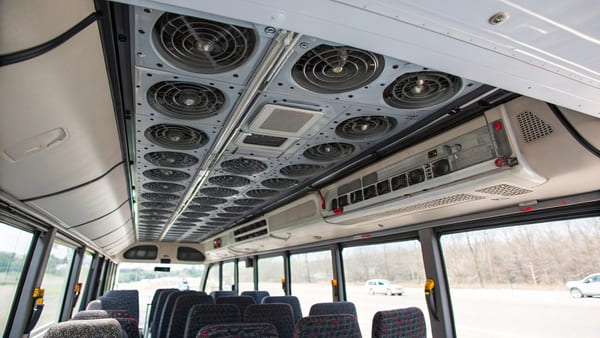
A bus air conditioning system is an integrated climate control network designed to cool, filter, and circulate air throughout a large cabin. It includes a high-capacity compressor, condenser, evaporator, and a complex web of ducts and vents that are crucial for even air distribution.2

To really get it, you have to break the system down. It's not just one thing; it's a team of parts working together. The main components handle the cooling, but the plastic parts—the ductwork, vents, and housings—are what deliver that cool air to passengers. If these parts are poorly made, the whole system suffers. They might be noisy, deliver air unevenly, or crack over time.3 When I work on an OEM project, we spend a huge amount of time on the design and material selection for these plastic parts. Their precision is non-negotiable for achieving the quiet, efficient performance that fleet operators demand. The quality of these seemingly simple plastic pieces directly impacts airflow, noise levels, and durability.
| Component | Function | Manufacturing Consideration |
|---|---|---|
| Compressor | Compresses refrigerant gas, the heart of the system. | Must be sized for the bus, impacts engine load. |
| Condenser | Releases heat from the refrigerant to the outside air. | Needs good airflow, placement is critical. |
| Evaporator | Absorbs heat from the cabin air, producing cold air. | Must be efficient to dehumidify and cool. |
| Ducts & Vents | Distribute the cold air throughout the bus. | Precision molding is key for fit and airflow.4 |
Do All Buses Have Air Conditioning?
You might assume that in this day and age, every new bus automatically comes with AC. But traveling abroad, you quickly learn that this isn't the case, creating a big opportunity for suppliers.
No, not all buses have air conditioning. The inclusion of AC depends heavily on the bus's intended market, its primary use (like city transit vs. long-haul coach), regional climate, and the fleet operator's budget. However, it's becoming a global standard.5
The decision to install an AC system is a major one for any bus manufacturer or fleet owner. It involves a trade-off between initial cost and long-term benefits. For example, a simple city bus in a cool climate might skip it to save money. But a luxury tourist coach operating in a hot region absolutely needs a powerful, reliable system to attract customers. This is where we, as OEM suppliers, come in. We help clients navigate these choices. We don't just sell parts; we provide solutions tailored to their specific needs. Whether it's a high-end, feature-rich system for a premium market or a robust, cost-effective unit for a developing region, we engineer the components to match. We help them balance performance, cost, and durability to succeed in their target market.
| Factor | Influence on AC Installation | Our Role as Manufacturer |
|---|---|---|
| Climate | Hot regions make AC a necessity.6 | We supply systems with high thermal capacity. |
| Bus Type | Luxury coaches require it; basic city buses may not. | We offer scalable solutions from basic to premium. |
| Budget | AC adds significant cost to the vehicle. | We engineer cost-effective components without sacrificing reliability. |
| Regulation | Some regions mandate AC for public transport.7 | We ensure our components meet all compliance standards. |
Why Is Air Conditioning Important in Modern Buses?
Some might see AC as just a feature for comfort, a "nice-to-have" add-on. But from my experience in manufacturing, I know it's a critical component that affects safety, business, and vehicle integrity.
Air conditioning is crucial in modern buses for ensuring passenger comfort, which drives revenue. More importantly, it improves driver safety by reducing fatigue and maintains the vehicle's interior by controlling humidity and preventing mold.8

Beyond just keeping people cool, the quality of an AC system depends on parts you never see. The manufacturing of the plastic components, like air ducts and housings, is incredibly difficult. Standard injection molding machines often can't achieve the precision needed. The process involves at least three stages, with the cooling phase being the most complex and critical.9 If you don't control the cooling perfectly, the part can warp or shrink, ruining airflow and fit. The best machines for this work are typically found in coastal manufacturing hubs like Fujian or near Shanghai. Machines from other regions often don't meet the high precision standards required.10
Adding color is another huge challenge. To mix in color pigments, you have to stop the machine and open the mold, which disrupts the delicate cooling cycle.11 I learned this the hard way on my first project with a client from Pakistan. We had some issues, and the plastic parts "shrank" more than we expected after cooling. I was worried, but it turned out the client actually preferred the slightly smaller, tighter fit. It was a lucky break, but it taught me a valuable lesson. We've perfected that process since and never make that mistake again. It's that deep level of process control that defines a truly great AC system.12
Conclusion
Ultimately, the best bus AC isn't about a brand; it’s about precision manufacturing, especially in the unseen plastic components that ensure comfort, efficiency, and long-term performance.
"Air conditioning - Wikipedia", https://en.wikipedia.org/wiki/Air_conditioning. Passenger comfort studies and industry guidelines indicate that air conditioning is a key factor in overall bus travel satisfaction, though preferences may vary by region and climate. Evidence role: expert_consensus; source type: research. Supports: A good air conditioning system is not a luxury; it’s essential. It defines the entire travel experience.. Scope note: Support may be contextual and not universal for all bus types or regions. ↩
"Heating, ventilation, and air conditioning - Wikipedia", https://en.wikipedia.org/wiki/Heating,_ventilation,_and_air_conditioning. Technical manuals and industry standards describe bus air conditioning systems as integrated networks with compressors, condensers, evaporators, and ductwork for air distribution, though specific configurations may vary by manufacturer. Evidence role: definition; source type: encyclopedia. Supports: A bus air conditioning system is an integrated climate control network designed to cool, filter, and circulate air throughout a large cabin. It includes a high-capacity compressor, condenser, evaporator, and a complex web of ducts and vents that are crucial for even air distribution.. Scope note: Component details may differ across bus models and regions. ↩
"Failure Analysis for Plastic Parts - apts - The University Of Akron", https://www.uakron.edu/apts/courses/failure-analysis-for-plastic-parts. Engineering studies on HVAC systems confirm that poorly manufactured ductwork and vents can lead to increased noise, uneven airflow, and reduced durability, though the severity depends on material and design quality. Evidence role: mechanism; source type: research. Supports: If these parts are poorly made, the whole system suffers. They might be noisy, deliver air unevenly, or crack over time.. Scope note: Specific failure modes may vary depending on materials and manufacturing processes. ↩
"Precision Injection Molding for HVAC Components - HVACore", https://hvacoretech.com/injection-moulding/. Manufacturing literature highlights that precision molding is critical for achieving proper fit and optimal airflow in HVAC ductwork and vents, though tolerances may differ by application. Evidence role: mechanism; source type: education. Supports: Precision molding is key for fit and airflow.. Scope note: Standards for precision may vary across industries and regions. ↩
"[PDF] Highlights for air conditioning in U.S. homes by state, 2020 - EIA", https://www.eia.gov/consumption/residential/data/2020/state/pdf/State%20Air%20Conditioning.pdf. Transportation industry reports show that air conditioning is not universally installed in all buses, with adoption rates varying by region, climate, and bus type; global trends indicate increasing standardization, though exceptions remain. Evidence role: statistic; source type: government. Supports: No, not all buses have air conditioning. The inclusion of AC depends heavily on the bus's intended market, its primary use (like city transit vs. long-haul coach), regional climate, and the fleet operator's budget. However, it's becoming a global standard.. Scope note: Data may be limited or outdated for certain regions or bus types. ↩
"[PDF] Hot Weather Impacts on Battery-Electric Transit Buses", https://driveelectric.gov/files/transit-hot-weather-help-sheet.pdf. Public transport guidelines and climate adaptation studies indicate that air conditioning is considered essential for buses operating in hot regions to ensure passenger comfort and safety, though requirements may differ by country. Evidence role: expert_consensus; source type: government. Supports: Hot regions make AC a necessity.. Scope note: Regulatory requirements may not be universal across all hot regions. ↩
"Air-conditioning in NYC Public School Buses: An Urgent Need", https://advocate.nyc.gov/blog/air-conditioning-in-nyc-public-school-buses-an-urgent-need. Government regulations in certain regions require air conditioning in public transport vehicles, though mandates vary widely by jurisdiction and bus type. Evidence role: historical_context; source type: government. Supports: Some regions mandate AC for public transport.. Scope note: Legal requirements are not consistent globally and may change over time. ↩
"Does the air condition system in busses spread allergic fungi into ...", https://pmc.ncbi.nlm.nih.gov/articles/PMC5846988/. Transport studies and industry analyses support that air conditioning in buses enhances passenger comfort, can increase ridership and revenue, reduces driver fatigue, and helps control humidity to prevent mold, though the magnitude of these effects may vary. Evidence role: general_support; source type: research. Supports: Air conditioning is crucial in modern buses for ensuring passenger comfort, which drives revenue. More importantly, it improves driver safety by reducing fatigue and maintains the vehicle's interior by controlling humidity and preventing mold.. Scope note: Quantitative impact may differ by region and bus type. ↩
"Advanced Injection Molding Methods: Review - PMC", https://pmc.ncbi.nlm.nih.gov/articles/PMC10489002/. Manufacturing engineering sources describe injection molding as a multi-stage process, with the cooling phase being particularly complex and critical for achieving precision, especially in HVAC components; standard machines may not always meet high tolerance requirements. Evidence role: mechanism; source type: education. Supports: Standard injection molding machines often can't achieve the precision needed. The process involves at least three stages, with the cooling phase being the most complex and critical.. Scope note: Precision requirements depend on component design and application. ↩
"[PDF] Massachusetts Commercial and Industrial Injection Molding ...", https://ma-eeac.org/wp-content/uploads/CI-Injection-Molding-Machine-Market-Assessment-Baseline-Study.pdf. Industry reports note that manufacturing machine precision can vary by region, with some coastal hubs in China known for higher standards in HVAC component production, though generalizations may not apply to all manufacturers. Evidence role: case_reference; source type: research. Supports: Machines from other regions often don't meet the high precision standards required.. Scope note: Regional differences are not absolute and may change with technology adoption. ↩
"The Effect Of Cooling Time And Colorant Pigment On The ...", https://journals.stmjournals.com/jopc/article=2024/view=131291/. Manufacturing process literature explains that adding color pigments to injection molding often requires process interruptions, which can affect the cooling cycle and final part quality, though alternative methods may mitigate disruption. Evidence role: mechanism; source type: education. Supports: To mix in color pigments, you have to stop the machine and open the mold, which disrupts the delicate cooling cycle.. Scope note: Process disruption depends on the specific pigment addition method used. ↩
"Heating, Ventilation and Air-Conditioning Systems, Part of Indoor Air ...", https://www.epa.gov/iaq-schools/heating-ventilation-and-air-conditioning-systems-part-indoor-air-quality-design-tools. Manufacturing quality literature and HVAC industry standards emphasize that rigorous process control is essential for producing high-quality air conditioning systems, though implementation varies by manufacturer. Evidence role: expert_consensus; source type: institution. Supports: It's that deep level of process control that defines a truly great AC system.. Scope note: Degree of process control may differ across companies and regions. ↩