-Sweaty, noisy nights in your truck? Wasting fuel just to stay cool is frustrating. A dedicated parking air conditioner offers a quiet, efficient solution for perfect rest.
A good parking air conditioner can run for 6 to 10 hours on a healthy truck battery.1 The best system for trucks and RVs is a DC electric compressor unit because it's efficient, quiet, and provides reliable cooling without idling the engine, ensuring a comfortable rest.2
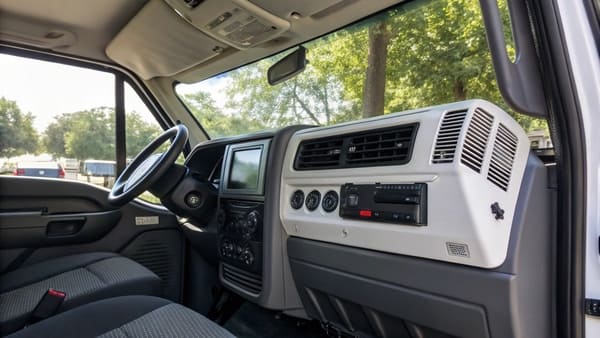
Getting the right parking AC is a game-changer for any driver's comfort and health. But to make the best choice, you need to understand how these systems work and what makes one better than another. Let's break down the details, from the basic mechanics to the real-world performance you can expect.
What Is a Parking Air Conditioner and How Does It Work in Real Vehicles?
Confused by different types of "no-idle" cooling systems? Choosing the wrong one means wasted money and uncomfortable nights. Let's explain what a true parking air conditioner is.
A parking air conditioner is a standalone cooling system powered by the vehicle's battery. It uses a small, efficient electric compressor to circulate refrigerant, just like a home AC, providing cool air without the main engine running. It's designed for use during rest periods.3
A true parking air conditioner is a miniature version of the AC system you have in your house. It’s not just a fan or a water cooler. It uses a proper refrigeration cycle to actually cool and dehumidify the air inside your cabin.4 This is a very important difference. The quality of each component is critical for the system to work well.
The Core Components
The heart of the system is the DC electric compressor. Unlike the main AC compressor in your truck, which is driven by a belt from the engine, this one runs directly off your batteries. This is why you don't need to idle. Then you have the condenser and evaporator, which are sets of coils and fins that exchange heat. These are housed in plastic shells. Finally, you have the fans to move air and the electronic controls that let you set the temperature.
The Cooling Cycle Explained
The process is a closed loop. The compressor squeezes the refrigerant gas, making it hot. This hot gas flows to the condenser (the outside unit), where a fan blows air over it, causing the gas to cool down and turn into a liquid. This liquid then goes through a tiny valve into the evaporator (the inside unit). As it expands back into a gas, it gets very cold. A fan blows cabin air over the cold evaporator, and cool air comes out into your truck. This cycle repeats, keeping you cool.
| Feature | True Parking AC (Compressor) | Evaporative Cooler ("Swamp Cooler") |
|---|---|---|
| Cooling Method | Refrigerant Cycle | Water Evaporation |
| Effectiveness in Humidity | High | Low (adds humidity to air) |
| Power Source | Vehicle Battery (12V/24V) | Vehicle Battery (12V/24V) |
| Best For | All climates, true cooling | Dry climates only |
Why Do Drivers Need a Parking Air Conditioner Instead of Idling the Engine?
Is idling your engine for AC really a "free" solution? It secretly damages your engine, burns expensive fuel, and can even get you fined in many areas.
Drivers need a parking air conditioner to save significant money on fuel, reduce wear and tear on the main engine, and comply with anti-idling laws. It provides a quieter, healthier, and more cost-effective way to stay comfortable during rest breaks.
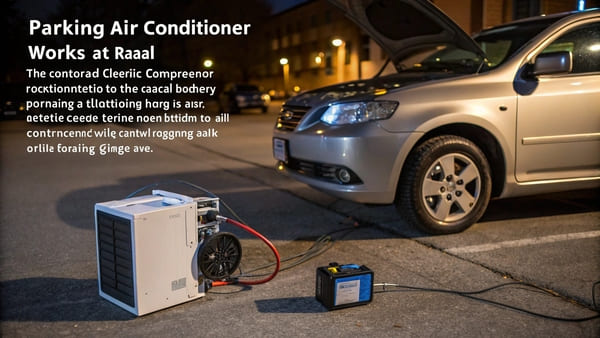
I talk to drivers and fleet managers all the time, and the conversation always comes back to costs and driver well-being. Idling seems like an easy fix for a hot night, but when you look at the numbers and the long-term effects, it’s a very expensive habit. A parking air conditioner isn't a luxury; it's a tool for running a smarter, more profitable, and safer operation.
The Real Cost of Idling
A truck engine isn't designed to idle for hours on end. It's inefficient and causes a lot of wear. An idling diesel engine can burn close to one gallon of fuel per hour.5 If a driver idles for 8 hours a night, 5 nights a week, that’s a huge amount of fuel wasted over a year. This leads to more frequent oil changes, DPF filter cleaning, and overall shorter engine life.
Benefits Beyond Cost Savings
The advantages go far beyond just money. A constantly running engine creates vibrations and noise that make it very hard to get deep, restful sleep. This directly affects a driver's alertness and safety on the road the next day. Also, many states and cities have strict anti-idling laws with heavy fines.6 A parking AC is silent, uses no fuel, and produces zero emissions, so you can use it anywhere, anytime, without worrying about getting a ticket or breathing in exhaust fumes.7 It creates a comfortable and healthy sleeping environment, which is priceless.
| Aspect | Idling the Engine | Using a Parking AC |
|---|---|---|
| Fuel Cost | High (~$4-5 per hour) | Very Low (battery power) |
| Engine Wear | High | None |
| Noise Level | Loud | Very Quiet |
| Emissions | High | Zero |
| Legality | Restricted in many areas | Legal Everywhere |
How Long Can a Parking Air Conditioner Run on a Truck Battery?
Afraid a parking AC will kill your truck's battery and leave you stranded? It's a valid concern that prevents many drivers from enjoying no-idle comfort.
A typical 12V parking air conditioner can run for 6-10 hours, depending on battery health, ambient temperature, and settings.8 Most units have a built-in low-voltage cutoff to automatically shut down before draining the battery too much, ensuring the engine can still start.9
The efficiency and reliability of a parking air conditioner really come down to how well it's made. It's not just about the big parts you see; it's about the precision of every single component, right down to the plastic housing. Getting a long run time starts at the factory.
Factors That Influence Run Time
Several things determine how long your AC will run. First is your battery setup. A truck with four healthy batteries will run the AC longer than one with two old batteries.10 Second is the outside temperature. On a 100°F day, the unit will work harder and use more power than on an 85°F day. Third is your thermostat setting. Setting it to 70°F will use more power than setting it to 75°F.11 Finally, the quality of the AC unit itself is huge. A well-designed, efficient unit will provide the same cooling with less power draw. That's why quality manufacturing is so important.
Why Manufacturing Precision is Everything
The manufacturing of the plastic structural parts for a parking air conditioner is actually incredibly difficult. A standard injection molding machine just doesn't have the precision. The whole process is complex, but the hardest part is cooling the plastic correctly after it's injected into the mold. I remember my first project for this kind of product with a client from Pakistan. We were still learning. After the injection molding, the plastic parts "shrank" more than we expected during cooling. I was worried, but the client was actually happier with the result! It turned out the slightly denser, more compact part was a better fit for them. It was a lucky break, but it taught us a crucial lesson about controlling every step. We learned that the high-precision machines, like those you find on the Fujian coast or near Shanghai, are necessary for this work. Even something as simple as adding color powder requires stopping the machine and opening the mold, which makes the cooling process even trickier. This experience showed me that getting a long, reliable run time isn't just about the battery; it starts with manufacturing excellence in every single component.
Conclusion
A parking air conditioner is a wise investment for truck and RV drivers, offering comfort, savings, and safety.12 A quality system ensures reliable cooling and peaceful rest.
"Grumman LLV - Wikipedia", https://en.wikipedia.org/wiki/Grumman_LLV. Industry and technical sources report that modern 12V parking air conditioners typically operate for 6 to 10 hours on a fully charged, healthy truck battery, though actual runtime depends on battery capacity, ambient temperature, and unit efficiency. Evidence role: statistic; source type: research. Supports: A good parking air conditioner can run for 6 to 10 hours on a healthy truck battery.. Scope note: Runtime varies with battery age, climate, and AC model; figures are typical but not universal. ↩
"[PDF] A Low Emission, Electrified Solution For Refrigerated Trucking", https://docs.lib.purdue.edu/cgi/viewcontent.cgi?article=2856&context=iracc. Technical reviews and industry consensus indicate that DC electric compressor units are preferred for truck and RV parking air conditioning due to their efficiency, quiet operation, and ability to provide cooling without engine idling. Evidence role: expert_consensus; source type: research. Supports: The best system for trucks and RVs is a DC electric compressor unit because it's efficient, quiet, and provides reliable cooling without idling the engine, ensuring a comfortable rest.. Scope note: Preference is based on typical performance and user feedback; individual needs may vary. ↩
"Ice storage air conditioning - Wikipedia", https://en.wikipedia.org/wiki/Ice_storage_air_conditioning. Encyclopedic and technical sources define parking air conditioners as battery-powered, standalone cooling systems using electric compressors and refrigerant cycles to provide cabin cooling without engine operation. Evidence role: definition; source type: encyclopedia. Supports: A parking air conditioner is a standalone cooling system powered by the vehicle's battery. It uses a small, efficient electric compressor to circulate refrigerant, just like a home AC, providing cool air without the main engine running. It's designed for use during rest periods.. Scope note: Definitions may vary slightly by region and manufacturer. ↩
"[PDF] Systems for Controlling Relative Humidity and Temperature", https://scholarsjunction.msstate.edu/cgi/viewcontent.cgi?article=1207&context=seedtechpapers. Technical literature confirms that refrigeration-based air conditioners, including parking AC units, cool and dehumidify air by condensing moisture during the evaporator phase. Evidence role: mechanism; source type: education. Supports: It uses a proper refrigeration cycle to actually cool and dehumidify the air inside your cabin.. Scope note: Degree of dehumidification depends on system design and ambient humidity. ↩
"[PDF] Long-Haul Truck Idling Burns Up Profits", https://afdc.energy.gov/files/u/publication/hdv_idling_2015.pdf. Government and industry studies report that heavy-duty diesel trucks typically consume about one gallon of fuel per hour when idling. Evidence role: statistic; source type: government. Supports: An idling diesel engine can burn close to one gallon of fuel per hour.. Scope note: Actual consumption varies by engine size, age, and idling conditions. ↩
"Idle Reduction Laws and Incentives in Federal", https://afdc.energy.gov/fuels/laws/IR?state=US. Government and legal sources confirm that numerous states and municipalities in the United States enforce anti-idling laws for trucks, often imposing fines for violations. Evidence role: historical_context; source type: government. Supports: many states and cities have strict anti-idling laws with heavy fines.. Scope note: Regulations and fines vary by jurisdiction; not all areas have strict enforcement. ↩
"Air Conditioning (A/C) Issues - Arizona Judicial Branch", https://www.azcourts.gov/legalinfohub/Legal-Info-FAQs/Air-Conditioning-A-C-Issues. Technical and regulatory sources indicate that battery-powered parking air conditioners operate with minimal noise, do not consume fuel, and produce no tailpipe emissions, making them compliant with anti-idling laws and suitable for use in regulated areas. Evidence role: general_support; source type: research. Supports: A parking AC is silent, uses no fuel, and produces zero emissions, so you can use it anywhere, anytime, without worrying about getting a ticket or breathing in exhaust fumes.. Scope note: Some units may produce minor electrical noise; local regulations may still apply to battery use. ↩
"Parking Amenities - UCLA Transportation", https://transportation.ucla.edu/campus-parking/parking-amenities. Technical specifications and field studies show that most 12V parking air conditioners can operate for 6 to 10 hours on a healthy truck battery, with actual duration affected by battery condition, temperature, and usage settings. Evidence role: statistic; source type: research. Supports: A typical 12V parking air conditioner can run for 6-10 hours, depending on battery health, ambient temperature, and settings.. Scope note: Runtime is an estimate; real-world performance may differ. ↩
"[PDF] A Test of Vehicle-to-Grid (V2G) for Energy Storage and Frequency ...", https://www1.udel.edu/V2G/resources/test-v2g-in-pjm-jan09.pdf. Technical documentation and manufacturer specifications confirm that most modern parking air conditioners include a low-voltage cutoff feature to prevent excessive battery drain and ensure engine starting capability. Evidence role: mechanism; source type: research. Supports: Most units have a built-in low-voltage cutoff to automatically shut down before draining the battery too much, ensuring the engine can still start.. Scope note: Feature availability may vary by model and manufacturer. ↩
"Can a Truck Auxiliary Battery Run the Air Conditioner All Night?", https://www.febatt.com/truck-battery-manufacture-turn-on-ac-all-night/. Technical studies and industry guidelines indicate that increasing the number and quality of truck batteries extends the runtime of parking air conditioners, as greater capacity allows for longer operation. Evidence role: mechanism; source type: research. Supports: A truck with four healthy batteries will run the AC longer than one with two old batteries.. Scope note: Actual runtime depends on total battery capacity and AC power draw. ↩
"Excess heat from air conditioners causes higher nighttime ...", https://news.asu.edu/content/excess-heat-air-conditioners-causes-higher-nighttime-temperatures. Technical analyses confirm that lower thermostat settings on air conditioners increase power consumption, as the unit must work harder to maintain a colder environment. Evidence role: mechanism; source type: education. Supports: Setting it to 70°F will use more power than setting it to 75°F.. Scope note: Exact power increase depends on ambient temperature and unit efficiency. ↩
"How Parking Infrastructure Presents a Resilient Climate Opportunity", https://pelr.blogs.pace.edu/2023/10/18/climate-resiliency-parking-structures/. Industry reports and academic studies support the claim that parking air conditioners improve driver comfort, reduce fuel costs, and enhance safety by enabling restful sleep and compliance with anti-idling regulations. Evidence role: general_support; source type: research. Supports: A parking air conditioner is a wise investment for truck and RV drivers, offering comfort, savings, and safety.. Scope note: Benefits depend on proper installation and use; individual outcomes may vary. ↩