-Choosing a metal stamping supplier is risky. A wrong choice means high costs and poor quality. Understanding the process helps you find the right partner for your project.
Metal stamping is a manufacturing process that uses a die and press to form flat metal sheets into specific shapes. It impacts cost via tooling and material waste1, quality through precision, and supplier choice based on their machinery and expertise.
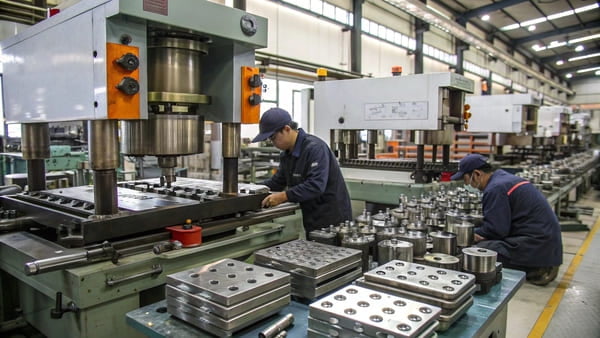
You now have a basic idea of what metal stamping is. But how does it really work, and what should you look for in a supplier? Let's break down the process step by step. This knowledge is crucial for anyone sourcing custom automotive parts2. Getting this right from the start saves a lot of trouble later.
What Is the Metal Stamping Process and How Does It Work Step by Step?
The metal stamping process can seem complex and confusing. This makes supplier talks difficult. Let's break it down into simple, easy-to-understand steps to give you clarity.
The metal stamping process begins with die design and fabrication3. Next, a metal coil is fed into a stamping press. The press uses the die's force to cut, bend, and shape the metal. The finished part is then ejected and inspected for quality control4.
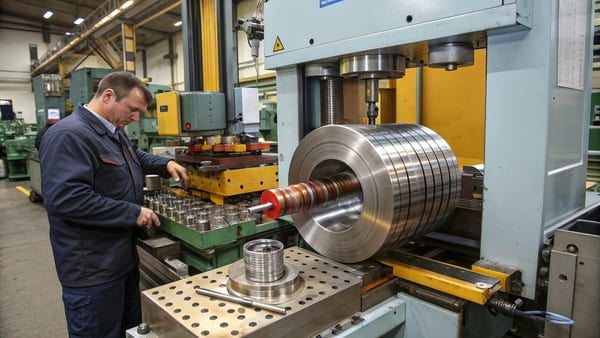
The process looks simple on the surface, but the details are what define quality and consistency. It's much more than just pressing a piece of metal. It is a sequence of carefully controlled events where precision is everything.
Step 1: Die Design and Tooling
This is the most critical first step. The die is a custom tool that acts as a mold to shape the metal. A poorly made die guarantees bad parts, no matter how good the press is. We spend a lot of time and resources engineering the die to match the exact specifications of a client's part. It's a significant upfront investment, but it’s the foundation of the entire production run and pays off in quality and reliability.
Step 2: Material Selection and Feeding
Next, we select the right metal sheet or coil based on strength, conductivity, and corrosion resistance requirements. This material is fed into the press, usually automatically from a large coil. The speed and alignment of this feeding process must be perfect. Any slight misalignment can cause defects, material waste, and even damage to the expensive die.
Step 3: The Stamping Operation
The press applies immense force. The die then cuts, bends, and forms the metal into the desired shape. For complex parts, we often use progressive dies5. In this setup, the metal strip moves through several stations within a single die. Each station performs a different operation, gradually forming the part. This is where high-precision machinery6 makes all the difference, as every station must be perfectly aligned.
What Are the Key Steps Involved in Sheet Metal Stamping Operations?
You know the general flow, but what specific actions shape the metal? Not knowing these details can lead to misunderstandings. Let’s look at the core operations inside the press.
The main operations are blanking7, which cuts the part's outer shape, and piercing8, which creates holes. Bending forms angles, while drawing9 shapes deeper parts. Coining adds fine details. These steps determine the final geometry and precision of the component.
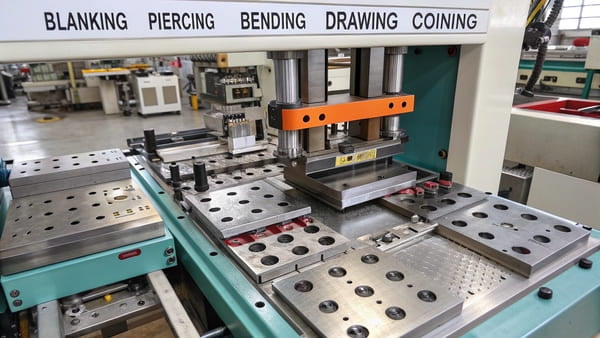
Inside the stamping press, several distinct actions happen in quick succession. Each one serves a specific purpose in creating the final part. Understanding these operations helps you appreciate why certain designs are more complex or costly to produce. Here’s a simple breakdown of the most common operations:
| Operation | Description | Common Use in Automotive |
|---|---|---|
| Blanking | Cutting a piece of sheet metal out from a larger strip. | Creates the basic outline of a bracket or panel. |
| Piercing | Punching holes, slots, or other cutouts into the part. | For screw holes, mounting points, or ventilation. |
| Bending | Forcing the metal to an angle along a straight line. | Creates flanges, corners, and structural L-shapes. |
| Drawing | Stretching the metal into a cup or box-like shape. | Used for making oil pans, housings, or body panels. |
However, one of the hardest steps isn't even on this list: cooling and setting10. After the part is formed, it's hot and needs to cool properly to hold its exact shape. I learned this the hard way on an early project with a client from Pakistan. Our process was still new, and the parts "shrank" more than we expected during cooling. I was very worried, but the client actually loved the result because the slightly smaller size fit their assembly better. It was a lucky break, but it taught me a valuable lesson: you must control every variable, especially cooling. This becomes even more complex if we need to add materials mid-process, as that requires stopping the machine and opening the mold, which completely disrupts the thermal stability.
What Types of Metal Stamping Processes Are Used in Different Industries?
Is every stamping process the same? Choosing the wrong type for your needs can be a costly mistake. Let’s review the main stamping methods and their specific applications.
Common types include progressive die stamping for high-volume, complex parts like automotive brackets. Transfer die stamping is better for larger components like body panels. Four-slide stamping excels at making small, intricate parts like clips and connectors used in electronic systems.
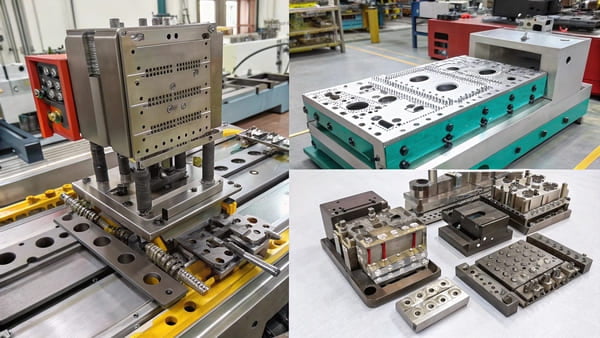
The type of stamping process we use depends entirely on the part's design, size, and the required production volume. Choosing the right method is essential for balancing cost, speed, and quality.
Progressive Die Stamping
This is the workhorse for many small to medium-sized automotive parts. A single metal strip is fed through a series of stations in one large die. Each station performs one or more operations—like piercing8, bending11, and blanking7—until the finished part is ejected at the end. It's incredibly fast and cost-effective for high-volume production runs.
The Critical Role of Precision Machinery
No matter the process, the machine's quality is everything. Achieving the tight tolerances required for modern automotive components is impossible with standard equipment. This is a key factor when I select manufacturing partners or invest in new equipment for my factory. For example, the most precise machines that can handle difficult cooling stages and maintain high accuracy are often manufactured in specific industrial hubs, like those near Shanghai or in the Fujian province. Factories in other regions, like Hebei, sometimes use equipment that just can't meet the highest precision standards. This geographical detail about machinery origin can make or break a high-stakes project. It’s not just about having a press; it’s about having the right press.
Conclusion
Understanding metal stamping helps you evaluate cost, quality, and suppliers. Choosing a partner with the right process and precision machinery6 is the key to getting reliable parts.
Reducing tooling and material waste can significantly lower production costs and improve project profitability. ↩
Exploring custom automotive part production helps you understand how to source reliable, tailored components. ↩
Understanding die design and fabrication is crucial because it directly impacts the quality and reliability of stamped parts. ↩
Effective quality control ensures consistent, defect-free parts, reducing rework and customer complaints. ↩
Progressive dies enable efficient, high-volume production and are essential for complex part manufacturing. ↩
Precision machinery guarantees tight tolerances and high-quality parts, especially for demanding industries. ↩
Blanking is the foundational operation that determines the basic shape and outline of stamped parts. ↩
Piercing creates holes and cutouts, which are vital for assembly and functionality in automotive and electronic parts. ↩
Drawing is used to create deep, cup-like shapes, essential for components like oil pans and housings. ↩
Proper cooling and setting ensure parts retain their intended shape and dimensions, preventing costly errors. ↩
Bending forms structural features like flanges and corners, critical for part strength and assembly. ↩