Struggling to choose the right brake pads for your product line? The wrong choice means poor performance and unhappy customers. We'll help you pick the right material for your business.
Carbon ceramic pads offer extreme heat resistance for racing and high-performance cars. Standard ceramic pads provide quiet, low-dust performance for daily driving. Your choice depends on the vehicle's application. For wholesale or OEM projects, this difference is key to satisfying your market.
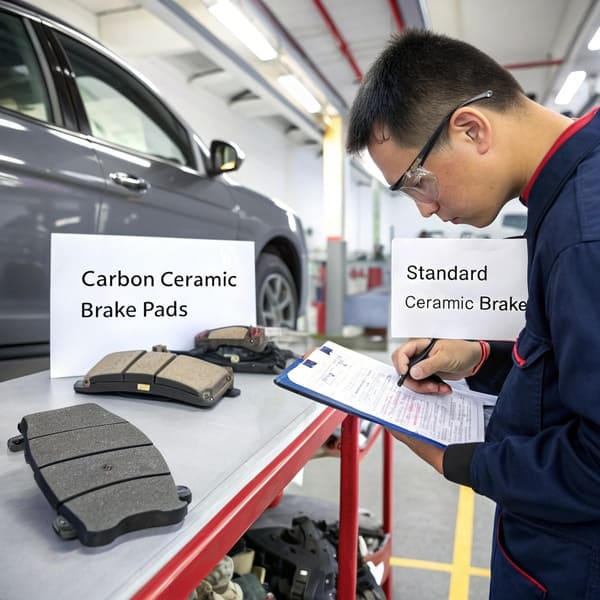
Choosing the right brake pad material is more than just a technical decision; it is a business one. It affects your product line, your customer satisfaction, and your brand's reputation in the market. To make an informed choice for your brand or distribution network, it's important to understand the details of each type. Let's break down each material to see which one fits your needs best.
What Are Carbon Brake Pads and Are They the Same as Carbon Ceramic?
Confused by the terms "carbon" and "carbon ceramic"? Using the wrong term can mislead your clients and damage your credibility. Let's clarify the difference to strengthen your product expertise.
No, they are not always the same. "Carbon brake pads" can refer to carbon-fiber metallic pads, an upgrade from semi-metallic. True "carbon ceramic" pads are a high-performance composite of carbon fibers and ceramic, made for motorsport. They offer superior heat management and durability.
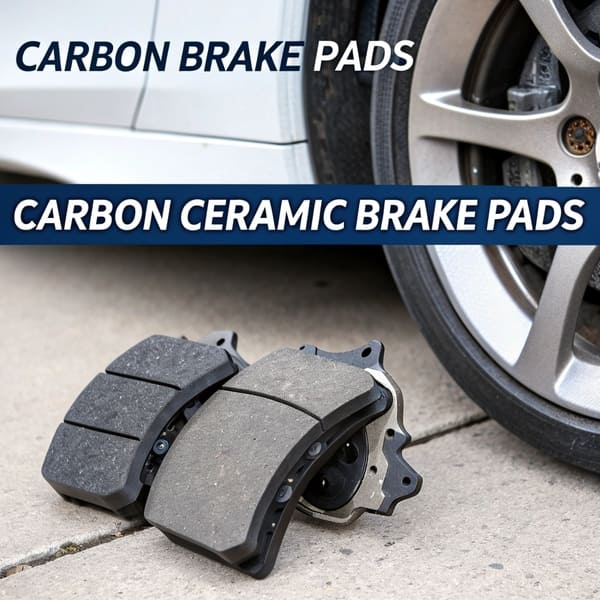
When we talk about high-performance braking, the term "carbon ceramic" stands out. These are not your everyday brake pads. They are made from a special mix of carbon fiber and ceramic materials. This combination is designed to handle extreme heat without losing its stopping power, a problem known as brake fade. That is why you see them on supercars and race cars. But there is another type often called "carbon" pads. These are usually carbon-fiber infused metallic pads. They are a good step up from basic semi-metallic pads and offer better performance, but they are not in the same league as true carbon ceramics.
As a manufacturer, I can tell you that producing true carbon ceramic pads is incredibly difficult. It requires specialized, high-precision machinery that can handle very high temperatures and control the material's density perfectly during the cooling stage. Standard equipment just cannot do it. We have found that the best machines for this job are located in specific industrial areas, like the coastal parts of Fujian or around Shanghai. In contrast, machines from other regions, like Hebei, often don't meet the strict precision standards needed for these high-end products. This manufacturing complexity is a huge factor in their high cost and makes them a premium item for very specific B2B clients.
What Are Ceramic Brake Pads and How Do They Work?
Are your customers complaining about brake noise and dusty wheels? Standard pads can hurt your brand's reputation. Ceramic pads offer a clean, quiet, and effective solution for the mass market.
Ceramic brake pads are made from a dense ceramic material mixed with copper fibers. They work by creating consistent friction that is less abrasive on rotors. They handle heat well, produce very little dust, and are extremely quiet, making them ideal for daily-driving passenger cars.
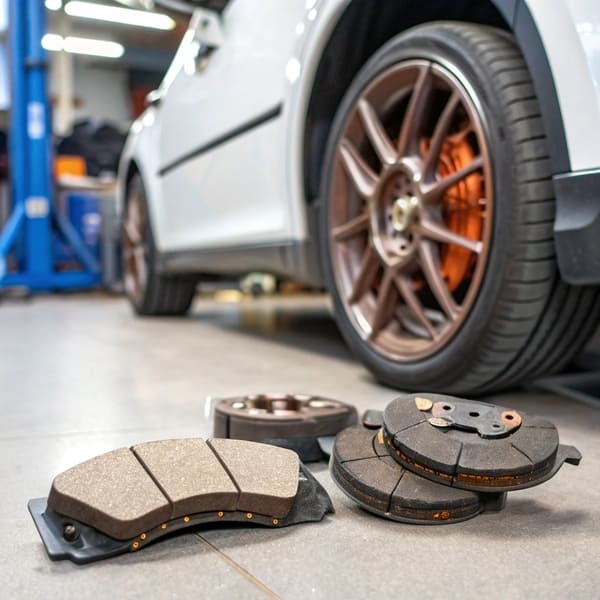
Ceramic brake pads have become the go-to choice for most modern passenger cars, and for good reason. They are made from a type of ceramic compound that includes small copper fibers and other filling materials. These copper fibers help manage heat and provide consistent friction without being too aggressive on the brake rotor. The result is a brake pad that stops the car smoothly and reliably in normal driving conditions. One of their biggest selling points is comfort. They produce a fine, light-colored dust that doesn't stick to wheels, and they are famous for being almost silent during operation.
The production process for high-quality ceramic pads is also very demanding. One of the trickiest steps is adding the raw materials into the mold. The machine has to stop, and we have to open the mold to put the mix in. This timing is critical because it can complicate the cooling process and affect the final density and performance of the pad. I remember our first project with a Pakistani client for this type of product. We were still refining our process for that specific formula. The first batch showed some signs of uneven wear. I was worried it was a failure, but the client actually loved how they performed on their vehicles. It was a lucky break, but it taught us a very important lesson about process control and listening to market feedback. We perfected our methods right after that experience.
What Are the Key Differences Between Carbon and Ceramic Brake Pads?
Choosing the wrong pad for your target market can lead to unsold inventory and lost profits. Don't guess which is better. Understand their specific strengths to match your products to your customers' needs.
The main difference is their intended use. Carbon ceramic pads are built for extreme heat and high-speed braking, perfect for racing. Regular ceramic pads prioritize quiet operation, low dust, and consistent daily performance. Cost is also a major factor; carbon ceramics are far more expensive.
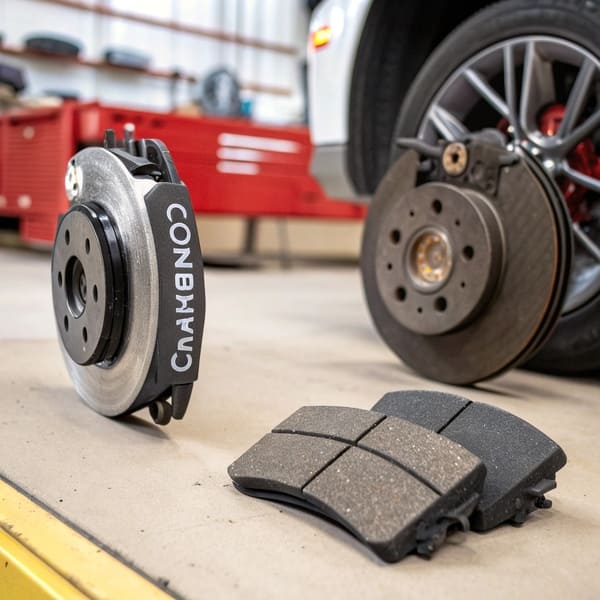
The choice between carbon ceramic and ceramic brake pads comes down to balancing performance, comfort, and cost. Each material is engineered for a very different purpose, and understanding these differences is critical for any business in the auto parts industry. For example, carbon ceramic pads are amazing on a racetrack where brakes get incredibly hot, but they can feel weak and unresponsive when they are cold during a normal city commute. On the other hand, ceramic pads offer great performance from the first stop but would overheat and fail quickly on a racetrack.
Here is a simple breakdown of their characteristics:
Carbon Ceramic vs. Ceramic Brake Pads
| Feature | Carbon Ceramic Brake Pads | Ceramic Brake Pads |
|---|---|---|
| Primary Application | Supercars, motorsport, extreme performance | Daily-driving passenger cars, SUVs, and light trucks |
| Heat Resistance | Exceptional; designed to resist brake fade at extreme temps | Very good for normal use, but not for track conditions |
| Braking Performance | Best when hot; can be less effective when cold | Consistent and reliable in a wide range of temperatures |
| Noise Level | Can be noisy, especially when cold | Extremely quiet; designed for driver comfort |
| Dust Production | Very low | Very low; produces a light-colored, non-sticking dust |
| Rotor Wear | Very low; rotors can last the life of the vehicle | Low; gentle on rotors, leading to longer rotor life |
| Cost | Extremely high; a premium product | Affordable; priced for the mass consumer market |
| Manufacturing | Highly complex and requires specialized equipment | Complex but standardized for mass production |
For wholesalers and importers, this table makes the business case clear. Stocking standard ceramic pads allows you to serve the massive daily driver market reliably. Offering carbon ceramic pads helps you target a small but very high-margin niche of performance enthusiasts and specialty shops. As an OEM/ODM supplier, we have the capability to develop either type. However, the investment in tooling, materials, and process control for carbon ceramic pads is significantly higher, and that is reflected in the final product cost.
Conclusion
For your business, ceramic pads serve the daily driver market perfectly. Carbon ceramic pads target the high-performance niche. Choose based on your target customer to ensure product success and profitability.