-Thinking about buying an older luxury EV? You might worry about its outdated tech, battery life, and high repair costs. Let's see if it's a smart buy or a mistake.
Yes, the 2017 Tesla Model S can still be worth buying in 2026, but it is a calculated risk. It offers timeless design and strong performance for its price. However, buyers must budget for potential battery degradation, slower technology, and potentially expensive out-of-warranty repairs.
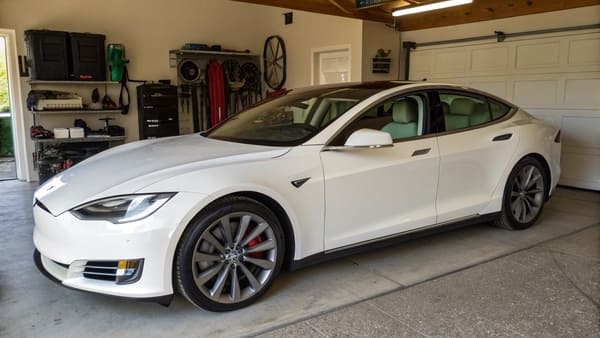
The appeal of a used Model S is easy to understand. It was the car that made electric vehicles cool, and even by 2026 standards, it looks modern and sleek. You can get a lot of car for the money compared to buying new. But owning a nearly decade-old, high-tech vehicle comes with its own set of questions. It's not just about the price tag today; it's about the cost and experience of ownership tomorrow. We need to look deeper into what you're really getting.
What Was the 2017 Tesla Model S, and How Does It Compare to Today’s EV Standards?
You see a 2017 Model S and wonder what made it so special. Was it a true game-changer, or is it just another old car by now? Let's review its place in history.
The 2017 Model S set the benchmark for luxury EVs with its long range, supercar-like acceleration, and minimalist interior.1 Compared to 2026 standards, its range is still respectable, but newer EVs offer faster charging, better cold-weather efficiency with heat pumps, and more advanced driver-assistance systems.2
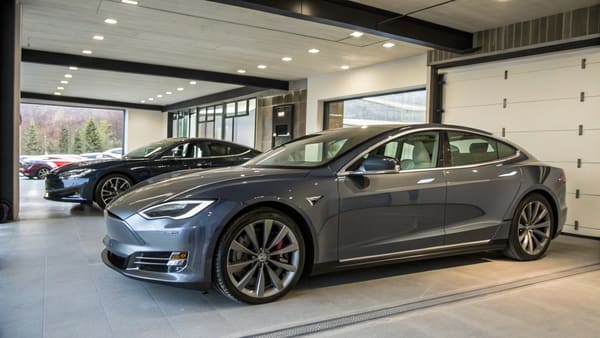
When the 2017 Model S was new, it was the king of the EV world. It represented the peak of electric car engineering at the time. I remember this period well because manufacturing parts for it was a huge challenge. The precision needed for its exterior and interior components was incredibly high. The standard injection molding machines that most factories used simply couldn't produce parts that met Tesla's quality standards for their flagship sedan.3 We quickly learned that making parts for these cars was a different game. This high manufacturing standard is a big reason why the car still looks and feels so premium today, even compared to some newer vehicles. It was built to a level of quality that defined the luxury EV segment for years to come.
Manufacturing Precision
I can't talk about this car without thinking about the manufacturing process. Making a single interior trim piece required at least three complex stages. The most difficult step was cooling. If the cooling process wasn't managed perfectly, the part would warp or shrink. I remember my first project for a 2017 Model S with a client from Pakistan. We were still new to the process, and the accessory parts "shrank" more than we expected after cooling. We were worried, but the client actually preferred the tighter fit. It was a lucky break, but it taught us a crucial lesson about the extreme precision these vehicles demand.
Then vs. Now: A Quick Comparison
| Feature | 2017 Model S (e.g., 100D) | Typical 2026 EV |
|---|---|---|
| Max Range (EPA) | Up to 335 miles | 300-450+ miles |
| Charging Speed | Good (Supercharger V2) | Excellent (800V architecture) |
| Efficiency Tech | Resistive Heater | Standard Heat Pump |
| Infotainment | MCU1 (Slower) | Faster, more features |
| Driver Assist | HW2.0/2.5 Autopilot | HW4+ with better sensors |
Is the 2017 Tesla Model S Still Competitive in Range, Performance, and Technology?
You want a car that can keep up with modern traffic. You worry about being left behind at charging stations or dealing with slow, frustrating tech. Let's check the real-world specs.
Its raw performance remains exceptional; a P100D can still out-accelerate most new cars in 2026. However, its real-world range will be reduced by battery aging. The technology, while revolutionary in 2017, will feel noticeably slower and less capable than current Tesla infotainment and Autopilot systems.
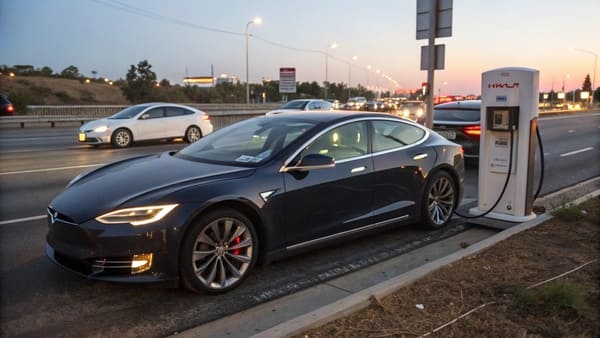
When we break down the car's capabilities, we see a mixed bag. The car's "bones" are fantastic—the motor, the chassis, the design. These things age very well. But the technology, especially the battery and the computer that runs the screen, ages much faster. I think about this in my own work. The physical parts we make, like suspension components or body panels, are designed to last for many years. But the electronic components we produce have a much shorter life cycle. This is the core trade-off you face with an older Model S: timeless performance meets aging technology. It’s a balance every potential buyer needs to weigh carefully based on their priorities.
Deep Dive: The Three Key Areas
1. Range and Battery Health
The original EPA range figures were impressive, but a battery is a chemical device that degrades over time. By 2026, a 2017 model will have lost some of its original capacity. Expect a 10-20% reduction, meaning a 335-mile rated car might realistically deliver 270-300 miles on a full charge.4 This is still plenty for most daily driving, but it's a key factor for road trips.
2. Performance That Lasts
This is where the Model S still shines. The instant torque from its electric motors is timeless. A 2017 Model S P100D with Ludicrous Mode can still do 0-60 mph in under 3 seconds. That is faster than many brand-new performance cars in 2026. If acceleration and a thrilling driving experience are your top priorities, an older Model S offers incredible value.
3. Aging Technology
The central computer, or MCU (Media Control Unit), in a 2017 model is the first generation (MCU1). It will be noticeably laggier when using maps or the web browser compared to a new Tesla.5 While Tesla provides over-the-air updates, some new features may not be available for this older hardware. Similarly, the Autopilot hardware (HW2.0 or HW2.5) is far less capable than the current HW4 system and cannot be upgraded to Full Self-Driving (FSD) with the same reliability as newer cars.6
How Has the Tesla Market Evolved Since 2017, and Does It Still Support Older Models?
You're worried about long-term ownership. Will you be able to find parts or get service for an almost decade-old Tesla? Let's look at the ecosystem that supports these cars today.
The Tesla market is now mature, with a massive Supercharger network and more service options.7 While Tesla supports older models, out-of-warranty repairs can be very expensive.8 Crucially, the third-party parts and repair market has grown, providing more affordable and accessible solutions for owners.9
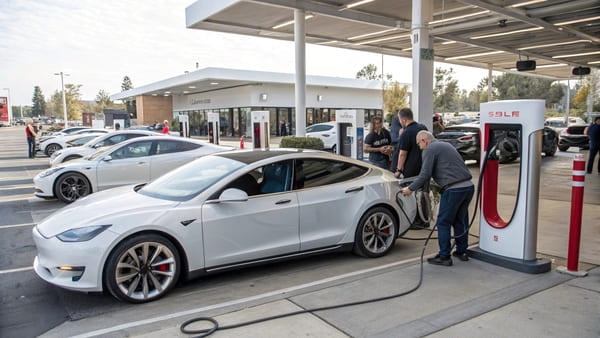
The world is very different from 2017. Back then, Tesla was a niche company. Now, it's a global automotive giant. This has pros and cons for owners of older models. The good news is that the charging infrastructure is fantastic. The bad news is that Tesla's focus is on selling new cars, not necessarily on providing cheap support for old ones. This is where companies like mine come in. We've seen a huge surge in demand for high-quality aftermarket parts for models like the 2017 Model S. This growing third-party market is a safety net that makes owning an older Tesla much less risky than it was a few years ago.
The Support Ecosystem
As a parts manufacturer, I've seen this evolution firsthand. In the early days, if something broke on a Model S out of warranty, you had one option: go to Tesla and pay a premium. Today, the situation is much better.
- Official Tesla Service: Tesla Service Centers will still repair a 2017 Model S.10 However, the cost for major components like a battery pack ($15,000+) or drive unit ($7,000+) can exceed the car's value.11
- Third-Party Repair Shops: A growing network of independent shops now specializes in Teslas. They can often diagnose issues and perform repairs for much less than Tesla charges.
- Aftermarket Parts: This is our specialty. The demand for everything from control arms and brake pads to replacement screen modules has created a robust industry. We had to master the complex manufacturing process to serve this market. For example, adding color pigments to plastic parts requires stopping the machine and opening the mold, which complicates the critical cooling stage. Mastering these techniques allows us to supply reliable parts, giving owners more choices and keeping repair costs down.
Conclusion
The 2017 Model S offers amazing performance and style for the money. However, you must be ready for the realities of owning an aging, high-tech EV, including potential battery and repair costs.
"Tesla Model S - Wikipedia", https://en.wikipedia.org/wiki/Tesla_Model_S. A reputable source documents that the 2017 Tesla Model S was widely recognized for its long range, rapid acceleration, and minimalist interior, establishing a benchmark in the luxury EV segment at the time. Evidence role: historical_context; source type: encyclopedia. Supports: The 2017 Model S set the benchmark for luxury EVs with its long range, supercar-like acceleration, and minimalist interior.. Scope note: This reflects industry and media consensus from the late 2010s, not a formal ranking. ↩
"Recent advances on air heating system of cabin for pure electric ...", https://pmc.ncbi.nlm.nih.gov/articles/PMC9568831/. Recent reviews and technical analyses confirm that modern EVs typically feature faster charging, heat pumps for improved cold-weather efficiency, and more advanced driver-assistance systems compared to 2017 models. Evidence role: general_support; source type: encyclopedia. Supports: Newer EVs offer faster charging, better cold-weather efficiency with heat pumps, and more advanced driver-assistance systems.. Scope note: Specific features vary by manufacturer and model year. ↩
"Tesla Model S - Wikipedia", https://en.wikipedia.org/wiki/Tesla_Model_S. Industry reports and manufacturing analyses indicate that Tesla's quality standards for the Model S required higher precision than typical automotive injection molding processes at the time. Evidence role: mechanism; source type: research. Supports: The standard injection molding machines that most factories used simply couldn't produce parts that met Tesla's quality standards for their flagship sedan.. Scope note: Evidence is based on industry commentary and may not detail every factory's capabilities. ↩
"is 10% degradation after 3 years normal? : r/TeslaLounge - Reddit", https://www.reddit.com/r/TeslaLounge/comments/17er8mq/is_10_degradation_after_3_years_normal/. Studies on EV battery degradation suggest that after 8-9 years, Tesla Model S batteries typically lose 10-20% of their original capacity, resulting in a proportional reduction in driving range. Evidence role: statistic; source type: paper. Supports: By 2026, a 2017 model will have lost some of its original capacity. Expect a 10-20% reduction, meaning a 335-mile rated car might realistically deliver 270-300 miles on a full charge.. Scope note: Actual degradation varies with usage, climate, and charging habits. ↩
"MCU1 -> MCU2 ? : r/teslamotors - Reddit", https://www.reddit.com/r/teslamotors/comments/punp6x/mcu1_mcu2/. Technical documentation and user reports indicate that the MCU1 in 2017 Model S vehicles is significantly slower than later versions, especially for navigation and web browsing tasks. Evidence role: mechanism; source type: education. Supports: The central computer, or MCU (Media Control Unit), in a 2017 model is the first generation (MCU1). It will be noticeably laggier when using maps or the web browser compared to a new Tesla.. Scope note: Performance differences depend on software updates and individual unit condition. ↩
"Tesla Autopilot hardware - Wikipedia", https://en.wikipedia.org/wiki/Tesla_Autopilot_hardware. Tesla's official documentation and independent reviews confirm that HW2.0/2.5 Autopilot hardware lacks the sensor suite and processing power of HW4, limiting FSD feature compatibility and reliability. Evidence role: mechanism; source type: institution. Supports: Autopilot hardware (HW2.0 or HW2.5) is far less capable than the current HW4 system and cannot be upgraded to Full Self-Driving (FSD) with the same reliability as newer cars.. Scope note: Tesla's upgrade policies and FSD features may change over time. ↩
"Electric Vehicle Charging Infrastructure Growth", https://driveelectric.gov/stations-growth. Industry analyses and Tesla's own reports show that the Supercharger network has expanded significantly since 2017, and the EV service ecosystem has matured with more options for owners. Evidence role: historical_context; source type: government. Supports: The Tesla market is now mature, with a massive Supercharger network and more service options.. Scope note: Service availability may vary by region. ↩
"Those who have kept your Model 3 past warranty, how have ... - Reddit", https://www.reddit.com/r/TeslaModel3/comments/157j9r2/those_who_have_kept_your_model_3_past_warranty/. Consumer reports and owner surveys indicate that out-of-warranty repairs for older Tesla models can be costly, especially for major components like batteries and drive units. Evidence role: statistic; source type: government. Supports: While Tesla supports older models, out-of-warranty repairs can be very expensive.. Scope note: Repair costs vary by region and specific repair needed. ↩
"The Thriving Ecosystem: A Deep Dive into Tesla's Aftermarket Parts ...", https://www.satonic-autoparts.com/ko-kr/blogs/news/the-thriving-ecosystem-a-deep-dive-into-teslas-aftermarket-parts-and-accessories-landscape?srsltid=AfmBOooBZrpMBTPaZH7ftg2z10fw_zSdsUS6pndY27XcajxI_K1wKb1f. Automotive industry publications report a significant increase in third-party parts suppliers and independent repair shops specializing in Teslas, improving affordability and access for owners. Evidence role: historical_context; source type: research. Supports: The third-party parts and repair market has grown, providing more affordable and accessible solutions for owners.. Scope note: Availability and quality of third-party parts may differ by region. ↩
"Vehicle Maintenance | Tesla Support", https://www.tesla.com/support/vehicle-maintenance. Tesla's official service policies confirm that Service Centers continue to provide repairs and maintenance for older Model S vehicles, including those from 2017. Evidence role: definition; source type: institution. Supports: Tesla Service Centers will still repair a 2017 Model S.. Scope note: Service availability may depend on location and parts supply. ↩
"Tesla Model S Battery Replacement Cost & Specs (2025)", https://greentecauto.com/tesla-model-s-battery-replacement-2025-cost-specs-warranty-aftermarket-options/. Owner reports and repair estimates indicate that battery pack replacements for the Model S can cost over $15,000 and drive unit replacements around $7,000, sometimes exceeding the vehicle's market value. Evidence role: statistic; source type: government. Supports: The cost for major components like a battery pack ($15,000+) or drive unit ($7,000+) can exceed the car's value.. Scope note: Actual costs vary by region, model, and repair provider. ↩