-Sourcing brake pads seems simple, but getting it wrong leads to performance issues1 and unhappy customers. The differences between front and rear pads are critical for safety and performance.
Front and rear brake pads are designed for different jobs. Front pads handle most of the braking force and heat, so they are larger and use heat-resistant formulas2. Rear pads provide stability and use different formulas to reduce noise and wear3, working with the front pads as a system.
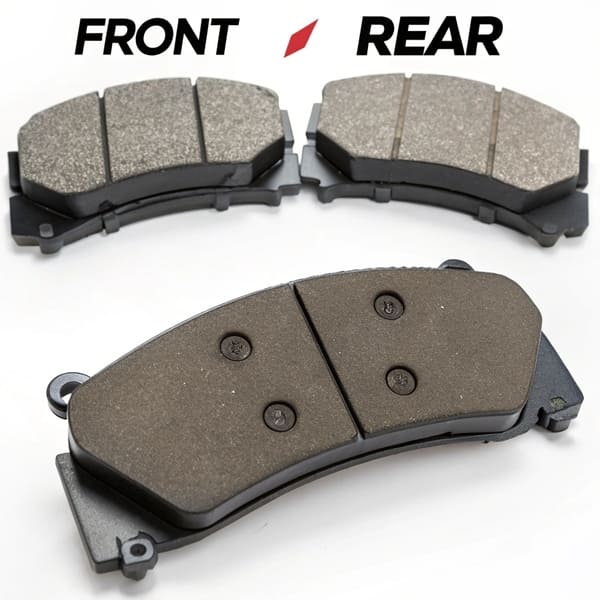
Understanding this difference is the first step. But choosing a supplier who masters this distinction is what truly sets your business up for success. I've learned that the hard way, and it’s a lesson that has shaped how we operate. Let's explore why these components are so different and what it means when you're sourcing them from China. This knowledge will help you avoid common pitfalls and build a reliable product line.
What Are Brake Pads and What Role Do They Play in a Vehicle’s Braking System?
Your vehicle's safety depends on a system that works perfectly every time. But do you know what part does the most important work when you hit the brakes?
Brake pads are the friction components in a disc brake system4. When you press the brake pedal, the caliper squeezes the pads against the spinning brake rotor, creating friction that slows and stops the vehicle. They are essential for safe and controlled braking performance.
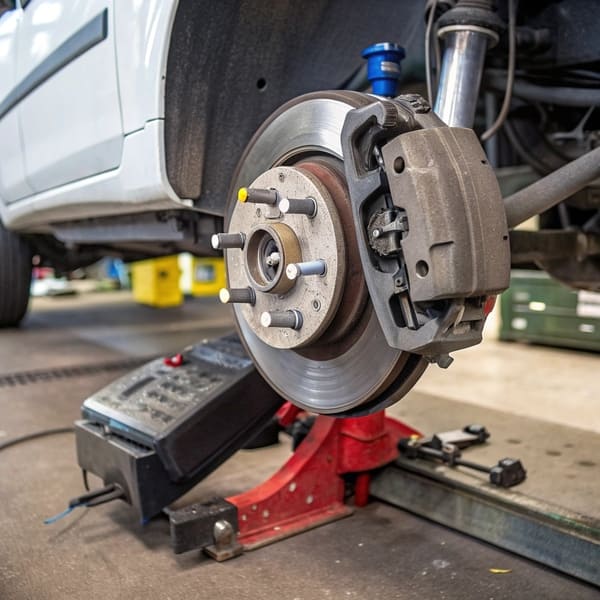
Let's dive deeper into this. A brake pad isn't just one piece of material. It's a system made of a few key parts. The most important parts are the backing plate5 and the friction material6. The steel backing plate5 provides a solid foundation. The friction material6 is the part that actually touches the rotor. This material is a complex blend of ingredients, and its recipe, or formula, determines how the brake pad behaves.
Think about the physics. Your car is heavy and moving fast. To stop it, you need to convert all that kinetic energy (motion) into thermal energy (heat). That's the brake pad's main job. This process generates an incredible amount of heat.
Key Components of a Brake Pad
| Component | Function | Importance |
|---|---|---|
| Friction Material | Creates friction against the rotor to slow the car. | The "recipe" dictates performance, noise, dust, and lifespan. |
| Backing Plate | Provides a rigid steel foundation for the friction material6. | Distributes pressure evenly and resists bending under force. |
| Shims & Slots | Reduce vibration and noise during braking. | Crucial for driver comfort and preventing squealing sounds. |
So, a brake pad is much more than a simple block. It's an engineered component designed to manage massive forces and extreme temperatures, all while providing smooth, quiet, and reliable stopping power. The specific formula of that friction material6 is where the real science and supplier expertise come into play.
Why Are Front and Rear Brake Pads Designed Differently?
You might think a brake pad is a brake pad. But installing the wrong ones can unbalance your car's braking, creating a serious safety risk. Why are they so different?
Front and rear brake pads are different because they handle different braking loads. The front brakes do 70-80% of the work, requiring larger pads with high-temperature formulas. The rear brakes provide stability and need formulas focused on quiet operation and consistent performance.
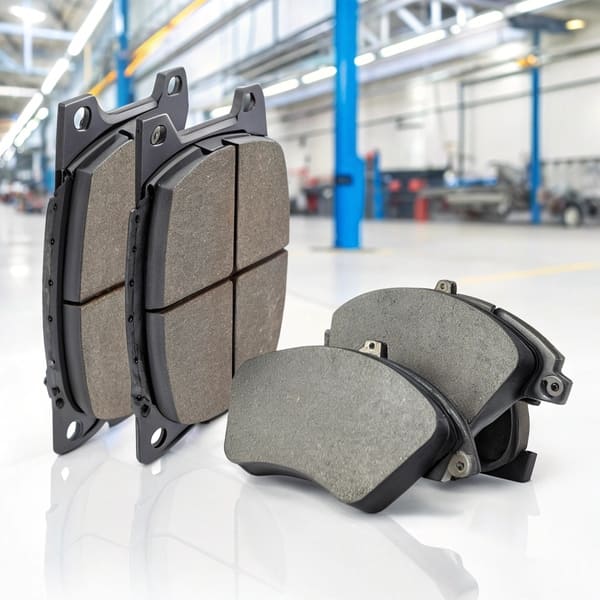
This difference is not just a minor detail; it's fundamental to vehicle dynamics and safety. When you brake, your car's weight shifts forward. This puts a massive amount of stress, force, and heat on the front axle. The rear brakes handle a much lighter load and are there mostly to keep the car stable and prevent it from spinning. Because of these distinct roles, a one-size-fits-all approach doesn't work. A reliable supplier must engineer front and rear pads as two separate, but related, products.
For example, a high-performance formula that works well on the front might be too aggressive for the rear, causing the rear wheels to lock up. A quiet, low-dust formula from the rear might overheat and fade dangerously if used on the front.
Comparing Front vs. Rear Brake Pad Characteristics
| Characteristic | Front Brake Pads | Rear Brake Pads |
|---|---|---|
| Braking Load | Handles 70-80% of the stopping force. | Handles 20-30% of the force, mainly for stability. |
| Heat Resistance | Very high. Must resist brake fade at extreme temperatures7. | Moderate. The focus is on consistent performance, not peak heat. |
| Size & Shape | Generally larger and thicker to dissipate more heat. | Smaller and thinner, as less material is needed. |
| Friction Formula | Often semi-metallic or aggressive ceramic8 for high friction. | Often low-noise ceramic or organic9 for quiet, smooth operation. |
This is why a good OEM/ODM partner in China will have separate R&D and testing for front and rear pads. They understand that matching a semi-metallic front pad with a ceramic rear pad can provide the perfect balance of stopping power and driver comfort for a specific vehicle model.
Are Front and Rear Brake Pads Interchangeable in Modern Vehicles?
You've found a supplier offering a great price on brake pads with a single formula for all four wheels. This sounds efficient, but is it a safe shortcut for your business?
Absolutely not. Front and rear brake pads are not interchangeable. Using the wrong pads compromises braking balance, safety, and performance. A professional supplier will always provide distinct, vehicle-specific front and rear pad sets10 with the correct formulas and certifications.
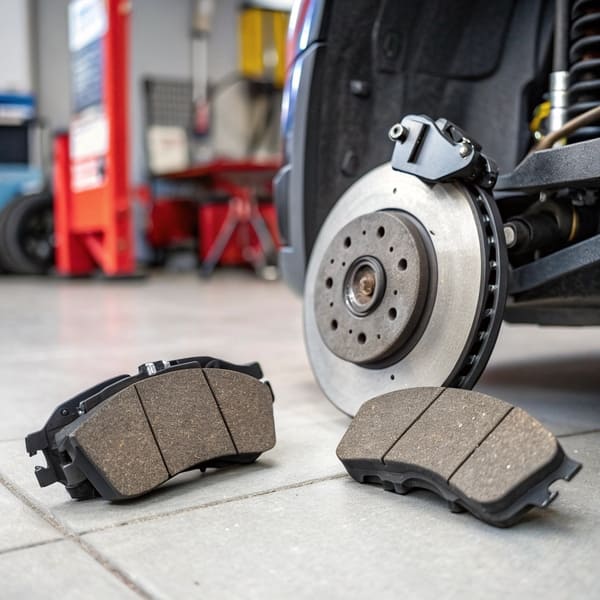
This is where choosing the right supplier becomes the most critical part of your job. Small factories might use one formula for everything to cut costs. This is a huge red flag. They cannot meet the dual demands of low-wear for electric vehicles and high-temperature anti-fade for traditional cars. True expertise lies in differentiation.
I learned this firsthand during a project with a Pakistani client. Our first shipment had issues: the front pads showed high-temperature fade, and the rear pads were noisy. It was a stressful situation. We immediately went back to our workshop. We adjusted the front pad formula to a more robust semi-metallic mix for better heat resistance. For the rear, we switched to a quieter ceramic formula. We also created different packaging for their different aftermarket tiers. The client was impressed with our ability to quickly diagnose and fix the problem. They valued our capability to fine-tune front and rear formulas separately11. That initial mistake actually built a stronger, long-term partnership.
How to Vet a Chinese Brake Pad Supplier
When you are auditing a potential partner, here is what you must verify:
- Separate Formulas: Ask to see their development process. Do they engineer and test front and rear pads separately? Can they offer different formulas (e.g., semi-metallic, ceramic) for the same vehicle model?
- Manufacturing Hubs: Look for suppliers in core friction material regions like Laizhou in Shandong or Ningbo in Zhejiang12-shoes/)6 regions like Laizhou in Shandong or Ningbo in Zhejiang. Factories in these areas, or OE-level joint ventures in the Yangtze River Delta, often have the deepest expertise.
- Certification: This is non-negotiable. You must check that both the front and rear pads have the necessary certifications for your target market, like ECE R90 for Europe and FMVSS for the USA13. Ask for the documentation and verify it.
- Batch Consistency: Ensure they have strong quality control to maintain consistency from one production batch to the next for both front and rear sets.
Choosing a supplier is not just about price. It's about finding a partner with the technical depth to deliver a safe, reliable, and properly engineered braking system.
Conclusion
Front and rear brake pads are a specialized system, not interchangeable parts. Success depends on finding a supplier who masters the science of creating distinct, complementary formulas for each axle.
Understanding performance issues helps you avoid costly mistakes and ensures your customers receive reliable, safe products. ↩
Learning about heat-resistant formulas will help you choose pads that withstand extreme conditions and prevent brake fade. ↩
Discovering how rear pads minimize noise and wear can improve driver comfort and extend the lifespan of your products. ↩
Knowing the function of friction components is essential for understanding how brake pads ensure vehicle safety. ↩
Exploring the backing plate's role will help you assess the structural integrity and performance of brake pads. ↩
Learning about friction materials allows you to select pads with optimal performance, noise, and dust characteristics. ↩
Learning about brake fade prevention ensures you select pads that maintain performance under stress. ↩
Comparing these formulas helps you match the right pad to your customers' performance and durability needs. ↩
Understanding these formulas will help you provide quieter, smoother braking for your customers. ↩
Choosing vehicle-specific sets guarantees safety, performance, and compliance with industry standards. ↩
Learning about this process helps you choose partners who can deliver tailored, high-performance braking solutions. ↩
Knowing these regions helps you identify suppliers with deep expertise and advanced manufacturing capabilities. ↩
Understanding these certifications ensures your products meet legal and safety requirements in key markets. ↩