-Frustrated by the confusion around brake pads? Using the wrong parts is a serious safety risk. Understanding the key differences is the only way to make the right choice.
No, front and rear brake pads are not the same. They are specifically designed for different roles. The front pads are typically larger and made from different materials to handle the majority of the braking force and heat, while the rear pads are smaller and built for a lighter workload.
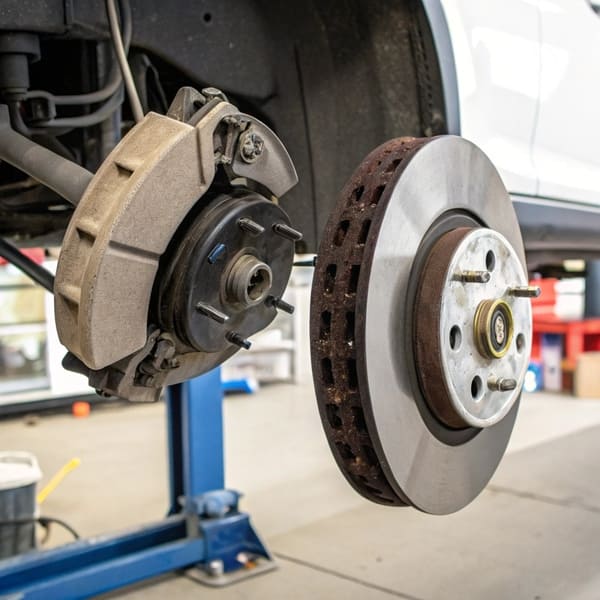
It's easy to think of brake pads as simple components, but the reality is far more complex, especially from a manufacturing standpoint. The differences are not just for show; they are critical for your safety. If you've ever wondered why they can't be swapped, or why your front ones always seem to wear out first, it's important to understand the engineering behind them. Let's dive deeper into what sets them apart and why getting it right is so important for any vehicle.
What Is the Difference Between Front and Rear Brake Pads?
Choosing brake pads can feel complicated. Making a mistake doesn't just affect performance; it can lead to dangerous situations. Knowing the exact differences makes the selection process simple and safe.
The main differences between front and rear brake pads are their size, shape, and the composition of the friction material1. Front pads are larger and thicker to manage more force and dissipate more heat, as they perform most of the braking work for the vehicle.
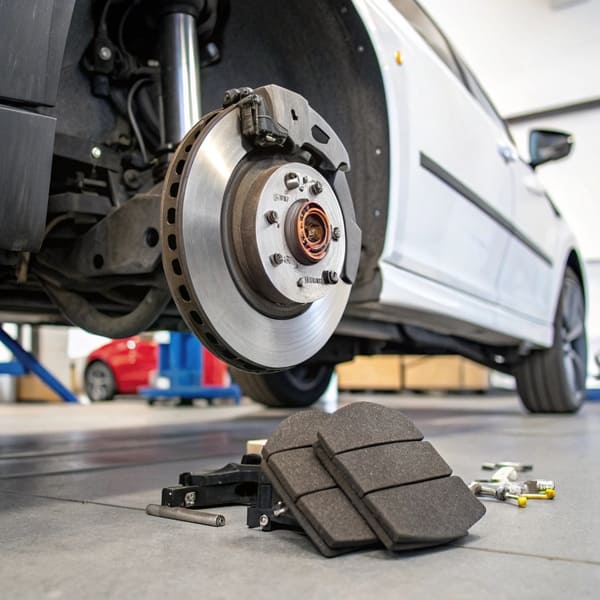
From my experience as a manufacturer, producing brake pads with the right specifications is incredibly difficult. Standard injection molding machines often lack the required precision. The process involves several complex stages, with the cooling and shaping step being the most challenging. If the cooling isn't perfect, the pad's dimensions can be off. I remember my first project with a client from Pakistan. We were still learning, and the finished pads had a noticeable "shrinkage" issue. Luckily, the client actually preferred the slightly smaller fit, so it worked out well, but it taught me a valuable lesson about precision. The material formula is another critical point. When we have to stop the machine to add raw materials, the mold opens, which can complicate the cooling process and affect the final product's integrity. These production challenges highlight why the specific design of each pad is so vital.
Here is a simple breakdown of the key differences:
| Feature | Front Brake Pads | Rear Brake Pads |
|---|---|---|
| Size | Larger and thicker to handle more heat and pressure. | Smaller and thinner, as they do less work. |
| Shape | Varies widely by vehicle, designed to fit a larger caliper. | Different shape, designed for a smaller rear caliper. |
| Material | Often a more aggressive friction compound2 to provide strong stopping power. | Usually a less aggressive compound for stability and longer life. |
| Wear Indicators | More likely to have electronic wear sensors3. | May have simpler mechanical squeal tabs or no sensor. |
Can Front and Rear Brake Pads Be Interchanged Safely?
You might be tempted to swap pads to save a little time or money. This is a huge mistake that puts you and others in serious danger. You must understand why.
Absolutely not. You cannot and should not interchange front and rear brake pads. In almost all cases, they will not physically fit. Even if they could be forced to fit, it would create a severe braking imbalance, making the vehicle dangerously unstable and unsafe to drive.
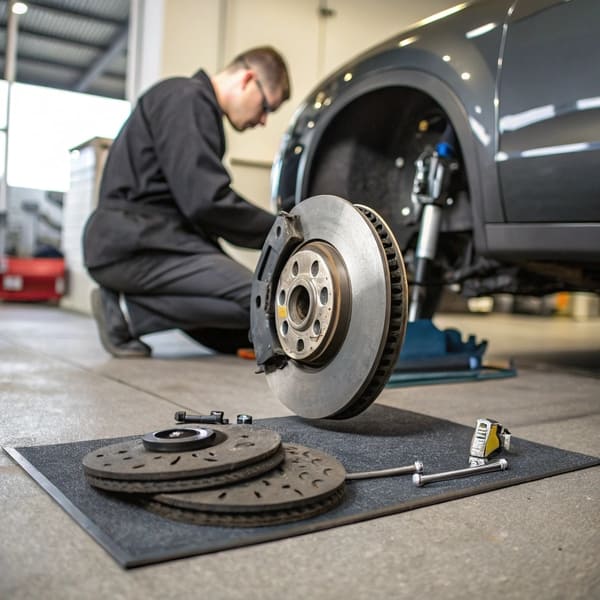
The idea of swapping front and rear pads is a non-starter for several critical reasons. First and foremost is the physical design. The mounting points, overall size, and shape of a front pad are completely different from a rear pad for the same vehicle. They are designed to fit into specific brake calipers4 and brackets that are also sized differently. You simply cannot fit a front pad into a rear caliper, or vice versa.
But let's imagine for a moment that you could. The result would be catastrophic for the vehicle's handling. A car's braking system is engineered with a specific "brake bias5," meaning the front brakes are designed to do much more work than the rear ones. If you were to install smaller rear pads on the front, they would overheat almost instantly under heavy braking, leading to complete brake failure, known as brake fade6. If you put powerful front pads on the rear, the rear wheels could lock up before the front ones, causing the car to spin out of control. As a manufacturer, our entire process is built around meeting these exact OEM specifications7 to guarantee this balance is maintained for safety.
Why Do Front Brake Pads Wear Faster Than Rear Brake Pads?
You've probably noticed your front brakes need replacing more often. This might seem like a flaw or a way to get more money from you, but it is actually by design.
Front brake pads wear out faster because they handle the majority of the braking force. When you press the brake pedal, the vehicle's weight shifts forward, putting significantly more load, friction, and heat on the front brakes, causing them to wear down more quickly.
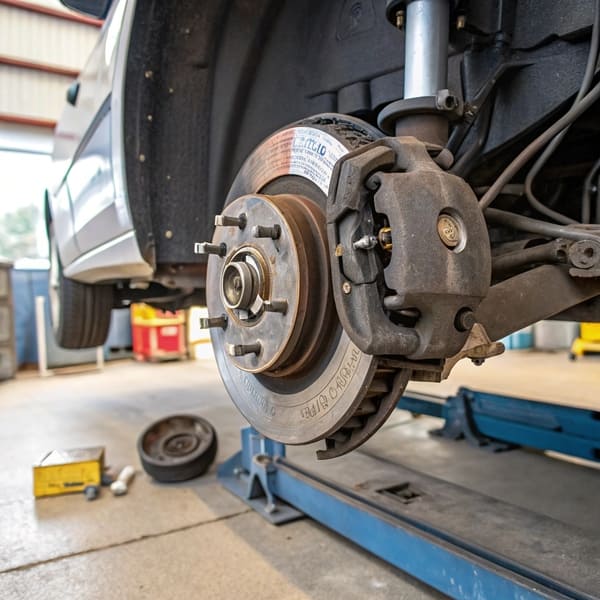
The science behind this is straightforward: it's all about physics and weight transfer8. When your car is moving, it has momentum. As you brake, that momentum pushes the car's weight forward onto the front axle. This phenomenon is often called "nose dive9." You can feel it every time you come to a sudden stop. To handle this massive shift in load, automotive engineers design the braking system with a forward bias. This means that roughly 70-80% of the stopping power is intentionally directed to the front wheels.
Because the front brakes do most of the work, they generate far more heat and friction than the rear brakes. This intense workload is the direct cause of their faster wear rate. It's not a sign of a defective part; it's proof that the system is working exactly as it was designed to. In our factory, we account for this by engineering front brake pads with friction material1s that can withstand extreme temperatures and pressure, while rear pads are optimized for their lighter, stabilizing role. Understanding this principle is key to appreciating why regular checks and timely replacement of your front brakes are so crucial for maintaining your vehicle's safety.
Conclusion
Front and rear brake pads are fundamentally different for critical safety and performance reasons. Always choose the correct, high-quality part for each axle to ensure your vehicle stops safely.
Learning about friction materials helps you choose the right brake pads for performance and longevity. ↩
Knowing about aggressive friction compounds helps you select pads that offer strong stopping power for your needs. ↩
Exploring electronic wear sensors can help you understand when to replace your brake pads for optimal safety. ↩
Learning about brake calipers helps you understand how brake pads are mounted and why fitment is critical. ↩
Understanding brake bias is crucial for safe vehicle handling and explains why front and rear brake pads are designed differently. ↩
Knowing about brake fade can help you avoid dangerous brake failure and maintain safe stopping power. ↩
OEM specifications ensure your brake pads fit and function correctly, maintaining your vehicle's safety. ↩
Understanding weight transfer explains why front brakes wear faster and why pad design matters for safety. ↩
Understanding nose dive helps you recognize the importance of proper brake pad selection and system balance. ↩