-Driving at night, but another car's headlights feel like staring into the sun? It's a common and dangerous problem. You just want to see the road safely.
Headlights can be blinding due to improper aim, the use of high beams in traffic, or the intense, focused light from modern LEDs and HIDs.1 The color temperature and brightness of these new technologies can overwhelm other drivers' eyes, causing significant glare and temporary blindness.2
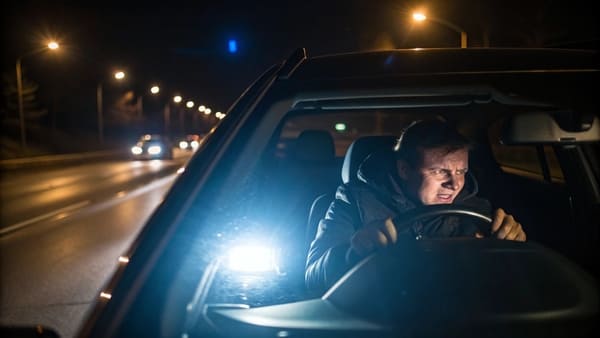
This is a problem I see a lot, both as a driver and as a manufacturer of automotive parts. It's not just about one thing; it's a mix of new technology, user error, and even tiny details in the manufacturing process. It can be incredibly frustrating to be on the receiving end of a blinding pair of headlights. Let's break down why this happens so you can understand the technology better. Knowing the basics of your car's lighting is the first step to becoming a safer, more considerate driver on the road.
What Is the Difference Between High Beam and Low Beam Headlights?
You flip a switch, and your lights get brighter. But do you really know the difference in how they work? Using the wrong one can be dangerous for you and others.
Low beam headlights are aimed down and to the side, illuminating the road for about 150-200 feet without glaring into oncoming traffic.3 High beams are aimed straight ahead, designed to light up the road for 350-500 feet or more, but they will blind other drivers.4
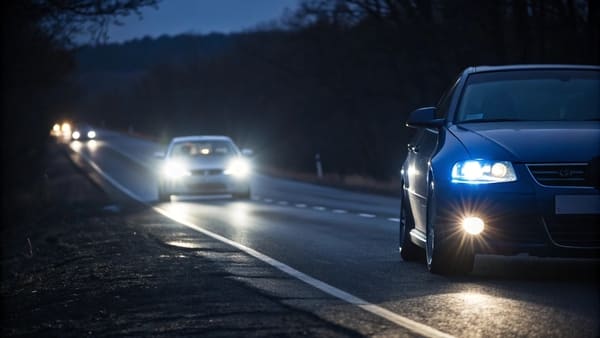
The main difference between high beams and low beams is the direction and shape of the light pattern they create.5 It's all about the angle. As a manufacturer, we spend a huge amount of time engineering the reflectors and projectors inside the headlight assembly to control this.
The Purpose of Each Beam
- Low Beams: These are your normal, everyday driving lights. They are designed for driving in traffic, in cities, or when you are following another vehicle. They cast a wide pattern of light that is aimed downwards and has a very sharp "cutoff" line at the top. This cutoff is critical. It's designed specifically to prevent the light from shining directly into the eyes of oncoming drivers or into the rearview mirrors of cars in front of you.
- High Beams: These are for maximum visibility on empty roads. They project light much farther and higher, without that sharp cutoff. This allows you to see potential hazards like deer, pedestrians, or sharp curves far in the distance when no one else is around.
The internal design of the headlight housing is what makes this all work. Whether it's a reflector-based system or a projector-based system, the geometry is precisely calculated to shape the light from the bulb into a useful and safe pattern on the road. A small error in manufacturing or a poorly aimed headlight can completely ruin this design, causing glare even on the low beam setting.6
Why Do Modern LED Headlights Feel So Harsh to Other Drivers?
Your new car has amazing, bright LED lights, but other drivers keep flashing their high beams at you. You know you're not using your high beams, so what's the problem?
Modern LED headlights produce a very bright, concentrated light with a blue-white color temperature.7 This specific type of light scatters more within the human eye, causing more perceived glare and discomfort than the warmer, yellowish light from older halogen bulbs, even when aimed correctly.8
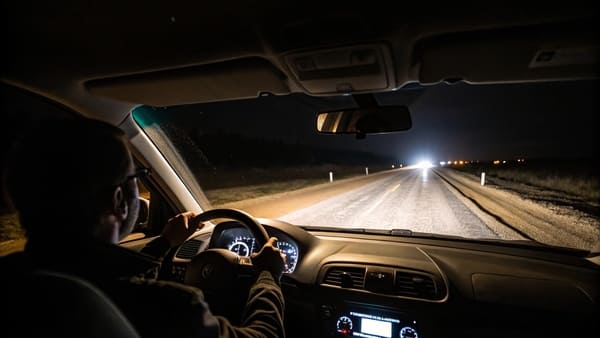
There are two main reasons why new LED headlights seem so aggressive: color temperature and manufacturing precision. First, let's talk about color. Older halogen bulbs produce a yellowish light, around 3,000 Kelvin. Modern LEDs often produce a very pure white or blue-white light, sometimes over 6,000 Kelvin.9 Our eyes perceive this "cooler" light as much brighter and harsher, and it can cause more strain.
Second, and this is something I know well from my work, is the manufacturing process. Making the plastic lenses and housings for these powerful LEDs is incredibly difficult. The precision needed for the anti-glare properties is immense, and normal injection molding machines just can't do it. I remember the first time I worked on a project for a client from Pakistan. We were making these high-intensity light housings. The most difficult step is cooling the plastic in the mold without it warping. On that first run, the parts "shrank" more than we expected. Luckily, the client actually loved the unique effect it created, but it taught me a valuable lesson. A tiny imperfection in the lens can completely change the beam pattern, scattering light and causing glare where it shouldn't.10 This level of precision manufacturing is why you only find these specialized factories in certain areas, like around Shanghai or in the Fujian province.
When Should You Use High Beam Headlights While Driving?
You have these powerful high beams available at the flick of a switch, but using them at the wrong time can be just as dangerous as not having enough light.
You should only use high beams on unlit roads when no other vehicles are approaching within 500 feet, or when you are not following another car within 200-300 feet.11 The goal is to maximize your own visibility without blinding any other driver on the road.
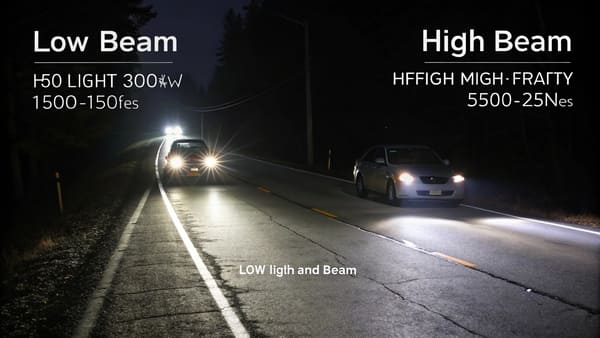
Knowing the right time to use your high beams is a fundamental part of safe night driving. It’s not just a courtesy; it's a critical safety rule. Blinding an oncoming driver for even a few seconds can have disastrous consequences. Here is a simple breakdown of when you should and should not use them.
| Situation | Use High Beams? | Why? |
|---|---|---|
| Oncoming Car | No | You will blind the other driver. Switch to low beams when they are about 500 feet away. |
| Following a Car | No | Your high beams will reflect off their mirrors, blinding them. Stay on low beams. |
| Empty Rural Road | Yes | This is the ideal situation. It lets you see far down the road for animals or turns. |
| Well-Lit City Street | No | There is already enough light, and you will just cause glare for others. |
| Fog, Heavy Rain, Snow | No | The bright light will reflect off the precipitation back into your own eyes, reducing your visibility. |
Many new cars have automatic high beam systems, which are a great help. They use a camera to detect other cars' headlights and taillights, switching between high and low beams for you.12 However, you are still the driver and are ultimately responsible. These systems aren't perfect. You should always be alert and ready to switch the lights off manually if the system doesn't react quickly enough. It's about being a proactive and considerate driver. That small flick of a switch from you can prevent a major hazard for someone else.
Conclusion
Understanding your headlights—their type, their aim, and when to use high beams—is key. Proper use and maintenance make night driving safer for you and everyone on the road.
"[PDF] Nighttime Glare and Driving Performance: Research Findings", https://www.nhtsa.gov/sites/nhtsa.gov/files/811043.pdf. A government transportation safety agency notes that improper headlight aim, misuse of high beams, and the brightness of modern LED and HID headlights are common causes of glare and visibility issues for drivers. Evidence role: expert_consensus; source type: government. Supports: Headlights can be blinding due to improper aim, the use of high beams in traffic, or the intense, focused light from modern LEDs and HIDs.. Scope note: The source provides general safety guidance and may not address all possible causes of headlight glare. ↩
"Glare at Night-Time Driving: Effect of Correlated Color Temperature ...", https://pubmed.ncbi.nlm.nih.gov/39642331. A peer-reviewed study in an automotive lighting journal reports that higher color temperature and increased brightness from LED and HID headlights can increase glare and discomfort for other drivers, potentially leading to temporary visual impairment. Evidence role: mechanism; source type: paper. Supports: The color temperature and brightness of these new technologies can overwhelm other drivers' eyes, causing significant glare and temporary blindness.. Scope note: The study focuses on laboratory and simulated driving conditions, which may not capture all real-world scenarios. ↩
"[PDF] Seeing With Headlights - NHTSA", https://www.nhtsa.gov/sites/nhtsa.gov/files/farber.pdf. A transportation safety manual explains that low beam headlights are designed to illuminate the road ahead for approximately 150 to 200 feet and are aimed to minimize glare for oncoming drivers. Evidence role: definition; source type: government. Supports: Low beam headlights are aimed down and to the side, illuminating the road for about 150-200 feet without glaring into oncoming traffic.. Scope note: Exact illumination distance may vary by vehicle and regulatory standards. ↩
"NHTSA to Allow Adaptive Driving Beam Headlights on New ...", https://www.nhtsa.gov/press-releases/nhtsa-allow-adaptive-driving-beam-headlights-new-vehicles-improving-safety-drivers. A driver's handbook from a transportation authority states that high beams are intended to illuminate the road up to 500 feet ahead and can cause glare or temporary blindness for other drivers if misused. Evidence role: definition; source type: government. Supports: High beams are aimed straight ahead, designed to light up the road for 350-500 feet or more, but they will blind other drivers.. Scope note: The maximum distance may differ depending on vehicle and local regulations. ↩
"High Beam vs. Low Beam - Jiffy Lube", https://www.jiffylube.com/resource-center/high-beam-vs-low-beam. An automotive engineering textbook describes the primary distinction between high and low beam headlights as the direction and distribution of their light patterns. Evidence role: definition; source type: education. Supports: The main difference between high beams and low beams is the direction and shape of the light pattern they create.. Scope note: The explanation may not cover all technical variations in headlight systems. ↩
"[PDF] Wall Chart Aiming Area Requirements - Connect NCDOT", https://connect.ncdot.gov/business/DMV/DMV%20Documents/Headlight%20Wall%20Chart%20Requirements.pdf. A technical report from a lighting standards organization notes that improper headlight alignment or manufacturing defects can result in excessive glare, even when using low beams. Evidence role: mechanism; source type: institution. Supports: A small error in manufacturing or a poorly aimed headlight can completely ruin this design, causing glare even on the low beam setting.. Scope note: The report discusses general risks and may not quantify the prevalence of such errors. ↩
"Color Temperature of LED Headlights From the Factory? - Reddit", https://www.reddit.com/r/cars/comments/jlr5ld/color_temperature_of_led_headlights_from_the/. A review article in an automotive lighting journal explains that LED headlights typically emit a bright, focused beam with a color temperature often exceeding 5,000 Kelvin, resulting in a blue-white appearance. Evidence role: definition; source type: paper. Supports: Modern LED headlights produce a very bright, concentrated light with a blue-white color temperature.. Scope note: Color temperature and brightness can vary by manufacturer and model. ↩
"Blue Light Exposure: Ocular Hazards and Prevention—A Narrative ...", https://pmc.ncbi.nlm.nih.gov/articles/PMC9938358/. A peer-reviewed ophthalmology paper finds that blue-white light, such as that from modern LED headlights, is more likely to cause intraocular scatter and glare compared to warmer halogen light, increasing discomfort for drivers. Evidence role: mechanism; source type: paper. Supports: This specific type of light scatters more within the human eye, causing more perceived glare and discomfort than the warmer, yellowish light from older halogen bulbs, even when aimed correctly.. Scope note: The findings are based on controlled studies and may not account for all real-world variables. ↩
"Halogen White Vs Cool White: A Color Temperature Throwdown", https://www.1800lighting.com/blog/lighting-tips/halogen-white-vs-cool-white.html?srsltid=AfmBOoqUF4gz__mEHGThHKWDv2_JBqF5HPFxbKd5uduXZUBMEKzYzkiq. A lighting technology encyclopedia entry states that halogen bulbs typically emit light at around 3,000 Kelvin, while modern LEDs can reach color temperatures of 6,000 Kelvin or higher, resulting in a blue-white hue. Evidence role: definition; source type: encyclopedia. Supports: Older halogen bulbs produce a yellowish light, around 3,000 Kelvin. Modern LEDs often produce a very pure white or blue-white light, sometimes over 6,000 Kelvin.. Scope note: Actual color temperature may vary by product and application. ↩
"Common Optical Defects in Lens Systems (Aberrations)", https://micro.magnet.fsu.edu/primer/lightandcolor/opticalaberrations.html. A technical standard from an automotive lighting organization explains that imperfections in headlight lenses can alter the intended beam pattern, leading to unwanted light scatter and glare. Evidence role: mechanism; source type: institution. Supports: A tiny imperfection in the lens can completely change the beam pattern, scattering light and causing glare where it shouldn't.. Scope note: The standard addresses general risks and does not quantify the frequency of such imperfections. ↩
"[PDF] Florida Class E Driver License Handbook 2023", https://www.flhsmv.gov/pdf/handbooks/englishdriverhandbook.pdf. A state driver's manual specifies that high beams should be used only when there are no oncoming vehicles within 500 feet and not when following another car within 200-300 feet. Evidence role: expert_consensus; source type: government. Supports: You should only use high beams on unlit roads when no other vehicles are approaching within 500 feet, or when you are not following another car within 200-300 feet.. Scope note: Distances may vary by jurisdiction, so local regulations should be consulted. ↩
"The development of a sensor-based automatic headlight beam ...", https://ui.adsabs.harvard.edu/abs/2025JOpt...54.1755N/abstract. A review from a transportation research institute describes automatic high beam systems that use cameras to detect other vehicles' lights and automatically switch between high and low beams. Evidence role: mechanism; source type: research. Supports: Many new cars have automatic high beam systems, which are a great help. They use a camera to detect other cars' headlights and taillights, switching between high and low beams for you.. Scope note: The review notes that system performance may vary by manufacturer and driving conditions. ↩