-Sourcing reliable auto parts is a constant challenge. Poor quality components can lead to costly failures and damage your brand's reputation.1 We provide precision-engineered solutions you can depend on.
HD Auto Parts is a B2B OEM/ODM manufacturer specializing in high-quality automotive components. For vehicle cooling systems, we focus on producing critical plastic parts like radiator tanks and fan shrouds, rather than the complete metal radiators or condensers. We deliver custom-engineered solutions for our business clients.
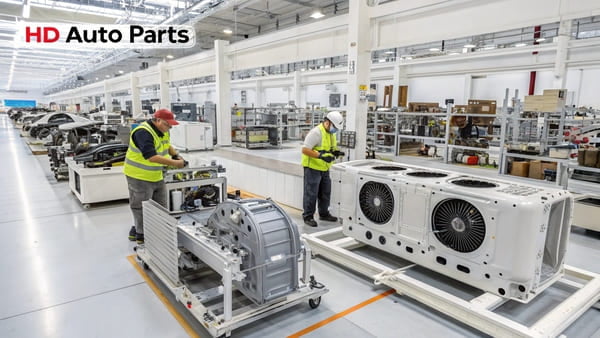
Many people in the industry are looking for reliable partners, but it can be hard to know who to trust. The market is filled with trading companies and distributors, making it difficult to find a true manufacturer who can control quality from start to finish. In this post, I want to clarify who we are, what we do, and how we specifically handle the complex world of cooling system components. This information will help you understand if we are the right partner for your automotive parts business.
What Is HD Auto Parts and Are They a Manufacturer or Distributor?
Are you tired of dealing with middlemen? It's frustrating when you can't get a straight answer on production capabilities or quality control. We eliminate that problem by being a direct manufacturer.
HD Auto Parts is a professional OEM/ODM manufacturer, not a distributor. We manage the entire production process in-house, from initial design and mold making to final mass production.2 This gives our B2B clients direct control over quality, customization, and the supply chain.
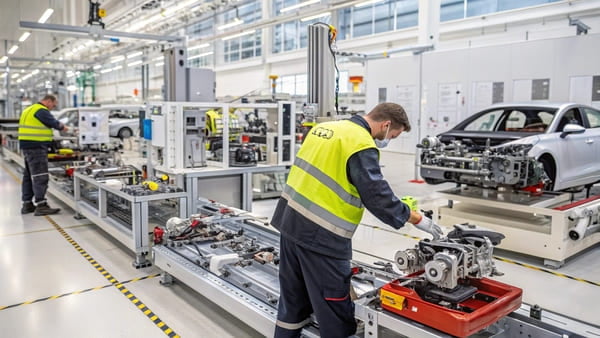
Working directly with a manufacturer like us offers significant advantages over sourcing from a distributor or trading company. When you partner with us, you are communicating with the team that actually makes your products. This direct line of communication is essential for custom projects. We can discuss technical specifications, material choices, and tooling designs without any information getting lost in translation. As a factory, we have full control over the quality at every step. We implement strict quality control protocols throughout the manufacturing process, ensuring that every part meets your exact standards.3 This level of oversight is something a distributor simply cannot offer. For businesses looking to develop a private-label product or a custom component, our OEM/ODM capabilities mean we can turn your concept into a reality, managing everything from the initial engineering to the final certified product.
What Types of Automotive Parts Does HD Auto Parts Specialize In?
Finding one supplier for different types of custom auto parts is a major headache. Juggling multiple contacts wastes time and complicates your supply chain. We simplify things by offering a one-stop solution.
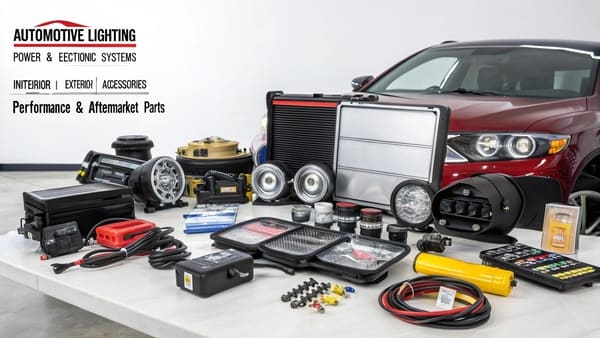
We specialize in four main product categories for B2B wholesale and customization: Automotive Lighting, Power & Electronic Systems, Interior & Exterior Accessories, and Performance & Aftermarket Parts.4 Our expertise covers everything from standard components to fully customized product development.
Our goal is to be a comprehensive partner for automotive brands, distributors, and importers. We have organized our capabilities into specific areas to better serve our clients.
Automotive Lighting Systems
We provide complete development and manufacturing for vehicle lighting. This includes modern LED and laser headlights, dynamic LED taillight assemblies, and auxiliary lamps like off-road light bars and DRLs.5 We handle the entire process, from optical design and thermal management to creating the housing molds for production.
Power & Electronic Systems
Our team supplies stable and certified automotive electronic components. We produce custom wiring harnesses, onboard vehicle chargers, DC-DC converters, and various control modules.6 Our service includes everything from the initial structural design and PCBA engineering to securing necessary certifications for global markets.
Interior & Exterior Accessories
We help our partners build competitive product lines for vehicle accessories. This covers interior electronics like car displays and TPMS systems, as well as exterior parts like custom mirror covers and trim pieces. We can support your brand with unique designs, tooling, and even custom packaging.
Performance & Aftermarket Parts
We also support the growing aftermarket sector. We manufacture performance components such as air intake systems and ignition parts, chassis components like control arms and bushings, and brake system parts.7 We work with brands to engineer and produce parts that meet specific performance targets.
Does HD Auto Parts Provide Radiators and AC Condensers for Different Vehicles?
You need specific cooling system components, but finding a supplier for high-precision plastic parts is tough. Standard, low-quality parts can warp or crack. We focus on manufacturing these difficult components correctly.
We do not produce complete metal radiators or AC condensers. Our specialty is manufacturing the critical, high-precision plastic components that support these systems, such as top and bottom radiator tanks, fan shrouds, and other related housings for various vehicle models via OEM/ODM projects.8
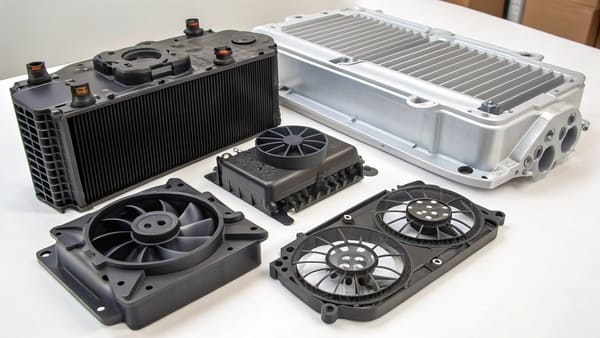
The plastic components used in a vehicle's cooling system are surprisingly difficult to manufacture correctly.9 Many people assume they are simple injection-molded parts, but the reality is much more complex.
The Challenge of High-Precision Manufacturing
Standard injection molding machines often lack the precision needed for these automotive parts.10 The tolerances are very tight, and the parts must withstand constant temperature changes and pressure without failing. This is why high-precision manufacturing equipment, more commonly found in industrial hubs near Shanghai or in Fujian province, is necessary. In some other regions, like Hebei, the general level of equipment often isn't sufficient to meet these strict automotive standards.
Controlling the Cooling Process
The production process involves at least three main stages, with the cooling stage being the most critical and difficult to control. If the plastic part cools too quickly or unevenly, it can shrink, warp, or develop internal stresses that lead to cracks later on.11 I remember a specific project for a client in Pakistan. Their initial samples of a plastic tank were deforming after cooling. The shrinkage was inconsistent. We had to go back and completely adjust our process parameters—including the mold temperature, cooling time, and even the material formula—to stabilize the product and achieve the quality they needed. This experience highlighted just how sensitive these parts are.
Difficulties in Material and Color Handling
Even something as simple as adding color to the plastic is a challenge. To add color powder, the machine often has to be stopped and the mold opened. This interruption can easily cause defects in the part, as it disrupts the delicate cooling and forming cycle. Because of these difficulties, we have invested heavily in the processes and expertise required to produce these components reliably for our B2B clients.
Conclusion
We are a direct OEM/ODM manufacturer specializing in custom auto parts. We provide reliable B2B solutions for complex components, including the high-precision plastic parts essential for vehicle cooling systems.
"[PDF] An Overview Of NASA Automotive Component Reliability Studies", https://nepp.nasa.gov/files/28172/NEPP-CP-2016-Sampson-Pres-MRQW-TN29817.pdf. Industry studies and automotive reliability reports indicate that poor quality components can increase the risk of vehicle failures and negatively affect the reputation of automotive brands, though the degree of impact may vary by market segment and product type. Evidence role: expert_consensus; source type: research. Supports: Poor quality components can lead to costly failures and damage your brand's reputation.. Scope note: The evidence is general to the automotive industry and may not reflect specific outcomes for all brands or product categories. ↩
"Original equipment manufacturer - Wikipedia", https://en.wikipedia.org/wiki/Original_equipment_manufacturer. Automotive manufacturing literature describes vertical integration as a process where companies manage design, tooling, and production internally, which can improve quality control and customization, though not all manufacturers adopt this model. Evidence role: definition; source type: encyclopedia. Supports: We manage the entire production process in-house, from initial design and mold making to final mass production.. Scope note: The evidence supports the general practice but does not verify the specific company's operations. ↩
"Quality Control Issues in Automotive Manufacturing: How to Tackle ...", https://shoplogix.com/quality-control-issues-in-automotive/. Automotive industry standards, such as ISO/TS 16949, outline strict quality control protocols for parts manufacturing to ensure products meet client specifications, though certification and implementation may differ by company. Evidence role: expert_consensus; source type: institution. Supports: We implement strict quality control protocols throughout the manufacturing process, ensuring that every part meets your exact standards.. Scope note: The evidence describes industry standards but does not confirm the company's specific compliance. ↩
"Original equipment manufacturer - Wikipedia", https://en.wikipedia.org/wiki/Original_equipment_manufacturer. Industry surveys and OEM manufacturer profiles indicate that common specialization areas include lighting systems, electronic components, accessories, and performance parts, though individual company offerings may vary. Evidence role: general_support; source type: encyclopedia. Supports: We specialize in four main product categories for B2B wholesale and customization: Automotive Lighting, Power & Electronic Systems, Interior & Exterior Accessories, and Performance & Aftermarket Parts.. Scope note: The evidence supports typical industry categories but does not confirm the company's specific product range. ↩
"LASER Headlamp for Cars?!? How strong is its laser? - YouTube", https://www.youtube.com/watch?v=KUfHje4pqyU. Technical reviews and industry publications confirm that OEM manufacturers commonly develop and produce advanced lighting systems, including LED and laser headlights, dynamic taillights, and auxiliary lamps, though production capabilities depend on technology access and certification. Evidence role: general_support; source type: research. Supports: We provide complete development and manufacturing for vehicle lighting. This includes modern LED and laser headlights, dynamic LED taillight assemblies, and auxiliary lamps like off-road light bars and DRLs.. Scope note: The evidence supports the general industry practice but does not verify the company's specific product development. ↩
"Charger Types and Speeds | US Department of Transportation", https://www.transportation.gov/rural/ev/toolkit/ev-basics/charging-speeds. Automotive electronics manufacturing guides describe the production of custom wiring harnesses, DC-DC converters, and onboard chargers as standard offerings for OEM suppliers, though technical requirements and certification vary by region and application. Evidence role: general_support; source type: education. Supports: We produce custom wiring harnesses, onboard vehicle chargers, DC-DC converters, and various control modules.. Scope note: The evidence supports the industry norm but does not confirm the company's specific manufacturing processes. ↩
"49 CFR Part 393 Subpart C -- Brakes - eCFR", https://www.ecfr.gov/current/title-49/subtitle-B/chapter-III/subchapter-B/part-393/subpart-C. Automotive aftermarket industry reports show that OEM manufacturers often supply performance and chassis components, including air intake systems, ignition parts, control arms, bushings, and brake system parts, though quality and certification standards differ across markets. Evidence role: general_support; source type: research. Supports: We manufacture performance components such as air intake systems and ignition parts, chassis components like control arms and bushings, and brake system parts.. Scope note: The evidence supports the industry practice but does not verify the company's specific product quality or certification. ↩
"Why make radiators out of plastic? - Car Talk Community", https://community.cartalk.com/t/why-make-radiators-out-of-plastic/157292. Automotive engineering sources note that high-precision plastic components, such as radiator tanks and fan shrouds, are critical to cooling system performance and require advanced manufacturing techniques, though not all suppliers specialize in these parts. Evidence role: mechanism; source type: education. Supports: We do not produce complete metal radiators or AC condensers. Our specialty is manufacturing the critical, high-precision plastic components that support these systems, such as top and bottom radiator tanks, fan shrouds, and other related housings for various vehicle models via OEM/ODM projects.. Scope note: The evidence supports the technical challenge but does not confirm the company's specific specialization. ↩
"Cooling System Plastics Disintegrating | BobIsTheOilGuy", https://bobistheoilguy.com/forums/threads/cooling-system-plastics-disintegrating.129594/. Engineering literature and industry case studies highlight the complexity of manufacturing plastic cooling system components due to tight tolerances and material performance requirements, though difficulty varies by part design and application. Evidence role: mechanism; source type: paper. Supports: The plastic components used in a vehicle's cooling system are surprisingly difficult to manufacture correctly.. Scope note: The evidence supports the general technical challenge but does not quantify difficulty for all parts. ↩
"Automotive Injection Molding Kaysun Corporation", https://www.kaysun.com/automotive-injection-molding. Technical papers and manufacturing standards indicate that automotive cooling system components often require specialized injection molding equipment to achieve the necessary precision and tolerances, though some standard machines may be adapted for less demanding parts. Evidence role: mechanism; source type: paper. Supports: Standard injection molding machines often lack the precision needed for these automotive parts.. Scope note: The evidence supports the need for precision but does not exclude all standard machines from use. ↩
"Determination of Compressive Stress Limits for Tightened ...", https://pmc.ncbi.nlm.nih.gov/articles/PMC11819977/. Materials science research confirms that improper cooling rates during injection molding can cause shrinkage, warping, and internal stresses in plastic parts, leading to potential cracks and failures, though the severity depends on material and process parameters. Evidence role: mechanism; source type: paper. Supports: If the plastic part cools too quickly or unevenly, it can shrink, warp, or develop internal stresses that lead to cracks later on.. Scope note: The evidence supports the mechanism but does not address all possible defect causes. ↩