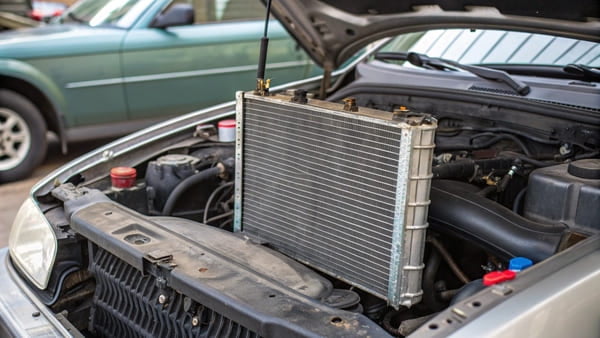
-An overheating engine can cause serious damage and costly repairs.1 Understanding your car's radiator is the first step to preventing this and ensuring your vehicle runs smoothly for years.
A car radiator is the core of the cooling system.2 It transfers heat from the hot coolant flowing from the engine into the outside air.3 This is done through a network of thin tubes and fins, which keeps the engine within its optimal operating temperature.
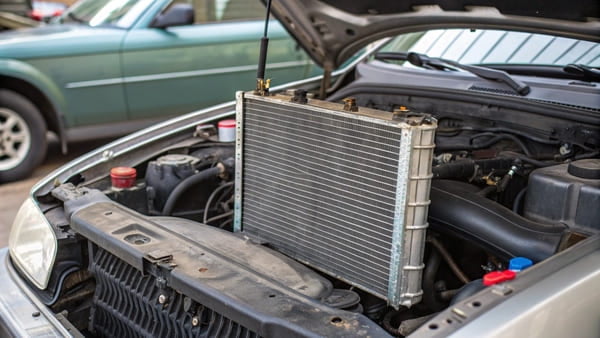
Your car’s engine is like a powerful furnace, creating incredible heat to generate motion. But too much heat is the enemy of any engine. Managing this thermal energy is one of the most critical jobs in your vehicle, and the radiator sits at the center of it all. Without this key component, your engine would quickly overheat and fail. Let's dive deeper into how this system works to protect your investment and keep you on the road.
What Is the Function of a Car Radiator in the Cooling System?
Your engine produces massive heat during operation. Without proper control, this heat will destroy internal components. The radiator is the key part that manages this thermal threat, protecting your engine.
The radiator's main function is to act as a heat exchanger.%%%FOOTNOTE_REF4%%% It receives hot antifreeze/coolant from the engine, spreads it across a large surface area, and [uses airflow to cool it down before it's sent back to the engine for another cycle.](https://en.wikipedia.org/wiki/Radiator(engine_cooling))5
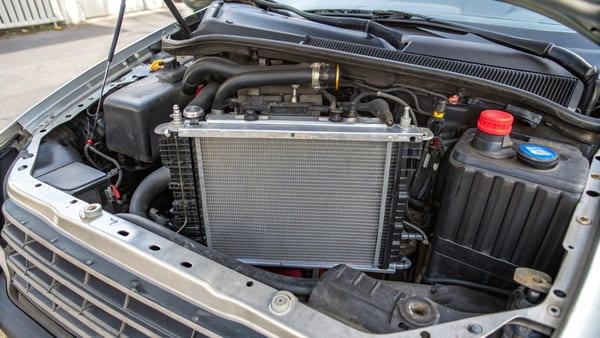
The radiator doesn't work alone; it's the star player on a team. This team, the cooling system, includes the water pump, thermostat, hoses, and cooling fan.6 Each part has a specific job, but the radiator's role is to be the primary point where heat is actually removed from the system. I always think of it as the lungs of the engine's temperature management. The system circulates the "blood" (coolant), but the radiator is where it breathes out the dangerous heat and breathes in the cool air. Understanding this helps you see that a problem with the radiator can bring the whole system to a halt.
The Heart of the Heat Exchange Process
The entire cooling system is designed to move heat from the engine to the radiator. The radiator's specific job is to then move that heat from the liquid coolant into the air. It does this through a very large surface area made up of small fins. This design is simple but extremely effective. The more surface area that is exposed to the air, the faster the heat can be carried away.7
A Critical Part of a Larger System
It's important to see the radiator as part of a complete circuit. If one part fails, the others are affected. A bad water pump means no coolant gets to the radiator.8 A stuck thermostat can also stop the flow.
| Component | Role in the Cooling System |
|---|---|
| Radiator | Removes heat from the coolant and transfers it to the air. |
| Water Pump | Circulates the coolant between the engine and the radiator. |
| Thermostat | Controls the flow of coolant based on its temperature. |
| Coolant Hoses | Transport the coolant between the engine, radiator, and other parts. |
| Cooling Fan | Pulls air through the radiator when the vehicle is slow or stopped. |
How Does a Car Radiator Work to Remove Heat From the Engine?
Hot liquid coolant flows into the radiator from the engine. But how does it actually get cool enough to be useful? The process is a simple but brilliant use of physics and airflow.
Hot coolant enters the radiator's inlet tank and flows through many small tubes. Fins attached to these tubes increase the surface area, and air passing over them carries the heat away.9 The now-cooler liquid exits and returns to the engine.
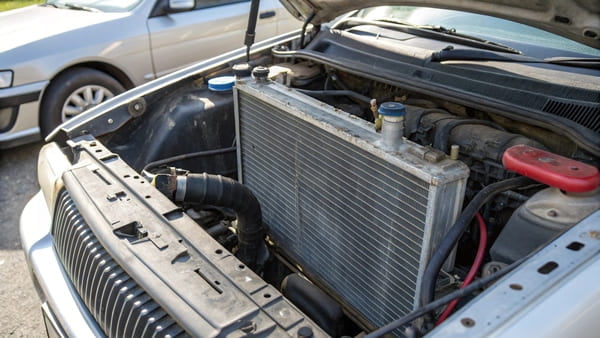
The process of cooling your engine is a continuous loop that relies on the radiator to do the heavy lifting. I like to break it down into a few simple steps. Thinking about it this way makes it easy to understand where problems might happen. From the moment hot coolant leaves the engine to the moment cooled liquid returns, every step is designed for maximum efficiency. It's a beautiful piece of engineering that happens right at the front of your car every time you drive. Let's look at the journey of the coolant.
Step 1: Hot Coolant Enters the Radiator
After absorbing heat from the engine block, the hot coolant is pushed by the water pump through a hose and into one of the radiator's tanks, usually called the inlet tank. At this point, the coolant is at its highest temperature and needs to be cooled down quickly.
Step 2: Heat Spreads Through Tubes and Fins
From the inlet tank, the coolant flows into a network of very thin tubes that run across the main body, or "core," of the radiator. Attached to these tubes are thousands of tiny, thin metal fins. The tubes carry the hot liquid, but the fins are what really do the work. They dramatically increase the surface area that is exposed to the air, giving the heat a massive space to escape from.
Step 3: Airflow Carries the Heat Away
As your car moves, air is forced through the front grill and passes over the radiator's fins. This moving air absorbs the heat from the fins and carries it away from the vehicle. When the car is stopped or moving slowly, a large cooling fan behind the radiator turns on to pull air through, ensuring the cooling process never stops. The now-cooled liquid gathers in the outlet tank on the other side of the radiator, ready to be sent back to the engine.
What Components Make a Car Radiator Work Efficiently?
Not all radiators are made equal. A poorly manufactured one can leak or fail when you need it most. Understanding the critical components helps you source a quality product for your business.
Key components for an efficient radiator include the core (tubes and fins), the inlet and outlet tanks, and the radiator cap.10 The quality of materials, especially for the plastic tanks and gaskets, is critical for longevity and preventing leaks.
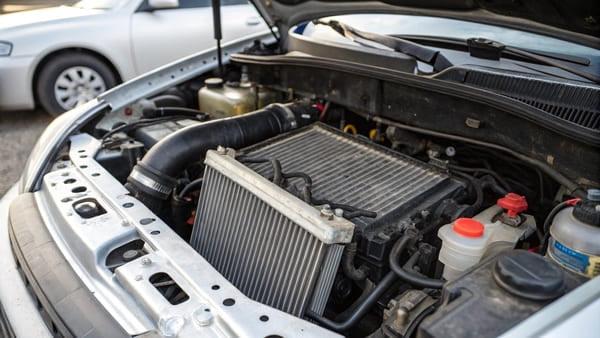
From my experience as a manufacturer, the parts that look the simplest are often the hardest to make correctly. The plastic tanks on modern radiators are a perfect example. They might just look like black plastic boxes, but getting them right requires incredible precision. This is where we separate professional-grade parts from the cheap alternatives that will ultimately fail and damage a customer's trust in your brand. It's the small details in manufacturing that make a big difference in performance and reliability.
The Core: Where Heat Exchange Happens
The core is the largest part of the radiator, made of tubes and fins. Most modern radiators use aluminum because it's lightweight and transfers heat very well.11 The design of the tubes and the density of the fins are engineered to balance maximum cooling with good airflow. A well-designed core is the foundation of an efficient radiator.12
The Tanks: Precision in Plastic Manufacturing
The tanks on either side of the core hold the coolant before and after it passes through the tubes. Making these plastic parts is extremely difficult. A standard injection molding machine just can't achieve the precision needed. The process has several steps, and the hardest one is cooling the plastic part after it comes out of the mold. I remember my first time producing these for a client from Pakistan. After the plastic tanks were molded, they "shrank" a little more than our standard specification during the cooling stage. I was very worried. But when the client saw them, he was actually happier with the result, as they were denser. It was a lucky break, but it taught me a huge lesson about how critical precise cooling control is. Since then, we have perfected this process. It's a level of manufacturing that you typically only find in specialized factories in coastal regions like Fujian or near Shanghai, not from lower-spec machines found elsewhere.
| Manufacturing Aspect | Standard Injection Molding | High-Precision Radiator Tank Molding |
|---|---|---|
| Required Precision | Low to Medium | Extremely High |
| Cooling Control | Basic, often uneven | Multi-stage, precisely controlled |
| Material Stability | Prone to warping and shrinkage issues | Minimal and predictable shrinkage |
| Common Location | Widespread | Specialized coastal industrial zones |
Conclusion
Your car's radiator is vital for engine health. Its function relies on efficient heat exchange, a clear process, and high-quality components. Understanding this helps you maintain your vehicle better.
"The Most Common Car Cooling System Problems | UTI", https://www.uti.edu/blog/automotive/the-most-common-cooling-system-problems. Automotive engineering sources confirm that engine overheating can lead to severe mechanical damage and expensive repairs, including warped cylinder heads and blown gaskets. This is generally accepted in technical literature, though the extent of damage depends on the duration and severity of overheating. Evidence role: general_support; source type: education. Supports: An overheating engine can cause serious damage and costly repairs.. Scope note: Severity of damage varies by engine design and duration of overheating. ↩
"How Does a Car Radiator Work? | UTI - Universal Technical Institute", https://www.uti.edu/blog/automotive/radiators. Automotive encyclopedias and technical manuals describe the radiator as the central component of the vehicle's cooling system, responsible for dissipating engine heat. Evidence role: definition; source type: encyclopedia. Supports: A car radiator is the core of the cooling system.. Scope note: Some cooling systems may use additional heat exchangers, but the radiator is typically primary. ↩
"No 31 2012 ASEE Radiator Final.pdf", https://www.lamar.edu/engineering/_files/documents/mechanical/dr.-fan-publications/2012/No%2031%202012%20ASEE%20Radiator%20Final.pdf. Engineering textbooks and automotive guides explain that the radiator's primary function is to transfer heat from the coolant to the outside air, facilitating engine temperature regulation. Evidence role: mechanism; source type: education. Supports: It transfers heat from the hot coolant flowing from the engine into the outside air.. Scope note: The efficiency of heat transfer depends on radiator design and environmental conditions. ↩
"Radiator - Wikipedia", https://en.wikipedia.org/wiki/Radiator. Automotive engineering literature consistently identifies the radiator as a heat exchanger, facilitating the transfer of thermal energy from coolant to ambient air. Evidence role: definition; source type: encyclopedia. Supports: The radiator's main function is to act as a heat exchanger.. Scope note: Other heat exchangers may exist in some vehicles, but the radiator is primary. ↩
"Radiator (engine cooling) - Wikipedia", https://en.wikipedia.org/wiki/Radiator_(engine_cooling). Automotive cooling system guides explain that airflow, either from vehicle movement or a fan, is essential for cooling the radiator's coolant before it returns to the engine. Evidence role: mechanism; source type: education. Supports: uses airflow to cool it down before it's sent back to the engine for another cycle.. Scope note: Airflow effectiveness varies with vehicle speed and fan operation. ↩
"Internal combustion engine cooling - Wikipedia", https://en.wikipedia.org/wiki/Internal_combustion_engine_cooling. Automotive technical manuals list the radiator, water pump, thermostat, hoses, and cooling fan as key components of the engine cooling system, each with a distinct function. Evidence role: definition; source type: encyclopedia. Supports: The radiator doesn't work alone; it's the star player on a team. This team, the cooling system, includes the water pump, thermostat, hoses, and cooling fan.. Scope note: Some vehicles may have additional or alternative cooling components. ↩
"[PDF] No 31 2012 ASEE Radiator Final.pdf - Lamar University", https://www.lamar.edu/engineering/_files/documents/mechanical/dr.-fan-publications/2012/No%2031%202012%20ASEE%20Radiator%20Final.pdf. Physics and engineering sources explain that increasing the surface area of a heat exchanger, such as a radiator, enhances heat dissipation by allowing more contact with cooling air. Evidence role: mechanism; source type: education. Supports: The more surface area that is exposed to the air, the faster the heat can be carried away.. Scope note: Actual heat transfer rates depend on airflow and material properties. ↩
"Radiator (engine cooling) - Wikipedia", https://en.wikipedia.org/wiki/Radiator_(engine_cooling). Automotive repair guides and technical manuals state that a malfunctioning water pump prevents coolant circulation, which can lead to engine overheating due to lack of heat removal by the radiator. Evidence role: mechanism; source type: education. Supports: A bad water pump means no coolant gets to the radiator.. Scope note: Some vehicles may have secondary pumps or fail-safe mechanisms. ↩
"Radiator (engine cooling) - Wikipedia", https://en.wikipedia.org/wiki/Radiator_(engine_cooling). Automotive engineering textbooks describe the radiator's structure, including inlet tanks, tubes, and fins, and explain how airflow over fins facilitates heat removal from coolant. Evidence role: mechanism; source type: education. Supports: Hot coolant enters the radiator's inlet tank and flows through many small tubes. Fins attached to these tubes increase the surface area, and air passing over them carries the heat away.. Scope note: Design specifics may vary by vehicle model and radiator type. ↩
"Radiator (engine cooling) - Wikipedia", https://en.wikipedia.org/wiki/Radiator_(engine_cooling). Automotive technical references identify the core, tanks, and radiator cap as essential components for radiator efficiency and proper operation. Evidence role: definition; source type: encyclopedia. Supports: Key components for an efficient radiator include the core (tubes and fins), the inlet and outlet tanks, and the radiator cap.. Scope note: Some radiator designs may include additional or alternative components. ↩
"[PDF] No 31 2012 ASEE Radiator Final.pdf - Lamar University", https://www.lamar.edu/engineering/_files/documents/mechanical/dr.-fan-publications/2012/No%2031%202012%20ASEE%20Radiator%20Final.pdf. Materials science and automotive sources report that aluminum is commonly used in modern radiators due to its favorable properties, including low weight and high thermal conductivity. Evidence role: expert_consensus; source type: education. Supports: Most modern radiators use aluminum because it's lightweight and transfers heat very well.. Scope note: Some radiators may use copper or plastic components depending on application. ↩
"[PDF] No 31 2012 ASEE Radiator Final.pdf - Lamar University", https://www.lamar.edu/engineering/_files/documents/mechanical/dr.-fan-publications/2012/No%2031%202012%20ASEE%20Radiator%20Final.pdf. Engineering literature on heat exchangers emphasizes that the design of the core, including tube and fin arrangement, is critical for radiator efficiency. Evidence role: expert_consensus; source type: paper. Supports: A well-designed core is the foundation of an efficient radiator.. Scope note: Efficiency also depends on other factors such as airflow and coolant properties. ↩