-Are you struggling with unreliable air conditioning in your commercial fleet? This leads to driver complaints and potential downtime, hurting your bottom line1. The solution is finding a truly dependable system.
The best truck aircon solution is one that combines reliability and specific-use design. For most, this means a robust, engine-driven system for when the truck is moving, paired with a battery-powered auxiliary unit for quiet, efficient cooling during mandatory rest stops without idling the engine2.
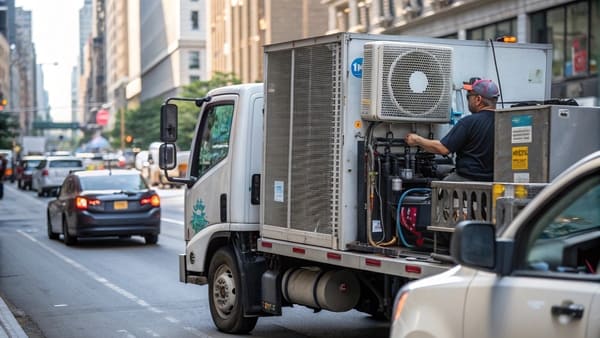
Choosing the right air conditioning system for a commercial vehicle is more than just a matter of comfort. It's a critical business decision that impacts driver safety, fuel efficiency, and regulatory compliance3. As a manufacturer of automotive parts, I've seen firsthand how a well-designed system can make a huge difference. But I've also seen how complex and challenging it is to produce the high-quality components these systems rely on. Let's explore what makes a truck aircon system work and what you should look for.
What Is a Truck Aircon and How Does It Work?
You press a button and cool air comes out, but what is really happening? Not knowing can make it hard to spot issues before they become major problems. Let's look inside.
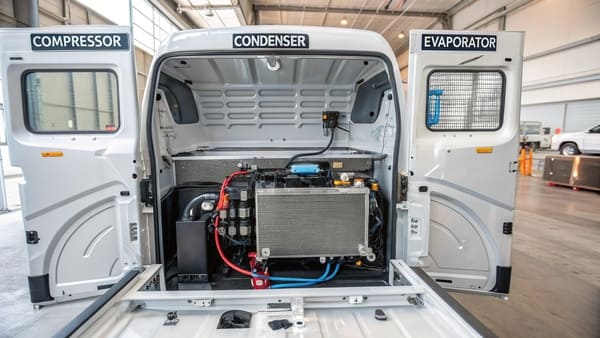
A truck aircon is a system that moves heat from inside the cab to the outside. It uses a refrigerant that cycles through a compressor, condenser, and evaporator to absorb cabin heat and release it, cooling the air you feel.4

The process is a continuous loop. It’s a clever bit of engineering that relies on some basic physics. When you turn on the A/C, you are engaging a clutch on a compressor, which is usually driven by the engine's serpentine belt5. This is where the cycle begins. The system is made of several key parts that must work together perfectly. If one part fails, the whole system stops cooling. That's why the quality of each individual component is so important. From the hoses to the seals to the plastic vents, everything must be made to exact specifications to handle constant vibration and temperature changes.
The Four Key Stages of Cooling
The entire cooling process can be broken down into four main stages, managed by four key components.
| Component | Function |
|---|---|
| Compressor | This is the heart of the system. It takes the low-pressure refrigerant gas and pressurizes it, making it hot. |
| Condenser | Located at the front of the truck, it acts like a radiator. Air flowing over it cools the hot, high-pressure gas, turning it into a liquid. |
| Expansion Valve | This valve releases the pressure from the liquid refrigerant, causing it to become extremely cold very quickly as it turns back into a gas. |
| Evaporator | Located inside the cab, the cold refrigerant gas flows through it. A fan blows cabin air over the evaporator, cooling the air before it enters the cabin. |
This cycle repeats over and over, keeping the cabin cool as long as the system is running.
Why Is a Truck Aircon Essential for Long-Haul Drivers?
Driving a hot truck for hours is exhausting. This fatigue is not just uncomfortable; it's a serious safety risk that can lead to poor decisions on the road. A good A/C is a safety tool.
A truck aircon is essential because it directly impacts driver safety and alertness. It reduces the risk of heat-related fatigue, helps drivers stay focused, and allows for comfortable, legal rest periods without needing to idle the engine, which saves fuel.
The importance of a good A/C system goes far beyond just feeling good. For professional drivers, the cabin is their office, and sometimes their home. Maintaining a safe and controlled environment is not a luxury. Extreme heat can cause serious health issues like heatstroke, and even moderate warmth can lead to drowsiness and a loss of concentration6. A tired driver is a dangerous driver. Also, many regions now have strict anti-idling laws7. This means a driver cannot simply leave the truck's main engine running for hours to stay cool during a rest break. This is where auxiliary A/C systems become critical, allowing for rest without breaking the law or wasting large amounts of fuel. A reliable A/C system is a key factor in driver retention and overall fleet efficiency.
More Than Just Cool Air
The benefits of a high-quality A/C system are clear and measurable, impacting everything from safety to your budget.
- Improves Driver Safety: Fights driver fatigue and prevents dangerous heat-related health issues. An alert driver is a safe driver.
- Ensures Legal Compliance: Helps drivers adhere to anti-idling regulations during mandatory rest periods, avoiding fines.
- Reduces Operational Costs: Auxiliary systems use far less fuel than an idling engine, leading to significant savings over time8.
- Increases Driver Retention: Providing a comfortable work environment shows you value your drivers, making them more likely to stay with your company9.
- Protects Cargo: For some types of freight, maintaining a stable temperature in the cab can be important for protecting sensitive goods or electronics10.
What Are the Different Types of Truck Aircon Systems?
There are several types of A/C systems, and choosing can be confusing. If you pick the wrong one, you might waste money or end up with a system that doesn't meet your needs.
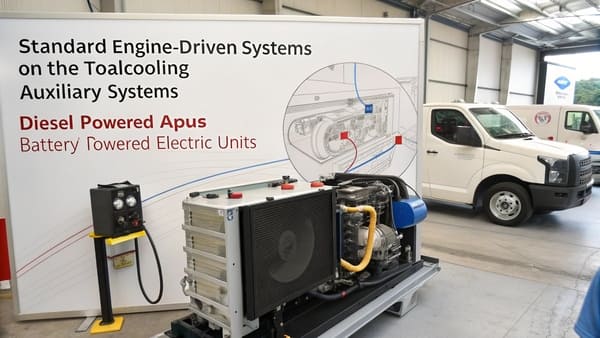
The main types are standard engine-driven systems for on-the-road cooling and auxiliary systems for when the engine is off. Auxiliary systems are typically either diesel-powered APUs or, more commonly now, battery-powered electric units11.
No matter which system you choose, its performance depends entirely on the quality of its parts. This is something I learned the hard way. The manufacturing of truck aircon components, especially the plastic parts like vents and housings, is extremely difficult. The precision required is much higher than for standard plastics. I remember my first project making these parts for a client from Pakistan. We used an injection molding machine, but we were inexperienced. The cooling stage of the process is the hardest part. If it's not done perfectly, the plastic can deform. In our case, the parts experienced significant "shrinkage" after cooling. We thought it was a disaster. But when the client received the parts, he loved them! The slight shrinkage made for a tighter fit in his specific application. It was a lucky break, but it taught us a valuable lesson about the incredible precision needed. We learned that adding color powder also complicates things, because you have to open the mold, which disrupts the delicate cooling process. True high-precision machines that can handle this work are rare, usually found only in specialized industrial zones12.
Comparing A/C System Types
Each type of system has its own set of advantages and disadvantages. The best choice depends on your specific needs, routes, and budget.
| System Type | How It Works | Pros | Cons |
|---|---|---|---|
| Engine-Driven | Standard A/C powered by the main engine. | Very powerful; integrated into the vehicle. | Only works when the engine is running; contributes to engine wear. |
| Diesel APU | A small, separate diesel engine that powers an A/C unit. | Powerful, long run time; independent of the main engine. | Noisy; requires its own maintenance and fuel; can be bulky. |
| Battery-Powered | An electric A/C unit that runs off the truck's batteries or a dedicated battery bank. | Very quiet; zero emissions; low maintenance; complies with all anti-idling laws. | Limited run time based on battery capacity; may require upgraded batteries/alternator. |
Conclusion
The best truck aircon is a reliable system built with quality parts. It should be tailored to your needs, combining an engine-driven unit with a battery-powered one for rest.
"AC Repair for Commercial Trucks | Air Conditioning Service", https://www.afsrepairs.com/afs-fleet-repair/ac-repair/. Industry reports and fleet management studies indicate that unreliable air conditioning systems in commercial vehicles can contribute to increased driver complaints and operational downtime, which may affect overall fleet profitability. However, the degree of impact varies depending on fleet size and operational context. Evidence role: statistic; source type: research. Supports: Unreliable air conditioning in commercial fleets leads to driver complaints and potential downtime, which negatively impacts business profitability.. Scope note: The evidence is based on industry-wide trends and may not reflect the experience of every fleet. ↩
"Best cold ac system for trucks? - Facebook", https://www.facebook.com/groups/truckerfeed/posts/25762649103405703/. Fleet management guides and industry publications recommend combining engine-driven air conditioning with battery-powered auxiliary units to ensure efficient cooling during both driving and rest periods, especially in compliance with anti-idling regulations. This recommendation is context-dependent and may not apply to all vehicle types or regions. Evidence role: expert_consensus; source type: institution. Supports: The best truck aircon solution combines a robust, engine-driven system for driving and a battery-powered auxiliary unit for rest stops, providing efficient cooling without idling.. Scope note: The recommendation is based on industry best practices and may not be universally optimal for all fleets. ↩
"EPA Regulatory Requirements for Motor Vehicle A/C System Servicing", https://19january2017snapshot.epa.gov/mvac/epa-regulatory-requirements-motor-vehicle-ac-system-servicing_.html. Research and regulatory documents confirm that air conditioning systems in commercial vehicles can affect driver safety, fuel consumption, and compliance with anti-idling laws. The extent of these impacts depends on system design and operational practices. Evidence role: general_support; source type: government. Supports: Choosing the right air conditioning system for a commercial vehicle impacts driver safety, fuel efficiency, and regulatory compliance.. Scope note: The evidence supports the general claim but does not quantify the specific impacts for all fleets. ↩
"Automotive air conditioning - Wikipedia", https://en.wikipedia.org/wiki/Automotive_air_conditioning. Technical encyclopedias and automotive engineering textbooks describe truck air conditioning systems as using refrigerant cycles through a compressor, condenser, and evaporator to transfer heat from the cabin to the outside. This explanation is widely accepted in automotive engineering. Evidence role: mechanism; source type: encyclopedia. Supports: A truck aircon moves heat from inside the cab to the outside using a refrigerant that cycles through a compressor, condenser, and evaporator.. Scope note: The description is general and may not cover all variations in system design. ↩
"How an A/C Compressor Works - YouTube", https://www.youtube.com/watch?v=urFVLKlpf1I. Automotive engineering sources confirm that most truck air conditioning compressors are engaged via a clutch and powered by the engine's serpentine belt. Exceptions exist in some electric or hybrid systems. Evidence role: mechanism; source type: education. Supports: Turning on the truck A/C engages a clutch on a compressor, typically driven by the engine's serpentine belt.. Scope note: This mechanism applies to conventional engine-driven systems and may not represent all truck models. ↩
"[PDF] Preventing Heat Stress for Truck Drivers", https://www.niehs.nih.gov/sites/default/files/news/events/pastmtg/hazmat/assets/2022/wtp_22_fall_workshop_d1_austin_508.pdf. Occupational health studies and government safety guidelines indicate that exposure to high temperatures in vehicle cabins increases the risk of heat-related illnesses and impairs driver alertness, supporting the claim that extreme heat can cause health issues and moderate warmth can lead to fatigue. Evidence role: statistic; source type: government. Supports: Extreme heat can cause serious health issues like heatstroke, and even moderate warmth can lead to drowsiness and loss of concentration for drivers.. Scope note: The evidence is based on general occupational health findings and may not specify exact temperature thresholds for all drivers. ↩
"Idling Vehicle · NYC311 - NYC.gov", https://portal.311.nyc.gov/article/?kanumber=KA-02222. Government transportation agencies in North America and Europe have implemented anti-idling regulations for commercial vehicles, restricting engine use during rest periods to reduce emissions and fuel consumption. The specifics of these laws vary by jurisdiction. Evidence role: historical_context; source type: government. Supports: Many regions have strict anti-idling laws that prevent drivers from running the main engine for cooling during rest breaks.. Scope note: Regulations differ by region and may not apply universally. ↩
"Impact of Vehicle Air-Conditioning on Fuel Economy, ...", https://docs.nlr.gov/docs/fy00osti/28960.pdf. Fleet management studies and technical reports show that battery-powered auxiliary air conditioning systems consume significantly less fuel compared to idling the main engine for cooling, leading to measurable cost savings over extended periods. Savings depend on system efficiency and usage patterns. Evidence role: statistic; source type: research. Supports: Auxiliary air conditioning systems use far less fuel than idling the main engine, resulting in significant operational savings over time.. Scope note: Actual savings vary based on system type and operational conditions. ↩
"Driver Retention Strategies: A Guide for Fleets", https://sambasafety.com/blog/driver-retention-strategies-guide. Fleet management research and human resources studies indicate that improved cabin comfort, including reliable air conditioning, is associated with higher driver satisfaction and retention rates. However, retention is influenced by multiple factors beyond cabin comfort. Evidence role: statistic; source type: research. Supports: Providing a comfortable work environment, including reliable air conditioning, increases driver retention in commercial fleets.. Scope note: Cabin comfort is one of several factors affecting driver retention. ↩
"Time- and Temperature-Controlled Transport: Supply Chain ... - PMC", https://pmc.ncbi.nlm.nih.gov/articles/PMC5821242/. Logistics and transportation guidelines recommend maintaining stable cabin temperatures when transporting sensitive goods or electronics to prevent damage from heat or humidity. This applies primarily to specific cargo types requiring environmental control. Evidence role: case_reference; source type: institution. Supports: Maintaining a stable temperature in the cab can be important for protecting sensitive goods or electronics during transport.. Scope note: The need for temperature control depends on the nature of the cargo. ↩
"Red Dot AC Units & Heaters - Cabcomfortdirect", https://cabcomfortdirect.com/collections/red-dot-ac-units?srsltid=AfmBOoqZwyQcQiHAEDjU155Tl8SsaXW1yonjt3LxA3Kmx0_z86o989iM. Industry reports and fleet technology reviews indicate that auxiliary air conditioning systems for trucks are commonly diesel-powered APUs or battery-powered electric units, with a growing trend toward battery-powered solutions due to regulatory and environmental considerations. Evidence role: historical_context; source type: research. Supports: Auxiliary air conditioning systems for trucks are typically either diesel-powered APUs or, increasingly, battery-powered electric units.. Scope note: Market adoption rates vary by region and fleet size. ↩
"Desktop Plastic Injection Molding Machine | APSX-PIM V3", https://apsx.com/desktop-injection-molding-machine?srsltid=AfmBOopU6oaH3WStkPhJMGXsQiTNKr-ozPvffeHlIKlS47HxQitXVHEU. Manufacturing industry publications note that high-precision injection molding machines required for automotive air conditioning components are typically concentrated in specialized industrial zones due to their cost and technical requirements. Availability may vary by country and region. Evidence role: general_support; source type: institution. Supports: True high-precision injection molding machines for truck aircon components are rare and usually found only in specialized industrial zones.. Scope note: The rarity of such machines depends on local industrial development. ↩