-Your engine is overheating, and you're worried about expensive damage. Understanding your car's radiator is the first step to preventing this problem and keeping your car running smoothly.
A car radiator is a heat exchanger designed to keep your engine from overheating.1 It circulates a special fluid, called coolant, to transfer heat away from the engine and release it into the surrounding air, ensuring optimal performance.2
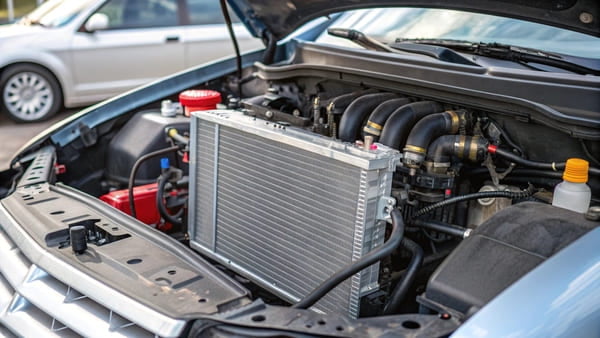
Your car's engine generates an incredible amount of heat just by running.3 Without a way to manage this heat, the engine would quickly destroy itself. This is where the cooling system, with the radiator as its star player, comes in. It is a critical system that many drivers overlook until it is too late. To really appreciate your car's reliability, it helps to understand the parts that work so hard to keep it running. Let's dive into what a radiator is, what it does, and how it differs from a similar-looking part, the AC condenser.
What Exactly Is a Car Radiator and What Does It Do?
Looking under the hood can be confusing. You might not know what everything does. Let's make it simple and explain one of the most important components for your engine's health.
A car radiator is the main part of the engine's cooling system.%%%FOOTNOTE_REF4%%% It looks like a large, thin grill at the front of the engine bay. [Its only job is to get rid of the excess heat carried by the engine coolant.](https://en.wikipedia.org/wiki/Radiator(engine_cooling))5
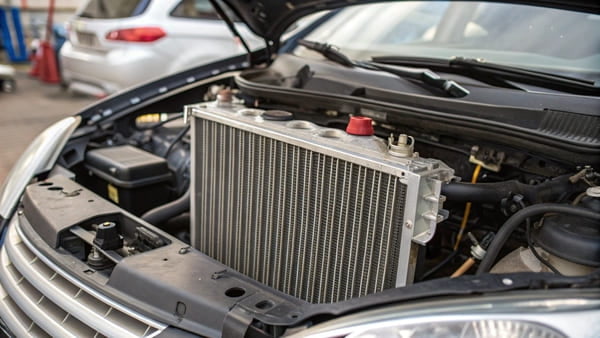
The radiator's job is to exchange heat. It takes hot liquid from the engine, cools it down, and sends it back to continue the cycle. To do this well, it is made of a few key parts that work together. The materials are usually a mix of aluminum and plastic.6 Aluminum is great for transferring heat, while plastic is used for the tanks because it is durable and can be molded into complex shapes.7 As a manufacturer, I can tell you that getting these materials to work together perfectly is a real engineering challenge.
Key Radiator Components
| Component | Function |
|---|---|
| Core | The largest part of the radiator. It has many small aluminum tubes that coolant flows through, and thin fins that air passes over to pull heat away. |
| Inlet/Outlet Tanks | These plastic tanks on the sides or top and bottom receive hot coolant from the engine (inlet) and send the cooled liquid back (outlet). |
| Fins | These are the thin, wavy metal strips between the tubes. They dramatically increase the surface area, helping the radiator transfer heat to the air much more efficiently. |
| Pressure Cap | This special cap keeps the cooling system pressurized. This raises the boiling point of the coolant, making the system more effective at high temperatures.8 |
What Does an AC Condenser Do in a Car?
You turn on your AC, expecting cold air. But what part actually makes that happen? A component that looks just like a radiator is doing the hard work, but for a different system.
The AC condenser is part of your car's air conditioning system. It takes hot, high-pressure refrigerant gas from the compressor and cools it down, turning it back into a liquid so your AC can blow cold air.9
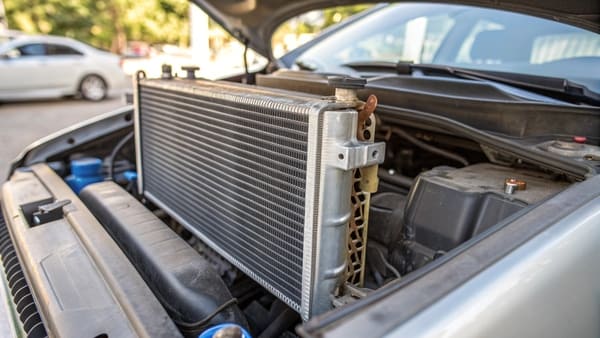
The AC system works by changing the state of a special gas called refrigerant.10 The condenser's role is critical in this process. Think of it as the radiator for your air conditioner. After the compressor squeezes the refrigerant gas, it becomes very hot and highly pressurized. This hot gas then flows into the condenser. Just like the radiator, the condenser uses airflow from driving or a fan to get rid of this heat. As the refrigerant cools, it condenses from a gas back into a liquid. This cooled, high-pressure liquid is now ready to move to the next stage of the AC system to create cold air inside your cabin. Without the condenser releasing this heat, your AC simply would not work.
How the Condenser Fits in the AC System
- Compressor: Squeezes low-pressure refrigerant gas into a hot, high-pressure gas.
- Condenser: Cools the hot gas, turning it into a cool, high-pressure liquid.
- Expansion Valve: Reduces the pressure of the liquid, making it very cold.
- Evaporator: The cold liquid absorbs heat from the cabin air, which is then blown into the car as cold air. The liquid turns back into a gas and returns to the compressor.
Are the Car Radiator and AC Condenser the Same Thing?
They look almost identical and sit right next to each other. It is easy to mix them up. But are they interchangeable? Let's clear up this common confusion once and for all.
No, the radiator and AC condenser are not the same. The radiator cools the engine using coolant. The condenser cools the AC system's refrigerant. They are separate parts with different jobs, even though they look similar.
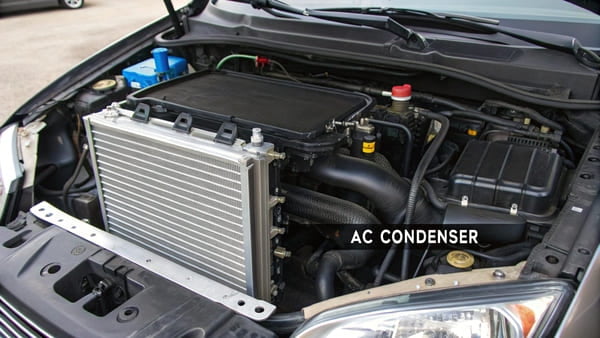
Although they both use the same principle of heat exchange, their roles are completely different. You will usually find the AC condenser mounted right in front of the radiator. This placement allows it to get the first blast of cool air as you drive, which is important for AC efficiency.11 The radiator sits behind it, still getting plenty of air to cool the engine.12
From a manufacturing standpoint, making the plastic parts for both components is extremely difficult. The plastic tanks require a level of precision that standard injection molding machines often cannot provide. The process has at least three stages, and the cooling stage is the hardest to control. I learned this the hard way on a project for a client from Pakistan. After we molded the plastic radiator tanks, they "shrank" more than we expected during cooling. I was very stressed. Luckily, the client found that the slightly smaller fit was actually perfect for his assembly. We got lucky, but it taught us a valuable lesson about controlling every step. Since then, we have perfected our process to ensure every part meets exact specifications.
Radiator vs. Condenser: Key Differences
| Feature | Car Radiator | AC Condenser |
|---|---|---|
| Primary Function | Cools the engine | Cools the AC refrigerant |
| Fluid Inside | Engine coolant (antifreeze and water) | Refrigerant (e.g., R-134a or R-1234yf) |
| System | Engine Cooling System | Air Conditioning (HVAC) System |
| Typical Location | Behind the AC condenser | In front of the radiator |
Conclusion
Your car's radiator is essential for preventing engine overheating. The AC condenser is just for your comfort. Knowing the difference helps you understand how your car works and what to check.
"Radiator - Wikipedia", https://en.wikipedia.org/wiki/Radiator. According to automotive engineering references, a car radiator is classified as a heat exchanger that transfers heat from engine coolant to the air, thereby preventing engine overheating. Evidence role: definition; source type: encyclopedia. Supports: A car radiator is a heat exchanger designed to keep your engine from overheating.. ↩
"Coolant Heat Transfer", https://www.engr.colostate.edu/~allan/heat_trans/page8/page8.html. Automotive engineering literature explains that radiators circulate coolant to absorb engine heat and release it into the air, maintaining optimal engine temperature. Evidence role: mechanism; source type: education. Supports: It circulates a special fluid, called coolant, to transfer heat away from the engine and release it into the surrounding air, ensuring optimal performance.. ↩
"Heat engine - Wikipedia", https://en.wikipedia.org/wiki/Heat_engine. Engineering sources report that internal combustion engines convert a significant portion of fuel energy into heat, with typical operating temperatures reaching hundreds of degrees Celsius. Evidence role: statistic; source type: education. Supports: Your car's engine generates an incredible amount of heat just by running.. Scope note: Exact heat output varies by engine type and operating conditions. ↩
"How Does a Car Radiator Work? | UTI - Universal Technical Institute", https://www.uti.edu/blog/automotive/radiators. Automotive textbooks identify the radiator as the primary component responsible for dissipating heat in the engine cooling system. Evidence role: expert_consensus; source type: education. Supports: A car radiator is the main part of the engine's cooling system.. Scope note: Other components, such as the water pump and thermostat, also play important roles. ↩
"Radiator (engine cooling) - Wikipedia", https://en.wikipedia.org/wiki/Radiator_(engine_cooling). Technical manuals state that the radiator's primary function is to remove excess heat from the engine coolant by transferring it to the air. Evidence role: definition; source type: encyclopedia. Supports: Its only job is to get rid of the excess heat carried by the engine coolant.. Scope note: Radiators may also serve as mounting points for other components, but their main function is heat removal. ↩
"Why are today's radiators made of aluminum and plastic ... - Quora", https://www.quora.com/Why-are-todays-radiators-made-of-aluminum-and-plastic-and-what-problems-does-that-cause-for-old-repair-methods. Industry sources confirm that most modern car radiators are constructed from aluminum cores with plastic tanks for durability and cost efficiency. Evidence role: general_support; source type: research. Supports: The materials are usually a mix of aluminum and plastic.. Scope note: Some older or specialty radiators may use copper or brass. ↩
"Thermal Conductivity of Aluminum Alloys—A Review - PMC", https://pmc.ncbi.nlm.nih.gov/articles/PMC10144406/. Materials engineering literature notes that aluminum's high thermal conductivity makes it ideal for radiator cores, while plastics are chosen for tanks due to their moldability and resistance to corrosion. Evidence role: mechanism; source type: education. Supports: Aluminum is great for transferring heat, while plastic is used for the tanks because it is durable and can be molded into complex shapes.. Scope note: Plastic tanks may have lower temperature resistance than metal alternatives. ↩
"Understanding the Role of Radiator Caps in Automotive Cooling ...", https://motorad.com/understanding-the-role-of-radiator-caps-in-automotive-cooling-systems/. Automotive engineering sources explain that the radiator pressure cap maintains system pressure, which increases the coolant's boiling point and improves heat management. Evidence role: mechanism; source type: education. Supports: This special cap keeps the cooling system pressurized. This raises the boiling point of the coolant, making the system more effective at high temperatures.. Scope note: Boiling point increase depends on the pressure rating of the cap. ↩
"How Does Car AC Work? | UTI - Universal Technical Institute", https://www.uti.edu/blog/automotive/air-conditioning. Automotive HVAC references describe the AC condenser as the component that cools and condenses refrigerant gas into liquid, enabling the air conditioning system to produce cold air. Evidence role: mechanism; source type: education. Supports: The AC condenser is part of your car's air conditioning system. It takes hot, high-pressure refrigerant gas from the compressor and cools it down, turning it back into a liquid so your AC can blow cold air.. Scope note: Exact refrigerant types and pressures vary by vehicle model. ↩
"[PDF] Experimental Analysis of an Automotive Air Conditioning System ...", https://docs.lib.purdue.edu/cgi/viewcontent.cgi?referer=&httpsredir=1&article=1734&context=iracc. Automotive air conditioning guides explain that the AC system relies on refrigerant phase changes (gas to liquid and back) to absorb and release heat. Evidence role: mechanism; source type: education. Supports: The AC system works by changing the state of a special gas called refrigerant.. Scope note: Different refrigerants may have varying properties and environmental impacts. ↩
"Air Conditioner Maintenance | Department of Energy", https://www.energy.gov/energysaver/air-conditioner-maintenance. Automotive design references indicate that AC condensers are commonly installed in front of radiators to maximize airflow and cooling efficiency. Evidence role: general_support; source type: education. Supports: You will usually find the AC condenser mounted right in front of the radiator. This placement allows it to get the first blast of cool air as you drive, which is important for AC efficiency.. Scope note: Some vehicle designs may vary in condenser placement. ↩
"Need second opinion on AC condenser to radiator placement on a '65", https://stangnet.com/mustang-forums/threads/need-second-opinion-on-ac-condenser-to-radiator-placement-on-a-65.646043/. Automotive engineering sources confirm that radiators are typically positioned behind AC condensers and are designed to receive sufficient airflow for effective engine cooling. Evidence role: general_support; source type: education. Supports: The radiator sits behind it, still getting plenty of air to cool the engine.. Scope note: Airflow may be reduced in extreme conditions or with clogged condensers. ↩