-Struggling to understand what's under your car's hood? It feels complex, but knowing the basics can save you money and make you a smarter car owner.
A vehicle engine is the heart of your car. It's a machine that converts fuel into motion, using a process called internal combustion to power the wheels. Understanding this core function is the first step to feeling more confident about your vehicle.
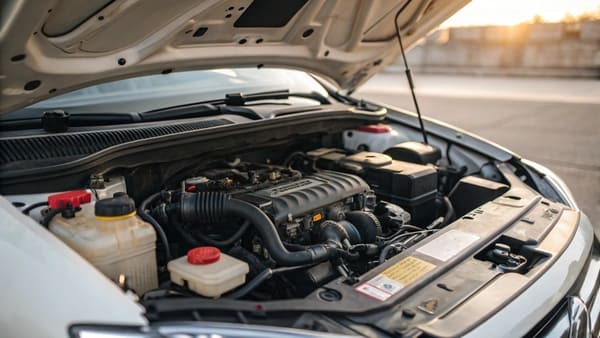
An engine might seem like a mysterious box of metal, but its job is simple: to make your car go. When you press the gas pedal, you're telling the engine to work harder to produce more power. This power is what moves you down the road. Learning a little about it helps you understand what mechanics are talking about and why regular maintenance, like oil changes, is so important. It empowers you to ask the right questions and spot potential issues before they become big, expensive problems.1 Let's dive in and demystify this amazing machine together.
What Exactly Is a Vehicle Engine?
Ever feel lost when mechanics start talking about engines? It's easy to get confused by all the jargon. But the engine's main job is actually pretty straightforward.
An engine is a complex machine that acts as your car's power source. Its main purpose is to burn fuel to create powerful energy, which then turns the wheels.2 Think of it as the powerhouse that makes your entire car move.
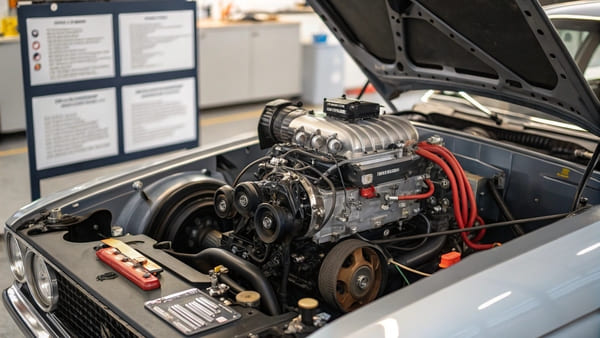
At its core, an engine is a type of machine called an "internal combustion engine." This just means the fuel is burned inside the engine itself to create pressure and force. This force is then harnessed to create movement. Think of it like a series of thousands of tiny, controlled explosions happening every single minute you're driving.3 These explosions push parts inside the engine, and that motion is transferred all the way to your wheels.
It's not just one big piece of metal, either. An engine is an assembly of hundreds of parts, all working together in perfect harmony. Every single piece, from the largest metal block to the smallest plastic connector, must be made with incredible precision. If even one small part is off, the whole system can fail.4 This precision is why manufacturing engine components is so challenging. It requires specialized machinery and expert knowledge to make sure everything fits and works exactly as it should, under intense heat and pressure.
How Does a Vehicle Engine Actually Work?
You hear terms like "four-stroke" and "combustion" and just nod along, right? It sounds complicated. But the basic idea is just a series of small, controlled explosions happening very, very fast.
Most car engines work on a four-stroke cycle: intake, compression, combustion (or power), and exhaust. The engine sucks in air and fuel, squeezes it, ignites it with a spark, and then pushes out the waste gas. This cycle repeats thousands of times per minute to generate power.
Let's break down that four-stroke cycle. Imagine a can with a lid that can move up and down inside it. The can is the cylinder, and the moving lid is the piston. This is where all the action happens.
The process is a continuous loop that creates the power to run your car.
| Stroke Name | Piston Action | What Happens |
|---|---|---|
| 1. Intake | Moves Down | The piston moves down, creating a vacuum that sucks a mixture of air and fuel into the cylinder. |
| 2. Compression | Moves Up | The piston moves back up, squeezing the air and fuel mixture into a tiny space. This makes it more explosive. |
| 3. Combustion | Forced Down | The spark plug creates a spark, igniting the squeezed mixture. The explosion forces the piston down with great power. |
| 4. Exhaust | Moves Up | The piston moves back up one last time, pushing the leftover burnt gases out of the cylinder through an exhaust valve. |
This whole four-step dance happens in a fraction of a second, across multiple cylinders at once. The powerful downward push from the combustion stroke is what turns a part called the crankshaft. The spinning crankshaft is what ultimately sends power to your transmission and wheels, making the car move.
What Are the Main Parts of a Vehicle Engine?
Looking at an engine can be overwhelming with all its wires, hoses, and metal parts. It's confusing. But knowing just a few key components will help you understand what's happening inside.
The main parts of an engine include the engine block, cylinders, pistons, crankshaft, and cylinder head with its valves and spark plugs. Each part has a specific job in the four-stroke cycle to create power and keep the engine running smoothly.
While there are hundreds of parts, let's focus on the big players. The engine block is the heavy, metal foundation of the engine that holds everything together. Inside it are the cylinders, which are the hollow tubes where the pistons move. The pistons are the cylindrical plugs that are pushed up and down by the fuel explosions. They are connected to the crankshaft, which is a long, rotating shaft that converts the pistons' up-and-down motion into the spinning motion needed to turn the wheels. On top of the engine block sits the cylinder head, which holds the valves (to let air/fuel in and exhaust out) and the spark plugs (to ignite the fuel).
But it's not just about the big metal parts. Many smaller components, even plastic ones, are critical. I learned this the hard way on a project for a client from Pakistan. We were manufacturing plastic accessory parts for an engine. The process for making these parts with an injection molding machine is incredibly precise. The plastic needs to be injected into a mold and then cooled perfectly. This cooling stage is the hardest part. If it’s not right, the part can shrink or warp.5 On our first try, the parts had a noticeable "shrinkage" problem after cooling. I was worried the client would reject the whole batch. But, to my surprise, he actually liked the slightly smaller, denser feel. It was a lucky break! We learned a lot that day about controlling the cooling process. It showed me how even a tiny plastic part requires immense precision to meet automotive standards. This kind of work needs special machines, often found in manufacturing hubs near Shanghai, not just any factory can do it right.6
Conclusion
Now you know an engine converts fuel to power through combustion. Understanding its basic parts and cycle helps you talk to mechanics and make smarter car choices.
"How Do Car Engines Work? A Close Look at The Intricate ...", https://www.youtube.com/watch?v=zYMzE4xnjtc. Consumer education resources note that understanding basic car mechanics can help owners communicate with mechanics and identify issues early, potentially reducing repair costs. Evidence role: general_support; source type: education. Supports: It empowers you to ask the right questions and spot potential issues before they become big, expensive problems.. Scope note: This is a general benefit and may not apply in all cases. ↩
"Engine", https://en.wikipedia.org/wiki/Engine. Technical encyclopedias confirm that the primary function of a car engine is to convert fuel into mechanical energy to drive the vehicle's wheels. Evidence role: definition; source type: encyclopedia. Supports: An engine is a complex machine that acts as your car's power source. Its main purpose is to burn fuel to create powerful energy, which then turns the wheels.. ↩
"Internal combustion engine", https://en.wikipedia.org/wiki/Internal_combustion_engine. Automotive engineering texts describe the combustion process in gasoline engines as a series of rapid, controlled explosions (combustion events) occurring in the cylinders during operation. Evidence role: mechanism; source type: education. Supports: Think of it like a series of thousands of tiny, controlled explosions happening every single minute you're driving.. Scope note: The term 'explosions' is a simplification; technically, these are rapid combustions. ↩
"Damage Tolerance and Reliability of Turbine Engine ...", https://ntrs.nasa.gov/api/citations/20000011913/downloads/20000011913.pdf. Manufacturing and engineering sources emphasize that engine components require high precision, as small defects can lead to engine failure or reduced performance. Evidence role: expert_consensus; source type: education. Supports: Every single piece, from the largest metal block to the smallest plastic connector, must be made with incredible precision. If even one small part is off, the whole system can fail.. Scope note: The degree of risk depends on the specific part and defect. ↩
"7 Common Injection Molding Defects and How to Avoid Them", https://sybridge.com/injection-molding-defects/. Manufacturing engineering sources explain that improper cooling during plastic injection molding can cause shrinkage or warping of parts. Evidence role: mechanism; source type: education. Supports: The plastic needs to be injected into a mold and then cooled perfectly. This cooling stage is the hardest part. If it’s not right, the part can shrink or warp.. Scope note: The extent of shrinkage or warping depends on material and process parameters. ↩
"Shanghai Auto Global: Home", https://shanghaiglobalauto.com/. Industry reports note that advanced automotive component manufacturing often requires specialized machinery and is concentrated in major industrial regions such as those near Shanghai. Evidence role: case_reference; source type: institution. Supports: This kind of work needs special machines, often found in manufacturing hubs near Shanghai, not just any factory can do it right.. Scope note: The concentration of such factories varies by country and industry sector. ↩