-Annoying brake squeal ruins the driving experience. This noise makes customers doubt the quality of your parts. The right brake pad shims1 can solve this problem completely.
Brake pad shims are thin layers of metal and rubber attached to the back of a brake pad. They absorb vibrations and reduce noise. Choosing the right type means matching the shim's material, layers, and adhesive to the specific vehicle application and performance needs to ensure a quiet, smooth stop.

You might think such a small part is simple, but the science behind it is surprisingly complex. Getting it wrong leads to customer complaints and returns. Let's explore why these shims are so vital and how they actually work. We will break down everything you need to know.
What Are Brake Pad Shims and Why Are They Critical in Modern Braking Systems?
Many people think brake pads are the only important part. This thinking leads to noisy brakes and customer complaints. Understanding shims is key to providing a truly premium braking solution.
Brake pad shims are multi-layered insulators2 placed on the back of brake pads. They are critical because they dampen high-frequency vibrations3s](https://bullet-automotive.com/what-causes-brake-vibrations-10-reasons/)%%%FOOTNOTE_REF_4%%% created when the caliper piston presses the pad against the rotor. This prevents the audible squeal that customers hate and ensures a quiet, comfortable braking experience.
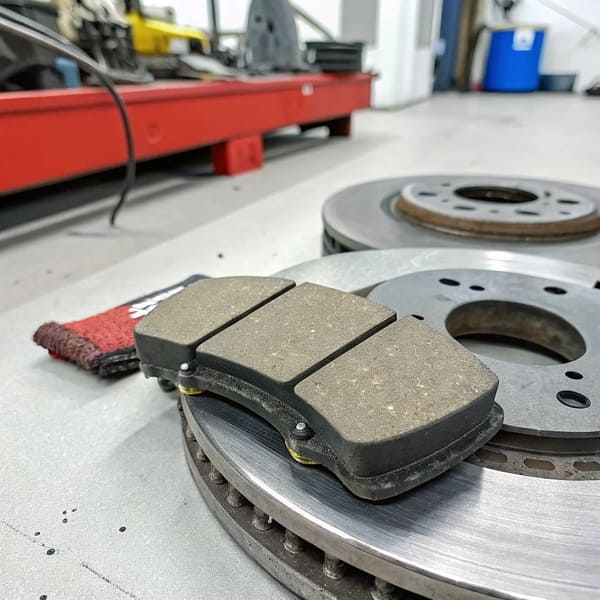
Modern cars use lighter and stiffer components in their chassis and suspension systems. This design choice improves fuel efficiency and handling, but it has a side effect. These components are more likely to resonate at high frequencies that we can hear as noise. When the brake pad touches the rotor, it creates a very high-frequency vibration. Without a shim, this vibration travels directly from the pad's backplate to the caliper and then through the entire brake assembly. The whole system can act like a giant speaker, turning a tiny, harmless vibration into a loud, irritating squeal. This is why shims are no longer an optional accessory; they are a critical component for perceived quality. A customer who hears noise will immediately assume the parts are cheap or defective, even if the brake pads offer excellent stopping power. This makes the precision of the shim itself just as important as the pad's friction material.
| Feature | Brakes Without Shims | Brakes With Quality Shims |
|---|---|---|
| Noise Level | High (Squealing, Grinding) | Low (Quiet Operation) |
| Vibration | Noticeable in Pedal and Steering | Minimal to None |
| Pad Wear | Can be uneven due to vibration | Promotes more even wear |
| Customer Perception | Low Quality, Annoying | High Quality, Smooth, Safe |
How Do Brake Pad Shims Reduce Noise, Vibration, and Harshness (NVH)?
You know shims are supposed to stop noise, but the "how" is often a mystery. This makes it hard to select the best shim for a specific brake system or explain its value.
Shims reduce NVH through two main principles: damping5 and isolation. The rubber and adhesive layers6 absorb vibrational energy, converting it into tiny amounts of heat. The different material layers also create a barrier, isolating the caliper from the pad's high-frequency vibrations4, stopping the noise at its source.
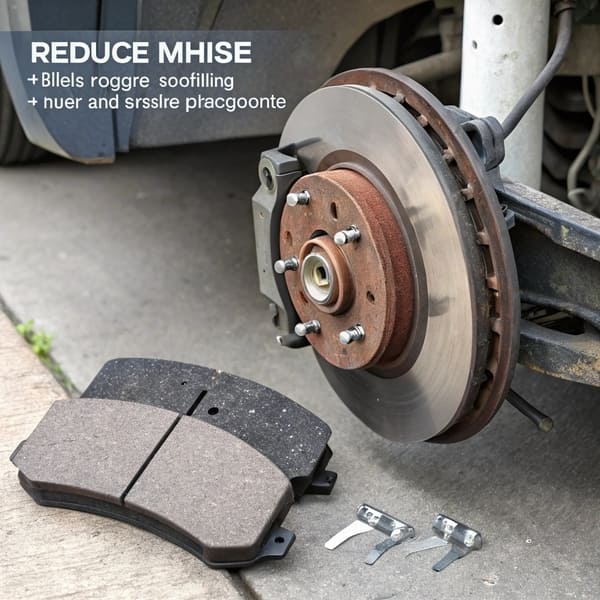
The real work happens inside the shim's layered structure. It’s not just a single piece of metal. A good shim is a carefully engineered sandwich of different materials, each with a specific job.
The Damping Layers
Typically, you will find one or more layers of specialized rubber or viscoelastic material7. These layers are designed to absorb energy. When the brake pad vibrates, this energy travels into the rubber layer, which flexes and moves on a microscopic level. This movement converts the vibrational energy into a very small amount of heat. This process is called damping5. It effectively "eats" the vibration before it can become sound.
The Constraining and Isolating Layers
These are usually made of steel or stainless steel8. They provide stiffness and a solid foundation for the shim. More importantly, they create a barrier. Because steel and rubber have very different densities, it is difficult for vibrational energy to pass between them. This isolates the caliper from the pad.
Manufacturing these layered shims is extremely difficult. The process of adding the coatings and bonding the layers9 requires incredible precision. For example, when applying a specific coating, the machine has to stop for adjustments, and the mold might be opened. This can interfere with the cooling and setting process. If the shim cools unevenly, it will not be perfectly flat. An imperfectly flat shim is a failed shim, as it cannot do its job. This is why only factories with highly advanced machinery, like those found in Fujian or near Shanghai, can produce shims that meet our quality standards.
Where Are Brake Pad Shims Installed and How Do They Work in the Brake Assembly?
Even the best shim is useless if installed incorrectly. A simple mistake during assembly can completely negate its benefits, leading to the very noise you tried to prevent.
Brake pad shims are installed on the backplate of the brake pad, between the pad and the brake caliper piston or caliper fingers. They work by creating a buffer that absorbs micro-vibrations from the pad before they can transfer to the caliper and amplify into audible noise.
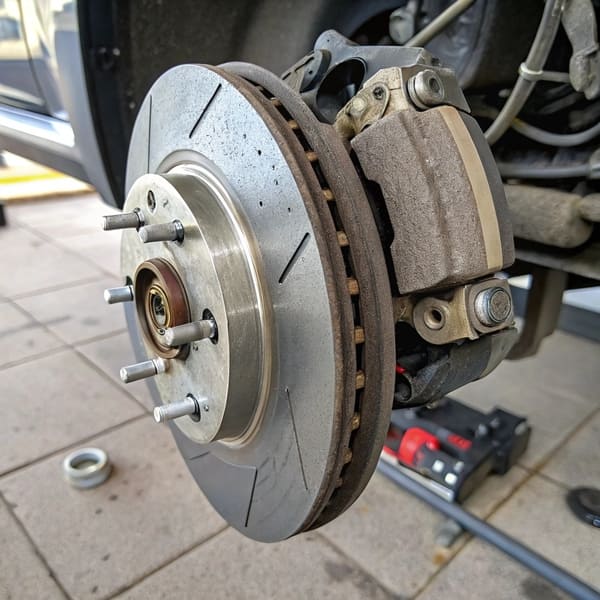
The shim's position is simple but critical. It must be attached directly to the steel backplate of the brake pad. Many quality shims come with a peel-and-stick adhesive backing10 to ensure they stay in place. When the driver presses the brake pedal, the hydraulic pressure pushes the caliper piston11. This piston does not push the brake pad directly. Instead, it pushes against the shim. The shim then transfers that force evenly across the back of the pad, pressing the friction material against the spinning brake rotor.
The fit between the shim and the pad's backplate12 must be perfect. There can be no gaps. This is where manufacturing precision13 is tested. I learned this lesson the hard way on one of our first shim projects for a customer in Pakistan. We were new to the complexities and, after production, we discovered that the shims had a slight "loose fit" and did not stick perfectly flat. I was very worried this would be a major problem. To my complete surprise, the client actually preferred this for their specific aftermarket application. However, it was a wake-up call for us. That experience taught us that while our client was happy, a loose fit is technically a defect. It creates a space where vibrations can build up and escape, causing noise. This pushed us to master our cooling and forming processes to control the flatness and adhesion perfectly, ensuring a tight, gap-free fit for every shim we produce now.
Conclusion
Brake pad shims are essential for quiet braking. Their layered design dampens vibration14, but only if they are manufactured and chosen with precision. This ensures a high-quality, noise-free driving experience.
Learn how brake pad shims play a crucial role in reducing noise and enhancing the quality of your braking system. ↩
Discover the science behind multi-layered insulators and their impact on vibration and noise reduction in brakes. ↩
Explore the mechanism by which shims absorb and reduce unwanted vibrations, preventing brake squeal. ↩
Understand why high-frequency vibrations cause brake noise and how to address them for a smoother driving experience. ↩
Learn about the damping process and its significance in minimizing brake noise and improving comfort. ↩
Find out how these layers contribute to vibration absorption and noise isolation in brake systems. ↩
Discover the benefits of viscoelastic materials in absorbing energy and reducing brake vibrations. ↩
Understand the importance of these materials for providing stiffness and isolating vibrations in shims. ↩
Learn about the technical difficulties in producing high-quality shims and their impact on performance. ↩
Find out how adhesive backing ensures a secure fit and maximizes the effectiveness of brake shims. ↩
Understand the brake operation process and the role of shims in force transfer and noise reduction. ↩
Learn why a perfect fit is necessary to prevent gaps that can lead to vibration and brake noise. ↩
See why precise manufacturing is essential for effective shims and preventing brake noise issues. ↩
Explore how the multi-layer structure of shims is engineered to absorb and eliminate brake vibrations. ↩