-Driving without a clear view is a recipe for disaster. Blind spots can hide an entire car, making a simple lane change a high-risk move that could lead to an accident.
Your car has three main mirrors designed to work together1. An interior rear-view mirror shows what's directly behind, while two exterior side-view mirrors cover the areas to your left and right, helping you see into blind spots and change lanes safely.
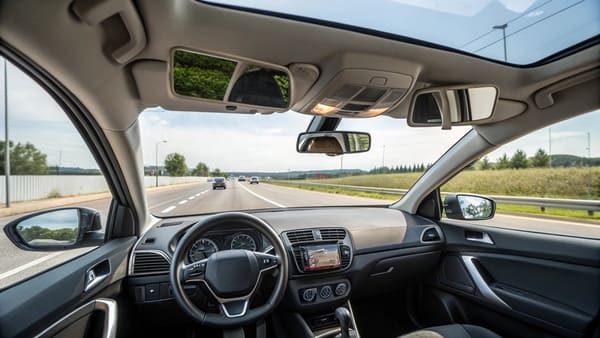
Your car's mirrors are more than just pieces of glass; they are a critical safety system. Each one is designed for a specific purpose, and knowing how to use them together is the key to having full awareness on the road. It's time we took a closer look at each one to understand its unique role in keeping you safe. This knowledge will not only make you a better driver but also give you a deeper appreciation for the engineering behind these everyday components.
What Are the Different Types of Car Mirrors?
It's easy to get confused by your car's mirrors. Some are flat, some are curved, and some even have electronic features. This variety can feel overwhelming if you don't know why.
Cars primarily use three types of mirrors: the interior rear-view, the driver's side-view, and the passenger's side-view. Each has a different shape and function2 to provide a complete picture of your surroundings, from directly behind you to the tricky blind spots on either side.
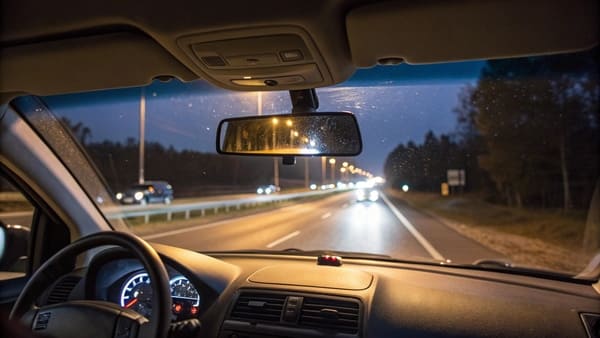
To really master your road awareness, you need to understand the job of each mirror. They are not interchangeable. The view you get from your interior mirror is very different from the one you get on your passenger side, and there's a good reason for that. Let's break down the different types and the advanced technologies that make modern mirrors so effective.
A Quick Comparison
The easiest way to see the differences is to put them side-by-side. Each mirror is a tool, and you need to know which tool to use for which job.
| Mirror Type | Glass Type | Field of View | Key Purpose |
|---|---|---|---|
| Interior Rear-View | Flat | Narrow, True Distance | Monitor traffic directly behind you |
| Driver-Side Mirror | Flat or Slightly Convex | Medium | Cover the blind spot on the left side |
| Passenger-Side Mirror | Convex (Curved) | Wide | Cover the large blind spot on the right |
Advanced Mirror Technologies
Modern cars often include more advanced mirror features. For instance, auto-dimming mirrors use sensors to detect bright headlights from behind and automatically reduce the glare, which is a great safety feature for night driving. Heated mirrors are another common feature3, using a small heating element to quickly clear away frost, ice, or fog, ensuring your view is always clear. Many new vehicles also integrate Blind Spot Monitoring (BSM) systems, which use a small warning light directly in the side mirror4 to alert you when a vehicle is in your blind spot.
What Is a Rear View Mirror and What Does It Do?
That mirror in the middle of your windshield seems simple, right? But at night, the glare from another car's headlights can be blinding, proving there is more to it than you think.
The interior rear-view mirror gives you a clear, true-to-distance view of what is directly behind your car. Its main function is to help you monitor the flow of traffic, see cars approaching from the rear, and check for obstacles when you are backing up.
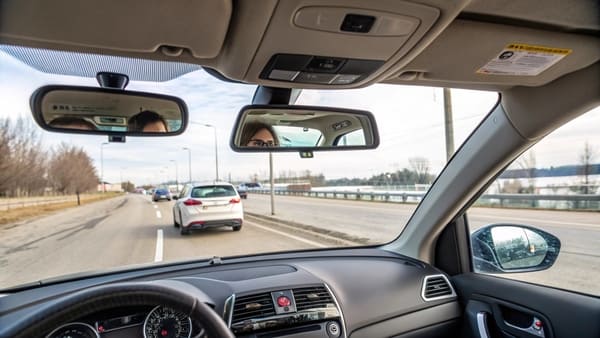
Most rear-view mirrors have a small tab at the bottom. This is for the day/night function5. When you flip it, you are changing the angle of a prismatic piece of glass inside. In the "night" position, it reflects a much dimmer image of the headlights behind you, which protects your eyes from glare while still allowing you to see that a car is there. But the mirror itself is only part of the story; the housing that holds it is surprisingly complex to manufacture.
The Manufacturing Challenge of Mirror Housings
As a manufacturer, I can tell you that producing the plastic housing for a rear-view mirror is incredibly difficult. The precision required is very high, and standard injection molding machines often can't meet the standard. The process involves several steps, but the hardest part is cooling. I remember my first project making these parts for a client from Pakistan. I was still new to it, and our plastic components had a serious "shrinkage" problem after they cooled. I was worried we had failed. But it turned out the client actually preferred the slightly shrunken look. We got lucky, but it taught me a valuable lesson. Since then, we've perfected our process. We use high-precision machines, often found in coastal industrial zones, to ensure every part is perfect. The process is so sensitive that even adding color pigments requires stopping the machine and opening the mold, which makes the cooling stage even more challenging.
What Are Side View Mirrors and Why Are They Important?
You have probably seen the warning: "Objects in mirror are closer than they appear." That text is printed on your passenger-side mirror for a very important reason, and ignoring it can be dangerous.
Side-view mirrors are essential for covering your blind spots6, the areas on either side of your car that the rear-view mirror can't see. They are your best tool for making safe lane changes and seeing cars or motorcycles that might be hiding just out of view.
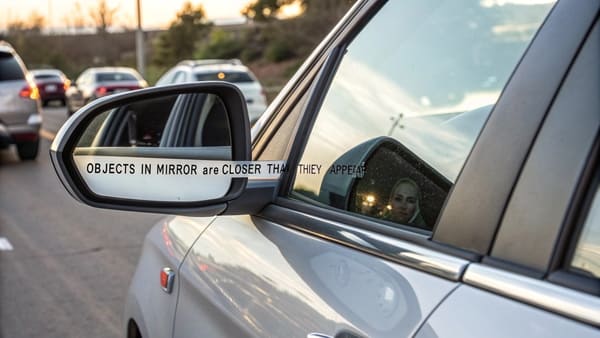
Side mirrors are your eyes for the lanes next to you. Without them, you would be driving half-blind, making every lane change a complete guess. The driver's side and passenger's side mirrors are designed differently to give you the best possible view of these critical areas. Understanding this difference is key to using them correctly and avoiding a potential collision.
Flat vs. Convex: A Tale of Two Mirrors
The reason your side mirrors look different is all about the field of view. The driver's side mirror is often flat, just like your interior mirror. This gives you a true-to-distance view, so you can accurately judge how far away cars are on your left. However, the passenger's side mirror is convex, meaning it's slightly curved outward. This curve allows the mirror to capture a much wider field of view, effectively eliminating the large blind spot on the right side of the car. The trade-off is that it makes objects look smaller and farther away than they actually are.7 That's why the warning is there—to remind you to be extra cautious.
The Importance of Precision in Assembly
As an OEM supplier, we know that a side mirror is much more than just glass in a plastic case. It’s a complex assembly. The mirror glass, a heating element for defrosting, a Blind Spot Monitoring light, and the electric motor for adjustments all have to fit perfectly inside the housing. The tolerances are tight, and any mistake can cause a failure. Our job is to engineer and manufacture all these components so they work together seamlessly. From designing the custom wiring harness to molding the housing and certifying the electronics, we provide a complete solution for brands and distributors who need reliable, high-quality mirror assemblies.
Conclusion
Understanding your car's mirrors is a simple but vital part of safe driving. Using the rear-view and both side mirrors together correctly turns dangerous blind spots into visible, safe zones.8
"Blindzone Glare Elimination Mirror Method", https://www.nhtsa.gov/sites/nhtsa.gov/files/blindzoneglaremirrormethod.pdf. Automotive safety manuals and driver education resources describe the standard configuration of three main mirrors—interior rear-view and two exterior side-view mirrors—designed to provide comprehensive visibility. Evidence role: definition; source type: education. Supports: Your car has three main mirrors designed to work together.. Scope note: Some vehicles may have additional mirrors or camera systems, especially in commercial or luxury models. ↩
"Side-view mirror", https://en.wikipedia.org/wiki/Side-view_mirror. Automotive engineering texts explain that interior and exterior mirrors are designed with different shapes and optical properties to maximize coverage of the driver's surroundings, including blind spots. Evidence role: mechanism; source type: education. Supports: Each has a different shape and function to provide a complete picture of your surroundings, from directly behind you to the tricky blind spots on either side.. Scope note: Mirror effectiveness can be influenced by driver adjustment and vehicle design. ↩
"Heated Mirror Explained", https://www.youtube.com/watch?v=EhJxXSeTnZg. Automotive technology guides note that heated mirrors use embedded heating elements to remove frost, ice, and fog, improving visibility in cold weather conditions. Evidence role: mechanism; source type: education. Supports: Heated mirrors are another common feature, using a small heating element to quickly clear away frost, ice, or fog, ensuring your view is always clear.. Scope note: Heated mirrors are more common in higher trim levels or in regions with cold climates. ↩
"Blind spot monitor", https://en.wikipedia.org/wiki/Blind_spot_monitor. Automotive safety literature explains that Blind Spot Monitoring systems often use sensors and display a warning light in the side mirror when another vehicle is detected in the blind spot. Evidence role: mechanism; source type: education. Supports: Many new vehicles also integrate Blind Spot Monitoring (BSM) systems, which use a small warning light directly in the side mirror to alert you when a vehicle is in your blind spot.. Scope note: The implementation of BSM systems can differ among manufacturers and vehicle models. ↩
"ELI5 how the "night" mode in a rearview mirror works : r/cars", https://www.reddit.com/r/cars/comments/69i8eh/eli5_how_the_night_mode_in_a_rearview_mirror_works/. Technical manuals explain that the day/night rear-view mirror uses a prismatic wedge to alter the reflection angle, reducing glare from headlights at night while maintaining rear visibility. Evidence role: mechanism; source type: education. Supports: Most rear-view mirrors have a small tab at the bottom. This is for the day/night function. When you flip it, you are changing the angle of a prismatic piece of glass inside. In the "night" position, it reflects a much dimmer image of the headlights behind you, which protects your eyes from glare while still allowing you to see that a car is there.. Scope note: Some modern vehicles use electronic auto-dimming mirrors instead of manual prismatic types. ↩
"Eliminate Blindspots FOREVER with THIS Simple Mirror ...", https://www.youtube.com/watch?v=VgvNxna8vp8. Driver education materials emphasize that side-view mirrors are designed to help drivers monitor areas not visible in the rear-view mirror, reducing the risk of blind spot-related accidents. Evidence role: mechanism; source type: education. Supports: Side-view mirrors are essential for covering your blind spots, the areas on either side of your car that the rear-view mirror can't see.. Scope note: Proper adjustment is necessary for optimal blind spot coverage. ↩
"Driver side mirror is flat unlike the passenger ...", https://www.reddit.com/r/DubaiPetrolHeads/comments/14wvwxu/driver_side_mirror_is_flat_unlike_the_passenger/. Automotive engineering sources explain that flat mirrors provide an undistorted image for accurate distance judgment, while convex mirrors on the passenger side increase the field of view but make objects appear smaller and farther away. Evidence role: mechanism; source type: education. Supports: The driver's side mirror is often flat, just like your interior mirror. This gives you a true-to-distance view, so you can accurately judge how far away cars are on your left. However, the passenger's side mirror is convex, meaning it's slightly curved outward. This curve allows the mirror to capture a much wider field of view, effectively eliminating the large blind spot on the right side of the car. The trade-off is that it makes objects look smaller and farther away than they actually are.. Scope note: Mirror design standards may vary by country or vehicle type. ↩
"Blindzone Glare Elimination Mirror Method", https://www.nhtsa.gov/sites/nhtsa.gov/files/blindzoneglaremirrormethod.pdf. Driver safety research indicates that correct adjustment and use of all three mirrors can significantly reduce or eliminate blind spots, enhancing driver awareness and safety. Evidence role: expert_consensus; source type: education. Supports: Using the rear-view and both side mirrors together correctly turns dangerous blind spots into visible, safe zones.. Scope note: Some blind spots may remain, and drivers should still check over their shoulder before changing lanes. ↩