-Struggling with car jargon? The transmission is a vital but often misunderstood part1. Ignoring it can lead to serious, expensive problems down the road2. Let's simplify this key component.
A car transmission, or gearbox, is a system that transfers power from the engine to the wheels3. It uses a set of gears to control the vehicle's speed and the engine's RPM4, allowing the car to accelerate, cruise, and reverse efficiently.
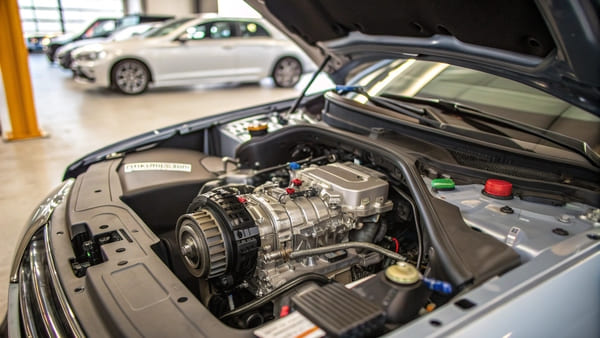
Now that you have the basic idea, you might be curious about what's happening inside that metal case. Understanding the transmission is not just for mechanics; it helps you become a more informed car owner and a smarter buyer of automotive parts. Let's break down this mechanical marvel piece by piece.
What Exactly Is a Car Transmission?
Heard the term "gearbox" but don't really get it? It can feel like a complex black box, making you feel helpless when talking about car maintenance or performance.
A car transmission is a vital system that manages the engine's power. It uses a series of gears to control the speed and torque delivered to the wheels. This ensures the engine operates within its most efficient RPM (revolutions per minute) range for any driving situation.
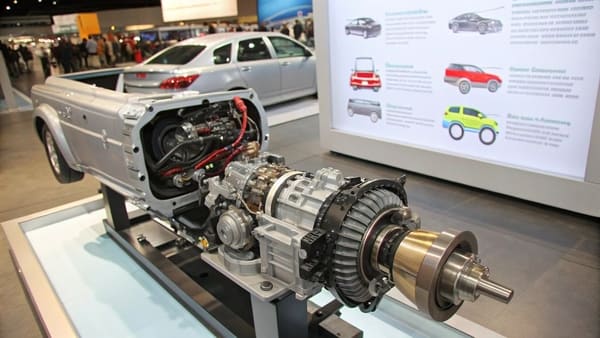
The transmission is basically a middleman between the engine and the wheels. The engine produces power in a fairly narrow speed range, but your car needs to do everything from starting from a dead stop to flying down the highway. The transmission makes this possible by changing gear ratios. But it's not just about the big metal gears. Many modern transmissions rely on complex plastic components5, and manufacturing them is a huge challenge. I remember my first project for a Pakistani client involving plastic transmission parts. The precision required is incredibly high, and standard injection molding machines often can't do the job. The cooling process is the hardest part6.
The Role of Precision Parts
We had to use a specialized machine, the kind you typically find in factories around Shanghai or the Fujian coast. During production, if you need to add color pigments, you have to stop the machine and open the mold. This makes the cooling process even more difficult and can affect the final dimensions. On that first project, we had a significant "shrinkage" issue after the plastic parts cooled. I was worried, but the client ended up preferring the slightly smaller, denser parts. It was a lucky break and a huge learning experience. Since then, we've perfected the process.
Key Internal Components
A transmission is more than just gears. It's a complex assembly of parts working together.
| Component | Function |
|---|---|
| Gear Sets | Provide different gear ratios for various speeds. |
| Clutch / Torque Converter | Engages and disengages power from the engine (manual/automatic). |
| Valve Body | The "brain" of an automatic transmission, directing fluid to shift gears. |
| Transmission Fluid | Lubricates, cools, and provides the hydraulic pressure to shift gears. |
| Plastic Components | Includes sensors, seals, and structural parts requiring high precision. |
Why Does a Car Even Need a Transmission?
Ever wonder why you can't just connect the engine directly to the wheels? The whole concept of a gearbox can seem unnecessarily complicated for just moving a car forward.
Without a transmission, your car would be almost useless. It would be incredibly slow to start, struggle to climb hills, and have a very low top speed. It would also be horribly inefficient. Let's explain why this component is absolutely essential for a car to work properly.
A car needs a transmission because an engine only produces useful power and torque within a limited speed range (RPM). The transmission acts as a bridge, allowing this limited engine output to be used effectively across a wide range of vehicle speeds, from zero to over 100 mph.
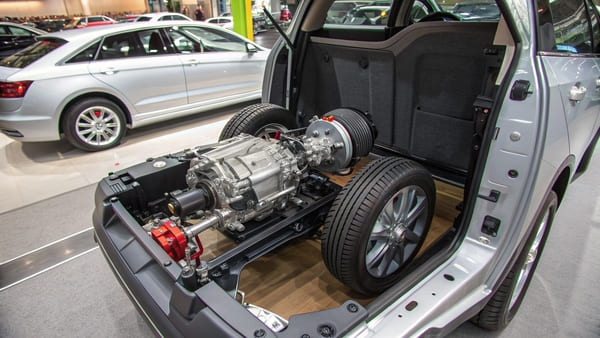
Think of it like the gears on a bicycle. When you start pedaling or go up a steep hill, you use a low gear. It's easy to pedal, but you don't go very fast. This is because the low gear multiplies your pedaling force (torque). Once you get moving on a flat road, you shift to a higher gear. Pedaling becomes harder, but for each pedal stroke, the wheel turns more, so you go much faster. A car's transmission does the exact same thing for the engine.
Managing Engine RPM
An engine is most efficient and powerful in its "power band," which is a specific range of RPMs. If the engine RPM is too low, it will stall. If it's too high, it will wear out quickly and waste fuel. The transmission's job is to keep the engine in this sweet spot, no matter how fast the car is actually going. When you accelerate from a stop, the transmission uses a low gear to multiply torque and get the car moving without stalling the engine.
The Power vs. Speed Trade-off
The transmission allows you to trade power for speed, and vice versa. Lower gears give you more torque for acceleration and climbing, while higher gears give you more speed for the same engine RPM, which is perfect for highway cruising and better fuel economy.
| Driving Scenario | Required Gear | Reason |
|---|---|---|
| Starting from a Stop | Low Gear (e.g., 1st) | Maximum torque multiplication to overcome inertia. |
| Climbing a Steep Hill | Low Gear (e.g., 2nd) | High torque needed to fight gravity. |
| City Driving | Mid-range Gears (e.g., 3rd, 4th) | A balance of acceleration and efficiency. |
| Highway Cruising | High Gear (e.g., 5th, 6th) | Low engine RPM for high speed, maximizing fuel economy. |
Where Is the Transmission Located in a Car?
Want to check your transmission fluid but have no idea where to look? Not knowing your car's layout can be intimidating and lead to mistakes, like putting oil in the wrong place.
Don't worry, finding the transmission is straightforward once you know what to look for. We'll show you exactly where it is in different types of vehicles so you can feel more confident.
The transmission is always located between the engine and the driveshaft(s) that turn the wheels. In a front-wheel-drive car, it's part of a combined unit called a transaxle. In a rear-wheel-drive car, it sits directly behind the engine, under the car's center console area.
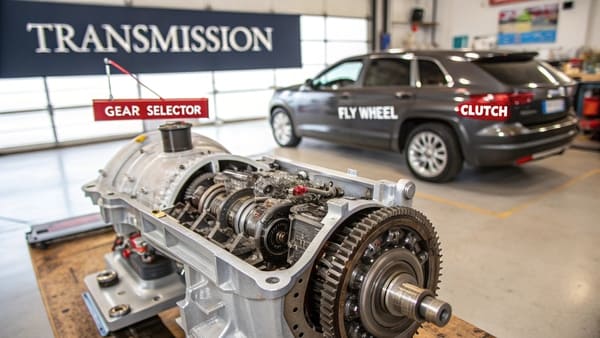
The exact location and appearance of the transmission depend on your vehicle's drivetrain layout. The three main types are Front-Wheel Drive (FWD), Rear-Wheel Drive (RWD), and All-Wheel Drive (AWD). Knowing which one you have is the first step to finding your transmission. Most passenger cars today are FWD7, while many trucks, SUVs, and performance cars are RWD or AWD. You can usually find this information in your owner's manual or by looking it up online with your car's make and model.
Location in Front-Wheel Drive (FWD) Cars
In a FWD car, the engine is usually mounted sideways (transversely). The transmission and differential are combined into a single unit called a transaxle. This compact unit sits right next to the engine in the engine bay and sends power directly to the front wheels via two half-shafts. If you open your hood and look at the engine, the transaxle will be the large component attached to one side of it.
Location in Rear-Wheel Drive (RWD) and All-Wheel Drive (AWD) Cars
In RWD vehicles, the engine is mounted lengthwise (longitudinally)8. The transmission is a separate unit bolted directly to the back of the engine. It's a long, bell-shaped component that sits under the "transmission tunnel," the hump that runs down the center of the car's interior. Power flows from the transmission through a long driveshaft to the rear axle. In AWD systems, the layout is similar to RWD, but it includes an additional component called a transfer case9 attached to the back of the transmission. This transfer case splits power between the front and rear wheels.
| Drivetrain Type | Transmission Location | Key Identifier |
|---|---|---|
| FWD | Next to the engine, in the engine bay (as part of a transaxle). | Look for the CV axles coming out of it and going to the front wheels. |
| RWD | Behind the engine, under the center of the car. | A long driveshaft runs from its rear to the back of the car. |
| AWD | Behind the engine, with a transfer case attached. | Driveshafts run to both the front and rear axles. |
Conclusion
In short, the transmission is a crucial gearbox that manages engine power. It allows your car to accelerate, climb hills, and cruise efficiently at a wide range of speeds.
"Transmission (mechanical device) - Wikipedia", https://en.wikipedia.org/wiki/Transmission_(mechanical_device). A general overview of automotive transmissions describes their critical role in vehicle operation and common misconceptions among car owners. Evidence role: general_support; source type: encyclopedia. Supports: The transmission is a vital but often misunderstood part.. Scope note: Does not quantify how often transmissions are misunderstood. ↩
"What Happens If I Don't Change My Transmission Fluid?", https://www.delaneytireandauto.com/About/News/ArticleID/3535. Automotive maintenance guides and repair cost analyses indicate that neglecting transmission maintenance can result in severe mechanical failures and high repair expenses. Evidence role: general_support; source type: education. Supports: Ignoring the transmission can lead to serious, expensive problems.. Scope note: Specific costs and failure rates may vary by vehicle and usage. ↩
"Transmission (mechanical device) - Wikipedia", https://en.wikipedia.org/wiki/Transmission_(mechanical_device). Automotive engineering textbooks define the transmission as the system responsible for transferring power from the engine to the drive wheels. Evidence role: definition; source type: education. Supports: A car transmission transfers power from the engine to the wheels.. ↩
"How Do Gears Work? A Guide to Speed, Torque, and Gear Ratios", https://www.lily-bearing.com/resources/blog/how-do-gears-work-speed-torque-motion-explained?srsltid=AfmBOoo9Lc8Aib51JmqQqAQuHJhV3RXDQDKaXyOUieiz7lRc0JLneqO-. Engineering references explain that transmissions use gear sets to modulate vehicle speed and engine RPM, enabling efficient operation across different driving conditions. Evidence role: mechanism; source type: education. Supports: The transmission uses a set of gears to control the vehicle's speed and the engine's RPM.. Scope note: Does not detail all types of transmissions (e.g., CVT). ↩
"Using Plastics in Automobile Powertrain Manufacturing", https://advancedplastiform.com/using-plastics-in-automobile-powertrain-manufacturing/. Recent automotive manufacturing literature documents the increasing use of high-precision plastic components in modern transmissions for functions such as sensors, seals, and structural elements. Evidence role: historical_context; source type: research. Supports: Many modern transmissions rely on complex plastic components.. Scope note: Extent of plastic use varies by manufacturer and transmission type. ↩
"Top Challenges Plastic Injection Molding Companies ...", https://cooperplastics.com/top-challenges-plastic-injection-molding-companies-solve-for-manufacturers/. Manufacturing process analyses highlight that cooling and shrinkage control are critical challenges in plastic injection molding for automotive parts. Evidence role: mechanism; source type: education. Supports: The cooling process is the hardest part of manufacturing plastic transmission components.. Scope note: May not be specific to transmission components but applies to plastic part production generally. ↩
"Powertrain layout - Wikipedia", https://en.wikipedia.org/wiki/Powertrain_layout. Automotive industry statistics confirm that front-wheel drive (FWD) is the most common drivetrain layout in modern passenger cars. Evidence role: statistic; source type: government. Supports: Most passenger cars today are FWD.. Scope note: Market share may vary by region and vehicle segment. ↩
"Longitudinal engine - Wikipedia", https://en.wikipedia.org/wiki/Longitudinal_engine. Automotive design literature explains that rear-wheel drive vehicles commonly feature a longitudinal engine layout to facilitate direct power transfer to the rear wheels. Evidence role: mechanism; source type: education. Supports: In RWD vehicles, the engine is mounted lengthwise (longitudinally).. Scope note: Some exceptions exist, especially in specialty vehicles. ↩
"Ultimate Drivetrain Guide: FWD vs RWD vs AWD vs 4x4 - YouTube", https://www.youtube.com/watch?v=-cTJqNWwmf0. Automotive engineering sources describe that all-wheel drive (AWD) systems often use a transfer case to distribute power to both front and rear axles, similar to RWD layouts with added complexity. Evidence role: mechanism; source type: education. Supports: In AWD systems, the layout is similar to RWD, but it includes an additional component called a transfer case.. Scope note: Some AWD systems use alternative designs without a traditional transfer case. ↩