-Finding a reliable brake pad supplier1 feels impossible. You need quality and consistency, but the market is crowded with options, making it hard to know who to trust for your business.
To choose the right supplier, first identify top global manufacturers like Brembo, Akebono, and TMD Friction, who excel in OE development2. Then, evaluate potential OEM/ODM partners3 on their customization capabilities, production flexibility4, and ability to meet your target market's specific certification requirements5.
Choosing the right partner is more than just picking a name from a list. It's a deep dive into their capabilities, their market focus, and how well they align with your business goals. I've spent years navigating this process, and it’s a detailed task that requires careful thought. This guide will walk you through the key things you need to know, from understanding what these manufacturers do to identifying the best ones and finally selecting a partner that truly fits your needs. Let's get started on finding the right fit for your automotive parts business.
What Is a Brake Pad Manufacturer and What Do They Actually Produce?
Your business needs a steady supply of brake pads, but you are not sure what separates a basic workshop from a true manufacturer. This uncertainty can risk your product quality and reputation.
A true brake pad manufacturer is a specialized company that handles the entire production process, from creating proprietary friction materials6 to fabricating backing plates7 and assembling the final, certified product8 for both OE and aftermarket channels. They are not just assemblers; they are engineering firms.
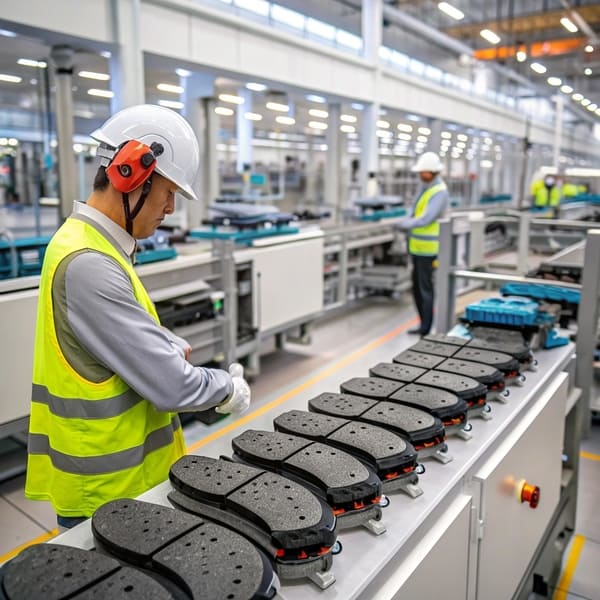
Let's go deeper into what these manufacturers really do. It's not just about pressing some material into a shape. The core of their business is material science9. A top-tier manufacturer invests heavily in research and development to create and patent their own friction formulas10. This is a huge barrier for smaller companies. These formulas determine a brake pad's performance, noise level, dust output, and lifespan. They have to develop different formulas for different needs, like a quiet ceramic pad for a luxury sedan11 or a high-friction semi-metallic pad12 for a performance car.
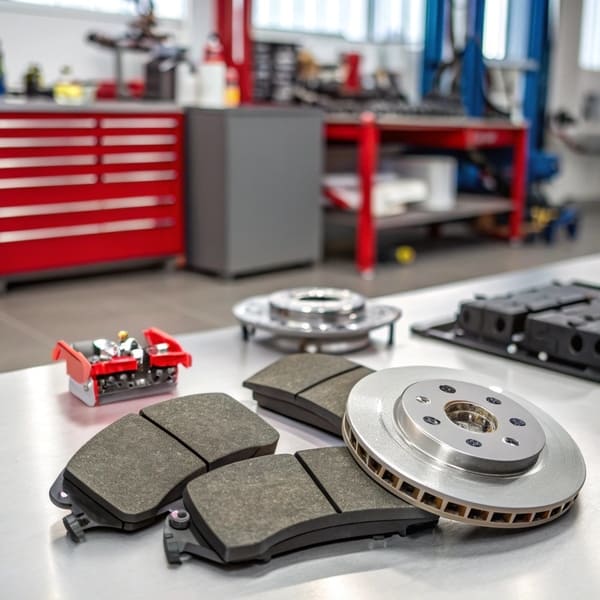
Besides the friction material, they also produce or source other key components.
Core Components of a Brake Pad
| Component | Function | Manufacturing Challenge |
|---|---|---|
| Friction Material | Generates the force to stop the vehicle. | Developing patented, stable, and compliant formulas. |
| Backing Plate | The steel foundation of the pad. | Ensuring precise dimensions and strong bonding with the friction material. |
| Shims & Insulators | Dampen noise and vibration. | Multi-layer construction and material selection for heat resistance. |
| Wear Sensors13 | Alert the driver when pads are thin. | Integration of electronic components and ensuring reliability. |
Small factories often can't handle this complexity. They might buy generic friction pucks and bond them to standard backing plates7. A real manufacturer controls the entire process, ensuring every component works together perfectly. This is crucial for meeting the strict precision and broad vehicle coverage required by global automotive brands and distributors.
Who Are the Leading Brake Pad Manufacturers in the Global Automotive Industry?
You know you need a world-class supplier, but who are the real leaders? Picking the wrong one means dealing with inconsistent quality, supply chain delays, and parts that don't fit the market.
The leading global brake pad manufacturers include Brembo (Italy), Akebono (Japan), TMD Friction (Germany), and Federal-Mogul (USA). These companies dominate because they partner directly with automakers for Original Equipment (OE) development and have vast aftermarket networks.
These top players didn't get there by accident. Their strength comes from a few key areas. The most important one is their ability to do simultaneous development. This means they work hand-in-hand with car brands like BMW, Toyota, or Ford to design brake pads for new vehicles. This OE experience gives them unmatched technical knowledge. They then use this knowledge to produce aftermarket parts that meet or exceed original specifications. This is something smaller suppliers simply cannot replicate.
Their global footprint14 is another major advantage. Top manufacturers have factories and distribution centers strategically located around the world. You'll often find their core R&D and high-tech manufacturing in traditional automotive hubs like Germany and Italy. At the same time, they leverage major industrial zones, like China's Yangtze River Delta, for large-scale production, supply chain efficiency, and access to a skilled workforce. This global system allows them to serve different markets with specific products while maintaining consistent quality. It’s a complex network that involves three core stages: advanced R&D15, flexible mass production, and regional logistics. Mastering all three is what separates the leaders from the rest.
Which Brake Pad Manufacturers Are Based in the United States?
You want to source from or compete with U.S.-based manufacturers, but it's tough to identify who they are. You need to understand the American market to make smart sourcing or sales decisions.
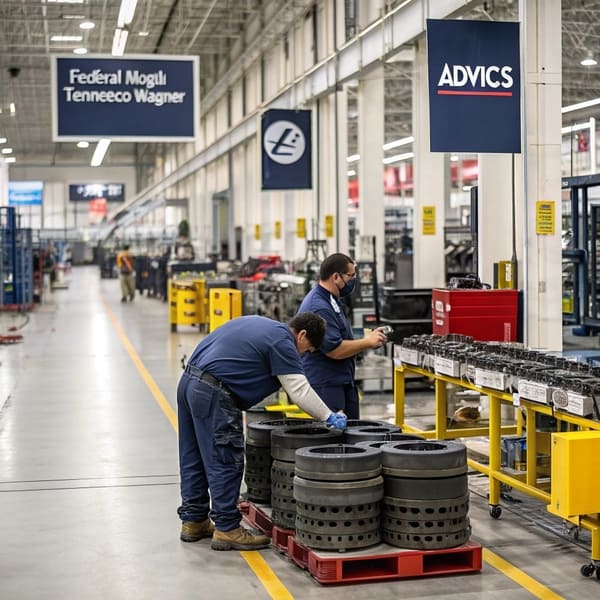
Key brake pad manufacturers and brands with a strong presence in the United States include Federal-Mogul (Tenneco/Wagner), ADVICS, and various private-label suppliers for major auto parts retailers. Many global players also have significant manufacturing and R&D facilities within the U.S.
While you can find major brands in the U.S., the real challenge for importers and distributors is choosing the right OEM/ODM partner, whether they are in the U.S. or overseas. This is where I've seen many businesses struggle. The hardest part is balancing two competing needs: production flexibility4 and customization. You need a supplier who can scale up or down with your order fluctuations but also has the engineering depth to develop custom products for your specific market.
I learned this the hard way on a project with a client from Pakistan. We were choosing a new supplier, and I was still a bit inexperienced. We focused so much on unit cost that we overlooked some finer details. After we selected the supplier, we found a significant "certification" or certification mismatch16. The pads didn't have the exact local certifications the client initially thought they needed. I thought it was a disaster. But it turned out to be a lucky mistake. The supplier's parts offered an amazing price-to-performance ratio17 that was perfect for the local aftermarket channels, which valued affordability over specific, high-end certifications. The client loved it, and their sales took off.
This experience taught me a critical lesson. When you evaluate a supplier, you have to pause and look at the whole picture.
Key Evaluation Metrics for an OEM/ODM Partner
| Metric | What to Look For | Why It's Difficult |
|---|---|---|
| Certification Alignment | Does the supplier meet your target market's specific requirements (e.g., AMECA, ECE R90)? | A supplier might have many certifications, but not the exact one you need. |
| Capacity Elasticity | Can they handle your order fluctuations, from small test batches to large-volume orders? | This requires flexible production lines, which can increase overhead costs for the manufacturer. |
| Customization Capability | Can they develop a unique friction formula or a custom backing plate for you? | This requires a strong R&D team and willingness to do small-batch tooling, which many large factories avoid. |
| Cost vs. Stability | Is the price competitive without sacrificing supply chain reliability? | The cheapest supplier may not be able to guarantee supply during peak seasons. |
You need to open up your data. Show them your order history and sales forecasts. Be clear about the certifications you must have. This process makes cost control and ensuring stable supply a bit harder at first, but it prevents much bigger problems later on.
Conclusion
Choosing a top brake pad manufacturer means balancing global leaders' OE quality with a partner's custom capabilities, ensuring they fit your market's unique certification and supply needs for long-term success.
Discovering a trustworthy brake pad supplier is crucial for consistent quality and business growth. This resource will help you make informed decisions. ↩
Understanding OE development helps you choose manufacturers who meet original equipment standards, ensuring top performance and compatibility. ↩
Learn how to assess OEM/ODM partners for customization, flexibility, and certification alignment to optimize your supply chain. ↩
Production flexibility allows suppliers to adapt to your order needs, ensuring stable supply and custom solutions. ↩
Ensuring your supplier meets the right certifications is vital for legal compliance and market acceptance. This guide clarifies the standards. ↩
Explore how proprietary friction materials impact performance, durability, and differentiation in the automotive parts industry. ↩
Backing plates are essential for safety and performance. Learn how their quality affects the reliability of brake pads. ↩
Understanding the assembly process ensures you source from suppliers who deliver certified, high-quality products. ↩
Material science is the foundation of brake pad performance. Discover how R&D leads to better, safer products. ↩
Patented friction formulas provide competitive advantages and ensure unique performance characteristics. Learn why this matters. ↩
Ceramic pads offer quiet operation and low dust, ideal for luxury vehicles. Find out why they are preferred in this segment. ↩
Semi-metallic pads are suited for performance cars. Learn their advantages and when to use them for optimal braking. ↩
Wear sensors alert drivers to pad replacement needs, improving safety and maintenance. Learn how they work. ↩
A global footprint ensures supply chain efficiency and market coverage. See how it impacts sourcing and reliability. ↩
Advanced R&D drives innovation and quality, helping manufacturers stay ahead. Explore its importance in the industry. ↩
Certification mismatch can disrupt sales and compliance. Learn how to avoid and resolve these issues. ↩
Balancing cost and performance is key to profitability. This resource helps you assess suppliers for optimal value. ↩