-Your clutch pedal feels soft, or worse, it sticks to the floor. Ignoring this could leave you stranded. It's time to understand the signs of a failing clutch master cylinder.
A clutch master cylinder is the heart of a manual transmission's hydraulic clutch system. It converts the force from your foot on the pedal into hydraulic pressure.1 When it fails, you'll notice a spongy pedal, low or dirty clutch fluid, and difficulty shifting gears.2
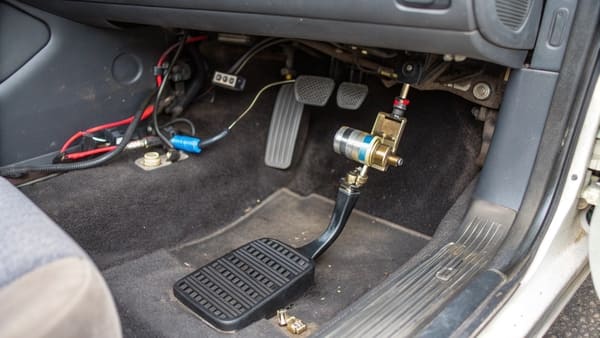
Understanding your vehicle's components is the first step toward a correct diagnosis and a lasting repair. A failing master cylinder can mimic other transmission problems, so knowing exactly what it is and what it does is critical. Let's dive into the specifics so you can identify the issue with confidence and find the right solution for your business.
What Is a Clutch Master Cylinder?
You hear mechanics talk about the "master cylinder," but what exactly is it? Not knowing your parts can make it hard to diagnose problems or source the right components.
A clutch master cylinder is a small but essential hydraulic pump. It is directly connected to the clutch pedal and holds the clutch fluid.3 Its main purpose is to begin the process of disengaging the clutch when you press the pedal, allowing you to shift gears.4
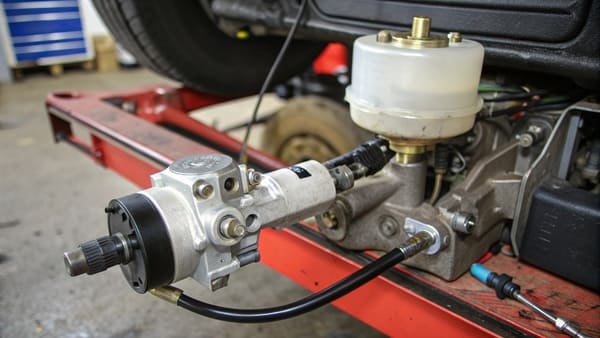
Let's get more specific. The master cylinder is typically mounted on the firewall of the engine bay, right in front of the driver's seat.5 It consists of a cylinder body, a piston, seals, and a plastic reservoir that holds the hydraulic fluid.6 The quality of each part is crucial, especially the plastic reservoir. I remember a project for a Pakistani client where we first started producing these reservoirs. The manufacturing process is incredibly demanding. The injection molding requires extreme precision that many standard machines can't achieve. After our first production run, we found the reservoirs had "shrunk" slightly more than expected during the cooling phase. I was worried, but the client actually preferred the result because it felt sturdier. It was a valuable lesson in how materials behave under stress and reinforced why we only use high-precision machinery from specific industrial zones in China.
What Does a Clutch Master Cylinder Do?
Your clutch isn't engaging, and you can't get into gear. A non-functioning clutch system brings your vehicle to a complete stop. Understanding the master cylinder's job is key.
The primary function of a clutch master cylinder is to create hydraulic pressure. This pressure travels through a high-pressure line to the slave cylinder, which then pushes on the clutch fork. This action physically disengages the clutch plate from the flywheel, interrupting power to the transmission.7
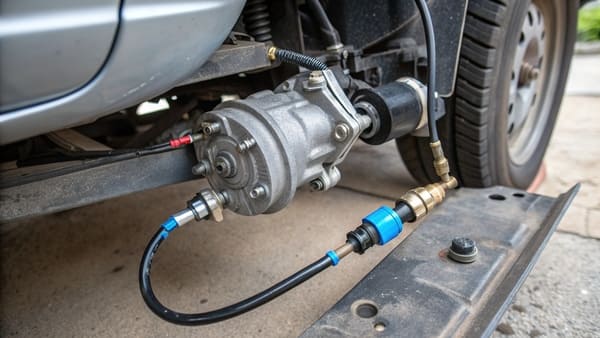
Think of it as the starting point of a chain reaction. Every time you want to change gears, you rely on this component to do its job perfectly. If it fails, the entire sequence breaks down. Here’s a simple breakdown of the process:
| Step | Action | Result |
|---|---|---|
| 1 | You press the clutch pedal. | The pedal pushes a rod connected to the master cylinder's piston. |
| 2 | The piston moves forward. | It pressurizes the hydraulic fluid inside the cylinder. |
| 3 | Fluid is forced out. | The pressure sends fluid through the clutch line to the slave cylinder. |
| 4 | The slave cylinder activates. | It extends and pushes the clutch fork. |
| 5 | The clutch disengages. | You can now shift gears smoothly. |
This entire process depends on a sealed, reliable system. Any air leaks, internal seal failures, or fluid contamination will compromise the pressure, leading to the symptoms of failure. That's why, as a manufacturer, we focus heavily on the quality of the seals and the integrity of the cylinder housing itself.
How Does a Clutch Master Cylinder Work?
The term "hydraulic pressure" can sound complicated. Misunderstanding the mechanics can lead to wasted time and money on the wrong diagnosis. Let's look inside the component.
When you press the clutch pedal, it pushes a piston inside the master cylinder's bore. This movement forces hydraulic fluid through a small opening and into the clutch line. A return spring pushes the piston back to its original position when you release the pedal.
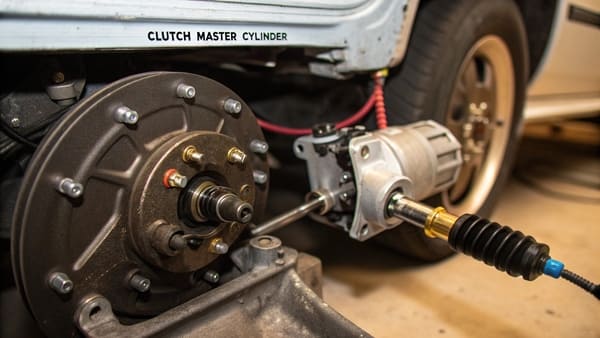
The internal mechanics are a great example of precision engineering. The piston and the cylinder bore must have an exact fit, with high-quality seals to prevent any fluid from leaking past the piston.8 If the tolerances are off by even a fraction of a millimeter, the cylinder won't be able to build or hold pressure effectively. This is where manufacturing expertise becomes critical. The injection molding process for the cylinder's plastic components, like the reservoir, is especially challenging.
Here are some of the technical difficulties we manage in production:
| Manufacturing Challenge | Why It's Difficult | Our Solution |
|---|---|---|
| Molding Precision | Standard machines often lack the accuracy needed for a perfect seal and fit, causing potential leaks. | We use advanced, high-precision injection machines located in China's top manufacturing hubs. |
| Controlled Cooling | If the plastic part cools too quickly or unevenly, it can shrink or warp, compromising its structure. | Our process involves multiple controlled cooling stages to ensure dimensional stability and strength. |
| Adding Color Pigments | Adding color often requires stopping the machine and opening the mold, which can ruin the cooling cycle. | We have developed a proprietary technique to integrate this step seamlessly, maintaining quality and consistency. |
These details show why not all aftermarket parts are created equal. True reliability comes from controlling every step of the manufacturing process.9
Conclusion
The clutch master cylinder is a small but vital part of any manual transmission. Understanding its function helps you diagnose issues and source reliable, high-quality replacement parts for your business.
"Clutch Master Cylinder Explained || - YouTube", https://www.youtube.com/watch?v=TF3dArpc5J8. According to automotive engineering references, the clutch master cylinder in manual transmission vehicles converts mechanical force from the pedal into hydraulic pressure, initiating clutch disengagement. Evidence role: definition; source type: encyclopedia. Supports: A clutch master cylinder is the heart of a manual transmission's hydraulic clutch system. It converts the force from your foot on the pedal into hydraulic pressure.. ↩
"Seven signs your clutch master cylinder is failing - BreakerLink Blog", https://www.breakerlink.com/blog/maintenance/seven-signs-your-clutch-master-cylinder-is-failing/. Automotive repair manuals and technical guides list symptoms of a failing clutch master cylinder as a spongy pedal, contaminated fluid, and gear shifting difficulties. Evidence role: expert_consensus; source type: education. Supports: When it fails, you'll notice a spongy pedal, low or dirty clutch fluid, and difficulty shifting gears.. Scope note: Symptom presentation may vary by vehicle model and condition. ↩
"Fixing a Clutch Master Cylinder - YouTube", https://www.youtube.com/watch?v=XW_Gugt5Ka0. Technical sources describe the clutch master cylinder as a hydraulic pump connected to the clutch pedal, containing a reservoir for clutch fluid. Evidence role: definition; source type: encyclopedia. Supports: A clutch master cylinder is a small but essential hydraulic pump. It is directly connected to the clutch pedal and holds the clutch fluid.. Scope note: Designs may vary in some vehicles, but the general principle applies widely. ↩
"Bad Clutch Master or Slave Cylinder? Symptoms, Diagnosis, and ...", https://www.youtube.com/watch?v=TsMA82Nb8wQ. Automotive engineering textbooks explain that the clutch master cylinder initiates clutch disengagement, enabling gear changes in manual transmissions. Evidence role: mechanism; source type: education. Supports: Its main purpose is to begin the process of disengaging the clutch when you press the pedal, allowing you to shift gears.. Scope note: The process may involve additional components depending on vehicle design. ↩
"Replace A Clutch Master Cylinder "How To" - YouTube", https://www.youtube.com/watch?v=NCm8vYJ9eVk&vl=en. Vehicle service manuals and technical diagrams show that the clutch master cylinder is usually mounted on the firewall, near the driver's position. Evidence role: general_support; source type: education. Supports: The master cylinder is typically mounted on the firewall of the engine bay, right in front of the driver's seat.. Scope note: Mounting location may differ in some vehicle models. ↩
"Clutch master cylinder diagram/pictures - SaabCentral Forums", https://www.saabcentral.com/threads/clutch-master-cylinder-diagram-pictures.142027/. Automotive component diagrams and technical descriptions identify the main parts of a clutch master cylinder as the cylinder body, piston, seals, and fluid reservoir. Evidence role: definition; source type: encyclopedia. Supports: It consists of a cylinder body, a piston, seals, and a plastic reservoir that holds the hydraulic fluid.. Scope note: Component materials and design may vary by manufacturer. ↩
"Why does the clutch disc disengages the flywheel? - Physics Forums", https://www.physicsforums.com/threads/why-does-the-clutch-disc-disengages-the-flywheel.769313/. Automotive textbooks describe how hydraulic pressure from the master and slave cylinders disengages the clutch plate from the flywheel, interrupting engine power to the transmission. Evidence role: mechanism; source type: education. Supports: This action physically disengages the clutch plate from the flywheel, interrupting power to the transmission.. Scope note: The disengagement process may vary in dual-clutch or automated systems. ↩
"Hydraulic cylinder repair – understanding internal leakage", https://berendsen.com.au/hydraulic-cylinder-repair-understanding-internal-leakage/. Manufacturing and engineering sources emphasize the importance of precise tolerances and quality seals in hydraulic cylinders to prevent fluid leakage. Evidence role: mechanism; source type: research. Supports: The piston and the cylinder bore must have an exact fit, with high-quality seals to prevent any fluid from leaking past the piston.. Scope note: General hydraulic cylinder principles apply, but specifics may vary for automotive applications. ↩
"Top 5 Benefits of Process Control Systems in Manufacturing", https://www.hallam-ics.com/blog/top-benefits-of-process-control-systems-in-manufacturing. Manufacturing quality literature supports the view that process control at every production stage is critical for ensuring component reliability. Evidence role: expert_consensus; source type: research. Supports: True reliability comes from controlling every step of the manufacturing process.. Scope note: This is a general principle and may not account for all variables in specific industries. ↩