-Are you worried about your car's braking performance? Ignoring worn brake shoes is a serious safety risk that can lead to brake failure when you least expect it.1
To identify worn brake shoes, listen for scraping or grinding noises from the rear wheels2. Also, check for a loose-feeling handbrake or reduced braking power3. The most reliable method is a visual inspection to confirm the friction lining is above the minimum safe thickness, usually about 1.5mm4.
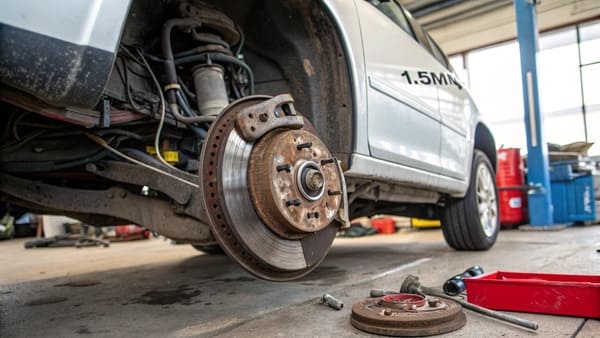
Knowing these signs is the first step, but understanding why they happen is key to keeping your vehicle safe on the road. It’s not just about replacement; it’s about recognizing the problem before it becomes a disaster. Let's dive deeper into what you need to look for, so you can act with confidence and ensure your braking system never lets you down.
What Is Brake Shoe Wear and Why Does It Matter?
Many drivers hear the term "brake wear" but aren't sure what it really means. This lack of knowledge can be dangerous, but understanding the basics is simple and keeps you safe.
Brake shoe wear is the slow wearing down of the friction material that pushes against the brake drum to stop your car.5 It matters because worn shoes cannot create enough friction, leading to longer stopping distances and potential brake failure6.
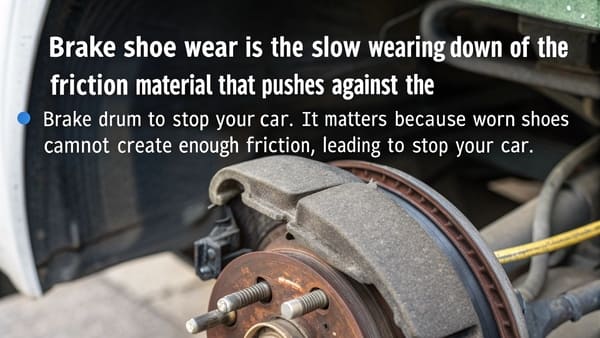
Brake shoes are a key part of the drum brake system, which is usually found on the rear wheels of many cars7. When you press the brake pedal, hydraulic fluid pushes pistons in a wheel cylinder. These pistons then push the curved brake shoes outward.8 The friction material, or lining, on the shoes presses against the inside of a spinning metal drum that is attached to the wheel. This friction slows the wheel down and stops your car.
Over time, every press of the brake pedal grinds away a tiny amount of this lining. When the lining gets too thin, it can't generate enough heat and friction. This means your car will take longer to stop. If it wears away completely, you get metal-on-metal contact, which can destroy the brake drum and cause a total loss of braking on that wheel.9
| Feature | New Brake Shoe | Worn Brake Shoe |
|---|---|---|
| Lining Thickness | Thick (e.g., 8-10mm) | Thin (below 1.5-2mm) |
| Braking Power | Strong and consistent | Weak and unpredictable |
| Safety Risk | Low | High risk of failure |
| Associated Noise | Quiet operation | Grinding or scraping |
What Causes Brake Shoe Wear?
Your brake shoes wear out over time, but do you know what makes them wear faster? Understanding the causes helps you avoid premature replacements and save money in the long run.
The primary cause of brake shoe wear is the friction from normal braking.10 However, factors like aggressive driving, carrying heavy loads, and using low-quality parts can significantly speed up this process, compromising both safety and performance.11
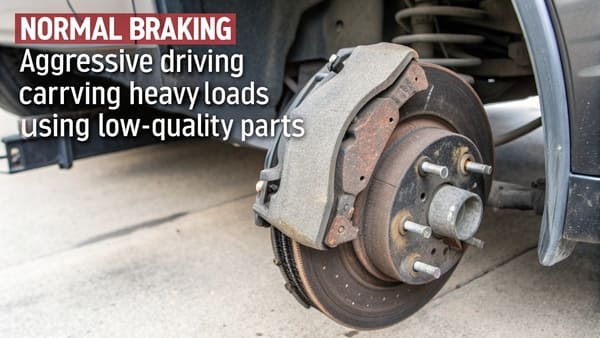
The biggest factor is simply how you drive. Every time you brake, you cause wear. If you are an aggressive driver who brakes hard and late, you will wear out your brake shoes much faster than someone who drives smoothly and anticipates stops. City driving with constant stop-and-go traffic is also much harder on brakes than steady highway driving.
Another major cause is the quality of the parts themselves. This is something I have a lot of personal experience with as a manufacturer. Even small plastic components on a brake shoe assembly are incredibly difficult to make correctly. The injection molding process requires extreme precision that standard machines just can't deliver. I remember my first project making these parts for a client from Pakistan. Our process wasn't perfect yet, and the plastic components "shrank" more than expected after the difficult cooling stage. Luckily, the client actually preferred the slightly tighter fit, but it was a big lesson for us. It showed me that a tiny error in manufacturing can change the final product. That's why we only use high-precision machines, mostly found in facilities near Shanghai, to ensure every part meets exact standards for a reliable fit and long life.
What Are the Most Common Signs of Worn Brake Shoes?
Is your car making a strange noise when you apply the brakes? That sound could be a direct warning of failing brakes, and you should never ignore it.
Listen for scraping or grinding noises coming from your rear wheels12. You might also notice a less responsive brake pedal, a handbrake that pulls up higher than usual, or an increase in brake dust on the wheels.
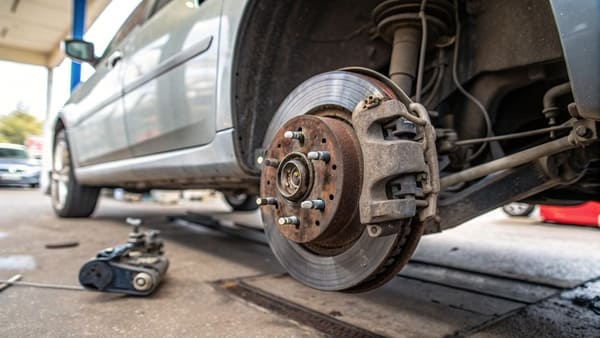
The signs of worn brake shoes can be subtle at first, but they become more obvious as the problem gets worse. It's important to pay attention to how your car sounds and feels. By catching these clues early, you can schedule a replacement before you face a dangerous situation. Here are the main signs broken down.
Audible Signs
The most common warning is noise. When the friction lining wears down completely, the metal backing of the brake shoe grinds directly against the metal brake drum. This creates a loud, harsh scraping or grinding sound whenever you apply the brakes. You might also hear a clicking noise if a retaining spring has broken or come loose, allowing the shoe to move around inside the drum.
Physical Sensations
You can often feel worn brake shoes through the brake pedal and handbrake. A worn-out lining means the shoe has to travel further to make contact with the drum. This can make the brake pedal feel "soft" or spongy, and you may have to push it down further to get a response. Similarly, the handbrake or parking brake will feel loose. You will have to pull the lever up much higher than usual to get it to hold the car in place.
Visual Clues
The only way to be 100% sure is to perform a visual inspection. Most brake drums have a small inspection hole on the backing plate. By shining a light through this hole, you can see the edge of the brake shoe and estimate the thickness of the remaining lining. As a rule, if the lining is less than 1.5mm thick (about the thickness of a dime), it’s time for a replacement.
| Sign | What It Means | Action Required |
|---|---|---|
| Grinding Noise | Metal-on-metal contact. | Immediate inspection and replacement. |
| High Handbrake | Shoes are worn thin. | Inspect lining thickness. |
| Soft Brake Pedal | Worn shoes or air in the system. | Inspect brakes and bleed system. |
| Visible Thin Lining | Shoes are at end of life. | Schedule replacement. |
Conclusion
Regularly checking for noise, a high handbrake, and thin lining is crucial for your safety. Don't wait for your brakes to fail; be proactive and replace worn shoes early.
"Limiting Copper in Brake Pads", https://dtsc.ca.gov/scp/limiting-copper-in-brake-pads/. Brake shoe wear is recognized as a significant safety risk, as worn friction material can result in brake failure and increased stopping distances, according to automotive safety guidelines. Evidence role: expert_consensus; source type: government. Supports: Ignoring worn brake shoes is a serious safety risk that can lead to brake failure when you least expect it.. Scope note: While most sources agree on the risk, actual failure rates depend on vehicle maintenance and driving conditions. ↩
"Brake pad - Wikipedia", https://en.wikipedia.org/wiki/Brake_pad. Scraping or grinding noises from the rear wheels are commonly cited as indicators of worn brake shoes, as documented in automotive maintenance literature. Evidence role: general_support; source type: encyclopedia. Supports: To identify worn brake shoes, listen for scraping or grinding noises from the rear wheels.. Scope note: Noise can also result from other brake system issues, so diagnosis should be confirmed by inspection. ↩
"HOW TO TELL IT'S TIME TO CHANGE BRAKE SHOES ... - YouTube", https://www.youtube.com/watch?v=fqNbl9I25Mg. A loose-feeling handbrake and reduced braking power are recognized symptoms of worn brake shoes, as outlined in vehicle maintenance guides. Evidence role: general_support; source type: education. Supports: check for a loose-feeling handbrake or reduced braking power. Scope note: These symptoms may also be caused by other brake system faults, not exclusively worn shoes. ↩
"[PDF] Federal Motor Carrier Safety Administration, DOT § 393.48 - GovInfo", https://www.govinfo.gov/content/pkg/CFR-2008-title49-vol5/pdf/CFR-2008-title49-vol5-sec393-47.pdf. Automotive standards recommend a minimum friction lining thickness of approximately 1.5mm for brake shoes to ensure safe operation. Evidence role: expert_consensus; source type: institution. Supports: The most reliable method is a visual inspection to confirm the friction lining is above the minimum safe thickness, usually about 1.5mm.. Scope note: Exact minimum thickness may vary by manufacturer and vehicle model. ↩
"[PDF] Compositions, Functions, and Testing of Friction Brake Materials ...", https://info.ornl.gov/sites/publications/Files/Pub57043.pdf. Brake shoe wear is defined as the gradual loss of friction material due to repeated contact with the brake drum, as described in automotive engineering textbooks. Evidence role: definition; source type: education. Supports: Brake shoe wear is the slow wearing down of the friction material that pushes against the brake drum to stop your car.. ↩
"Testing Passenger Car Brake Pad Exploitation Time's Impact on the ...", https://pmc.ncbi.nlm.nih.gov/articles/PMC8952483/. Worn brake shoes reduce friction, resulting in longer stopping distances and increased risk of brake failure, as documented in vehicle safety research. Evidence role: mechanism; source type: paper. Supports: worn shoes cannot create enough friction, leading to longer stopping distances and potential brake failure.. Scope note: The degree of risk depends on the extent of wear and overall brake system condition. ↩
"Drum brake - Wikipedia", https://en.wikipedia.org/wiki/Drum_brake. Drum brake systems are commonly used on the rear wheels of many passenger vehicles, according to automotive engineering references. Evidence role: general_support; source type: encyclopedia. Supports: drum brake system, which is usually found on the rear wheels of many cars. Scope note: Some modern vehicles use disc brakes on all wheels; prevalence varies by region and model. ↩
"Drum brake - Wikipedia", https://en.wikipedia.org/wiki/Drum_brake. The operation of drum brakes involves hydraulic fluid actuating pistons in a wheel cylinder, which then push the brake shoes outward, as explained in automotive engineering manuals. Evidence role: mechanism; source type: education. Supports: hydraulic fluid pushes pistons in a wheel cylinder. These pistons then push the curved brake shoes outward.. ↩
"Brake lining - Wikipedia", https://en.wikipedia.org/wiki/Brake_lining. Complete wear of brake shoe lining results in metal-on-metal contact, which can damage the brake drum and lead to loss of braking function, as noted in automotive repair guides. Evidence role: mechanism; source type: education. Supports: If it wears away completely, you get metal-on-metal contact, which can destroy the brake drum and cause a total loss of braking on that wheel.. Scope note: Severity of damage depends on duration of metal contact and vehicle use. ↩
"Testing Passenger Car Brake Pad Exploitation Time's Impact on the ...", https://pmc.ncbi.nlm.nih.gov/articles/PMC8952483/. Normal braking friction is identified as the primary cause of brake shoe wear in automotive maintenance literature. Evidence role: expert_consensus; source type: education. Supports: The primary cause of brake shoe wear is the friction from normal braking.. Scope note: Other factors such as driving style and environment also contribute to wear rates. ↩
"Why Do Brake Pads Wear Unevenly? - Colorado Tire and Service Co.", https://www.coloradotireservice.com/why-do-brake-pads-wear-unevenly. Aggressive driving, heavy loads, and low-quality parts are recognized as factors that accelerate brake shoe wear and compromise safety, according to automotive safety studies. Evidence role: expert_consensus; source type: paper. Supports: aggressive driving, carrying heavy loads, and using low-quality parts can significantly speed up this process, compromising both safety and performance.. Scope note: The impact of each factor varies depending on vehicle and usage conditions. ↩
"Scraping noise from brakes - but the pads look fine? : r/AskMechanics", https://www.reddit.com/r/AskMechanics/comments/12yyqyh/scraping_noise_from_brakes_but_the_pads_look_fine/. Scraping or grinding noises from the rear wheels are frequently reported as signs of worn brake shoes in automotive troubleshooting guides. Evidence role: general_support; source type: education. Supports: Listen for scraping or grinding noises coming from your rear wheels.. Scope note: Such noises may also indicate other brake system issues; confirmation by inspection is recommended. ↩