-Your clutch feels mushy, and shifting is a nightmare. A repair seems cheap, but a replacement feels safer. This guide cuts through the confusion to help you make the right choice.
Generally, you should replace a failing clutch slave cylinder1. While repair kits are available, they often fail to address internal wear and plastic fatigue2. A full replacement is the more reliable, long-term solution that guarantees performance and prevents future headaches.
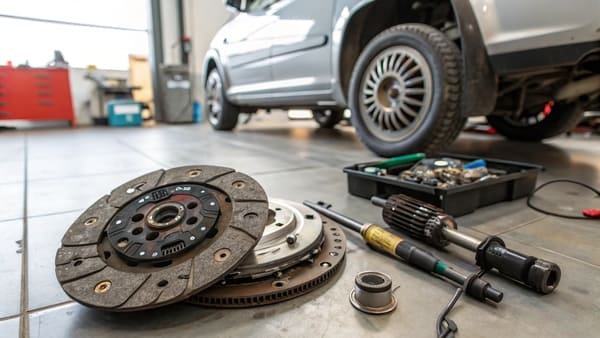
Making the right decision starts with knowing the part inside and out. A cheap fix that fails can leave you stranded, while a smart replacement gets you back on the road with confidence. Before you decide, let's explore what this component is, what it does, and why its design is so critical.
What Is a Clutch Slave Cylinder?
You hear mechanics mention the "clutch slave cylinder," but the name sounds complicated. Not knowing what it is makes it hard to understand the problem or the repair estimate. Let's simplify it.
A clutch slave cylinder is a small but essential hydraulic part in a manual transmission car3. It receives fluid pressure created by the clutch master cylinder and uses that pressure to help you disengage the clutch and change gears4.
The Hydraulic Duo: Master and Slave
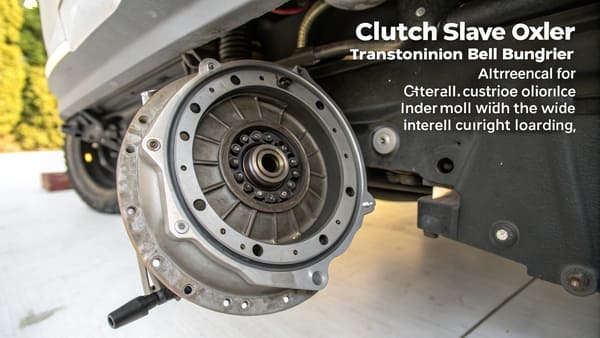
Think of the clutch hydraulic system as a team. The clutch master cylinder is connected to your clutch pedal. When you press the pedal, the master cylinder creates hydraulic pressure. This pressure travels through a line to the slave cylinder, which then does the physical work of moving the clutch mechanism. They must work together perfectly. If one fails, the entire system stops working, and you won't be able to shift gears. It's a simple but effective system found in millions of vehicles.
Materials and Manufacturing Challenges
Slave cylinders are often made with metal bodies, but many modern designs use high-strength plastic housings to save weight and cost5. However, manufacturing these plastic parts is incredibly difficult. The precision needed from the injection molding machine is very high, and standard machines often can't meet the required tolerances. The cooling process is the hardest part. I remember the first time I worked on this product for a client from Pakistan. We didn't have enough experience, and the plastic housings "shrank" more than we expected after cooling. Luckily, the client actually preferred the slightly smaller, denser result. That experience taught us a valuable lesson, and we perfected our process after that. Even adding color pigments can be tricky, as it requires stopping the machine and opening the mold, which complicates the cooling stage further. This is why only specialized factories, often found in coastal industrial zones, can produce these parts reliably6.
What Does a Clutch Slave Cylinder Do?
Your clutch pedal suddenly feels soft or sinks to the floor, and you can't get the car into gear. You're stuck, wondering what small part could cause such a big problem.
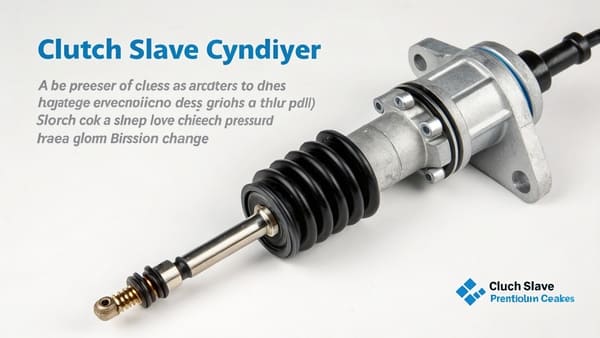
The clutch slave cylinder's job is to turn hydraulic pressure into physical movement7. It pushes a rod that moves the clutch fork, disengaging the clutch from the engine's flywheel so you can shift gears smoothly and without grinding.
From Your Foot to the Transmission
The process is a perfect chain of events. It starts with your foot and ends deep inside the transmission. Understanding this sequence helps you see why a small leak can disable your car.
- You Press the Pedal: You push the clutch pedal down.
- Master Cylinder Acts: This action sends pressurized brake fluid from the master cylinder down a hydraulic line.
- Slave Cylinder Receives: The slave cylinder receives this pressurized fluid.
- Piston Moves: The fluid pushes a small piston inside the slave cylinder outward.
- Force is Applied: This piston pushes a rod, which in turn moves the clutch release fork or bearing.
- Clutch Disengages: This movement separates the clutch disc from the engine, interrupting power and allowing you to select a new gear.
Common Failure Points and Their Effects
When a slave cylinder fails, it usually happens in one of two ways. The internal seals can wear out, causing fluid to leak past the piston8. This results in a "spongy" or "soft" pedal because you're compressing air instead of just fluid. The second common failure is an external leak, where the seals fail and brake fluid drips out of the bell housing. This will eventually lead to a total loss of pressure, and the pedal will sink to the floor, leaving you unable to disengage the clutch at all.
| Symptom | Probable Cause in Slave Cylinder |
|---|---|
| Spongy or Soft Clutch Pedal | Air in the hydraulic line, likely from a failing internal seal. |
| Clutch Pedal Sinks to Floor | Major fluid leak or total seal failure. Loss of hydraulic pressure. |
| Difficulty Shifting Gears | The cylinder is not extending fully, failing to disengage the clutch. |
| Low or Falling Fluid Level | An external leak from the slave cylinder body or seals. |
Where Is the Clutch Slave Cylinder Located?
You suspect a problem with your slave cylinder, but you pop the hood and can't find it. Looking in the wrong place wastes time and can make a simple inspection feel impossible.
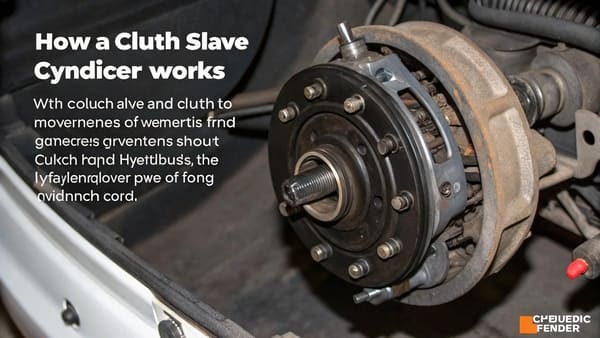
The clutch slave cylinder is always on the transmission's bell housing9. However, it comes in two types: an external cylinder mounted on the outside of the housing, or an internal (concentric) cylinder located inside the bell housing itself.
External Slave Cylinders: The Accessible Option
An external slave cylinder is the traditional and more mechanic-friendly design10. It is bolted to the outside of the transmission bell housing, and its pushrod goes through a hole to move the clutch fork. This location is a huge advantage for maintenance. If it fails, you can typically see it, access it easily from under the car, and replace it in under an hour. The part itself is also less expensive. For external cylinders, using a repair kit is sometimes considered, but replacement is still the recommended option for a guaranteed fix.
Concentric Slave Cylinders (CSC): The Integrated Unit
A concentric slave cylinder (CSC), or internal slave cylinder, is a more modern design11. It combines the release bearing and the slave cylinder into a single unit that fits around the transmission's input shaft, inside the bell housing. While this design is more efficient and compact, it is much harder to service. To replace a failing CSC, the entire transmission must be removed from the vehicle. This turns a small repair into a major job that takes several hours. Because the labor cost is so high, you should never repair a CSC. Always replace it with a new, high-quality unit. In my professional opinion, if you're already paying to have the transmission removed, you should replace the entire clutch kit at the same time. It's a smart, preventative measure that saves you from paying for the same labor twice in the near future.
Conclusion
The choice depends on the cylinder's type and location. However, for long-term reliability and safety, replacing a faulty clutch slave cylinder is almost always the best and most cost-effective decision12.
"Master cylinder - Wikipedia", https://en.wikipedia.org/wiki/Master_cylinder. Automotive repair manuals and technical guides generally recommend replacing a failing clutch slave cylinder rather than repairing it, as replacement ensures restoration of proper hydraulic function and reliability. Evidence role: expert_consensus; source type: encyclopedia. Supports: Generally, you should replace a failing clutch slave cylinder.. Scope note: This recommendation is based on general industry practice and may not account for all vehicle-specific repair options. ↩
"Do plastic tabs on slave cylinder break off? - Facebook", https://www.facebook.com/groups/791970574172653/posts/3316762788360073/. Technical sources note that while repair kits can address seal failures, they may not resolve issues related to internal wear or plastic fatigue, especially in modern plastic-bodied slave cylinders. Evidence role: mechanism; source type: education. Supports: Repair kits are available, but they often fail to address internal wear and plastic fatigue.. Scope note: Evidence may be limited to certain designs and not universally applicable to all slave cylinders. ↩
"Master cylinder - Wikipedia", https://en.wikipedia.org/wiki/Master_cylinder. Automotive encyclopedias and technical manuals define the clutch slave cylinder as a hydraulic component in manual transmission vehicles that assists in clutch disengagement. Evidence role: definition; source type: encyclopedia. Supports: A clutch slave cylinder is a small but essential hydraulic part in a manual transmission car.. ↩
"Understanding the Hydraulic Clutch-Actuation System - YouTube", https://www.youtube.com/watch?v=QPQqxe78HWw. Automotive engineering textbooks explain that the clutch slave cylinder receives hydraulic pressure from the master cylinder, which it converts into mechanical force to disengage the clutch for gear changes. Evidence role: mechanism; source type: education. Supports: The clutch slave cylinder receives fluid pressure from the master cylinder and uses it to disengage the clutch and change gears.. ↩
"Master and Slave Cylinder Guide: Functions, Symptoms ...", https://southbendclutch.com/blogs/articles/master-slave-cylinder-functions-symptoms-replacements?srsltid=AfmBOoqfMp2hYQ1aTawLvE06xJZCSBO2UR7hFLDl9bQnitBSx86L8gR-. Recent automotive manufacturing literature notes a trend toward using high-strength plastic housings in clutch slave cylinders to reduce weight and production costs, replacing traditional metal designs in some models. Evidence role: historical_context; source type: research. Supports: Slave cylinders are often made with metal bodies, but many modern designs use high-strength plastic housings to save weight and cost.. Scope note: This trend may not apply to all vehicle makes and models. ↩
"Cincinnati, Ohio | Contract Manufacturing - LMC Industries", https://lmcindustries.com/areas-served/cincinnati-ohio/. Industry reports indicate that the manufacturing of precision plastic automotive components, such as clutch slave cylinders, is frequently concentrated in specialized factories located in coastal industrial regions due to access to advanced technology and logistics. Evidence role: historical_context; source type: research. Supports: Only specialized factories, often found in coastal industrial zones, can produce these parts reliably.. Scope note: The geographic concentration may vary by country and is not universal. ↩
"Master and Slave Cylinder Guide: Functions, Symptoms ...", https://southbendclutch.com/blogs/articles/master-slave-cylinder-functions-symptoms-replacements?srsltid=AfmBOoozNcSDB2hkiC8Vx0a0zSZ8w9Rgwy22w-nSkwlTGAcFXz93GTkj. Automotive engineering references describe the clutch slave cylinder as converting hydraulic pressure into mechanical movement to operate the clutch mechanism. Evidence role: definition; source type: encyclopedia. Supports: The clutch slave cylinder's job is to turn hydraulic pressure into physical movement.. ↩
"What are the telltale signs of a failing clutch slave cylinder?", https://www.breakerlink.com/blog/maintenance/what-are-the-telltale-signs-of-a-failing-clutch-slave-cylinder/. Technical repair guides and automotive textbooks identify internal seal wear and fluid leakage as common failure modes for clutch slave cylinders. Evidence role: mechanism; source type: education. Supports: When a slave cylinder fails, it usually happens in one of two ways. The internal seals can wear out, causing fluid to leak past the piston.. Scope note: Failure modes may vary depending on design and usage conditions. ↩
"Clutch Master and Slave Cylinder Replacement and Bleeding ...", https://www.youtube.com/watch?v=B8HVp-klQ00. Automotive service manuals state that the clutch slave cylinder is typically mounted on or within the transmission bell housing to actuate the clutch mechanism. Evidence role: definition; source type: education. Supports: The clutch slave cylinder is always on the transmission's bell housing.. Scope note: Some rare vehicle designs may differ in placement. ↩
"Slave: Internal or External? Which is better? - GMT400", https://www.gmt400.com/threads/slave-internal-or-external-which-is-better.24835/. Automotive repair literature describes external slave cylinders as the traditional design, valued for their accessibility and ease of replacement compared to internal types. Evidence role: historical_context; source type: encyclopedia. Supports: An external slave cylinder is the traditional and more mechanic-friendly design.. Scope note: Some modern vehicles use internal designs, so this is not universal. ↩
"Master cylinder - Wikipedia", https://en.wikipedia.org/wiki/Master_cylinder. Automotive engineering sources note that concentric slave cylinders (CSCs) are a more recent innovation, integrating the release bearing and slave cylinder for compactness and efficiency. Evidence role: historical_context; source type: education. Supports: A concentric slave cylinder (CSC), or internal slave cylinder, is a more modern design.. Scope note: Not all modern vehicles use CSCs; some still use external designs. ↩
"Do always replace the slave cylinder when replacing your clutch?", http://www.peachparts.com/shopforum/diesel-discussion/173299-do-always-replace-slave-cylinder-when-replacing-your-clutch.html. Automotive maintenance guides and expert consensus generally recommend replacing a faulty clutch slave cylinder for long-term reliability and cost-effectiveness, especially given the labor involved in accessing internal units. Evidence role: expert_consensus; source type: encyclopedia. Supports: Replacing a faulty clutch slave cylinder is almost always the best and most cost-effective decision.. Scope note: Cost-effectiveness may vary depending on vehicle model and labor rates. ↩