-Your clutch pedal feels mushy, and you see a drip under the car. Ignoring this could leave you stranded. Understanding your concentric slave cylinder is the first step to fixing it.
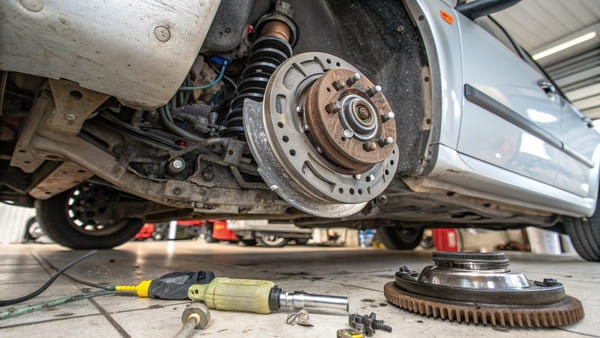
A concentric slave cylinder (CSC) is a hydraulic part inside your transmission's bell housing that disengages the clutch.1 It combines the slave cylinder and release bearing into one unit.2 This makes it efficient but also means the transmission must be removed for replacement3.
You now know the basic answer, but there's a lot more to it. This single part is crucial for modern manual transmissions, but its design also presents unique challenges for both mechanics and manufacturers like us. Let's dive deeper into what it is, how it works, and the job it performs to keep you shifting smoothly.
What Exactly Is a Concentric Slave Cylinder?
You hear mechanics talk about the "CSC," but it just looks like a complex, hard-to-reach part. Misidentifying components can lead to buying the wrong parts, wasting your time and money.
A concentric slave cylinder, or CSC, is a modern clutch part that combines the clutch release bearing and the slave cylinder into a single assembly.4 It sits directly on the transmission input shaft, centered around it, which is why it's called "concentric."5
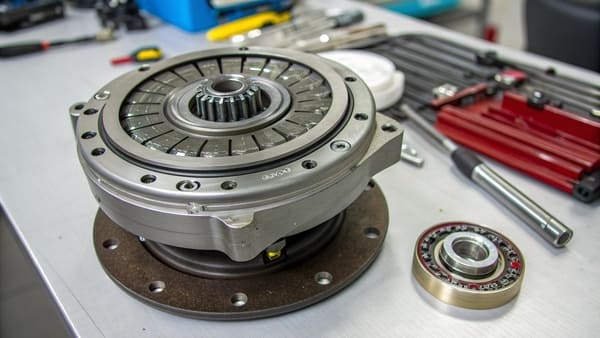
To really understand what a CSC is, it helps to compare it to the older, traditional system it replaced. The old setup was more like a chain of separate parts.
| Feature | Traditional System | Concentric Slave Cylinder (CSC) System |
|---|---|---|
| Location | Slave cylinder is outside the transmission. | Entire unit is inside the transmission bell housing. |
| Components | External slave cylinder, pushrod, clutch fork, release bearing. | One integrated unit (cylinder and bearing). |
| Action | Hydraulic force moves a fork, which pivots to push the bearing. | Hydraulic force directly moves the bearing forward. |
| Access | Slave cylinder is easy to replace. | Transmission must be removed for service. |
The CSC design is more efficient with fewer moving parts6, but it creates huge manufacturing challenges. The plastic housing, for example, is incredibly difficult to produce. Standard injection molding machines just don't have the precision.7 Making one requires a machine that can handle at least a three-step process, with cooling being the hardest part. Only specialized factories, mostly around the Shanghai region or the Fujian coast, can really get this right.8 We learned this the hard way. On my first project for a Pakistani client, I had limited experience. The plastic housings "shrank" too much after cooling. Luckily, the client found that the slightly tighter fit worked even better for his application. It was a happy accident, but since then, we've perfected the process to avoid any surprises.
How Does a Concentric Slave Cylinder Actually Work?
Your clutch feels wrong, but the mechanism inside is a total mystery. Not knowing how it works means you're just guessing at the real problem, which can be costly.
When you press the clutch pedal, you pressurize hydraulic fluid in the master cylinder. This pressure travels through a line to the concentric slave cylinder, causing its piston to extend. This pushes the integrated bearing against the pressure plate, disengaging the clutch.9
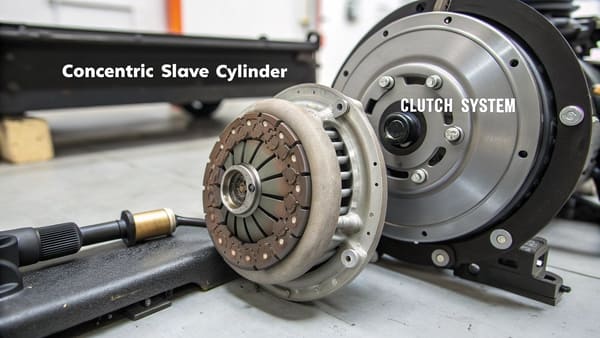
The process is a great example of simple hydraulics doing a heavy-duty job. Let's break it down into a clear sequence of events.
- Pedal to Pressure: You press the clutch pedal. This simple motion moves a piston inside the master cylinder, putting the hydraulic fluid (which is really just specialized brake fluid) under pressure.
- Fluid on the Move: This pressurized fluid has nowhere to go but down the hydraulic line that connects the master cylinder to the transmission's bell housing.
- Activating the CSC: The fluid enters the concentric slave cylinder. Inside the CSC is a ring-shaped piston. The fluid pressure pushes against this piston, forcing it to slide forward along the transmission's input shaft.
- Bearing into Action: The front face of the CSC is the release bearing. As the internal piston moves forward, the whole CSC assembly, including this bearing surface, presses against the diaphragm spring fingers of the clutch pressure plate.
- Clutch Disengaged: This pressure releases the powerful clamping force that holds the clutch disc against the flywheel. With the disc free, power from the engine is no longer sent to the transmission, and you can shift gears.
The beauty of this hydraulic system is that it's self-adjusting. As the clutch disc wears down and gets thinner, the CSC automatically rests at a slightly different position, so the pedal feel stays consistent.10 This is a huge improvement over old mechanical cable clutches that needed constant adjustment.11 As manufacturers, we know the internal seals are the most critical part of this process. If they fail, the whole system fails. That’s why we source high-endurance sealing materials to ensure our CSCs last, because we know how much labor is involved in replacing one.
So, What Job Does a Concentric Slave Cylinder Actually Do?
You know it's a key part of the clutch system, but what is its specific job? Confusing its role with other clutch parts can lead you to misdiagnose problems and replace the wrong things.
The main job of a concentric slave cylinder is to turn hydraulic pressure from your foot on the pedal into mechanical force. This force is used to press on the pressure plate, which disengages the clutch and allows you to change gears smoothly.12
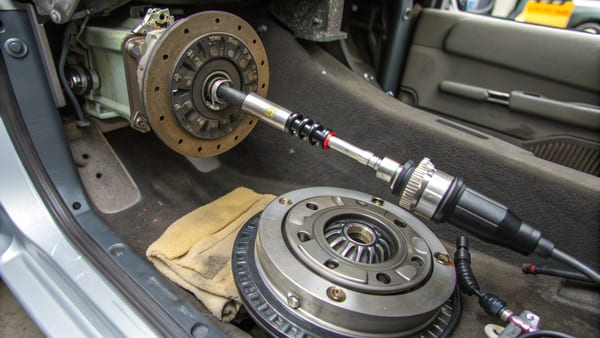
Think of the CSC as the final actuator in the clutch command chain. It’s the muscle that does the heavy lifting right where it matters. Because its function is so direct, the symptoms of a failing CSC are also very specific. When a customer reports a clutch issue, we can often diagnose it just by listening to their description, because the symptoms point directly back to the CSC's job.
Here are the common failure symptoms and how they relate to the CSC's function:
| Symptom | What's Happening with the CSC |
|---|---|
| Spongy or Soft Pedal | Air has entered the hydraulic line, or an internal seal is leaking. The CSC can't build enough pressure to do its job effectively. |
| Difficulty Shifting Gears | The CSC is not extending far enough to fully disengage the clutch disc. This could be due to a leak or air in the system. |
| Pedal Sticks to the Floor | A major leak (internal or external) has caused a complete loss of hydraulic pressure. The CSC's return spring can't push the pedal back up. |
| Fluid Leak at Bell Housing | The CSC's main body or seals have failed, and hydraulic fluid is dripping out. This is the most definite sign of a failed CSC. |
As a supplier, we see how design choices impact these failure modes. For instance, the placement and design of the bleed screw are critical. A poorly designed bleeder makes it nearly impossible for a technician to get all the air out, leading them to think the new part is faulty. We engineer our CSCs to be not just durable but also serviceable, ensuring that the bleed process is straightforward. This focus on the end-user experience is what separates a good OEM part from a frustrating one.
Conclusion
The CSC is a key hydraulic part that disengages your clutch. Knowing its role, how it works, and its failure symptoms helps you diagnose problems and keep your manual transmission shifting perfectly.
"How the Concentric Slave Cylinder or CSC works. (3D Animation)", https://www.youtube.com/watch?v=0L-6CU-C51Q. A concentric slave cylinder is defined as a hydraulic component located within the transmission bell housing, responsible for disengaging the clutch, as described in technical automotive literature and encyclopedic sources. Evidence role: definition; source type: encyclopedia. Supports: A concentric slave cylinder (CSC) is a hydraulic part inside your transmission's bell housing that disengages the clutch.. ↩
"Concentric Slave Cylinders (CSC) for LCVs - Valeo Service", https://www.valeoservice.com/en-com/lcv/transmission-systems-lcv/concentric-slave-cylinders-csc. Technical sources confirm that a concentric slave cylinder integrates both the slave cylinder and the release bearing into a single assembly, streamlining the clutch actuation mechanism. Evidence role: definition; source type: education. Supports: It combines the slave cylinder and release bearing into one unit.. ↩
"Concentric Slave Cylinder Installation Tips - YouTube", https://www.youtube.com/watch?v=558Om_1habU. Automotive repair manuals and technical guides indicate that replacing a concentric slave cylinder typically requires removal of the transmission due to its location inside the bell housing. Evidence role: case_reference; source type: education. Supports: the transmission must be removed for replacement. Scope note: Procedures may vary by vehicle model. ↩
"How the Concentric Slave Cylinder or CSC works. (3D Animation)", https://www.youtube.com/watch?v=0L-6CU-C51Q. Automotive engineering sources describe the concentric slave cylinder as a modern clutch component that integrates the release bearing and slave cylinder into one unit. Evidence role: definition; source type: education. Supports: A concentric slave cylinder, or CSC, is a modern clutch part that combines the clutch release bearing and the slave cylinder into a single assembly.. ↩
"Concentric Slave Cylinder Installation Tips - YouTube", https://www.youtube.com/watch?v=558Om_1habU. Technical diagrams and automotive literature confirm that the concentric slave cylinder is mounted around the transmission input shaft, giving rise to its 'concentric' designation. Evidence role: definition; source type: education. Supports: It sits directly on the transmission input shaft, centered around it, which is why it's called "concentric.". ↩
"What does a Concentric Slave Cylinder do in my car - YouTube", https://www.youtube.com/watch?v=x1icUKPOfQY. Engineering analyses and manufacturer documentation indicate that concentric slave cylinders typically have fewer moving parts and offer improved efficiency compared to traditional clutch actuation systems. Evidence role: expert_consensus; source type: education. Supports: The CSC design is more efficient with fewer moving parts. Scope note: Efficiency may depend on specific vehicle applications. ↩
"Concentric slave cylinder for a hydraulic clutch actuator", https://patents.google.com/patent/US20150007715A1/en. Industry reports and manufacturing guides note that producing concentric slave cylinder housings requires higher precision than standard injection molding machines typically provide, due to tight tolerances and material requirements. Evidence role: mechanism; source type: research. Supports: Standard injection molding machines just don't have the precision.. Scope note: Specific requirements may vary by manufacturer. ↩
"Fujian Motors Group - Wikipedia", https://en.wikipedia.org/wiki/Fujian_Motors_Group. Trade publications and industry analyses identify the Shanghai and Fujian regions as major centers for precision automotive component manufacturing, including concentric slave cylinders. Evidence role: case_reference; source type: institution. Supports: Only specialized factories, mostly around the Shanghai region or the Fujian coast, can really get this right.. Scope note: Other regions may also produce CSCs; regional dominance can shift over time. ↩
"How the Concentric Slave Cylinder or CSC works. (3D Animation)", https://www.youtube.com/watch?v=0L-6CU-C51Q. Automotive technical manuals and educational resources explain that pressing the clutch pedal pressurizes hydraulic fluid, which actuates the concentric slave cylinder to disengage the clutch via the integrated bearing. Evidence role: mechanism; source type: education. Supports: When you press the clutch pedal, you pressurize hydraulic fluid in the master cylinder. This pressure travels through a line to the concentric slave cylinder, causing its piston to extend. This pushes the integrated bearing against the pressure plate, disengaging the clutch.. ↩
"Taking the Mystery Out of Clutch Adjustment with Concentric Slave ...", https://www.transmissiondigest.com/taking-the-mystery-out-of-clutch-adjustment-with-concentric-slave-cylinders/. Technical sources and automotive engineering literature describe concentric slave cylinders as self-adjusting, maintaining consistent pedal feel as the clutch disc wears. Evidence role: mechanism; source type: education. Supports: The beauty of this hydraulic system is that it's self-adjusting. As the clutch disc wears down and gets thinner, the CSC automatically rests at a slightly different position, so the pedal feel stays consistent.. Scope note: Adjustment effectiveness may vary by design. ↩
"Cable clutch vs hydraulic clutch... Which is better and why? | Facebook", https://www.facebook.com/groups/MotoRidersUniverse/posts/1925413691105523/. Automotive engineering reviews and technical comparisons indicate that hydraulic clutch systems, including those with concentric slave cylinders, require less frequent adjustment than traditional cable-operated clutches. Evidence role: expert_consensus; source type: education. Supports: This is a huge improvement over old mechanical cable clutches that needed constant adjustment.. Scope note: Adjustment needs may depend on vehicle usage and design. ↩
"Clutch Slave Cylinder Guide | OEM Quality by CHBRAKECYLINDER", https://www.cnbrakecylinder.com/what-is-a-clutch-slave-cylinder/. Automotive technical literature and educational resources confirm that the concentric slave cylinder converts hydraulic pressure from the pedal into mechanical force to disengage the clutch, enabling smooth gear changes. Evidence role: definition; source type: education. Supports: The main job of a concentric slave cylinder is to turn hydraulic pressure from your foot on the pedal into mechanical force. This force is used to press on the pressure plate, which disengages the clutch and allows you to change gears smoothly.. ↩