-Building a car is incredibly complex. Managing a global EV supply chain is even harder. How does Tesla make it look so easy while others struggle to keep up?
Tesla's global manufacturing strategy1 relies on strategically located Gigafactories in North America, Europe, and Asia2. These facilities localize production and supply chains, reducing logistics costs, tariffs, and delivery times, which reveals a powerful, vertically integrated model3 for controlling the entire EV manufacturing process.
It's one thing to hear about Tesla's success, but it's another to understand the blueprint behind it. Their network of massive factories isn't just about building cars; it's a carefully designed system that has rewritten the rules for automotive manufacturing. This network is the engine behind their global dominance. Let's break down exactly where these cars come from and what makes this system so effective.
Where Are Tesla Vehicles Actually Manufactured Around the World?
You see Teslas everywhere on the road today. But have you ever wondered where each of those cars actually begins its journey? The answer isn't just one single place.
Tesla vehicles are primarily manufactured at four main Gigafactories around the world. These are located in Fremont, California; Austin, Texas; Shanghai, China; and Brandenburg, Germany. Each factory serves as a production and distribution hub4 for its respective continental market, creating a truly global footprint.
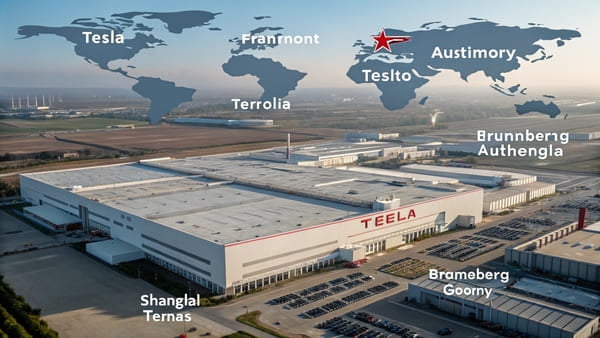
To truly grasp Tesla's scale, we need to look at each of these locations. They aren't just copies of each other; each one plays a unique role in the company's global strategy. The original factory in Fremont set the stage, but the newer factories in Shanghai, Berlin, and Austin represent the evolution of Tesla's manufacturing philosophy. They are built to be more efficient, more localized, and more technologically advanced than the last. This continuous improvement is key to their success. I've seen in my own business how critical it is to learn from each production run, and Tesla applies this on a massive scale. Let's look at what makes each factory special.
The Four Pillars of Tesla's Global Production
Tesla's manufacturing map is a clear indicator of its global ambitions. Each factory was chosen for specific strategic reasons, from access to markets to local talent and supply chains.
- Fremont, California: This is the original Tesla factory. It was a former GM and Toyota plant that Tesla transformed into its first large-scale production facility. It laid the groundwork for everything that followed and still produces all four of Tesla's main models (S, 3, X, and Y).
- Shanghai, China: Giga Shanghai was a game-changer. Built in record time, it gave Tesla direct access to the world's largest EV market and a robust local supply chain5. It's known for its incredible production efficiency6 and serves as a key export hub for the Asia-Pacific region and even Europe.
- Berlin, Germany: Giga Berlin is Tesla's foothold in the heart of Europe's traditional auto industry. It was designed to produce the Model Y for the European market, incorporating new manufacturing technologies like the Giga Press7 to build cars more efficiently.
- Austin, Texas: Giga Texas is the company's new global headquarters and a symbol of its future. It's where the Cybertruck is being built, alongside the Model Y, and it's also a hub for battery production with the 4680 cell8.
Here is a simple breakdown of these locations:
| Gigafactory Location | Primary Role | Key Models Produced |
|---|---|---|
| Fremont, California | Original Production Hub, R&D | Model S, 3, X, Y |
| Shanghai, China | Asia-Pacific Hub, Export Leader9 | Model 3, Y |
| Berlin, Germany | European Market Hub | Model Y |
| Austin, Texas | Global HQ, Future Products | Model Y, Cybertruck |
What Does Each Tesla Gigafactory Produce and Why Is It Strategically Located There?
Knowing the factory locations is just one part of the story. The real genius is in why they are located where they are and what each one specializes in.
Each Tesla Gigafactory is a strategic asset. It produces specific vehicle models tailored for its regional market, leveraging local supply chain5s and talent. This "build where you sell" approach minimizes logistical costs, avoids import tariffs, and strengthens Tesla's market presence in key regions.
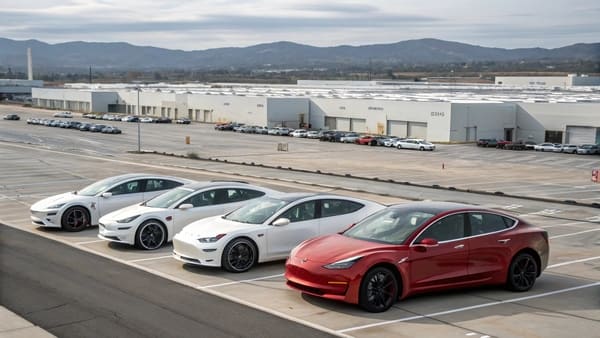
The strategy is simple but incredibly effective. Instead of building all cars in one place and shipping them worldwide, Tesla builds them locally. This sounds obvious, but the execution is what sets them apart. A factory in China doesn't just build cars; it taps into one of the most developed electronics and battery supply chains on the planet. A factory in Germany doesn't just serve Europe; it competes directly with legacy automakers on their home turf, using their own engineering talent against them. I've learned that proximity to suppliers and customers10 is everything in manufacturing. It cuts down on delays, reduces costs, and allows you to respond to market changes much faster. Tesla has applied this principle on a global scale.
The Strategic Purpose of Each Gigafactory
Let's dive deeper into the specific purpose behind each factory's location and production focus. It's a masterclass in global business strategy.
- Fremont's Role as the Innovator: As the first factory, Fremont has been the testbed for Tesla's production ideas. Its proximity to Silicon Valley gives it access to top engineering talent for both vehicle and manufacturing process innovation. While it may not be the most efficient factory by today's standards, it remains the heart of Tesla's R&D in production.
- Shanghai's Role as the Efficiency King: China offered Tesla a massive market, government support, and an unparalleled supply chain. Giga Shanghai was designed from the ground up for efficiency. It proved that Tesla could not only design great cars but also build them at an incredible speed and scale. Its success is a major reason for Tesla's profitability.
- Berlin's Role as the European Challenger: To win in Europe, Tesla needed to build in Europe. Germany is home to the world's most respected car brands. By building Giga Berlin, Tesla sent a clear message. It also allowed them to customize cars for European tastes and navigate complex EU regulations more easily. The factory's focus on advanced manufacturing techniques11 is meant to give it a competitive edge.
- Austin's Role as the Future Foundation: Giga Texas is more than just a car factory; it's the core of the "Tesla machine." It combines vehicle assembly, battery production (4680 cells), and corporate headquarters in one massive location. Its focus on the Cybertruck and future products shows that this is where Tesla is building its next chapter.
This table shows the strategic advantage of each location:
| Gigafactory | Strategic Advantage | Primary Market Served |
|---|---|---|
| Fremont | Proximity to Silicon Valley tech talent | North America |
| Shanghai | Access to huge market & supply chain | Asia-Pacific, Global Exports |
| Berlin | Access to automotive engineering talent | Europe |
| Austin | Central US location, business-friendly | North America, Future Products |
How Does Tesla’s Global Manufacturing Network Reduce Costs and Improve Efficiency?
Building these massive factories costs billions. So how does this global network actually save Tesla money and make them more efficient than their competitors?
Tesla's network drives down costs through extreme vertical integration12, localized supply chains13, and manufacturing standardization14. By making key components in-house and building cars close to customers, Tesla cuts out middlemen, reduces shipping costs, and gains total control over quality and production speed.
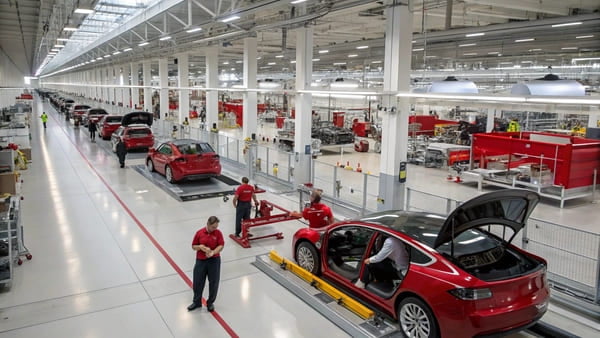
The secret isn't just one thing; it's a combination of strategies that work together. The most important is what we call vertical integration12. While other car companies buy many of their parts from outside suppliers, Tesla tries to make as much as possible themselves. This includes batteries, electric motors, seats, and even the computer chips that run the car. This gives them immense control and saves money in the long run. I've experienced this in my own business—when you rely on too many suppliers, you are vulnerable to their problems and their price increases. By bringing production in-house, Tesla controls its own destiny.
The Core of Tesla's Manufacturing Efficiency
Tesla's approach to manufacturing is fundamentally different from traditional automakers, and this is where its real advantage lies. It's not just about the buildings; it's about what happens inside them.
First, let's talk about the difficulty of making core EV components. From my own experience as a manufacturer, I can tell you that the precision required is incredibly high. Standard production equipment often can't meet the tight tolerances. For certain core parts, the process involves at least three critical stages, with the cooling and shaping phase being the most difficult to get right. This requires highly specialized machinery. I've found that equipment with this level of precision is typically made in specific regions, like the coastal areas of Fujian or around Shanghai. Equipment from other areas often just doesn't meet the standard.
I learned this the hard way. I once worked on a project for a client from Pakistan. It was our first time making a component with such complex cooling requirements. During the process, we had to stop the machine, open the mold to add materials, and then manage the cooling. Our first batch had a serious "shrinkage" problem after cooling. Fortunately for us, the client actually liked the slightly smaller, denser result. We got lucky, but it was a stressful experience and a huge lesson in how critical process control is.
This is exactly why Tesla's vertical integration12 is so powerful. By controlling these difficult manufacturing steps themselves, they don't have to worry about a supplier messing it up. They can perfect the process in-house. They combine this control with groundbreaking technology like the Giga Press7, a massive die-casting machine that can produce the entire front or rear underbody of a car in a single piece. This replaces dozens of individual stamped parts, dramatically simplifying assembly, reducing weight, and lowering costs.
Here is how these strategies create a more efficient system:
| Strategy | Benefit | Example |
|---|---|---|
| Vertical Integration | Control over quality, cost, and supply | In-house battery and motor production |
| Localization | Reduced shipping costs and tariffs | Giga Shanghai supplying the Asian market |
| Manufacturing Innovation | Faster assembly, lower costs, stronger cars | Using the Giga Press7 for vehicle underbodies |
| Standardized Design15 | "The machine that builds the machine" | Each new Gigafactory is an improved version of the last |
Conclusion
Tesla's Gigafactory network is a masterclass in modern manufacturing. It uses strategic location16, vertical integration12, and technology to build a powerful, efficient, and resilient global EV supply chain17.
Understand the blueprint behind Tesla's global dominance and how their manufacturing strategy rewrites industry rules. ↩
Learn how Tesla's strategically placed Gigafactories optimize production and supply chains, reducing costs and delivery times worldwide. ↩
Discover why vertical integration gives Tesla control over quality, costs, and supply, setting it apart from traditional automakers. ↩
Explore how Tesla's factories efficiently serve regional markets, minimizing logistics and maximizing market presence. ↩
See how Tesla's use of local supply chains reduces costs, avoids tariffs, and strengthens market presence. ↩
Find out the innovations and processes that drive Tesla's exceptional production efficiency and profitability. ↩
Learn about the Giga Press technology and its role in simplifying assembly, reducing weight, and lowering costs. ↩
Discover the significance of the 4680 battery cell and its impact on Tesla's vehicle performance and manufacturing. ↩
Understand how Giga Shanghai's location and efficiency make it a key export hub for Tesla in Asia-Pacific and beyond. ↩
See why being close to suppliers and customers is crucial for reducing delays, costs, and responding to market changes. ↩
Explore the cutting-edge manufacturing methods that give Tesla a competitive edge in the automotive industry. ↩
Find out how Tesla's in-house production of key components leads to greater control and long-term savings. ↩
See how Tesla's localized supply chains help avoid tariffs, reduce shipping costs, and streamline production. ↩
Discover how standardized designs and processes improve efficiency and quality in Tesla's global operations. ↩
Understand how Tesla's 'machine that builds the machine' approach leads to continuous improvement and efficiency. ↩
Discover the importance of strategic factory locations for market access, talent, and supply chain optimization. ↩
Learn how Tesla's strategies create a robust supply chain that withstands global challenges and disruptions. ↩