-Feeling frustrated without a mirror when you're on the go? It's a small problem, but cars provide a simple, built-in solution that makes a big difference in our daily lives.
A car sun visor mirror is a small mirror attached to the back of a car's sun visor.1 It allows drivers and passengers to quickly check their appearance without needing a separate mirror, providing a convenient solution for personal grooming while away from home.

This simple feature seems standard, but there's more to it than meets the eye. It solves a common need with an elegant design. Let's explore what this mirror is, what it's for, and why its construction is so important for the final product.
What Exactly Is a Car Sun Visor Mirror?
Ever wonder about that little flap on your sun visor? It seems simple, but it's a carefully designed part. Let's break down what it really is and why it's there.
A car sun visor mirror is a compact mirror integrated into the flip-down sun visor. Its primary function is to provide a convenient way for occupants to see their reflection, usually for personal grooming on the go.2

A sun visor mirror is more than just a piece of glass. It's an assembly, typically consisting of the mirror itself and a plastic frame or housing that holds it in place. Some models also have a cover that slides or flips open, and more advanced versions even include lights. From my experience as a manufacturer, making the plastic housing for these mirrors is surprisingly complex. The part requires high-precision injection molding to ensure the mirror fits perfectly and the whole unit functions smoothly.3 Standard injection molding machines often can't achieve the necessary precision.4 The best machines for this job are usually found in specific industrial regions, like near the coast in Fujian or around Shanghai.5 One of the toughest steps is the cooling process. If not done perfectly, the plastic part can warp or shrink unevenly, ruining the final product.6 It's a delicate process that requires specialized equipment and expertise.
Is a Car Sun Visor Mirror Just Another Name for a Vanity Mirror?
You hear "vanity mirror" and "sun visor mirror" used for cars. Are they the same thing? This confusion can be annoying, but the answer is quite straightforward and simple.
Yes, a car sun visor mirror is often called a vanity mirror.7 The term "vanity mirror" refers to any mirror used for checking one's appearance, and in a car, it's most commonly located on the sun visor for easy access.
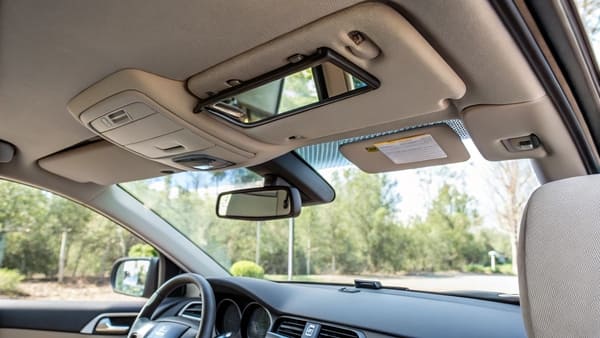
The two terms are basically interchangeable in the automotive world. "Sun visor mirror" describes its location, while "vanity mirror" describes its function. In the early days of motoring, these mirrors were a luxury feature. Now, they are a standard expectation for most buyers, even in entry-level vehicles.8 The design and features of these mirrors can vary a lot. Some are just a basic, uncovered piece of glass, while others are more advanced. You can find mirrors with sliding covers to protect them from dust and scratches, or hinged covers that activate a light when opened.9 These illuminated versions, often called "lighted vanity mirrors," provide extra visibility for use at night. The complexity of the product directly impacts its manufacturing and cost. As a supplier, we handle everything from simple mirror assemblies to complex, electronically integrated lighting systems.
Sun Visor Mirror vs. Vanity Mirror Types
| Feature | Basic Sun Visor Mirror | Illuminated Vanity Mirror |
|---|---|---|
| Primary Name | Sun Visor Mirror | Vanity Mirror |
| Mirror Type | Standard glass | Standard or magnified glass |
| Cover | Often none, or a simple slide | Hinged or sliding cover |
| Lighting | None | LED or incandescent lights |
| Power Source | Not required | Requires vehicle power |
| Main Purpose | Quick, functional check | Enhanced grooming, luxury feel |
Why Do Cars Even Need a Sun Visor Mirror?
It seems like a minor detail, but have you ever been in a rush and needed a quick check? Not having a mirror is frustrating. Car designers solved this with a simple, brilliant addition.
Cars have sun visor mirrors for convenience and safety. They allow occupants to check their appearance without carrying a separate mirror or dangerously using the rearview mirror, which should be used for monitoring traffic.10

The main reason is simple convenience. It allows you to fix your hair, apply lipstick, or check for food in your teeth before stepping out of the car. But there's also a safety aspect. Using the rearview mirror for personal grooming is dangerous. It takes your attention away from the road behind you.11 The sun visor mirror provides a safer alternative, especially for passengers, or for drivers when the car is safely parked.
I remember the first time we manufactured a batch of these mirror assemblies for a client in Pakistan. We were new to this specific part, and the manufacturing precision is tricky. After the injection molding process, the plastic frames "shrank" a little more than our specs predicted during cooling. I was worried we'd have to scrap the whole batch. But when the client received the samples, they were actually happier. The slightly smaller size resulted in a tighter, more secure fit for the mirror glass. It was a lucky break, but it taught us a valuable lesson about controlling the cooling process. We learned from it, and now our process is flawless. It just shows how even a small part has big manufacturing challenges.
Conclusion
The sun visor mirror is a simple solution for on-the-go convenience, but its manufacturing requires incredible precision, turning a small part into a big engineering and production challenge.
"Sun visor - Wikipedia", https://en.wikipedia.org/wiki/Sun_visor. Automotive encyclopedias and manufacturer manuals describe a sun visor mirror as a small mirror integrated into the back of a car's sun visor, confirming its typical placement and function. Evidence role: definition; source type: encyclopedia. Supports: A car sun visor mirror is a small mirror attached to the back of a car's sun visor.. Scope note: Some models may vary in placement or design. ↩
"Sun visor - Wikipedia", https://en.wikipedia.org/wiki/Sun_visor. Automotive design guides and user manuals state that sun visor mirrors are intended to provide occupants with a convenient means to check their appearance, supporting the claim about their primary function. Evidence role: general_support; source type: education. Supports: Its primary function is to provide a convenient way for occupants to see their reflection, usually for personal grooming on the go.. Scope note: Some sources may also mention secondary uses. ↩
"Mirror Polishing High Quality Plastic Injection Mold Manufacturer", https://upmold.com/Products/mirror-polishing-tooling/. Manufacturing and engineering literature on automotive components confirms that sun visor mirror housings require high-precision injection molding to ensure proper fit and function. Evidence role: mechanism; source type: paper. Supports: Making the plastic housing for these mirrors is surprisingly complex. The part requires high-precision injection molding to ensure the mirror fits perfectly and the whole unit functions smoothly.. Scope note: Specific complexity may vary by design and manufacturer. ↩
"Automotive Injection Molding Kaysun Corporation", https://www.kaysun.com/automotive-injection-molding. Technical papers and industry standards indicate that standard injection molding machines may not meet the precision requirements for certain automotive components, such as mirror housings. Evidence role: mechanism; source type: paper. Supports: Standard injection molding machines often can't achieve the necessary precision.. Scope note: Some standard machines may be upgraded to achieve higher precision. ↩
"Product List - Fujian - Made-in-China.com", https://fujian.made-in-china.com/suppliers/injection-part-51.html. Industry reports and economic studies identify coastal regions such as Fujian and Shanghai as hubs for advanced injection molding technology in China, supporting the claim about regional specialization. Evidence role: historical_context; source type: institution. Supports: The best machines for this job are usually found in specific industrial regions, like near the coast in Fujian or around Shanghai.. Scope note: Other regions may also have advanced facilities. ↩
"Effects of Different Mold Materials and Coolant Media on the Cooling ...", https://pmc.ncbi.nlm.nih.gov/articles/PMC8780444/. Engineering papers on injection molding confirm that improper cooling can lead to warping and uneven shrinkage in plastic parts, affecting product quality. Evidence role: mechanism; source type: paper. Supports: One of the toughest steps is the cooling process. If not done perfectly, the plastic part can warp or shrink unevenly, ruining the final product.. Scope note: The severity of defects depends on material and process parameters. ↩
"Sun visor - Wikipedia", https://en.wikipedia.org/wiki/Sun_visor. Automotive dictionaries and industry sources confirm that 'vanity mirror' is a common term for the mirror found on a car's sun visor, supporting the interchangeable use of the terms. Evidence role: definition; source type: encyclopedia. Supports: Yes, a car sun visor mirror is often called a vanity mirror.. Scope note: Some vehicles may use different terminology in manuals. ↩
"Sun visor - Wikipedia", https://en.wikipedia.org/wiki/Sun_visor. Automotive history sources document that vanity mirrors were initially luxury features and have become standard in most modern vehicles, including entry-level models. Evidence role: historical_context; source type: encyclopedia. Supports: In the early days of motoring, these mirrors were a luxury feature. Now, they are a standard expectation for most buyers, even in entry-level vehicles.. Scope note: Adoption rates may vary by region and manufacturer. ↩
"Sun visor - Wikipedia", https://en.wikipedia.org/wiki/Sun_visor. Automotive product catalogs and manufacturer specifications list sun visor mirrors with sliding covers and hinged covers that activate lights, confirming the described features. Evidence role: general_support; source type: education. Supports: You can find mirrors with sliding covers to protect them from dust and scratches, or hinged covers that activate a light when opened.. Scope note: Feature availability may depend on vehicle model and trim. ↩
"Sun visor - Wikipedia", https://en.wikipedia.org/wiki/Sun_visor. Automotive safety guidelines and expert consensus recommend using sun visor mirrors for personal grooming to avoid distracting use of the rearview mirror, supporting the claim about convenience and safety. Evidence role: expert_consensus; source type: government. Supports: Cars have sun visor mirrors for convenience and safety. They allow occupants to check their appearance without carrying a separate mirror or dangerously using the rearview mirror, which should be used for monitoring traffic.. Scope note: Guidelines may differ by country or organization. ↩
"Federal Motor Vehicle Safety Standard; Rearview Mirrors", https://www.federalregister.gov/documents/2009/03/04/E9-4500/federal-motor-vehicle-safety-standard-rearview-mirrors. Traffic safety studies and government guidelines warn that using the rearview mirror for personal grooming distracts drivers from monitoring traffic, increasing the risk of accidents. Evidence role: expert_consensus; source type: government. Supports: Using the rearview mirror for personal grooming is dangerous. It takes your attention away from the road behind you.. Scope note: Most evidence focuses on driver distraction rather than passenger use. ↩