-Have you ever needed a quick check of your appearance before a meeting but couldn't find a mirror? It’s a small problem, but it feels unprofessional and frustrating when it happens.
A car sun visor mirror, also known as a vanity mirror, is a small mirror located on the back of the sun visor.1 Cars have them for the convenience of the driver and front passenger, allowing them to quickly check their appearance without adjusting the main rearview mirror.2
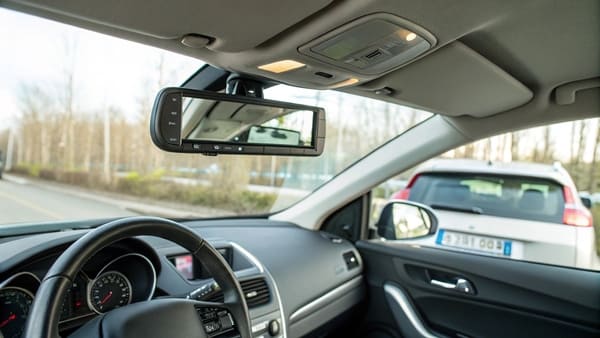
This small mirror seems like a simple feature, but it's part of a whole system of mirrors designed to make your driving experience safer and more convenient. It’s one of those little details that you don't think about until you need it. Let's look at the other mirrors in your car and why they are so important.
How Many Mirrors Does a Car Have?
Ever stopped to count all the mirrors in a modern car? You might be surprised to find there are more than you think, and missing even one can make driving feel incomplete.
Most modern cars have at least three main mirrors: one interior rearview mirror and two exterior side mirrors.3 However, including the sun visor mirrors for both the driver and passenger, the total count often goes up to five or more, especially in newer models with added safety features.4

The number of mirrors in a car has grown over time. Early cars might have only had a single interior mirror. Today, the standard is three, but it doesn't stop there. We now have additional mirrors to enhance safety and convenience. For example, some cars come with small, convex blind-spot mirrors integrated into the main side mirrors.5 Others have advanced camera systems that display images on the dashboard, acting as digital mirrors.6 Then there are the sun visor mirrors, which are purely for convenience. In our business of manufacturing auto parts, we see requests for all kinds of mirror components, from the complex housing for a camera-equipped side mirror to the simple frame for a sun visor mirror. Each one serves a specific purpose, contributing to the overall function and feel of the vehicle.
What Are the Three Mirrors on a Car Called?
You use them every time you drive, but do you know their proper names? Knowing what to call them is the first step to understanding how critical each one is for safety.
The three main mirrors on a car are the interior rearview mirror, the driver-side exterior mirror, and the passenger-side exterior mirror.7 Each one is designed to give the driver a specific view of the area around the vehicle, working together to minimize blind spots.8
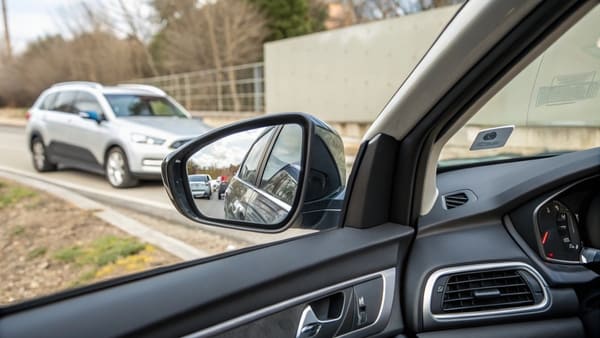
From a manufacturing perspective, the plastic housings for these mirrors are surprisingly complex to produce. The precision required is much higher than for typical plastic parts. Standard injection molding machines often can't meet the tight tolerances needed for automotive-grade components.9 In our factory, the process has several critical stages, but the most difficult is cooling. I learned this the hard way on one of my first big projects for a client from Pakistan. We produced a batch of mirror housings, but after cooling, they had shrunk more than we anticipated. The precision cooling process is an art. Machines in coastal regions like Fujian or near Shanghai are specialized for this, while machines from other areas might not be up to the task. Adding color is another challenge. You have to stop the machine and open the mold, which disrupts the cooling cycle. Luckily, that Pakistani client actually preferred the slightly smaller, denser feel of the "shrunken" parts. We got lucky, but it was a valuable lesson in controlling every step of the process.
| Mirror Component | Key Manufacturing Challenge | Reason for Difficulty |
|---|---|---|
| Rearview Mirror Housing | Vibration Dampening & Stability | Must be rigid to prevent shaking, requiring precise material flow and cooling to avoid internal stress. |
| Side Mirror Housing | Aerodynamics & Weatherproofing | Complex shape requires perfect mold filling. Must withstand sun, rain, and wind without warping or fading. |
| Mirror Frame/Bezel | Aesthetic Finish & Fit | The visible part must be flawless. Any imperfection from cooling or color mixing is immediately noticeable. |
What Is the Rearview Mirror Used For?
Imagine driving on a busy highway, unable to see the cars speeding up behind you. This is the danger you face without a properly used rearview mirror, a critical safety tool.
The rearview mirror is used for seeing what is directly behind your car.10 It provides a clear view of the road, traffic, and any potential hazards approaching from the rear, allowing the driver to make safer decisions when changing lanes, braking, or monitoring their surroundings.
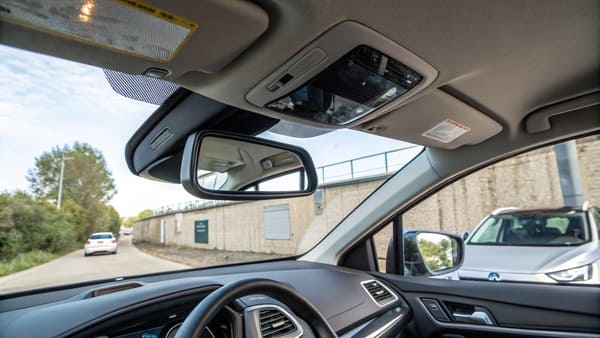
The rearview mirror is more than just a piece of glass; it's an engineered safety device. Most interior rearview mirrors have a day/night feature.11 This is usually a small tab at the bottom. When you flip it, you're not just tilting the mirror; you are changing the angle of a prismatic piece of glass. In the "night" position, the mirror reflects a much dimmer image from its front surface, reducing the glare from headlights behind you, while the main reflective surface angles the bright light away from your eyes.12 The stability of this mirror is also critical. A shaky rearview mirror is not only annoying but also dangerous because it blurs your view. This is where manufacturing quality comes in. The plastic mount and housing must be made with extreme precision to ensure a tight, vibration-free fit. We use specific injection molding techniques and controlled cooling to produce parts that are strong and stable, ensuring the mirror does its job perfectly without distracting the driver.
Conclusion
Every mirror in your car, from the main rearview to the small sun visor mirror, is part of a system designed for your safety and convenience, backed by complex manufacturing precision.
"Visor - Wikipedia", https://en.wikipedia.org/wiki/Visor. A general automotive encyclopedia or manufacturer manual confirms that a sun visor mirror, also called a vanity mirror, is typically mounted on the reverse side of the sun visor for driver or passenger use. Evidence role: definition; source type: encyclopedia. Supports: A car sun visor mirror, also known as a vanity mirror, is a small mirror located on the back of the sun visor.. Scope note: Placement may vary in some vehicle models. ↩
"Why Do Car Sun Visors Have Mirrors? (It's Not Just for Makeup)", https://www.youtube.com/watch?v=tLHxXSLKe7M. Automotive design guides and manufacturer documentation indicate that sun visor mirrors are installed primarily for convenience, enabling occupants to check their appearance without disturbing the rearview mirror. Evidence role: general_support; source type: education. Supports: Cars have them for the convenience of the driver and front passenger, allowing them to quickly check their appearance without adjusting the main rearview mirror.. Scope note: Some vehicles may omit this feature or place it differently. ↩
"Interpretation ID: 8517a - NHTSA", https://www.nhtsa.gov/interpretations/8517a. Automotive safety regulations and vehicle manuals confirm that most modern cars are equipped with one interior rearview mirror and two exterior side mirrors as standard. Evidence role: statistic; source type: government. Supports: Most modern cars have at least three main mirrors: one interior rearview mirror and two exterior side mirrors.. Scope note: Some specialty vehicles or older models may differ. ↩
"Side-view mirror - Wikipedia", https://en.wikipedia.org/wiki/Side-view_mirror. Automotive industry surveys and manufacturer specifications show that newer car models often include sun visor mirrors and additional safety mirrors, raising the total mirror count to five or more. Evidence role: statistic; source type: research. Supports: including the sun visor mirrors for both the driver and passenger, the total count often goes up to five or more, especially in newer models with added safety features.. Scope note: Mirror count varies by model and trim level. ↩
"[PDF] minimize blind spots - NHTSA", https://www.nhtsa.gov/sites/nhtsa.gov/files/2025-05/vehicle-blind-spots-handout-en-2025-16608-v4-tag.pdf. Automotive safety literature and manufacturer documentation confirm that some vehicles feature convex blind-spot mirrors integrated into the main side mirrors to improve visibility. Evidence role: mechanism; source type: education. Supports: some cars come with small, convex blind-spot mirrors integrated into the main side mirrors.. Scope note: Not all vehicles include this feature; it is often model-dependent. ↩
"If you have a digital rearview camera mirror, do you use it? - Reddit", https://www.reddit.com/r/cars/comments/1fgyx9j/if_you_have_a_digital_rearview_camera_mirror_do/. Automotive technology reviews and regulatory documents describe the adoption of camera-based digital mirror systems in some modern vehicles, which display rear and side views on dashboard screens. Evidence role: mechanism; source type: research. Supports: Others have advanced camera systems that display images on the dashboard, acting as digital mirrors.. Scope note: Digital mirrors are not yet standard in all vehicles and may be subject to legal restrictions in some regions. ↩
"Side-view mirror - Wikipedia", https://en.wikipedia.org/wiki/Side-view_mirror. Automotive manuals and safety guides consistently refer to the interior rearview mirror, driver-side exterior mirror, and passenger-side exterior mirror as the three primary mirrors for vehicle operation. Evidence role: definition; source type: education. Supports: The three main mirrors on a car are the interior rearview mirror, the driver-side exterior mirror, and the passenger-side exterior mirror.. Scope note: Terminology may vary slightly in different regions or languages. ↩
"Federal Motor Vehicle Safety Standard; Rearview Mirrors", https://www.federalregister.gov/documents/2009/03/04/E9-4500/federal-motor-vehicle-safety-standard-rearview-mirrors. Automotive safety research and driver education materials explain that the three main mirrors are positioned to provide complementary views, reducing blind spots and improving situational awareness. Evidence role: mechanism; source type: education. Supports: Each one is designed to give the driver a specific view of the area around the vehicle, working together to minimize blind spots.. Scope note: Blind spots may still exist depending on mirror adjustment and vehicle design. ↩
"Federal Motor Vehicle Safety Standard No. 111, Rear Visibility", https://www.regulations.gov/document/NHTSA-2018-0021-0005. Engineering standards and automotive manufacturing literature indicate that automotive-grade components require tighter tolerances than standard injection molding machines typically provide. Evidence role: expert_consensus; source type: education. Supports: Standard injection molding machines often can't meet the tight tolerances needed for automotive-grade components.. Scope note: Some advanced machines may meet these tolerances; requirements vary by part and manufacturer. ↩
"Rearview mirror - Wikipedia", https://en.wikipedia.org/wiki/Rearview_mirror. Automotive safety manuals and driver education resources state that the rearview mirror is intended to provide a view of the area directly behind the vehicle. Evidence role: definition; source type: education. Supports: The rearview mirror is used for seeing what is directly behind your car.. Scope note: Visibility may be affected by vehicle design or cargo. ↩
"How Do Day/Night Rear View Mirrors Work? - Campark", https://www.campark.net/blogs/dash-cameras/how-do-day-night-rear-view-mirrors-work?srsltid=AfmBOoqSC4bDsz0waBqe0PAbUUnpiy02ogneGBELys6Z0y2h4-TV6kJ7. Automotive manuals and safety guides confirm that most interior rearview mirrors are equipped with a day/night or anti-glare feature to reduce headlight glare at night. Evidence role: mechanism; source type: education. Supports: Most interior rearview mirrors have a day/night feature.. Scope note: Some basic or older models may lack this feature. ↩
"Rearview mirror - Wikipedia", https://en.wikipedia.org/wiki/Rearview_mirror. Automotive engineering literature describes the prismatic design of day/night rearview mirrors, which in night mode reflects a dimmer image from the front surface to reduce glare from headlights. Evidence role: mechanism; source type: education. Supports: In the "night" position, the mirror reflects a much dimmer image from its front surface, reducing the glare from headlights behind you, while the main reflective surface angles the bright light away from your eyes.. Scope note: Effectiveness depends on mirror quality and adjustment. ↩