-Struggling to understand what your car is actually made of? It feels like a mix of metal and plastic, but the details are confusing. This guide breaks it down simply.
Your car's exterior is mainly made of steel, aluminum, and various plastics. Steel is used for the main structure because it's strong and cheap1. Aluminum is used for panels to save weight. Plastics are used for parts like bumpers and grilles for design freedom and impact absorption.
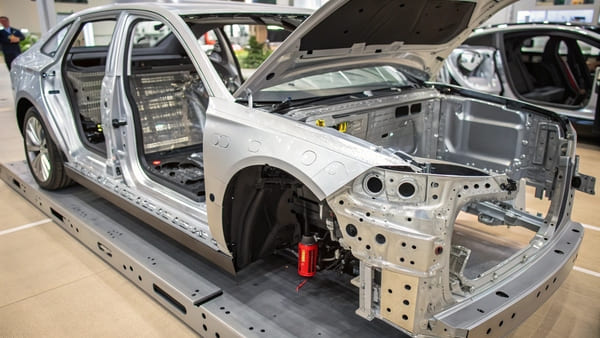
Have you ever tapped on a car's hood and then its bumper? They sound and feel completely different. That’s because car manufacturers are constantly balancing a complex puzzle. They need to make cars that are safe in a crash, light enough for good fuel economy, and affordable for you to buy. This puzzle is solved by using a clever mix of different materials, each with its own job. Understanding these materials helps you appreciate the engineering that goes into your vehicle and what it means for performance, safety, and even repair costs. Let's look at what these materials are and why they are chosen.
What Materials Are Car Exteriors Usually Made Of?
Wondering why some car parts dent easily while others just bounce back? The mix of materials can seem random, but there's a clear strategy behind it all.
Car exteriors are a blend of materials chosen for specific jobs. The main ones are various grades of steel for strength, aluminum for weight reduction, and plastics like ABS or polycarbonate for bumpers and trim. High-end cars may also use carbon fiber for performance2.
The choice of material for each car part is a deliberate engineering decision. It’s a trade-off between strength, weight, cost, and how easily the material can be shaped. The core frame, or safety cage, needs to be incredibly strong to protect you. Body panels need to be light but durable. Bumpers need to absorb impacts. Below is a breakdown of the most common materials and their roles.
A Closer Look at Common Materials
| Material | Key Properties | Common Uses |
|---|---|---|
| Steel | High strength, low cost, easy to repair | Main body structure, chassis, doors, roof |
| Aluminum | Lightweight, corrosion-resistant | Hoods, trunks, door panels, entire bodies |
| Plastics | Flexible, lightweight, easily molded | Bumpers, grilles, mirror housings, spoilers |
| Carbon Fiber | Extremely strong, very lightweight | High-performance car bodies, spoilers, roofs |
Making these parts, especially plastic ones, is harder than it looks. In my business, we manufacture automotive exterior components, and the precision required for plastic parts is incredibly high. Standard injection molding machines often can't meet the tight tolerances. The process has several steps, and the cooling stage is the most difficult to get right. I remember my first time producing a batch of plastic exterior trim for a client from Pakistan. We were still learning, and the parts "shrank" more than expected after cooling. I was worried, but the client ended up loving the slightly altered look. It was a lucky break, but it taught me a valuable lesson about controlling every step of the manufacturing process. We learned that the best machines for this job are often found in specific industrial zones in China, like the Fujian coast or around Shanghai, because they have the necessary precision that others lack.
Why Are Steel Materials Used in Car Exteriors?
With all the talk about lightweight materials, you might think steel is outdated. Isn't it just heavy and prone to rust? But it remains the backbone of the auto industry.
Steel is the most common material for car bodies because it offers the best combination of high strength, low cost, and proven manufacturability. It is essential for creating the vehicle's safety cage, which protects passengers during an accident3. It's the foundation of affordable, safe cars.
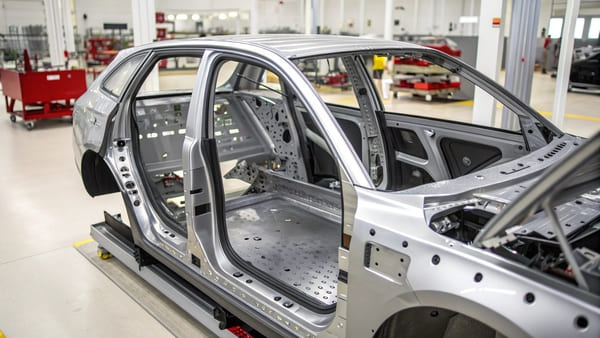
Steel's dominance in the auto industry is no accident. For decades, it has been the go-to material for automakers, and for good reason. While newer materials like aluminum and carbon fiber are gaining ground, steel has evolved too. Modern cars don't just use one type of steel; they use a variety of advanced steels strategically placed throughout the vehicle4. This approach allows engineers to build cars that are safer and more efficient than ever before, without making them unaffordable for the average person. The key benefits of steel come down to three main areas: safety, cost, and repairability.
The Pillars of Steel's Strength
Unmatched Safety and Strength
The number one priority in car design is safety. Steel is exceptionally strong and ductile, meaning it can absorb a huge amount of energy in a crash as it bends and deforms. The passenger compartment of a modern car is a "safety cage" made from various grades of High-Strength Steel (HSS) and Ultra-High-Strength Steel (UHSS). These materials are designed to resist intrusion and keep the space around the passengers intact during a collision. Softer steels are used in the front and rear "crumple zones," which are designed to collapse in a controlled way to absorb the impact forces before they reach the cabin.
Cost-Effectiveness for Mass Production
Another major advantage of steel is its cost. It is significantly cheaper to produce than aluminum or carbon fiber. This low material cost, combined with well-established and efficient manufacturing processes like stamping and welding, helps keep the final price of the vehicle down. Without affordable steel, cars would be much more expensive, limiting access for millions of people. As a manufacturer, we know that material cost is a huge factor for our clients, and steel provides a reliable, cost-effective solution for large-scale production.
Why Is Aluminum Used for Modern Car Exteriors?
You see more and more car brands advertising their "aluminum bodies." Why is this metal becoming so popular when steel has worked so well for so long?
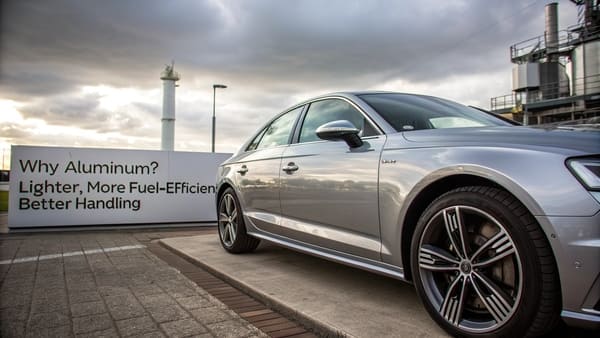
Aluminum is used in modern cars primarily to reduce weight. A lighter car is more fuel-efficient, handles better, and accelerates faster. While not as cheap as steel, its excellent strength-to-weight ratio and natural corrosion resistance make it a great choice for improving performance.
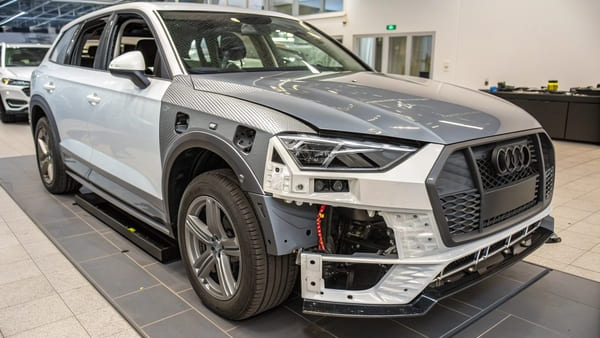
The push for better fuel economy and lower emissions is a driving force in the automotive world. One of the most effective ways to make a car more efficient is to make it lighter. This is where aluminum shines. For every 10% reduction in vehicle weight, fuel economy can improve by 6-8%5. As a result, many manufacturers are replacing steel panels with aluminum ones. You'll often find it used for large, flat parts like the hood, trunk lid, and doors. Some high-end and electric vehicles, like many from Audi and Tesla, even use an all-aluminum body and chassis to maximize range and performance.
The Advantages of Going Lighter
Performance and Efficiency Gains
A lighter car doesn't just save gas. It also improves overall vehicle dynamics. With less mass to move, the car can accelerate more quickly and stop in a shorter distance. The handling also feels more agile and responsive, as the suspension has less weight to manage. In electric vehicles, reducing weight is critical because it directly translates to longer driving range on a single charge6. This is why you see aluminum used so extensively in the EV market. It helps offset the heavy weight of the battery pack.
Design and Durability
Aluminum is also highly resistant to rust and corrosion7, which can improve the long-term durability and appearance of a vehicle. Additionally, it can be extruded and formed into complex shapes, giving designers more freedom to create aerodynamic and visually appealing car bodies. However, working with aluminum presents its own manufacturing challenges. It's more expensive than steel, and the processes for welding and repairing it are more specialized and costly. As a parts supplier, we have to invest in different equipment and training to handle aluminum projects, but the performance benefits it offers make it an essential material for the future of the automotive industry.
Conclusion
Car exteriors are a sophisticated mix of steel, aluminum, and plastics. Each material is chosen to balance safety, weight, cost, and performance, creating the reliable and efficient vehicles we drive today.
"Steel", https://en.wikipedia.org/wiki/Steel. A reputable source explains that steel is widely used in car structures due to its high strength and cost-effectiveness, supporting the claim that steel is chosen for these properties. Evidence role: expert_consensus; source type: encyclopedia. Supports: Steel is used for the main structure because it's strong and cheap.. Scope note: The source may discuss general trends rather than every specific car model. ↩
"Applications of Carbon Fiber in Marine, Auto & More", https://www.iyrs.edu/resources/applicationsofcarbonfibercomposites. A neutral source confirms that carbon fiber is used in high-performance and luxury vehicles for its strength and lightweight properties, supporting the claim about its application in high-end cars. Evidence role: case_reference; source type: encyclopedia. Supports: High-end cars may also use carbon fiber for performance.. Scope note: The use of carbon fiber is limited to certain models and not widespread across all high-end cars. ↩
"why don't car companies use roll cage style bars for safety?", https://www.reddit.com/r/explainlikeimfive/comments/1tbn9gh/eli5_why_dont_car_companies_use_roll_cage_style/. A reputable source explains that steel is critical for constructing the safety cage in vehicles, which is designed to protect occupants in the event of a crash, supporting the claim about its essential safety function. Evidence role: mechanism; source type: education. Supports: It is essential for creating the vehicle's safety cage, which protects passengers during an accident.. Scope note: The source may focus on modern vehicle design and not all historical vehicles. ↩
"Advanced High-Strength Steel—Basics and Applications in ...", https://info.ornl.gov/sites/publications/Files/Pub158668.pdf. A neutral source describes how modern automotive engineering employs multiple grades of advanced steel in different parts of the vehicle for optimized safety and performance, supporting the claim about strategic material placement. Evidence role: mechanism; source type: research. Supports: Modern cars don't just use one type of steel; they use a variety of advanced steels strategically placed throughout the vehicle.. Scope note: The source may focus on mainstream manufacturers and not all vehicles. ↩
"Gas-Saving Tips", https://afdc.energy.gov/files/u/publication/gas-saving_tips.pdf?fbb3c63ad5. A neutral source reports that reducing vehicle weight by 10% can lead to a 6-8% improvement in fuel economy, supporting the claim about the relationship between weight and efficiency. Evidence role: statistic; source type: government. Supports: For every 10% reduction in vehicle weight, fuel economy can improve by 6-8%.. Scope note: The percentage improvement may vary depending on vehicle type and driving conditions. ↩
"Lightweight Materials for Cars and Trucks", https://www.energy.gov/cmei/vehicles/lightweight-materials-cars-and-trucks. A neutral source explains that reducing the weight of electric vehicles increases their driving range per charge, supporting the claim about the importance of lightweight materials in EVs. Evidence role: mechanism; source type: research. Supports: In electric vehicles, reducing weight is critical because it directly translates to longer driving range on a single charge.. Scope note: The source may discuss general trends and not specific models or battery technologies. ↩
"Blog Will Aluminum Rust or Corrode?", https://www.metaltek.com/blog/will-aluminum-rust-or-corrode/. A reputable source confirms that aluminum exhibits high resistance to rust and corrosion, supporting the claim about its durability advantages in automotive applications. Evidence role: mechanism; source type: encyclopedia. Supports: Aluminum is also highly resistant to rust and corrosion.. Scope note: The source may discuss general material properties rather than specific automotive cases. ↩