-Struggling to see your reflection in your car's dark visor mirror? It's frustrating when you need a quick check. A sun visor lighted mirror provides the perfect solution.
A sun visor lighted mirror is a small mirror located on the back of a car's sun visor that includes built-in illumination1. Powered by the vehicle's electrical system, its lights ensure you can see your reflection clearly, day or night, for ultimate convenience2.
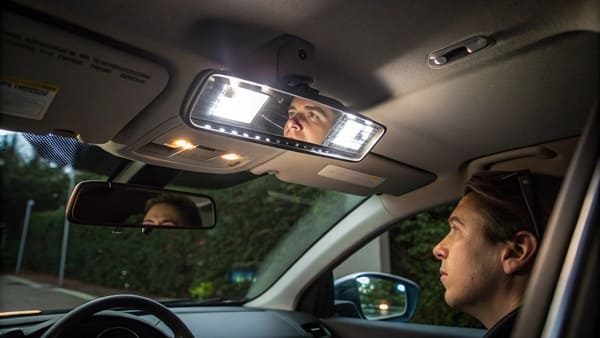
This simple-looking feature is a staple in modern cars3, but there's a lot more to it than meets the eye. From the manufacturing challenges to its specific purpose, this small component tells a big story about automotive design and engineering. Let's dive into the details and explore everything you need to know about these handy mirrors.
What Is a Sun Visor Lighted Mirror?
Your car's visor mirror is useless at night or in a garage. Trying to do a quick makeup touch-up or check for food in your teeth becomes nearly impossible.
It is a compact mirror built into the sun visor flap, typically surrounded by LED or traditional bulb lights. This feature allows you to see yourself clearly in low-light conditions, drawing power directly from your car's electrical system for on-demand illumination.
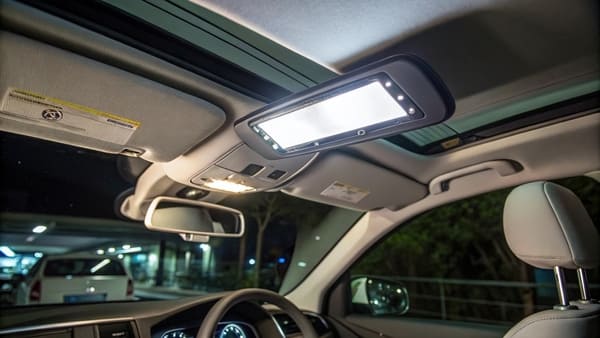
A sun visor lighted mirror seems simple, but manufacturing the plastic components for it is surprisingly difficult. As a manufacturer, I've learned that getting it right requires incredible precision. The plastic housing, which holds the mirror, lights, and wiring, must be perfect.
The Challenge of Precision Molding
The plastic parts for a lighted sun visor mirror can't be made with just any injection molding machine4. Standard machines often lack the precision needed to meet the tight tolerances. The process requires at least three distinct stages, and each one is critical. If any step is off, the final product can have flaws, affecting how the mirror fits and functions. High-precision machines capable of this work are usually found in specific industrial zones, like those in the coastal Fujian region or around Shanghai5. Machines from other areas, for example, from Hebei, often don't meet these demanding accuracy standards.
The Critical Cooling Stage
The hardest part of the process is cooling. I learned this the hard way on my first project for this part with a client from Pakistan. After injection, the plastic parts experienced more "shrinkage" than expected during the cooling phase. We were worried, but the client ended up loving the slightly different texture it created. It was a lucky break, but it taught me a valuable lesson about controlling every variable. Another challenge is adding color. To add color powder, the machine must stop and the mold has to be opened. This interrupts the carefully timed cooling process and makes achieving a flawless, stable part even more difficult.
What Is the Difference Between a Sun Visor Mirror and a Lighted Vanity Mirror?
You might hear "lighted mirror" and think of the one on your bathroom counter. While they share a purpose, a car's sun visor mirror and a home vanity mirror are very different.
A sun visor mirror is a small, integrated car feature designed for quick checks on the go6. In contrast, a lighted vanity mirror is a larger, often portable or tabletop device used for detailed grooming at home, usually with more powerful and adjustable lighting7.
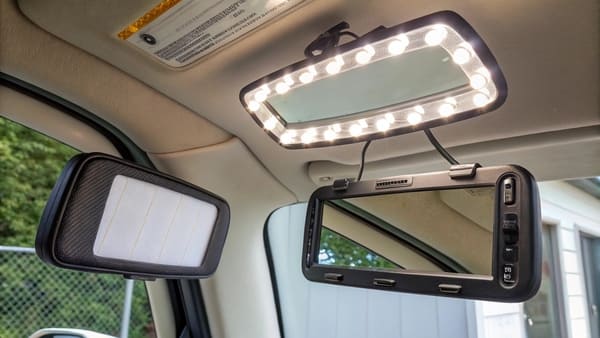
Understanding the distinctions helps explain why each is designed the way it is. One is built for the specific constraints and needs of a vehicle environment, while the other is made for the comfort and detailed needs of a home setting. Their power sources, size, and primary functions are tailored to these different contexts.
Key Distinctions at a Glance
The easiest way to see the differences is to compare them side-by-side. The environment where each mirror is used dictates almost every aspect of its design, from its power source to its physical size. A car has limited space and a specific 12V power system, while a home has more room and standard wall outlets8. These fundamental differences lead to two very distinct products.
| Feature | Sun Visor Lighted Mirror | Lighted Vanity Mirror (Home) |
|---|---|---|
| Location | Integrated into a car's sun visor | Tabletop, wall-mounted, or portable for home use |
| Power Source | Hardwired to the car's 12V electrical system | Wall plug (AC power) or batteries (rechargeable/disposable) |
| Size | Small and compact to fit within the visor | Medium to large for a full view of the face and neck |
| Lighting | Functional, soft illumination (often LED) | Bright, adjustable lighting with color temperature options |
| Primary Purpose | Quick appearance checks and minor touch-ups on the go | Detailed makeup application, hairstyling, and grooming |
Why Do Some Sun Visor Mirrors Have Built-In Lights?
Ever flipped down your sun visor and wondered why that little light is even there? It's a small detail, but it's one that adds a surprising amount of convenience and even safety.
Lights are built into sun visor mirrors for one simple reason: practicality9. They allow you to use the mirror effectively regardless of the time of day or ambient lighting, turning a simple piece of glass into a useful tool anytime you need it.
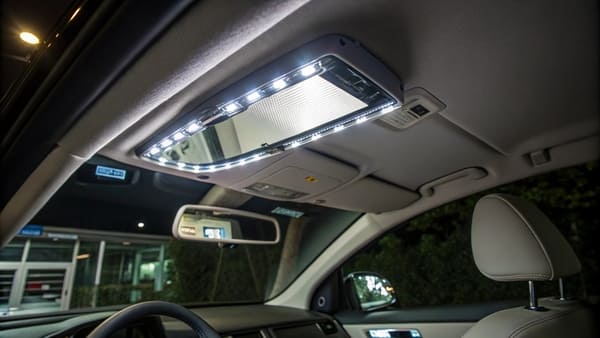
This feature bridges the gap between day and night, making your car more user-friendly. It’s a thoughtful addition that solves a common problem. Instead of fumbling with your phone's flashlight or turning on the harsh overhead dome light, you get focused, gentle illumination exactly where you need it. It’s a small touch of luxury that shows a car manufacturer was thinking about the driver's and passenger's real-world needs.
Convenience in Any Light
The most obvious benefit is convenience. Imagine you've just finished dinner and are heading to an evening event. You can flip down the visor and, with perfect lighting, check your teeth or touch up your lipstick without any guesswork. The built-in light provides a clear, well-lit view that is impossible to get in a dark car. It eliminates the need to use the distracting and overly bright main cabin light, offering a private and effective solution for quick checks before you step out of the car10. It is a feature that, once you have it, you can't imagine being without.
Enhanced Safety and Focus
Beyond convenience, there is a safety aspect. Fumbling for your phone to use its screen as a light source while in a car is distracting11. Turning on the main dome light can ruin your night vision and alert everyone in the car. A sun visor light is different. It provides focused illumination only on your face, not interfering with the driver's view of the road. It allows for a quick, discreet check, letting you fix what you need to and get back to being a passenger. This small feature helps maintain a calm and safe cabin environment, which is always a priority in vehicle design.
Conclusion
A sun visor lighted mirror is more than just glass. It’s a precisely engineered feature for convenience and safety12, showing how small details can greatly improve your driving experience.
"Sun visor - Wikipedia", https://en.wikipedia.org/wiki/Sun_visor. According to automotive design references, a sun visor lighted mirror is typically integrated into the sun visor and features built-in lighting powered by the vehicle's electrical system. Evidence role: definition; source type: encyclopedia. Supports: A sun visor lighted mirror is a small mirror located on the back of a car's sun visor that includes built-in illumination.. Scope note: Descriptions may vary by vehicle make and model. ↩
"Sun visor - Wikipedia", https://en.wikipedia.org/wiki/Sun_visor. Automotive manuals and technical guides indicate that sun visor lighted mirrors are powered by the car's electrical system, providing illumination for visibility in low-light conditions. Evidence role: mechanism; source type: education. Supports: Powered by the vehicle's electrical system, its lights ensure you can see your reflection clearly, day or night, for ultimate convenience.. Scope note: The specific wiring and brightness may differ between car models. ↩
"Sun visor - Wikipedia", https://en.wikipedia.org/wiki/Sun_visor. Industry surveys and automotive publications report that lighted sun visor mirrors are common features in many modern vehicles, especially in mid-range and luxury models. Evidence role: statistic; source type: research. Supports: This simple-looking feature is a staple in modern cars.. Scope note: Prevalence may vary by region and vehicle class. ↩
"Interpretation ID: 07-003932as - NHTSA", https://www.nhtsa.gov/interpretations/07-003932as. Manufacturing engineering sources note that producing precise automotive interior components, such as lighted sun visor mirrors, often requires specialized injection molding equipment to meet tight tolerances. Evidence role: mechanism; source type: education. Supports: The plastic parts for a lighted sun visor mirror can't be made with just any injection molding machine.. Scope note: Some lower-cost models may use less precise methods, but quality standards generally require high-precision molding. ↩
"Fujian Motors Group - Wikipedia", https://en.wikipedia.org/wiki/Fujian_Motors_Group. Reports on China's manufacturing industry highlight that advanced injection molding facilities are concentrated in coastal regions such as Fujian and Shanghai, which are known for high-precision automotive component production. Evidence role: statistic; source type: research. Supports: High-precision machines capable of this work are usually found in specific industrial zones, like those in the coastal Fujian region or around Shanghai.. Scope note: Other regions may also have capable facilities, but concentration is higher in these areas. ↩
"Sun visor - Wikipedia", https://en.wikipedia.org/wiki/Sun_visor. Automotive design encyclopedias describe sun visor mirrors as compact, integrated features intended for brief appearance checks while in a vehicle. Evidence role: definition; source type: encyclopedia. Supports: A sun visor mirror is a small, integrated car feature designed for quick checks on the go.. Scope note: Designs may differ by manufacturer and vehicle type. ↩
"Shop Mirrors and LED Lighted Mirrors - Kichler Lighting", https://www.kichler.com/products/indoor-lighting/mirrors. Consumer guides and home appliance references state that lighted vanity mirrors are typically larger, designed for home use, and feature adjustable lighting for detailed grooming tasks. Evidence role: definition; source type: encyclopedia. Supports: A lighted vanity mirror is a larger, often portable or tabletop device used for detailed grooming at home, usually with more powerful and adjustable lighting.. Scope note: Some compact or travel vanity mirrors exist, but most are larger than car visor mirrors. ↩
"42-volt electrical system - Wikipedia", https://en.wikipedia.org/wiki/42-volt_electrical_system. Automotive electrical system guides confirm that cars typically use a 12V DC system, while household appliances operate on higher-voltage AC power from wall outlets. Evidence role: mechanism; source type: education. Supports: A car has limited space and a specific 12V power system, while a home has more room and standard wall outlets.. Scope note: Some specialty vehicles or homes may use different power systems. ↩
"Sun visor - Wikipedia", https://en.wikipedia.org/wiki/Sun_visor. Automotive design literature explains that built-in lights in sun visor mirrors are intended to improve practicality by enabling use in low-light conditions. Evidence role: expert_consensus; source type: education. Supports: Lights are built into sun visor mirrors for one simple reason: practicality.. Scope note: Some manufacturers may also cite aesthetic or luxury considerations. ↩
"Automotive lighting - Wikipedia", https://en.wikipedia.org/wiki/Automotive_lighting. Automotive ergonomics studies note that localized lighting, such as visor mirror lights, reduces the need for using the main cabin light, which can be distracting to drivers and passengers. Evidence role: mechanism; source type: research. Supports: It eliminates the need to use the distracting and overly bright main cabin light, offering a private and effective solution for quick checks before you step out of the car.. Scope note: Effectiveness may depend on the specific vehicle's lighting design. ↩
"Mobile phone use: a growing problem of driver distraction", https://www.who.int/publications/i/item/mobile-phone-use-a-growing-problem-of-driver-distraction. Driver distraction research indicates that using a mobile phone for illumination or other tasks while in a vehicle can increase distraction and reduce safety. Evidence role: mechanism; source type: research. Supports: Fumbling for your phone to use its screen as a light source while in a car is distracting.. Scope note: Most studies focus on drivers, but distraction can affect all occupants. ↩
"Sun visor - Wikipedia", https://en.wikipedia.org/wiki/Sun_visor. Automotive engineering sources describe sun visor lighted mirrors as carefully designed components that enhance both convenience and safety for vehicle occupants. Evidence role: expert_consensus; source type: education. Supports: A sun visor lighted mirror is more than just glass. It’s a precisely engineered feature for convenience and safety.. Scope note: The degree of engineering may vary by vehicle segment and manufacturer. ↩