-Ignoring your brake lights can lead to dangerous rear-end collisions.1 Understanding this simple component is the first step to ensuring you and others stay safe on the road.
A brake light is a red light on the back of your vehicle that turns on when you press the brake pedal.2 Its main job is to warn drivers behind you that you are slowing down or stopping, which is critical for preventing rear-end collisions and ensuring overall road safety.3
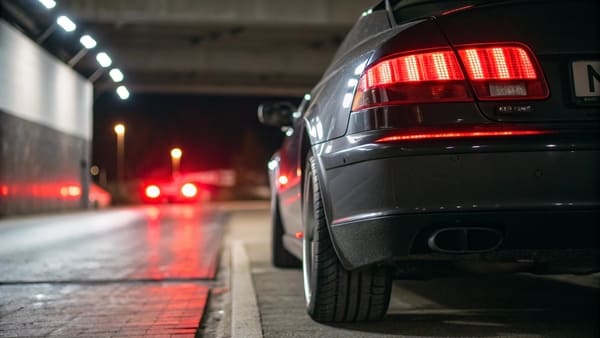
It's a simple concept, but the technology and manufacturing behind it are surprisingly complex. To really appreciate why this part is so crucial, let's break down exactly what it does, where it is, and the chain reaction you trigger every time you brake.
What Does a Brake Light Do on a Car?
You see brake lights constantly, but their function seems obvious. However, their role in road safety is much deeper than just a simple red light turning on and off.
A brake light's primary function is to signal to other drivers that your vehicle is decelerating or stopping. This visual cue gives them time to react, reducing the risk of accidents. It's a universal language on the road, instantly understood by everyone, ensuring traffic flows more safely.
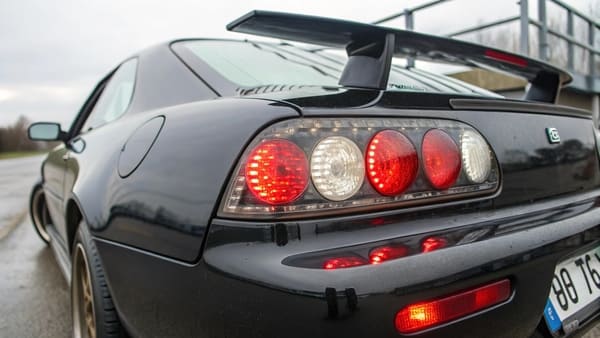
The brake light is your car's most important communication tool for those behind you. Its job is to instantly translate your decision to slow down into a clear, universal signal. This immediate visual warning is vital because it drastically cuts down the reaction time of the driver following you. Think about it: without that red light, they would only realize you're braking when the distance between your cars starts shrinking rapidly, which is often too late to avoid a collision. Modern systems have even improved on this. Some cars now use adaptive brake lights that flash rapidly during hard, emergency braking.4 This added layer of communication signals an urgent situation, giving following drivers an even better chance to react safely and prevent a serious accident. It's a simple part with a life-saving mission.
Where Is the Brake Light Located?
You know brake lights are on the back of a car. But their specific placement isn't random; it's a carefully regulated design for maximum visibility and safety for everyone.
Brake lights are located on the rear of the vehicle. Typically, there are two main brake lights integrated into the taillight assemblies on each side. Additionally, a third, high-mounted brake light is required on most vehicles, positioned higher up, usually inside the rear window.5
The placement of brake lights is standardized for safety and visibility.6 Every car has at least three, and each has a specific purpose. The two main lights are on the left and right sides of the car's rear, usually within the main taillight housing. These help other drivers gauge the width of your vehicle. The most critical addition, however, is the third brake light. It's officially called the Center High Mount Stop Lamp (CHMSL) and is positioned higher than the other two, either at the top of the rear window or on the trunk lid.7 This high position ensures that drivers several cars back, or those in taller vehicles like trucks, can see you're braking even if their view of your main taillights is blocked.
| Light Position | Common Name | Primary Function |
|---|---|---|
| Rear Left/Right | Main Brake Lights | Indicates braking and vehicle width. |
| Rear Center (High) | Third Brake Light / CHMSL | Provides visibility over other vehicles. |
What Happens When You Press the Brake Pedal?
Pressing the brake pedal feels simple. But behind that one motion is a rapid sequence of electrical and mechanical actions that must work perfectly every single time to ensure safety.
When you press the brake pedal, it activates a small electronic switch. This switch completes an electrical circuit, sending power from the car's battery directly to the brake light bulbs or LEDs. This causes them to illuminate instantly, signaling your intention to slow down.8
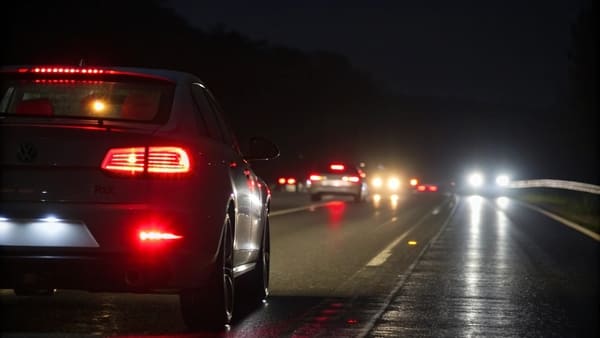
The process starts the moment your foot touches the brake pedal. This movement activates a component called the brake light switch, located right above the pedal arm. This switch acts like a gatekeeper for an electrical circuit. When you press the pedal, the switch closes the circuit, allowing electricity to flow from your car's battery to the brake lights, making them light up. It's a simple system, but manufacturing the parts for it is surprisingly complex. From my experience in OEM manufacturing, producing the plastic housing for a brake light is a high-precision job. The injection molding process requires at least three stages, with cooling being the most difficult.9 We once worked with a client from Pakistan on a brake light assembly. Our first batch had a slight "shrinkage" issue after cooling. Luckily, the client actually preferred the slightly altered look! We've since perfected the process, but it shows how much engineering goes into even the plastic parts you see.
Conclusion
Your brake lights are simple but essential safety devices. Regularly checking that they work correctly is one of the easiest ways to protect yourself and others on the road.10
"[PDF] Effectiveness of LED Stop Lamps for Reducing Rear-End Crashes", https://crashstats.nhtsa.dot.gov/Api/Public/ViewPublication/811712. National Highway Traffic Safety Administration (NHTSA) reports indicate that malfunctioning or non-operational brake lights are a contributing factor in rear-end collisions, though precise statistics may vary by region and reporting method. Evidence role: statistic; source type: government. Supports: Ignoring your brake lights can lead to dangerous rear-end collisions.. Scope note: Exact percentages may differ depending on the dataset and reporting practices. ↩
"Brake light - Wikipedia", https://en.wikipedia.org/?title=Brake_light&redirect=no. According to automotive encyclopedias, a brake light is a red lamp at the rear of a vehicle that illuminates when the brake pedal is pressed, signaling deceleration to following drivers. Evidence role: definition; source type: encyclopedia. Supports: A brake light is a red light on the back of your vehicle that turns on when you press the brake pedal.. ↩
"[PDF] Evaluation of Enhanced Brake Lights Using Surrogate Safety Metrics", https://www.nhtsa.gov/sites/nhtsa.gov/files/811127.pdf. Traffic safety authorities such as the NHTSA state that brake lights are designed to alert following drivers when a vehicle is slowing or stopping, thereby reducing the risk of rear-end collisions. Evidence role: mechanism; source type: government. Supports: Its main job is to warn drivers behind you that you are slowing down or stopping, which is critical for preventing rear-end collisions and ensuring overall road safety.. Scope note: While the general function is widely accepted, the degree of risk reduction may depend on other factors. ↩
"A Simulation-Based Study of the Effect of Brake Light Flashing ...", https://pmc.ncbi.nlm.nih.gov/articles/PMC9495388/. Automotive engineering literature documents that some modern vehicles are equipped with adaptive brake light systems that flash rapidly during emergency braking to warn following drivers. Evidence role: mechanism; source type: paper. Supports: Some cars now use adaptive brake lights that flash rapidly during hard, emergency braking.. Scope note: Not all vehicles are equipped with this feature; adoption varies by manufacturer and region. ↩
"Federal Motor Vehicle Safety Standards; Lamps, Reflective Devices ...", https://www.federalregister.gov/documents/2011/08/08/2011-19595/federal-motor-vehicle-safety-standards-lamps-reflective-devices-and-associated-equipment. Federal Motor Vehicle Safety Standards (FMVSS) require that passenger vehicles have two rear brake lights and a third, high-mounted brake light (CHMSL) for improved visibility. Evidence role: definition; source type: government. Supports: Brake lights are located on the rear of the vehicle. Typically, there are two main brake lights integrated into the taillight assemblies on each side. Additionally, a third, high-mounted brake light is required on most vehicles, positioned higher up, usually inside the rear window.. Scope note: Requirements may differ for older vehicles or in other countries. ↩
"Lighting - Texas Department of Public Safety", https://www.dps.texas.gov/section/vehicle-inspection/lighting. Vehicle lighting standards, such as those set by the FMVSS in the United States, specify the placement and visibility requirements for brake lights to ensure safety. Evidence role: definition; source type: government. Supports: The placement of brake lights is standardized for safety and visibility.. Scope note: Standards may vary internationally. ↩
"Third brake light - Wikipedia", https://en.wikipedia.org/?title=Third_brake_light&redirect=no. Automotive safety literature and regulatory documents refer to the third brake light as the Center High Mount Stop Lamp (CHMSL), typically mounted above the main brake lights for enhanced visibility. Evidence role: definition; source type: government. Supports: It's officially called the Center High Mount Stop Lamp (CHMSL) and is positioned higher than the other two, either at the top of the rear window or on the trunk lid.. Scope note: Placement may vary slightly depending on vehicle design. ↩
"Investigating the Cognitive Response of Brake Lights in Initiating ...", https://arxiv.org/html/2508.03274v1. Automotive engineering textbooks explain that pressing the brake pedal activates a switch, completing an electrical circuit that powers the brake lights. Evidence role: mechanism; source type: education. Supports: When you press the brake pedal, it activates a small electronic switch. This switch completes an electrical circuit, sending power from the car's battery directly to the brake light bulbs or LEDs. This causes them to illuminate instantly, signaling your intention to slow down.. Scope note: Some modern vehicles may use electronic control modules instead of a simple switch. ↩
"Cooling Rate in Injection Molding: A Comprehensive Guide", https://www.hansenplastics.com/understanding-the-cooling-rate-process-during-injection-molding/. Manufacturing engineering literature describes injection molding as a multi-stage process, typically including injection, cooling, and ejection, with cooling often cited as the most challenging stage due to its impact on part quality. Evidence role: mechanism; source type: education. Supports: The injection molding process requires at least three stages, with cooling being the most difficult.. Scope note: The number of stages and difficulty may vary depending on the specific part and material. ↩
"Maintaining the Brake Lights on the Vehicle - Lloyd's Automotive", https://lloydsautomotive.net/maintaining-the-brake-lights-on-the-vehicle/. Traffic safety organizations recommend regular inspection of brake lights to ensure they function properly, as faulty brake lights can increase the risk of accidents. Evidence role: expert_consensus; source type: institution. Supports: Regularly checking that they work correctly is one of the easiest ways to protect yourself and others on the road.. Scope note: Recommendations may vary in frequency and detail by organization. ↩