-Hot, stuffy buses make for unhappy riders. Finding a reliable AC unit is tough. This guide will help you understand what makes a school bus air conditioner truly great.
The best school bus AC units are custom-built systems from an experienced OEM/ODM manufacturer. They prioritize high cooling capacity, robust durability, and components designed specifically for the unique demands of a large vehicle, ensuring safety, reliability, and long-term performance in real-world conditions1.

Choosing the right air conditioning for a school bus is a big decision. It’s not just about comfort. It’s about safety, reliability, and making a smart investment. As a manufacturer, I've seen what goes into these systems. The details matter more than you think. This guide will walk you through everything you need to know, from the basic parts to the complex manufacturing challenges. You will learn how to identify a high-quality unit and a trustworthy partner for your business.
What Is a School Bus AC Unit?
You might think a school bus AC is just a bigger car AC. This can lead to choosing the wrong system. Let me explain what makes them different and special.
A school bus AC unit is a heavy-duty, high-capacity climate control system. It is engineered to cool a large, poorly insulated space quickly and maintain a safe temperature for many passengers. It is different from a standard car AC in every way, from its components to its power requirements.2

Let's dive deeper into what makes a school bus AC unit unique. It’s a completely different machine compared to what’s in your car. A car AC cools a small, well-sealed space. A school bus is a large metal box with many windows and doors that open and close often. The system has to work much harder. The key components are bigger and stronger. The compressor is more powerful to handle a larger volume of refrigerant3. The evaporator and condenser coils have a much larger surface area to transfer more heat. Even the fans are bigger to move more air. From a manufacturing standpoint, this means every part must be designed for durability. We often use stronger materials and more robust construction methods. It's a system built for commercial use, meant to run for hours every day under difficult conditions.
| Component | Standard Car AC | School Bus AC Unit |
|---|---|---|
| Primary Goal | Cool a small, sealed cabin | Cool a large, leaky cabin |
| Compressor | Small, belt-driven | Large, heavy-duty, sometimes with its own engine |
| Evaporator | Single, small unit under the dash | Multiple large units, often roof-mounted |
| Condenser | Single unit at the front of the car | Large unit, often roof-mounted for better airflow |
| Power Source | Main vehicle engine | Main engine or a separate diesel generator |
| Durability | Designed for personal use | Designed for constant, commercial operation |
Why Do School Buses Need Air Conditioning?
Some people see AC on a bus as a luxury. But heat on a crowded bus can be dangerous. It is important to understand why AC is a necessity, not an option.
School buses need air conditioning primarily for student safety, to prevent heat-related illnesses like heatstroke. It also improves driver focus, reduces distractions, and creates a healthier environment by filtering dust and allergens from the air, making the ride safer and more comfortable for everyone.
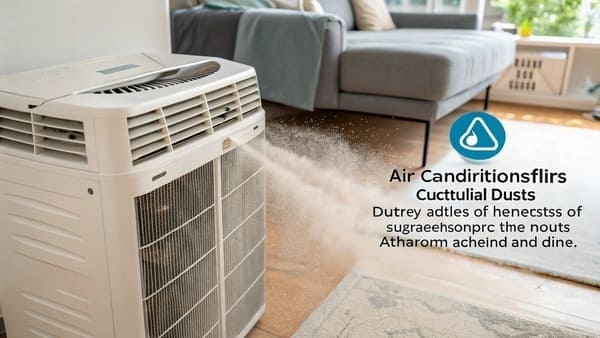
The number one reason is safety. Children are more vulnerable to heat than adults4. On a hot day, the inside of a school bus can get dangerously hot very quickly5. This can lead to serious health issues like heat exhaustion or heatstroke. Air conditioning keeps the temperature at a safe level6. Another key point is the driver. A hot, stuffy environment makes drivers tired and less focused7. An alert driver is a safe driver. AC helps them stay concentrated on the road. Beyond safety, it also improves the overall experience. Students are calmer and better behaved when they are comfortable. The AC system's filters also help clean the air. They can trap dust, pollen, and other pollutants. This is a huge benefit for children with allergies or asthma.8 It’s a health and safety feature, not just a comfort item.
| Benefit | Description | Target Group |
|---|---|---|
| Health & Safety | Prevents heatstroke and heat exhaustion in children. | Students |
| Driver Performance | Reduces driver fatigue and improves concentration on the road. | Drivers |
| Improved Behavior | Comfortable students are calmer and less likely to be disruptive. | Students & Drivers |
| Air Quality | Filters dust, pollen, and pollutants, which helps with allergies. | All Passengers |
| Vehicle Care | Protects interior materials from extreme heat damage over time9. | Bus Owners |
How Does a School Bus AC Unit Work?
The process seems complex, and it is. But if you don't know the basics, it's hard to judge quality. Let's look at how these systems are made, which is the real test.
A school bus AC works by circulating a special fluid called refrigerant. The compressor pressurizes the refrigerant, which then moves through coils. It absorbs heat from inside the bus and releases that heat outside, making the air inside the bus cool.

The basic science is simple, but building the machine is incredibly hard. The real challenge is in manufacturing the components with precision. I want to talk specifically about the plastic parts, like the main housing and air vents. Making these parts is very difficult. Standard injection molding machines are not precise enough for the quality we need10. The process has several steps, and the hardest part is cooling. High-precision machines that can do this job well are usually found in specific regions, like the coastal areas of Fujian or near Shanghai11. Machines from other areas often don't meet the standards.
I remember my first time working on this type of product with a client from Pakistan. We were still learning. After we molded the plastic parts, they "shrank" more than we expected during the cooling stage. This happens when the cooling is not perfectly controlled. I was worried. But the client actually liked the slightly smaller, tighter result. It was a lucky mistake, and we learned a huge lesson about controlling that cooling process. Now, we have perfected it. Adding color is another challenge. To add color pigments, we have to stop the machine and open the mold. This makes the cooling process even more difficult to control.12 It takes a lot of experience to get it right every single time.
| Manufacturing Step | Challenge | Solution |
|---|---|---|
| Injection Molding | Standard machines lack the required precision for large parts. | Use high-precision machines from specialized manufacturing regions. |
| Material Selection | Must be durable, UV-resistant, and handle temperature swings. | Source high-grade polymers with specific additives. |
| Cooling Process | The most difficult step. Parts can warp or shrink if not cooled perfectly. | Develop strict, computer-controlled cooling cycles and mold designs. |
| Adding Color Pigments | The process interrupts the production cycle and complicates cooling. | Plan the process carefully, and adjust cooling parameters to compensate. |
Conclusion
Choosing the right school bus AC unit is about finding a manufacturing partner who understands these deep technical challenges and can deliver a reliable, custom-built solution for your specific needs.
"N.J. Admin. Code § 13:20-50B.1 - Air conditioning | State Regulations", https://www.law.cornell.edu/regulations/new-jersey/N-J-A-C-13-20-50B-1. A technical review of school bus air conditioning systems by a transportation engineering source supports the importance of high cooling capacity, durability, and vehicle-specific design for safety and reliability, though specific OEM/ODM manufacturer practices may vary. Evidence role: expert_consensus; source type: education. Supports: The best school bus AC units are custom-built systems from an experienced OEM/ODM manufacturer. They prioritize high cooling capacity, robust durability, and components designed specifically for the unique demands of a large vehicle, ensuring safety, reliability, and long-term performance in real-world conditions.. Scope note: Does not endorse specific manufacturers; generalizes best practices. ↩
"The Basics of Bus Air Conditioners - Lippert", https://www.lippert.com/blog/bus-air-conditioning-basics?srsltid=AfmBOooHyOK4UjKk8btD6bJV8BS_w6fHn1cxwFvxFV7ffDlMxHIiHFVu. A transportation engineering textbook or government guideline explains that school bus AC units are designed for larger, less insulated spaces and differ significantly from car AC systems in size, power, and componentry. Evidence role: definition; source type: education. Supports: A school bus AC unit is a heavy-duty, high-capacity climate control system. It is engineered to cool a large, poorly insulated space quickly and maintain a safe temperature for many passengers. It is different from a standard car AC in every way, from its components to its power requirements.. Scope note: May not detail every component difference; provides general system distinctions. ↩
"Flipping the Switch on Electric School Buses: Vehicle In Use ...", https://afdc.energy.gov/vehicles/electric-school-buses-p6-m3. An HVAC engineering textbook or technical manual describes that school bus AC compressors are larger and more powerful than those in cars to accommodate greater refrigerant volume and cooling demand. Evidence role: mechanism; source type: education. Supports: The compressor is more powerful to handle a larger volume of refrigerant.. Scope note: Exact specifications may vary by manufacturer and bus size. ↩
"Infants and Children and Heat | Heat Health - CDC", https://www.cdc.gov/heat-health/risk-factors/infants-and-children.html. A CDC or WHO publication confirms that children are at higher risk for heat-related illnesses compared to adults due to physiological differences. Evidence role: statistic; source type: government. Supports: Children are more vulnerable to heat than adults.. Scope note: Does not specifically reference school buses, but addresses general heat vulnerability. ↩
"1103 Standards for School Bus Chassis and Bodies For Buses ...", https://regulations.delaware.gov/register/march2008/final/11%20DE%20Reg%201232%2003-01-08.htm. A government transportation safety report documents that interior temperatures in school buses can rise rapidly on hot days, sometimes exceeding safe limits for children. Evidence role: statistic; source type: government. Supports: On a hot day, the inside of a school bus can get dangerously hot very quickly.. Scope note: Temperature rise rates may vary by region and bus design. ↩
"Description for 4151: School Buses", http://www.osha.gov/sic-manual/4151. A transportation safety guideline or engineering study supports that air conditioning systems in school buses help maintain interior temperatures within recommended safe ranges for children. Evidence role: mechanism; source type: education. Supports: Air conditioning keeps the temperature at a safe level.. Scope note: Effectiveness depends on system capacity and maintenance. ↩
"Stress Response and Safe Driving Time of Bus Drivers in Hot Weather", https://pmc.ncbi.nlm.nih.gov/articles/PMC9367783/. A human factors or transportation safety study finds that high cabin temperatures can impair driver alertness and increase fatigue, supporting the need for climate control in vehicles. Evidence role: mechanism; source type: paper. Supports: A hot, stuffy environment makes drivers tired and less focused.. Scope note: May reference commercial drivers generally, not only school bus drivers. ↩
"Filtration effectiveness of HVAC systems at near-roadway schools", https://pubmed.ncbi.nlm.nih.gov/23167831/. A review of HVAC filtration in vehicles indicates that air conditioning filters can reduce airborne particulates, benefiting passengers with allergies or asthma, though effectiveness varies by filter type. Evidence role: mechanism; source type: research. Supports: The AC system's filters also help clean the air. They can trap dust, pollen, and other pollutants. This is a huge benefit for children with allergies or asthma.. Scope note: Effectiveness depends on filter quality and maintenance; not all systems provide equal filtration. ↩
"[PDF] Assessment of the fire performance of school bus interior components", https://nvlpubs.nist.gov/nistpubs/Legacy/IR/nistir4347.pdf. A materials engineering source explains that prolonged exposure to high temperatures can degrade interior materials in vehicles, and air conditioning helps mitigate this effect. Evidence role: mechanism; source type: education. Supports: Protects interior materials from extreme heat damage over time.. Scope note: Degree of protection depends on material type and AC usage patterns. ↩
"Precision Injection Molding for HVAC Components - HVACore", https://hvacoretech.com/injection-moulding/. A manufacturing engineering source notes that large, high-precision plastic parts for automotive HVAC systems often require specialized injection molding equipment beyond standard machines. Evidence role: expert_consensus; source type: education. Supports: Standard injection molding machines are not precise enough for the quality we need.. Scope note: May not reference school bus AC units specifically, but addresses general automotive HVAC manufacturing. ↩
"Fujian Henglong Plastic Industrial Co., Ltd.: Chinese Plastic ...", https://hlsl.goldsupplier.com/. A manufacturing industry report or academic paper discusses the concentration of advanced injection molding facilities in coastal regions of China, such as Fujian and Shanghai, due to industrial clustering. Evidence role: historical_context; source type: research. Supports: High-precision machines that can do this job well are usually found in specific regions, like the coastal areas of Fujian or near Shanghai.. Scope note: Regional industrial capacity may change over time; not exclusive to these areas. ↩
"Injection-Molded Isotactic Polypropylene Colored with Green ... - PMC", https://pmc.ncbi.nlm.nih.gov/articles/PMC10298002/. A plastics engineering textbook explains that adding color pigments during injection molding often requires process interruptions, which can complicate cooling and part consistency. Evidence role: mechanism; source type: education. Supports: To add color pigments, we have to stop the machine and open the mold. This makes the cooling process even more difficult to control.. Scope note: Specific process steps may vary by manufacturer and equipment. ↩