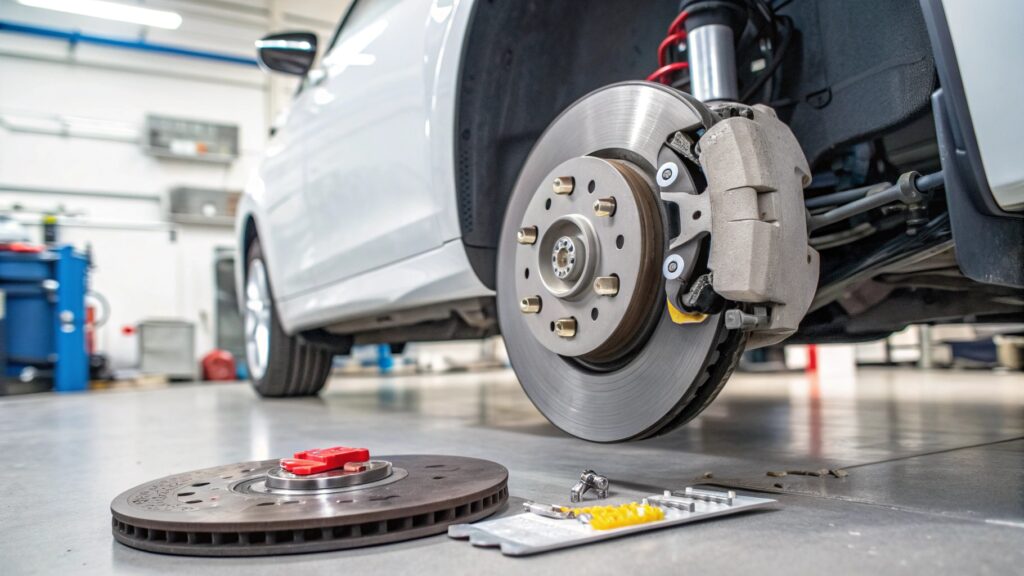
Choosing the right brake parts feels overwhelming. You worry that a wrong choice could risk your safety or waste your money on parts that don't last. Let's clarify this.
The best combination for value and reliability is not about one specific brand. It involves matching high-quality pads, like ceramic or semi-metallic, with durable, coated rotors that are specifically designed for your vehicle1. This pairing ensures maximum safety, quiet operation, and longevity, giving you the best return.
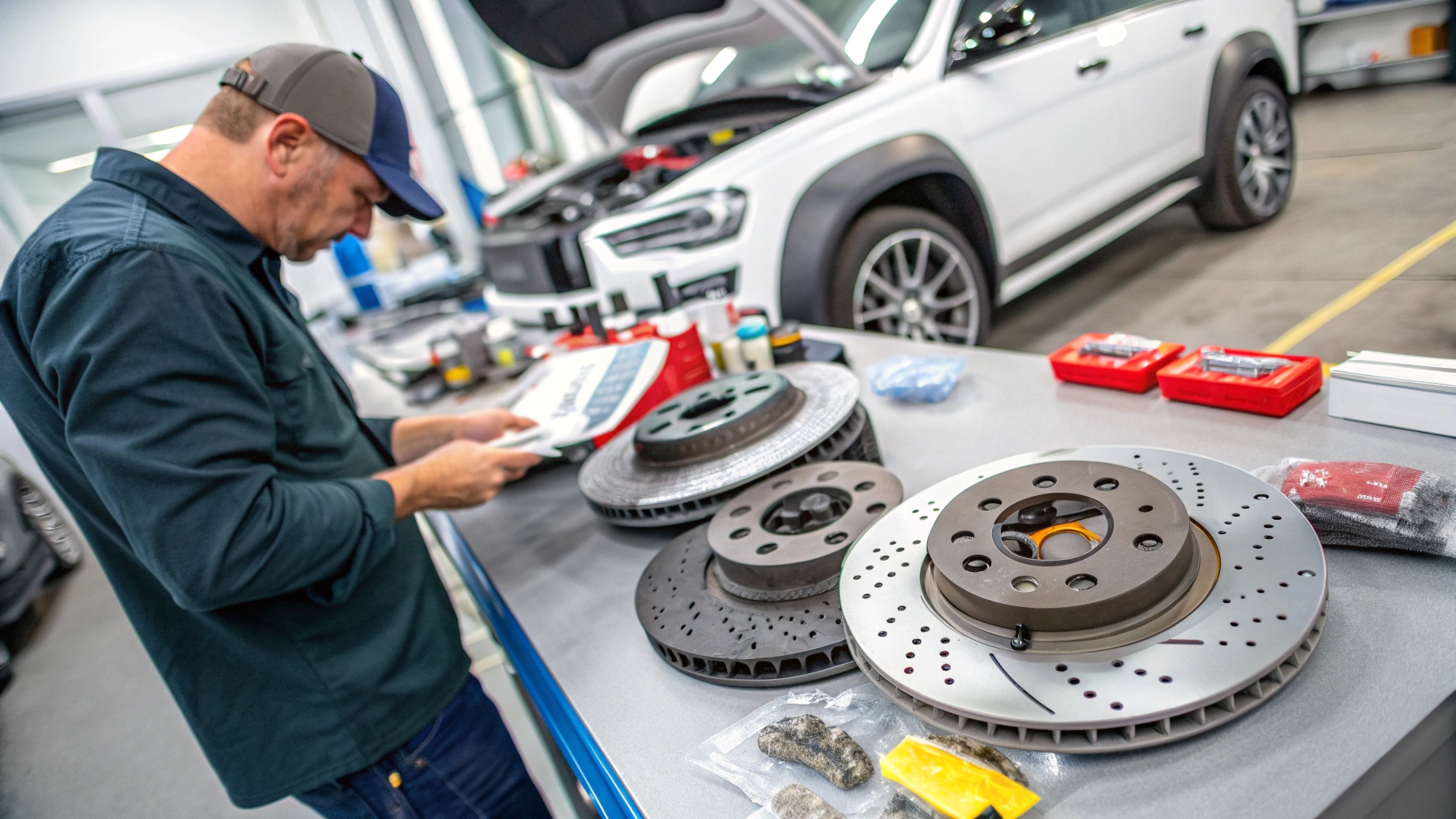
Finding the "best" brake setup isn't about chasing the most expensive option on the shelf. It's about understanding what your car needs for the way you drive. The market is filled with choices, from basic replacements to high-performance racing gear. For most of us, the goal is simple: safe, quiet, and reliable braking that doesn't break the bank. The key is to look at the system as a whole—the pads and rotors working together. Let's break down what makes a combination truly great for everyday use and long-term value.
What Makes a Brake Pad and Rotor Combination “Best” for Everyday Driving?
You see dozens of brake options online, all claiming to be the best. Choosing the wrong ones can lead to annoying squeals, excessive dust, and poor stopping power.
For everyday driving, the best combination delivers quiet operation, low brake dust, and consistent performance. A quality ceramic brake pad paired with a smooth, coated rotor is often the ideal balance2. This setup provides comfort, cleanliness, and excellent durability for daily commutes and family trips.
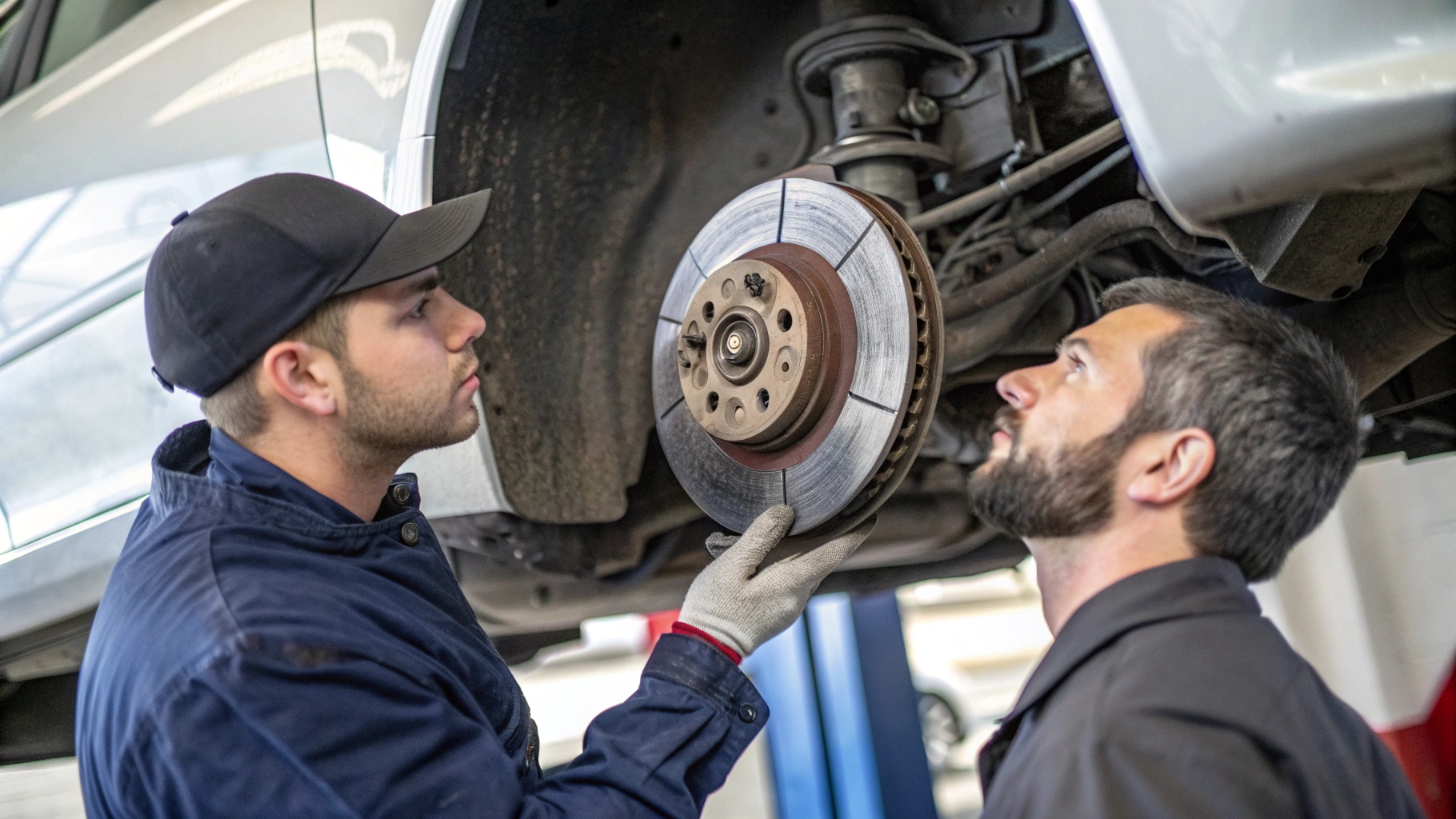
When we talk about "everyday driving," we mean the typical stop-and-go of city traffic, highway cruising, and running errands. For this type of use, you don't need the extreme stopping power of a race car. Instead, you need reliability and comfort. The goal is a brake system that you don't have to think about. It just works. A great combination for daily drivers focuses on three things: noise, dust, and consistent feel. Ceramic pads are excellent because they are very quiet and produce a light-colored dust that is less visible on your wheels3. When you pair them with a standard "blank" or smooth-faced rotor that has a protective coating, you get a system that performs well and resists rust4. This simple, effective pairing is the workhorse of the automotive world, delivering exactly what most drivers need without the drawbacks of more aggressive setups.
| Brake Pad Material | Pros | Cons | Best For |
|---|---|---|---|
| Ceramic | Quiet, low dust, long life, stable at high temps | Less initial "bite" than semi-metallic, more expensive | Everyday driving, comfort, and clean wheels |
| Semi-Metallic | Excellent heat transfer, strong initial bite | Noisy, produces more dust, can be harsh on rotors | Performance driving, heavy vehicles, towing |
| Organic (NAO)5 | Quiet, inexpensive, easy on rotors | Wears quickly, creates dust, not for heavy use | Small, light cars and budget-conscious repairs |
Why Do Brake Pads and Rotors Need to Be Replaced Together?
Your mechanic says you need new pads and rotors, but the rotors look okay to you. It feels like an unnecessary expense, and you wonder if you're being sold something you don't need.
It's crucial to replace pads and rotors together to ensure safety. A new, flat brake pad cannot make full contact with a worn, grooved rotor6. This mismatch reduces stopping power, creates noise, and causes the new pads to wear out much faster, wasting your money.
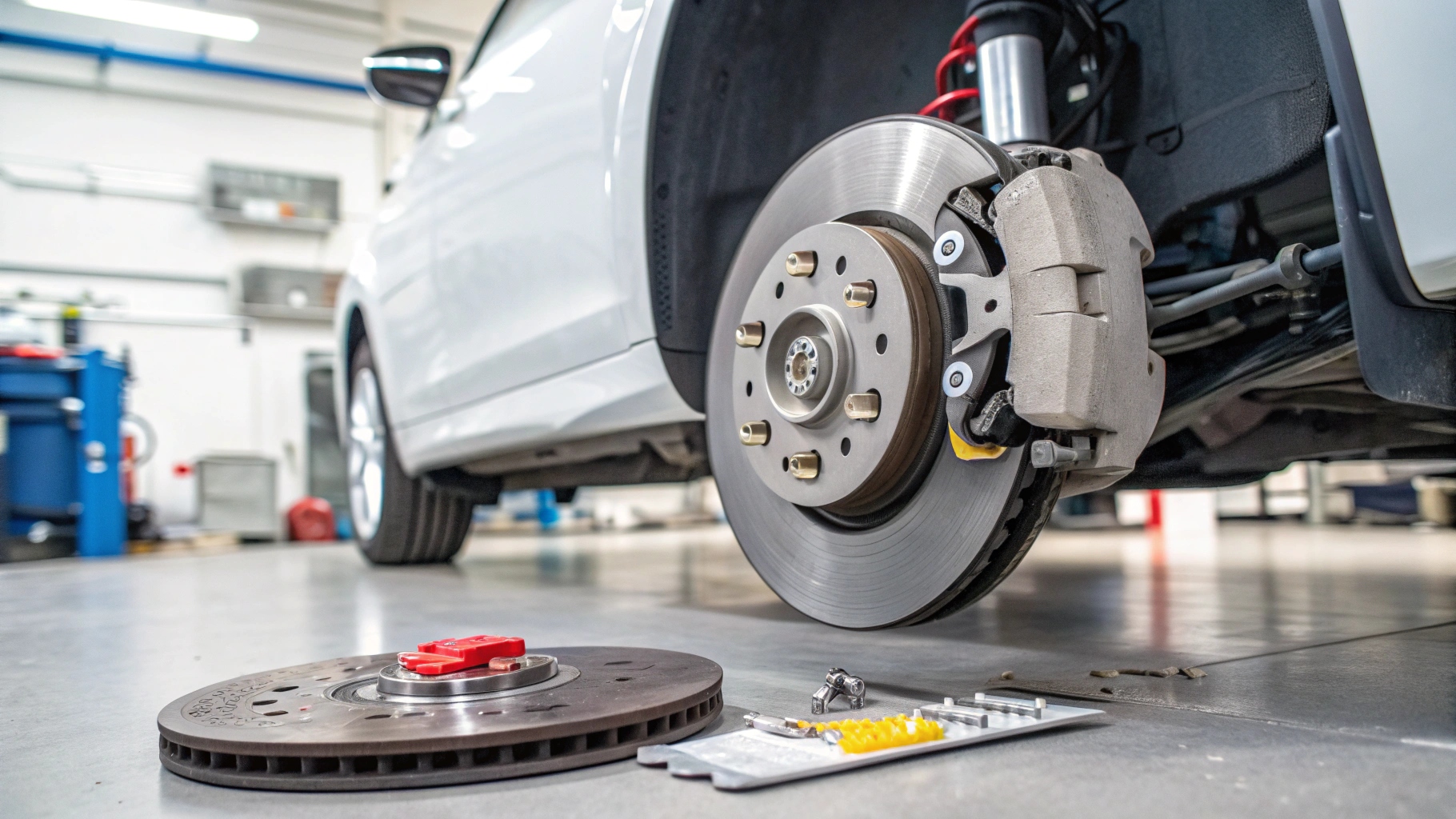
Think of your brake pads and rotors as a perfectly matched pair. When they are new, they both have perfectly flat, smooth surfaces. As you brake, the pad presses against the spinning rotor, creating friction that slows the car down. Over thousands of miles, the pad material wears down, but the rotor surface also wears down. It develops tiny grooves, ridges, and sometimes "hot spots" from intense heat. If you only replace the pads, you are putting a new, perfectly flat surface against an old, uneven one. The pad can't grip the rotor properly. It will only make contact on the high spots of the old rotor, dramatically reducing your braking effectiveness. This also creates vibration and noise. Furthermore, the new pad will be forced to conform to the old rotor's grooves, which causes it to wear out incredibly fast. While some people talk about "resurfacing" rotors, modern rotors are often too thin to be machined safely7. Replacing them together is the only way to restore 100% of your vehicle's braking performance and ensure your investment in new pads isn't wasted.
What Is the Difference Between OEM and Aftermarket Brake Pads and Rotors?
You're faced with a choice at the auto parts store: OEM or aftermarket. The OEM parts have a high price tag, but the aftermarket options seem like a gamble. It's hard to know what to trust.
OEM (Original Equipment Manufacturer) parts are identical to what your car had from the factory8. Aftermarket parts are made by other companies9. While OEM guarantees a perfect fit10, a high-quality aftermarket part can offer superior performance, specific features like less dust, and often better value11.
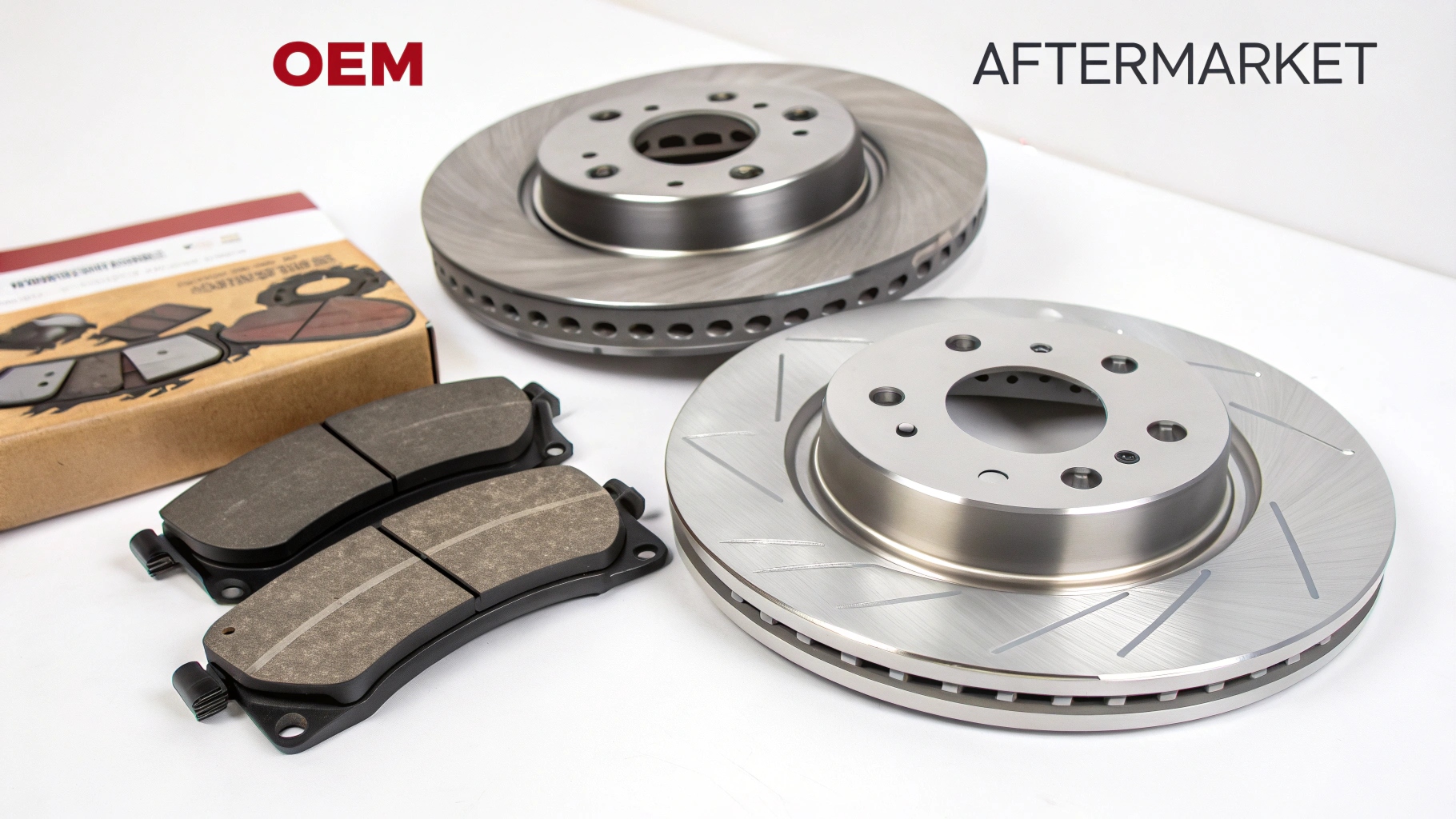
This is a question I get all the time, and it touches on the core of my business as a manufacturer. OEM parts are designed by the carmaker to be a good all-around solution for the average driver. They balance cost, performance, and noise. Aftermarket is a different world. It ranges from very cheap, low-quality parts to highly engineered upgrades that surpass OEM quality. The key is choosing a reputable aftermarket manufacturer. This reminds me of the challenges we face in production. Even small plastic components in a brake system require incredible precision. Standard injection molding machines often can't do it. The cooling process is the most difficult step. I remember my first time producing these parts for a client in Pakistan. We were still learning, and the plastic parts "shrank" a bit more than expected after cooling. I was worried, but the client actually preferred the result! We learned from that mistake and perfected our process. We use special high-precision machines, the kind you only find in certain manufacturing hubs, to get it right. Adding color pigments even complicates things, as you have to open the mold and risk disrupting the cooling. This experience shows why a good aftermarket supplier is different. We don't just copy OEM parts; we engineer solutions and invest in difficult processes to deliver reliable, high-value products that meet specific needs.
Conclusion
Choosing the right brake pads and rotors is about matching quality parts to your specific driving needs12. This ensures your vehicle is safe and gives you the best long-term value.
"Brake Pads: Semi-Metallic vs Ceramic? : r/MechanicAdvice - Reddit", https://www.reddit.com/r/MechanicAdvice/comments/vx34w3/brake_pads_semimetallic_vs_ceramic/. Technical reviews and automotive engineering sources support that pairing high-quality ceramic or semi-metallic pads with coated rotors designed for specific vehicles improves reliability and value, though individual driving conditions may affect optimal choices. Evidence role: expert_consensus; source type: education. Supports: The best combination for value and reliability is not about one specific brand. It involves matching high-quality pads, like ceramic or semi-metallic, with durable, coated rotors that are specifically designed for your vehicle.. Scope note: Optimal combinations may vary based on vehicle and driving style. ↩
"The Pros and Cons of Ceramic Brake Pads - ADVICS", https://www.advicsaftermarket.com/technical-resources/tech-tips/pros-and-cons-of-ceramic-brake-pads/. Automotive industry guides and consumer reports indicate that ceramic pads paired with coated rotors provide quiet operation, low dust, and consistent performance for typical daily driving, though performance may differ in extreme conditions. Evidence role: expert_consensus; source type: encyclopedia. Supports: For everyday driving, the best combination delivers quiet operation, low brake dust, and consistent performance. A quality ceramic brake pad paired with a smooth, coated rotor is often the ideal balance.. Scope note: Performance may vary in heavy-duty or performance applications. ↩
"The Pros and Cons of Ceramic Brake Pads - ADVICS", https://www.advicsaftermarket.com/technical-resources/tech-tips/pros-and-cons-of-ceramic-brake-pads/. Automotive testing organizations report that ceramic brake pads typically produce less noise and lighter-colored dust compared to semi-metallic pads, supporting their suitability for clean and quiet operation. Evidence role: statistic; source type: research. Supports: Ceramic pads are excellent because they are very quiet and produce a light-colored dust that is less visible on your wheels.. Scope note: Results may vary by manufacturer and pad formulation. ↩
"Coated vs. Uncoated brake rotors: Is rust preventive coating worth it?", https://www.allrotors.com/blog-31-coated-vs-uncoated-brake-rotors-is-rust-preventive-coating-worth-it?srsltid=AfmBOooNwHU2t_iy_SPnVtL0ALCG2S1IRulRCeGU-h6MO2S7Avtw1zgF. Automotive engineering sources confirm that rotors with protective coatings are more resistant to rust and corrosion, and maintain performance in typical driving conditions, though coatings may wear over time. Evidence role: mechanism; source type: education. Supports: When you pair them with a standard "blank" or smooth-faced rotor that has a protective coating, you get a system that performs well and resists rust.. Scope note: Coating effectiveness may decrease with extended use or harsh environments. ↩
"Differences in Wear and Material Integrity of NAO and Low-Steel ...", https://pmc.ncbi.nlm.nih.gov/articles/PMC8509441/. Automotive technical literature describes organic (NAO) brake pads as generally quieter and less abrasive to rotors, but prone to faster wear and higher dust production, especially under heavy use. Evidence role: expert_consensus; source type: encyclopedia. Supports: Organic (NAO) brake pads are quiet, inexpensive, easy on rotors, but wear quickly, create dust, and are not for heavy use.. Scope note: Performance may vary by manufacturer and vehicle application. ↩
"why change brake rotors at the same time as pads? : r/Cartalk - Reddit", https://www.reddit.com/r/Cartalk/comments/zbl1yl/why_change_brake_rotors_at_the_same_time_as_pads/. Automotive maintenance guidelines and technical papers confirm that installing new pads on worn rotors can reduce braking effectiveness, increase noise, and accelerate pad wear due to uneven contact surfaces. Evidence role: mechanism; source type: education. Supports: A new, flat brake pad cannot make full contact with a worn, grooved rotor. This mismatch reduces stopping power, creates noise, and causes the new pads to wear out much faster, wasting your money.. Scope note: Severity depends on rotor condition and pad material. ↩
"[PDF] BRAKE DISC RESURFACING GUIDELINES - nhtsa", https://static.nhtsa.gov/odi/tsbs/2018/MC-10150029-9999.pdf. Automotive industry standards indicate that many modern rotors are manufactured with minimal thickness, making resurfacing unsafe once wear limits are reached, though exceptions exist for certain models. Evidence role: expert_consensus; source type: government. Supports: While some people talk about "resurfacing" rotors, modern rotors are often too thin to be machined safely.. Scope note: Rotor thickness varies by manufacturer and model. ↩
"OEM vs Aftermarket Brake Pads: What's the Right Choice? - AutoZone", https://www.autozone.com/diy/brakes/oem-vs-aftermarket-brake-pads. Automotive manufacturer documentation defines OEM parts as those produced to the same specifications as original factory components, ensuring compatibility and performance. Evidence role: definition; source type: encyclopedia. Supports: OEM (Original Equipment Manufacturer) parts are identical to what your car had from the factory.. Scope note: Some OEM parts may be produced by third-party suppliers under contract. ↩
"The Difference Between OEM and Aftermarket Brake Components", https://gexhaust.com/blogs/news/blog-the-difference-between-oem-and-aftermarket-brake-components?srsltid=AfmBOoqeoVKsYoK2VXL3qLK5hXdzH0HhNaKtWqF4aoOBuknvsVGTQCQs. Automotive industry sources define aftermarket parts as components produced by manufacturers other than the original equipment supplier, offering alternatives to OEM parts. Evidence role: definition; source type: encyclopedia. Supports: Aftermarket parts are made by other companies.. Scope note: Quality and specifications may vary among aftermarket suppliers. ↩
"Can I Use My Original OE Equipment with PowerStop products?", https://www.powerstop.com/resources/use-my-original-oe-equipment-with-powerstop-products/. Automotive manufacturer guidelines state that OEM parts are designed to match original specifications, ensuring proper fit and function, though installation may still require professional expertise. Evidence role: definition; source type: encyclopedia. Supports: While OEM guarantees a perfect fit, a high-quality aftermarket part can offer superior performance, specific features like less dust, and often better value.. Scope note: Fitment may depend on correct part selection and vehicle model. ↩
"I Tested Every Major Parts Store Brake Pad... You're Being Ripped Off!", https://www.youtube.com/watch?v=ZVjN7_IB_OM. Consumer reports and automotive testing organizations have found that some high-quality aftermarket brake parts can outperform OEM components in areas such as dust reduction and longevity, though results vary by brand and application. Evidence role: case_reference; source type: research. Supports: a high-quality aftermarket part can offer superior performance, specific features like less dust, and often better value.. Scope note: Performance varies widely among aftermarket brands and products. ↩
"Which Type of Brake Pad Is Right for Your Driving Style?", https://www.grahamsautorepairandsales.com/which-type-of-brake-pad-is-right-for-your-driving-style. Automotive safety guidelines and technical manuals emphasize that selecting brake pads and rotors based on vehicle type and driving conditions is critical for safety and long-term value, though individual preferences may influence choices. Evidence role: expert_consensus; source type: education. Supports: Choosing the right brake pads and rotors is about matching quality parts to your specific driving needs. This ensures your vehicle is safe and gives you the best long-term value.. Scope note: Recommendations may differ for specialized or performance vehicles. ↩