-Struggling to source the right brake parts? The wrong choice can risk safety and your business reputation. Let’s clarify the essentials for confident decision-making.
Key brake parts are pads, rotors, calipers, and brake lines. For your business, choosing correctly means focusing on material quality1, manufacturing precision2, and supplier reliability3 to ensure vehicle safety and performance for your customers. This is crucial for building a trusted product line.
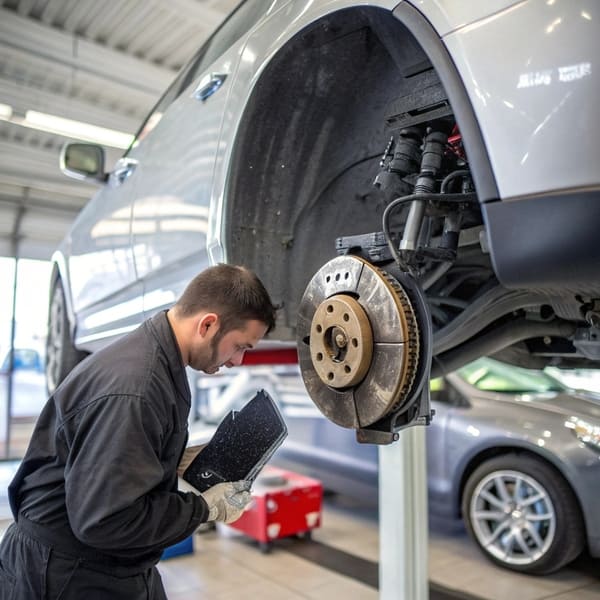
It's about more than just stopping power; it's about understanding how each component works together to create a safe and reliable system. When you know the role of each part, you can make smarter sourcing and development decisions for your market. Let's break down each part of the system so you can see how it all fits together.
What Are the Main Parts of a Car Brake System?
Are you unsure what makes up a full brake system? Sourcing individual parts without understanding the whole system can lead to costly mismatches and compatibility problems for your customers.
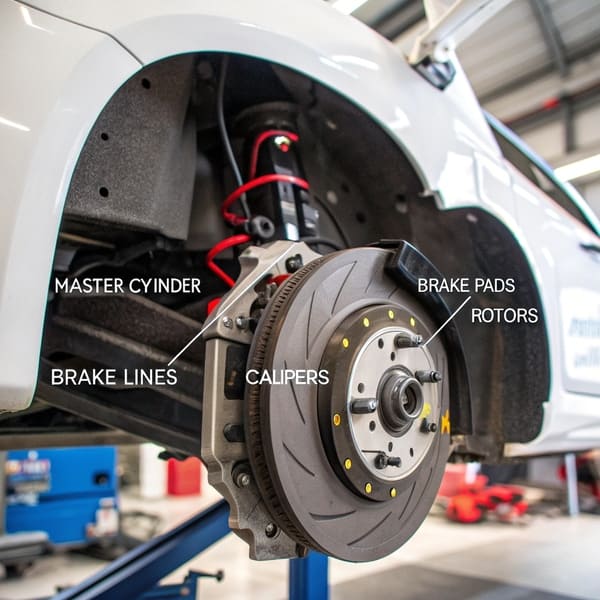
A car brake system's main parts are the brake pedal, master cylinder, brake lines, and the wheel-end components. These include calipers, pads, and rotors for disc brakes, or drums and shoes for drum brakes. Each part works together to convert hydraulic pressure into friction.
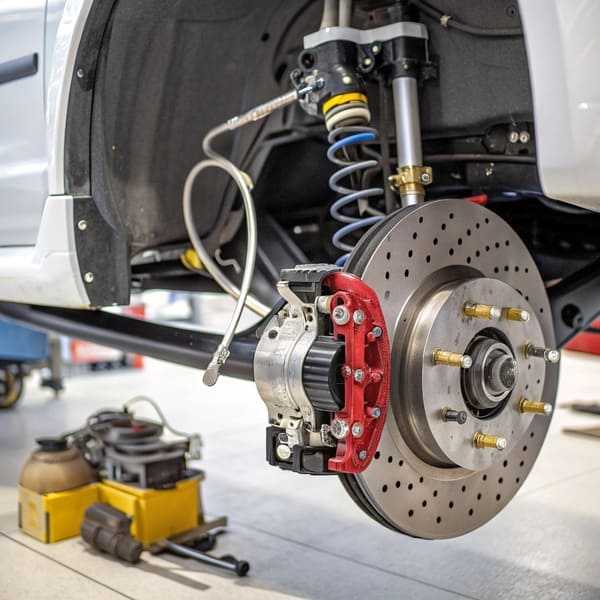
When we talk about a brake system, we're really looking at two main sections. First is the hydraulic system4 that creates and transmits force. Second is the friction assembly5 at the wheels that does the actual stopping. Producing these parts to the right standard is incredibly difficult. Normal manufacturing equipment just can't achieve the precision and safety levels required. You need specialized machinery and processes6. For anyone in the business of selling or distributing parts, understanding this manufacturing challenge is key. It helps you see why quality varies so much between suppliers and why partnering with a capable manufacturer is so important for your brand's reputation and your customers' safety.
The System's Core Components
| Component | Primary Function |
|---|---|
| Brake Pedal | The driver's input. It starts the entire braking process. |
| Master Cylinder | Converts the pedal's force into hydraulic pressure. |
| Brake Lines | Steel and rubber hoses that carry brake fluid7 under pressure. |
| Brake Fluid | The liquid used to transfer pressure through the system. |
| Wheel Assembly | The parts at each wheel that create friction (e.g., calipers, pads). |
How Does Each Brake Part Function in a Complete Braking System?
Do you know how each brake part actually works together? Misunderstanding a part's function can lead to incorrect sourcing or developing a product that doesn't meet your market's needs.
The master cylinder creates hydraulic pressure when you press the brake pedal. This pressure travels through brake lines to the calipers. The calipers squeeze brake pads against the rotors. This friction slows the wheel's rotation, stopping the car. Every step is a crucial energy transfer.
The real magic, and the biggest manufacturing challenge, happens in the materials. The formula for brake pads, for instance, is a closely guarded secret for many factories. It's a precise blend of materials that determines stopping power, noise, and lifespan. Adjusting this formula is a very delicate process. The machine has to be stopped, and the mold has to be opened to add new ingredients. This can mess up the cooling process, which is critical for the part's final structure and safety. I learned this firsthand. I remember my first time working on a brake parts order with a client from Pakistan. We were still learning. After the parts were made and assembled, we noticed the clearance gap was a bit larger than the standard specification. I was concerned it was a mistake, but the client was actually thrilled. That small difference made the parts a perfect fit for their local vehicles. It was a great lesson: sometimes, market-specific needs8 are more important than sticking to a universal standard.
The Braking Sequence
| Step | Action | Result |
|---|---|---|
| 1. Driver Input | The driver presses the brake pedal. | Force is applied to the master cylinder. |
| 2. Pressure Creation | The master cylinder piston moves. | It pressurizes the brake fluid7 in the lines. |
| 3. Force Transfer | Pressurized fluid travels to the calipers. | The fluid pushes the caliper pistons outward. |
| 4. Friction | Caliper pistons push brake pads. | The pads clamp onto the spinning brake rotor. |
| 5. Stopping | Friction converts motion into heat. | The wheel slows down, and the car stops. |
What Are the Key Components in Disc Brake Systems?
Disc brakes are now standard on most cars, but what are their specific parts? Focusing only on pads or rotors means you miss other critical components that affect performance and longevity.
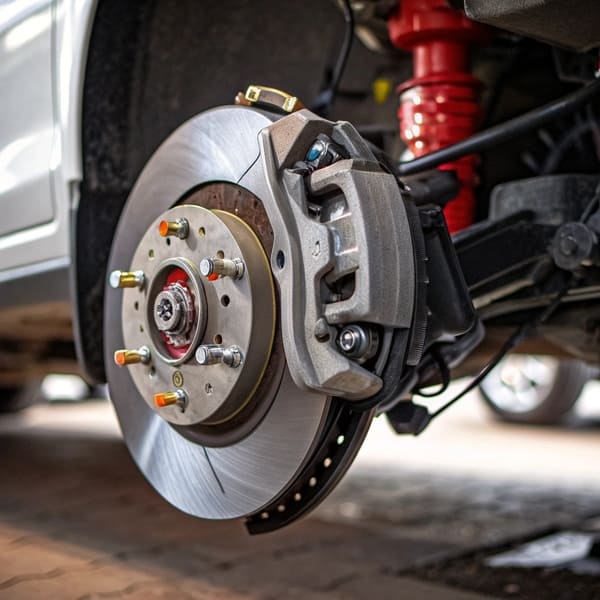
The key components of a disc brake system are the brake rotor (the disc), the brake caliper, and the brake pads. The caliper holds the pads and contains pistons that are pushed by brake fluid7. The caliper then squeezes the pads against the spinning rotor to stop the vehicle.
The manufacturing of these parts is a serious business. You can't just use any equipment. For brake components, there are at least three critical production stages, and the hardest one is the cooling and shaping phase9. This is where the part's final size and strength are set. Getting the dimensional accuracy10 right is everything. The kind of machinery that can handle this level of precision is usually only found in specific industrial areas, like the factories along the coast in Fujian or near Shanghai. From my experience in sourcing and manufacturing, I can tell you that equipment from other regions, for example, Hebei, often just doesn't meet the precision requirements for these safety-critical parts. For any business looking to build a private label or import brake components, knowing where and how your parts are made is fundamental to ensuring you're selling a safe, high-quality product.
Main Disc Brake Parts Explained
| Component | Description | Key Considerations for Sourcing |
|---|---|---|
| Brake Rotor | A metal disc that rotates with the wheel. It's the surface the pads grip. | Material (cast iron11), design (solid, vented, or drilled), and heat dissipation. |
| Brake Caliper | A hydraulic clamp that holds the brake pads and forces them onto the rotor. | Piston count, material (iron or aluminum), and compatibility with the vehicle. |
| Brake Pads | The friction material that makes direct contact with the rotor. | Material compound (organic, ceramic, semi-metallic) for performance, noise, and dust. |
Conclusion
Understanding brake parts is key to safety and business success. For quality manufacturing and sourcing, focus on precision, materials, and finding a reliable OEM partner12 for your needs.
Material quality directly impacts the safety, durability, and performance of brake parts. Learn how to identify high-quality materials for your business. ↩
Manufacturing precision ensures brake parts fit and function correctly, reducing risks and improving reliability. Discover best practices for precision manufacturing. ↩
Supplier reliability is crucial for consistent quality and timely delivery. Find out how to evaluate and choose trustworthy suppliers for your product line. ↩
Understanding the hydraulic system helps you source compatible parts and avoid mismatches. Explore the mechanics and importance of hydraulic systems in braking. ↩
The friction assembly is where stopping power is generated. Learn how its components interact and why sourcing the right parts is essential for safety. ↩
Specialized machinery ensures the precision and safety required for brake parts. Discover what equipment and processes are necessary for quality production. ↩
Brake fluid is vital for transferring force and ensuring effective braking. Learn about types, maintenance, and sourcing tips for brake fluid. ↩
Adapting to market-specific needs can improve fit and customer satisfaction. Find out how to tailor sourcing strategies for different markets. ↩
The cooling and shaping phase determines the final structure and strength of brake parts. Learn why this stage is crucial for quality and safety. ↩
Dimensional accuracy affects safety and performance. Explore how to ensure precise measurements and avoid costly errors in brake parts. ↩
Cast iron offers durability and heat dissipation for brake rotors. Discover its advantages and considerations when sourcing rotors. ↩
A reliable OEM partner ensures consistent quality and innovation. Get tips on selecting the best OEM for your sourcing and branding needs. ↩