-Your car's temperature gauge is creeping up. You're worried about overheating. What's the one part working overtime to prevent a total engine breakdown, and is its job really that simple?
A car radiator is the core of your cooling system. It keeps your engine from overheating by moving heat from the engine's coolant into the outside air.1 Without a functioning radiator, your engine would quickly get too hot and suffer major damage.2
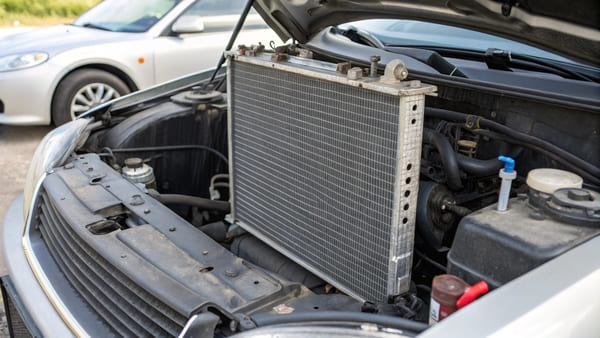
Your engine is a powerful machine, but it creates a huge amount of waste heat. Managing this heat is not just a feature; it's a basic requirement for the engine to survive. The radiator stands at the front line of this battle, and understanding its role is key to understanding your car's health. Let's look closer at this vital component.
What Is a Car Radiator?
You see it at the front of your car, right behind the grille. It looks simple, but what is it really? It seems like just a metal grid, but its job is complex.
A car radiator is a type of heat exchanger.3 Its only purpose is to move heat from the hot coolant coming out of the engine to the air passing through it. This simple-sounding task requires surprisingly precise engineering and manufacturing.
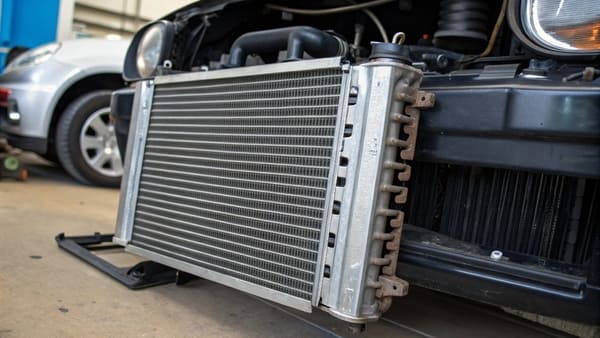
The radiator has a few main parts. There is a central part called the core, which has many small tubes and thin, wavy pieces of metal called fins. On the sides, or top and bottom, are the tanks.4 One is the inlet tank where hot fluid comes in, and the other is the outlet tank where cooled fluid leaves. While the core is usually aluminum, the tanks are often made of a special, high-strength plastic.5 As a manufacturer, I can tell you that making these plastic radiator parts is extremely difficult. Standard injection molding machines are not precise enough for the job. You need highly specialized equipment.6 In China, you typically only find machines with this level of precision in the coastal areas like Fujian or near major hubs like Shanghai. The machines made in other regions often can't meet the strict standards for automotive parts. The most difficult step in the whole process is cooling the plastic part correctly after it has been molded.
What Does a Radiator Actually Do in a Car?
Your engine creates a lot of heat when it runs. If that heat stays, it will destroy your engine. So how does your car handle this critical task every single day?
The radiator’s main job is to be the final destination for engine heat. It takes in hot coolant that has just passed through the engine block, absorbing its heat.7 The radiator's only function is to cool this liquid down before it gets sent back to the engine to start the cycle all over again.
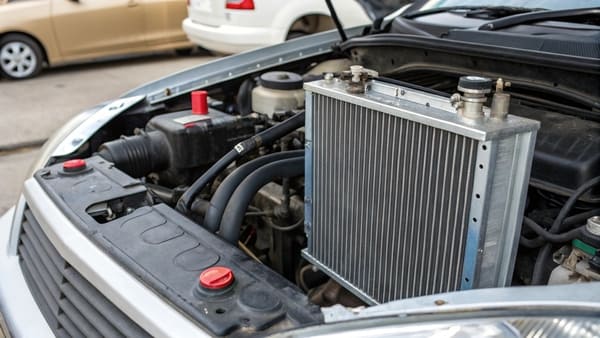
The radiator does not work by itself. It is the star player on a team of components that make up the cooling system. Each part has a specific job to do to keep the engine from overheating. The water pump is the heart of the system, pushing the coolant through the engine and radiator.8 The thermostat acts like a gatekeeper, deciding when the coolant is hot enough to need cooling.9 The hoses are the pathways that carry the coolant between the parts. Even adding custom colors to the plastic parts, a common request from our B2B clients, makes the manufacturing process harder. To add color powder, we have to stop the machine and open the mold. This can interfere with the critical cooling phase and requires expert handling to prevent defects. It shows how even small customizations demand a high level of control and expertise.
| Component | Function |
|---|---|
| Radiator | Cools the hot liquid (coolant) using airflow. |
| Coolant | The liquid that absorbs heat from the engine and releases it in the radiator. |
| Water Pump | Circulates the coolant through the entire system. |
| Thermostat | Regulates the coolant temperature by controlling its flow to the radiator. |
| Hoses | Connect the components and transport the coolant. |
| Radiator Fan | Pulls air through the radiator when the car is stopped or moving slowly. |
How Does a Car Radiator Keep the Engine Cool?
Hot liquid goes in one side, and cooler liquid comes out the other. The process seems basic, but it's a clever use of physics. How does a radiator use just air to save your engine?
The radiator cools the liquid using two main principles: conduction and convection.10 Hot coolant flows through thin tubes, and heat conducts from the liquid to the metal of the tubes and fins. Then, air flows over the fins and carries the heat away through convection.
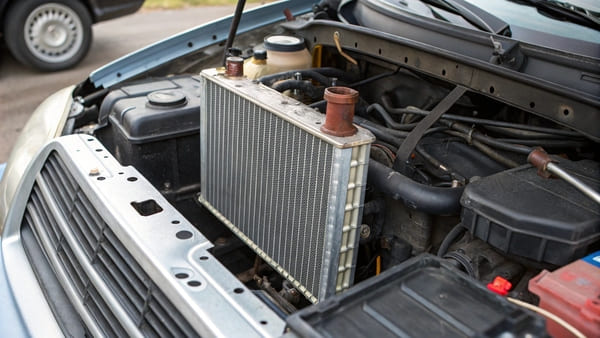
Let's break it down. First, the water pump sends hot coolant from the engine into the radiator's inlet tank. From there, the liquid spreads out into many small, flat tubes that run through the radiator's core. These tubes are surrounded by thousands of tiny metal fins. The fins create a huge surface area.11 As the hot coolant flows through the tubes, the heat transfers to the tubes and then to the fins. At the same time, air from outside flows over these fins. This air absorbs the heat and carries it away from the radiator. By the time the coolant reaches the outlet tank on the other side, it is much cooler and ready to go back to the engine. I learned a tough lesson about this process once. We were working with a new client from Pakistan, and it was one of our first times producing these complex plastic radiator tanks. After the injection molding process, the plastic parts "shrank" more than we expected during cooling. I was very worried we had ruined the batch. But, the client loved the samples. The unexpected shrinkage actually made the parts fit his assembly perfectly. It was lucky, but it taught me how critical the cooling stage is. We have perfected our methods since then.
Conclusion
The radiator is the heart of your engine's cooling system. It works hard to get rid of heat, preventing engine failure and helping your car run reliably for years.12
"Radiator (engine cooling) - Wikipedia", https://en.wikipedia.org/wiki/Radiator_(engine_cooling). Technical sources confirm that the car radiator is a central component of the cooling system, transferring heat from the engine coolant to the outside air to prevent overheating. This is a general description and may not account for variations in cooling system designs. Evidence role: mechanism; source type: encyclopedia. Supports: A car radiator is the core of your cooling system. It keeps your engine from overheating by moving heat from the engine's coolant into the outside air.. Scope note: General support; specific designs may differ. ↩
"The Most Common Car Cooling System Problems | UTI", https://www.uti.edu/blog/automotive/the-most-common-cooling-system-problems. Automotive engineering literature indicates that engine overheating due to radiator failure can cause significant damage, including warped cylinder heads and engine seizure. The severity depends on duration and engine type. Evidence role: case_reference; source type: education. Supports: Without a functioning radiator, your engine would quickly get too hot and suffer major damage.. Scope note: Severity and speed of damage may vary by engine and conditions. ↩
"Radiator (engine cooling) - Wikipedia", https://en.wikipedia.org/wiki/Radiator_(engine_cooling). Engineering encyclopedias classify car radiators as heat exchangers, designed to transfer heat from coolant to air. This definition is widely accepted in automotive engineering. Evidence role: definition; source type: encyclopedia. Supports: A car radiator is a type of heat exchanger.. Scope note: General definition; specific designs may vary. ↩
"Radiator - Wikipedia", https://en.wikipedia.org/wiki/Radiator. Automotive engineering textbooks and diagrams confirm that radiators consist of a core with tubes and fins, and tanks located at the sides, top, or bottom. This structure is standard in most modern radiators. Evidence role: definition; source type: education. Supports: The radiator has a few main parts. There is a central part called the core, which has many small tubes and thin, wavy pieces of metal called fins. On the sides, or top and bottom, are the tanks.. Scope note: Some radiator designs may differ in tank placement or materials. ↩
"Radiator - Wikipedia", https://en.wikipedia.org/wiki/Radiator. Industry sources and engineering references note that most modern radiators use aluminum for the core and high-strength plastic for the tanks, due to weight and corrosion considerations. Exceptions exist for performance or older vehicles. Evidence role: general_support; source type: research. Supports: While the core is usually aluminum, the tanks are often made of a special, high-strength plastic.. Scope note: Material choices may vary by manufacturer and vehicle type. ↩
"Federal Motor Vehicle Safety Standards; Radiator and Coolant ...", https://www.federalregister.gov/documents/2001/06/01/01-13800/federal-motor-vehicle-safety-standards-radiator-and-coolant-reservoir-caps-venting-of-motor-vehicle. Manufacturing research indicates that automotive radiator tanks require high-precision injection molding equipment to meet strict tolerances and durability standards. Standard machines may not suffice for automotive-grade parts. Evidence role: mechanism; source type: research. Supports: Standard injection molding machines are not precise enough for the job. You need highly specialized equipment.. Scope note: Specific equipment requirements may vary by manufacturer. ↩
"Radiator (engine cooling) - Wikipedia", https://en.wikipedia.org/wiki/Radiator_(engine_cooling). Technical sources confirm that the radiator receives hot coolant from the engine block and dissipates its heat, serving as the primary heat removal component in the cooling system. Evidence role: mechanism; source type: encyclopedia. Supports: The radiator’s main job is to be the final destination for engine heat. It takes in hot coolant that has just passed through the engine block, absorbing its heat.. Scope note: Other cooling system components also play roles in heat management. ↩
"Pump - Wikipedia", https://en.wikipedia.org/wiki/Pump. Automotive engineering sources describe the water pump as the main component responsible for circulating coolant through the engine and radiator, ensuring continuous heat transfer. Evidence role: mechanism; source type: encyclopedia. Supports: The water pump is the heart of the system, pushing the coolant through the engine and radiator.. Scope note: Some cooling systems may use electric pumps or alternative designs. ↩
"Thermostat - Wikipedia", https://en.wikipedia.org/wiki/Thermostat. Technical references confirm that the thermostat regulates coolant flow based on temperature, opening when the coolant is hot enough to require cooling by the radiator. Evidence role: mechanism; source type: encyclopedia. Supports: The thermostat acts like a gatekeeper, deciding when the coolant is hot enough to need cooling.. Scope note: Thermostat operation may vary in modern or electric vehicles. ↩
"Heat transfer - Wikipedia", https://en.wikipedia.org/wiki/Heat_transfer. Physics and engineering sources explain that radiators transfer heat from coolant to air primarily through conduction (from coolant to metal) and convection (from metal to air). Evidence role: mechanism; source type: education. Supports: The radiator cools the liquid using two main principles: conduction and convection.. Scope note: Other heat transfer modes may play minor roles. ↩
"Fin (extended surface) - Wikipedia", https://en.wikipedia.org/wiki/Fin_(extended_surface). Engineering sources note that radiator fins significantly increase surface area, enhancing heat transfer efficiency by allowing more air contact with the heated metal. Evidence role: mechanism; source type: education. Supports: The fins create a huge surface area.. Scope note: Exact surface area varies by radiator design. ↩
"Internal combustion engine cooling - Wikipedia", https://en.wikipedia.org/wiki/Internal_combustion_engine_cooling. Automotive engineering consensus holds that the radiator is a critical component for preventing engine overheating and failure, contributing to long-term engine reliability. This is a general statement and may not account for all failure modes. Evidence role: expert_consensus; source type: education. Supports: The radiator is the heart of your engine's cooling system. It works hard to get rid of heat, preventing engine failure and helping your car run reliably for years.. Scope note: Engine reliability depends on multiple factors beyond the radiator. ↩